HelloGrowthCRM software
Built for real small-business sales teams
HelloGrowthCRM helps reps qualify faster, follow up on time, and close more deals—with practical automation in one place.
- AI lead scoring and pipeline visibility
- Built-in dialer, WhatsApp, and email automation
- Sales forecasting and RevOps-ready reporting
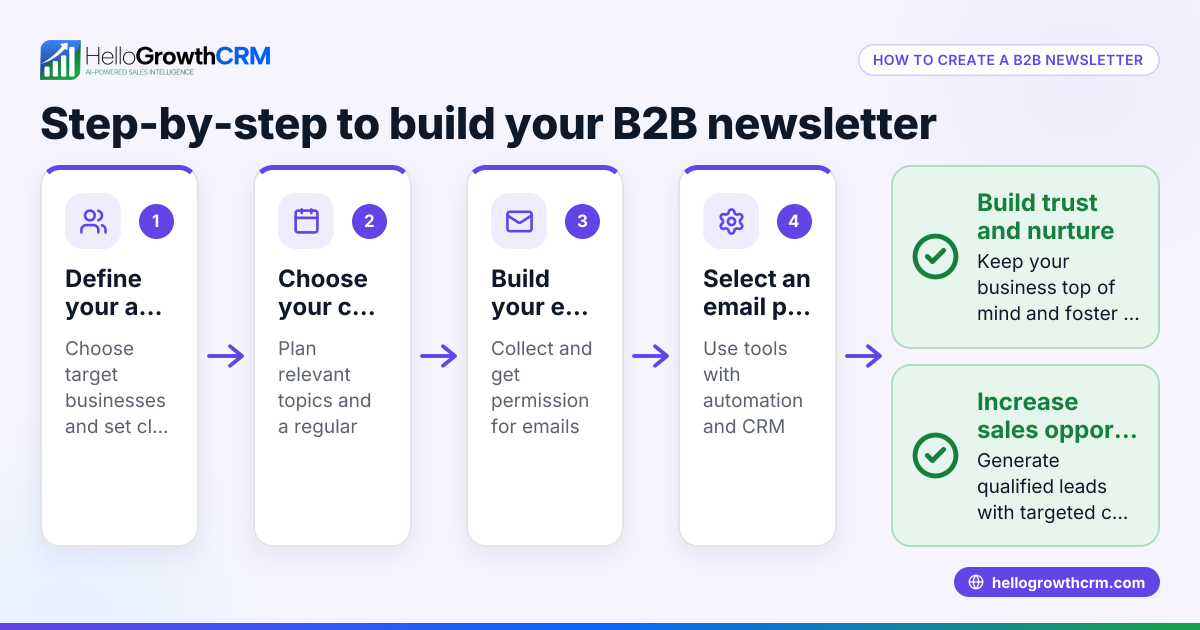
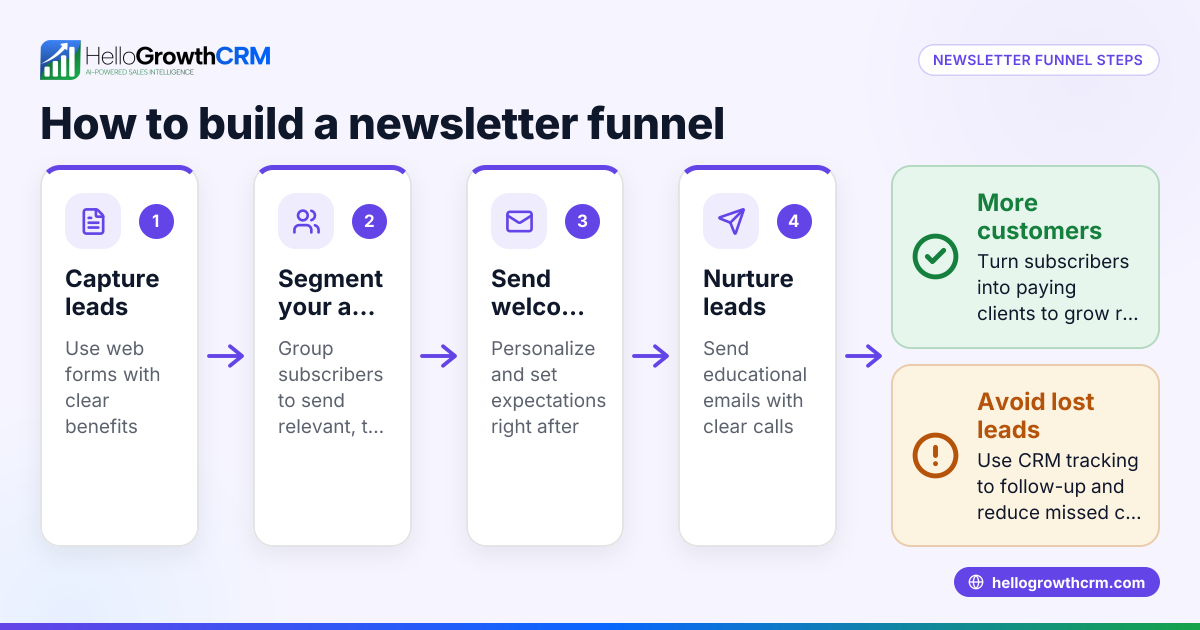
To create a newsletter, start by deciding exactly what you want to achieve and who will read it. Then choose the format and how often you will send it. Collect email addresses legally, plan your content carefully, design the layout, write clear and engaging text, and schedule your newsletter to go out consistently. This article explains each step in detail, offers a worked example with realistic figures, highlights common mistakes and how to avoid them, and answers frequent questions about newsletters.
Why this comes up / what goes wrong
Small business owners often want to create newsletters to keep customers informed, promote products or services, or build loyalty. However, many struggle because they do not have a clear plan or process. Without a defined goal, newsletters can become inconsistent or irrelevant. Poor design or lack of engaging content leads to low open and click rates. Sending newsletters without proper email collection or scheduling can result in lost leads or spam complaints. Learning how to create a newsletter step-by-step helps you avoid these problems and communicate effectively with your audience.
Step-by-step
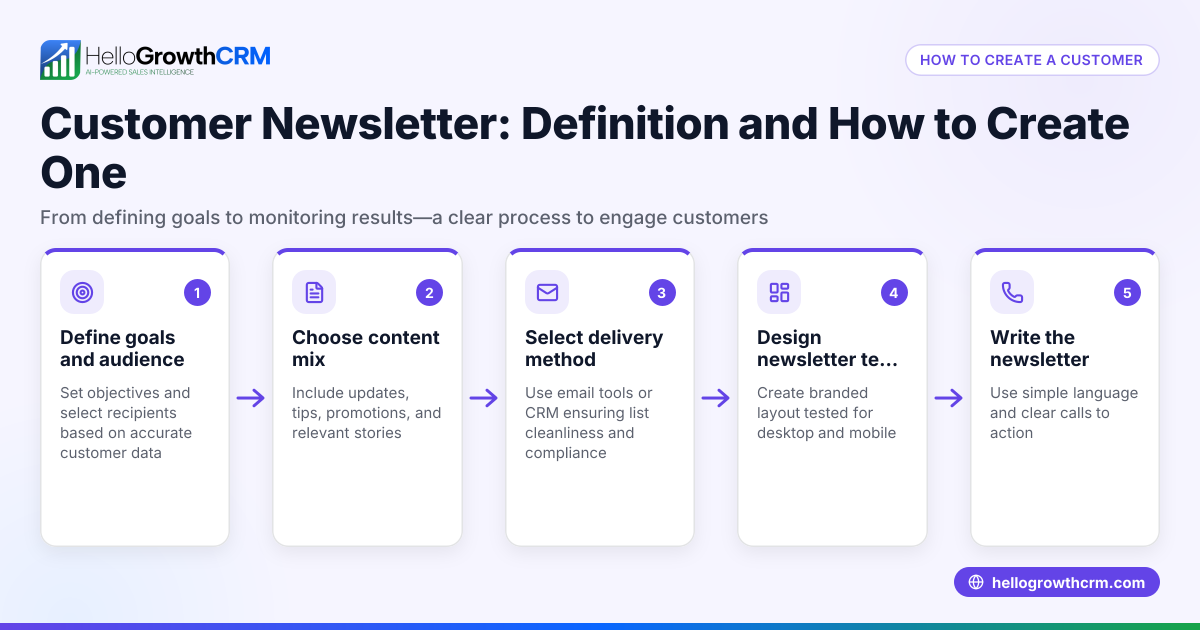
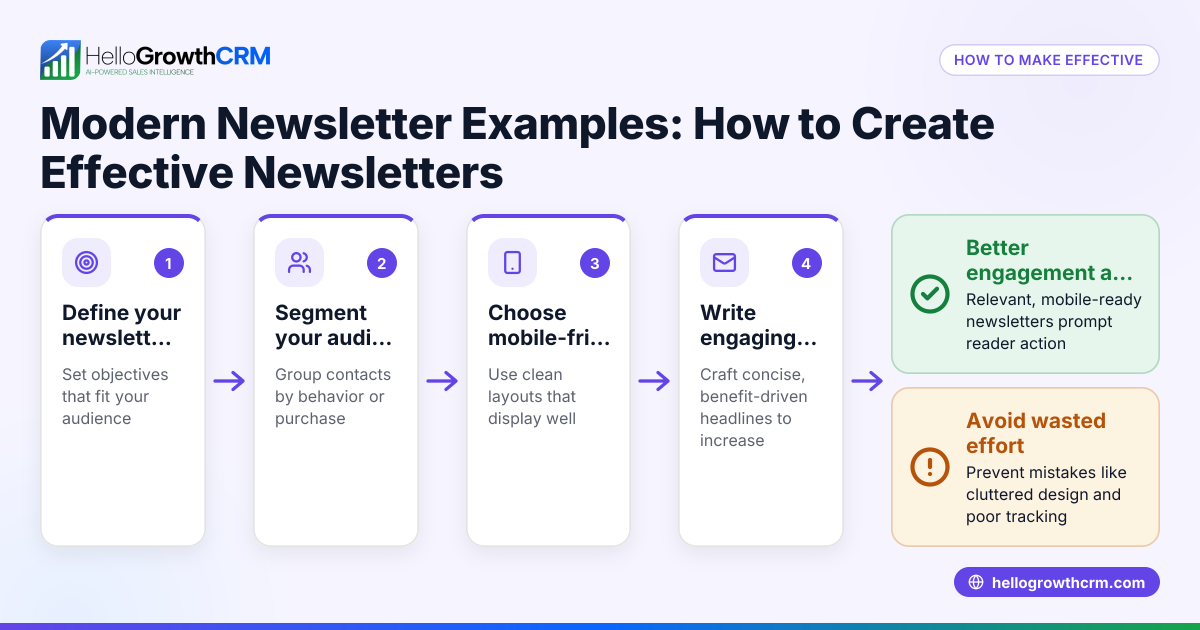
- Define your goal and audience: Decide what you want your newsletter to achieve, such as increasing sales, educating customers, or announcing events. Identify your target readers—current customers, potential clients, or partners.
- Check: Your goal should be specific and measurable.
- Choose your newsletter format and frequency: Decide if you want to send HTML emails with images, plain text emails, or PDFs. Pick how often you will send (weekly, biweekly, monthly).
- Check: Choose a frequency that your team can maintain consistently.
- Collect email addresses legally: Use web forms on your website, in-store sign-ups, or events to gather emails. Always get explicit permission to send emails.
- Check: Verify that every contact has opted in to avoid spam complaints (see HelloGrowthCRM for the United States for CRM compliance features).
- Plan your content: Outline topics, promotions, news, or tips that will interest your audience and support your goal.
- Check: Content should be relevant and valuable to your readers.
- Design your newsletter: Use a clean, simple layout with your branding, easy-to-read fonts, and clear calls to action.
- Check: Test your design on desktop and mobile devices to ensure readability.
- Write compelling content: Use clear headlines, short paragraphs, and engaging language to keep readers interested.
- Check: Proofread for spelling, grammar, and clarity.
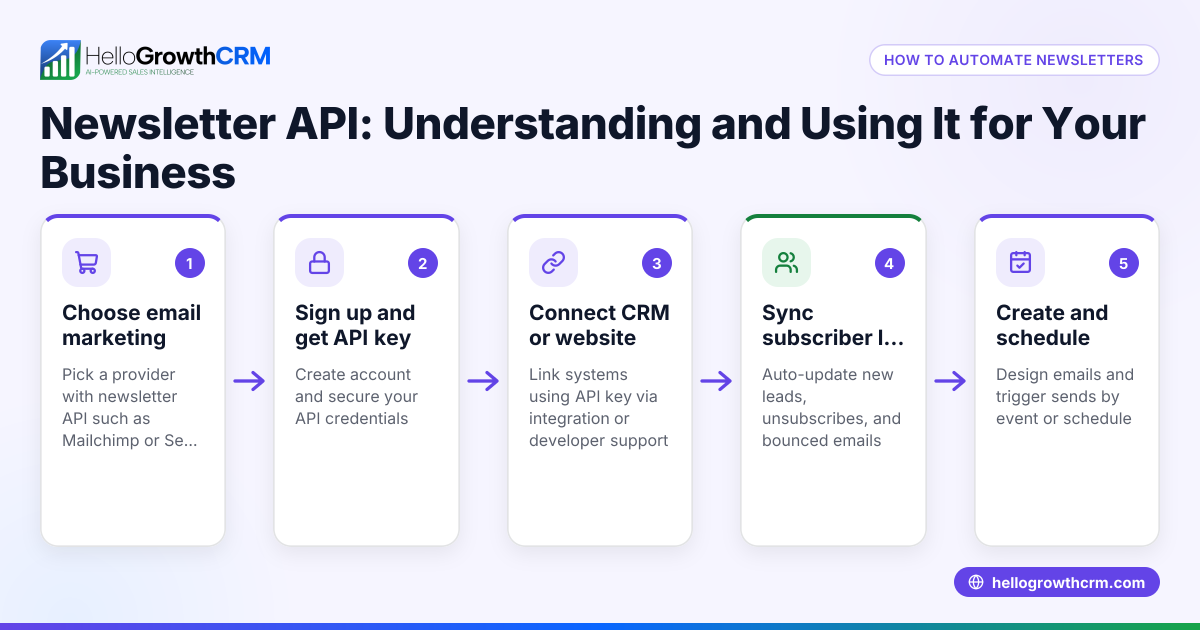
- Schedule and send your newsletter: Pick a consistent day and time for sending. Use email software or a CRM that supports scheduling and tracking.
- Check: Confirm your sending list is updated and all emails are valid.
- Track performance and adjust: Monitor open rates, click-through rates, and unsubscribes to understand what works.
- Check: Use analytics to improve future newsletters.
Example (fictional figures)
A two-location dental practice in Columbus, Ohio, decides to start a monthly newsletter to remind patients about checkups and promote new services.
- Goal: Increase appointment bookings.
- Audience: 1,200 current patients with email addresses.
- Format: HTML email with images and booking links.
- Content plan: Tips on dental care, staff introductions, monthly promotions.
- Design: Branded header, easy navigation, mobile-friendly.
- Schedule: First newsletter sent on 07/15/2026.
They expect a 20% open rate and 5% click-through rate.
Calculations:
Open rate = 1,200 × 20% = 240 opens Clicks = 1,200 × 5% = 60 clicks
If 6 of those clicks lead to appointments:
Appointments = 6
Each appointment is worth $150:
Revenue from newsletter = 6 × $150 = $900
This example shows how a newsletter can generate measurable business value by increasing appointments and revenue.
Common mistakes
- No clear goal: Prevent by defining what you want to achieve before creating content.
- Ignoring audience preferences: Prevent by surveying your list or segmenting contacts to tailor content.
- Poor design and readability: Prevent by testing your newsletter on different devices and keeping the layout simple.
- Inconsistent sending schedule: Prevent by committing to a realistic frequency and sticking to it.
- Not tracking results: Prevent by using tools with analytics to measure engagement and improve.
- Sending without permission: Prevent by collecting emails with explicit opt-in to avoid spam complaints (see HelloGrowthCRM for the United States).
Frequently asked questions
How do I make a newsletter? Start by defining your audience and goals, then plan your content and design. Collect emails legally, write engaging articles, and send regularly using email software or a CRM. Track results and adjust your approach.
What should I include in a newsletter? Include a mix of useful information, promotions, company news, and calls to action. Keep content relevant to your audience and aligned with your business objectives.
How often should I send a newsletter? Frequency depends on your resources and audience preferences. Common schedules are weekly, biweekly, or monthly. Consistency is more important than frequency.
Can I use WhatsApp or SMS for newsletters? Yes, tools like WhatsApp and SMS CRM let you send messages to leads and customers. These channels can complement email newsletters but require consent and concise content.
How can I improve newsletter engagement? Use clear subject lines, personalized content, and calls to action. Test sending times and designs. A CRM with features like a built-in CRM dialer can help follow up on leads generated by newsletters.
Key takeaways
- Define your newsletter’s goal and target audience clearly.
- Plan content and design for readability and engagement.
- Collect emails with permission and maintain a consistent schedule.
- Track performance metrics to improve future newsletters.
- Avoid common mistakes like irregular sending and ignoring audience preferences.
Creating a newsletter can boost customer engagement and sales when done methodically. To get started with managing your leads and communications efficiently, consider using a CRM designed for small businesses. Start on the Free Forever plan (200 leads, no credit card) today.
Ready to put this into practice?
Set up your pipeline, WhatsApp follow-ups, and AI lead scoring in minutes — free, no credit card.
Try HelloGrowthCRM freeGet CRM tips in your inbox
Join thousands of sales professionals who get weekly insights on CRM strategy, AI automation, and pipeline optimization.

The HelloGrowthCRM team publishes guides on CRM strategy, AI sales tools, and revenue operations for small business sales teams.