HelloGrowthCRM software
Built for real small-business sales teams
HelloGrowthCRM helps reps qualify faster, follow up on time, and close more deals—with practical automation in one place.
- AI lead scoring and pipeline visibility
- Built-in dialer, WhatsApp, and email automation
- Sales forecasting and RevOps-ready reporting
Creating a sales follow up sequence is essential for converting leads into customers without losing them to slow or inconsistent communication. Many small business owners in New Zealand struggle with follow-up because they rely on manual reminders, scattered notes, or inconsistent messaging across email, text, and calls. This guide explains how to build a structured follow-up sequence that you can implement today.
Why this comes up / what goes wrong
Small business owners often miss sales opportunities because follow-ups are too slow or irregular. Leads fall through cracks when follow-ups are forgotten or sent too late. Managing follow-ups across multiple channels like WhatsApp, email, SMS, and phone calls without a system leads to confusion and lost deals. A clear, repeatable sequence ensures every lead gets timely attention without overwhelming your team.
Step-by-step
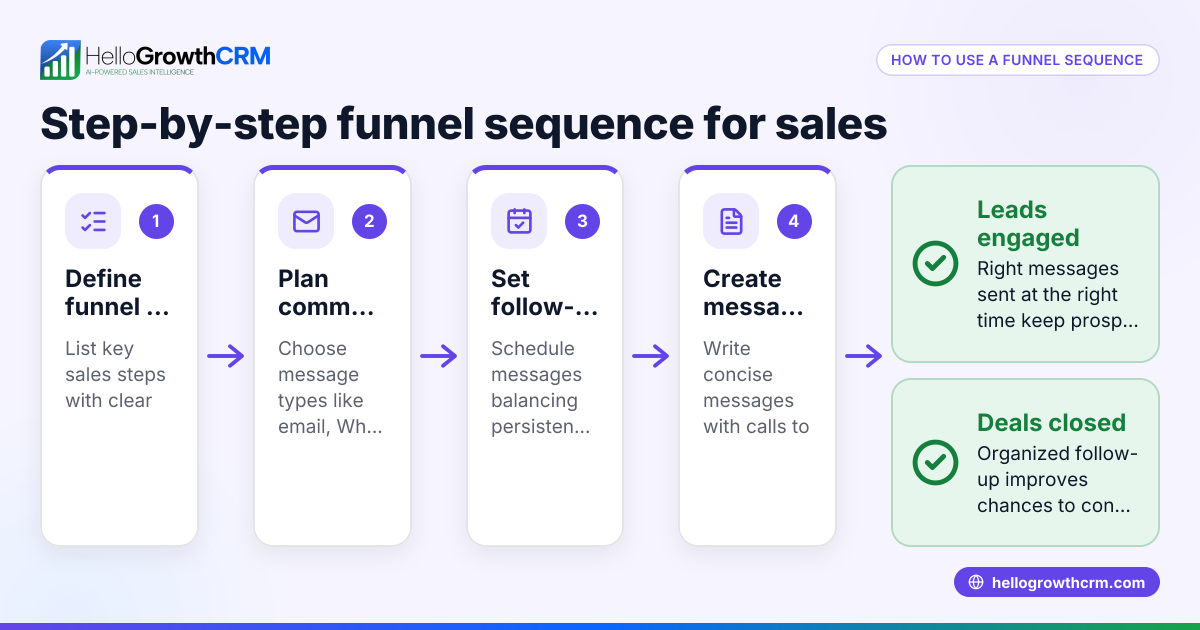
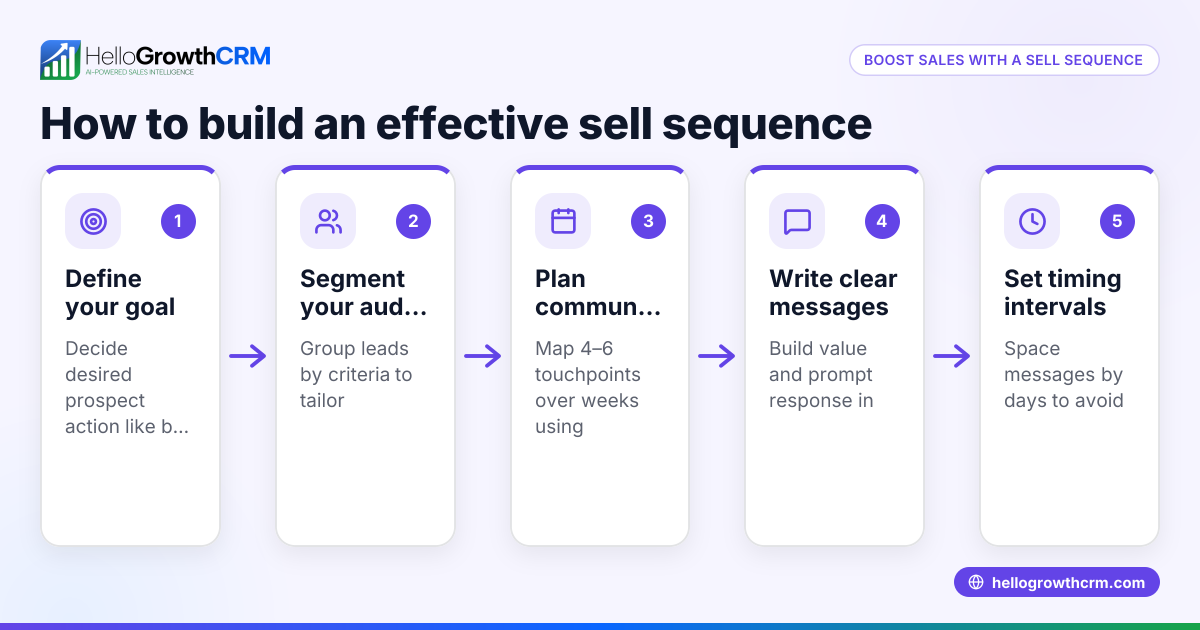
- Define your follow-up goal: Decide what you want to achieve with each follow-up message (e.g., schedule a meeting, answer questions, send a quote).
- Plan the number of follow-ups and timeline: Typically, 4 to 5 follow-ups over 10 to 14 days work well to keep the lead engaged without being pushy.
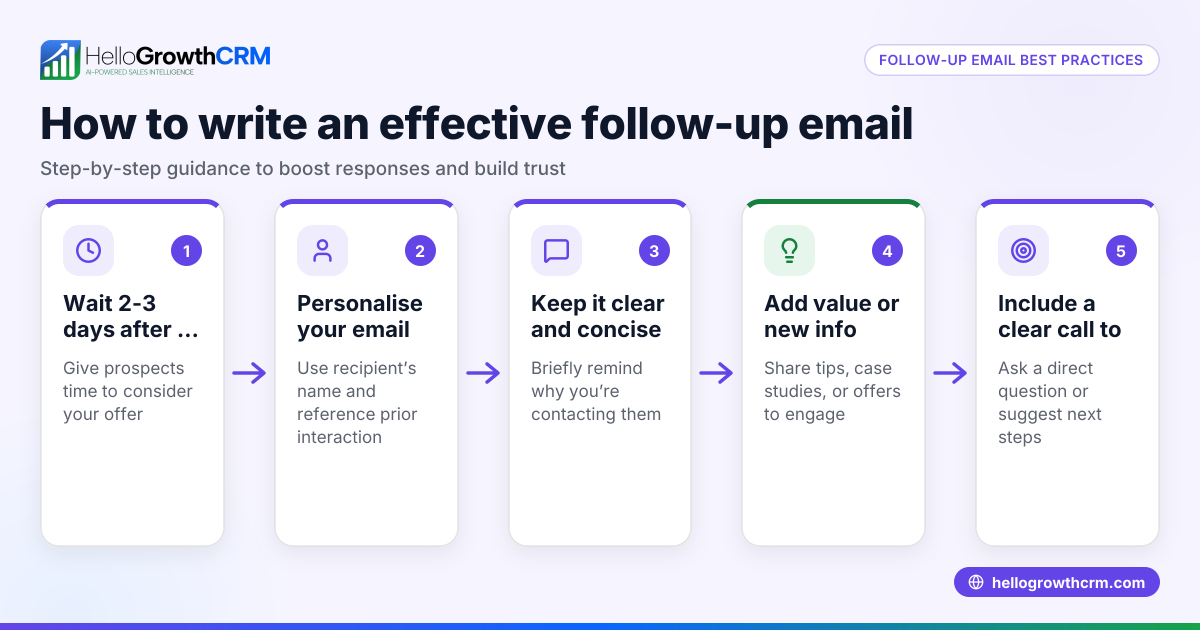
- Draft follow-up messages for each step: Write concise, personalised messages tailored to the lead’s stage. Include a clear call to action.
- Choose communication channels: Decide whether to use email, WhatsApp, SMS, or calls for each step based on what your leads prefer.
- Set timing between follow-ups: Space out your messages logically, for example:
- Day 1: Initial follow-up
- Day 3: Reminder
- Day 7: Value add or case study
- Day 10: Final check-in
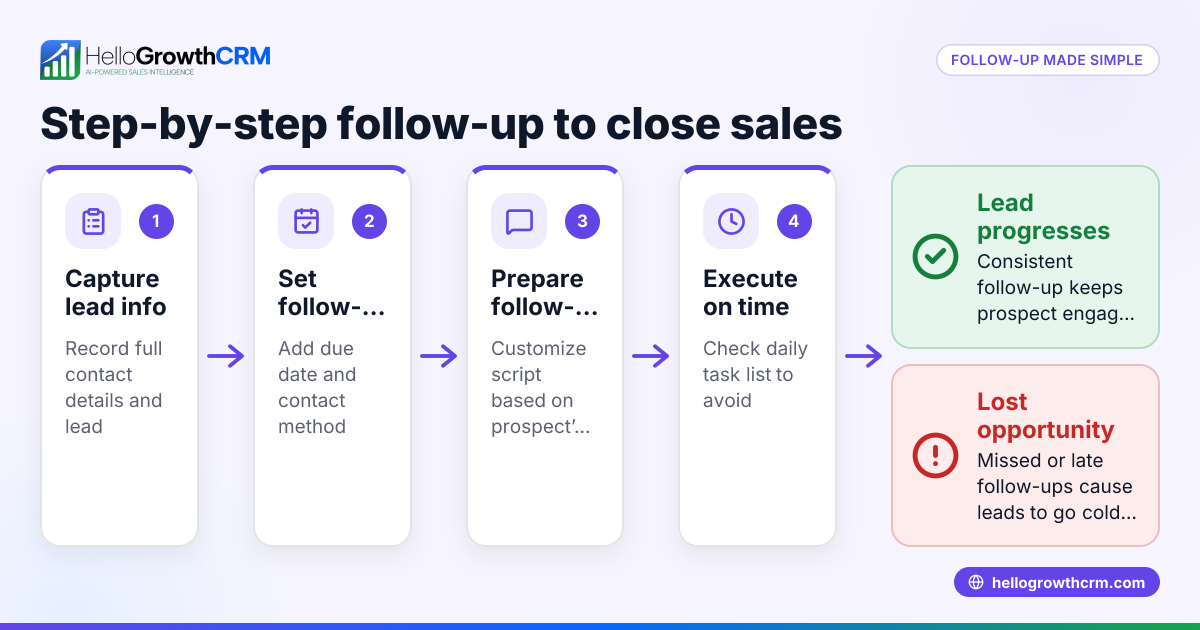
- Assign tasks and due dates: Make each follow-up a task with a deadline for your sales team to ensure accountability.
- Track responses and stop when the lead replies: Automatically or manually pause the sequence once the lead engages.
- Review and adjust: Analyse what works and refine your messages and timing accordingly.
Check that your messages are clear, polite, and focused on the lead’s needs. Avoid overwhelming them with too many follow-ups or irrelevant content.
For managing these tasks and sequences, consider tools that help organise follow-ups and automate messaging. See sales task boards and email automation and sequences for more on this.
Example (fictional figures)
A Wellington electrical contractor, "Welly Electrics Ltd," wants to follow up on new leads who requested a quote.
- Goal: Schedule an on-site visit
- Timeline: 5 follow-ups over 12 days
Follow-up schedule:
- Day 1 (10/04/2024): Email thanking for enquiry and offering to schedule a visit
- Day 3 (12/04/2024): WhatsApp message reminder
- Day 6 (15/04/2024): SMS sharing a customer testimonial
- Day 9 (18/04/2024): Phone call attempt
- Day 12 (21/04/2024): Final email with a special offer
Costs and time:
- Time per follow-up: 10 minutes
- Total time: 5 × 10 = 50 minutes
If the contractor values a new job at NZ$2,500 and expects a 20% conversion from follow-ups:
NZ$2,500 × 20% = NZ$500 expected revenue per lead
By following up 5 leads, expected revenue:
NZ$500 × 5 = NZ$2,500
This shows how a structured follow-up can translate into measurable business value.
Common mistakes
- Sending too many messages too quickly: Leads may feel spammed. Prevent this by spacing follow-ups at least 2-3 days apart.
- Using the same generic message each time: Personalise messages to keep leads engaged.
- Not tracking follow-up tasks: Leads get forgotten. Use task boards to assign and monitor follow-ups.
- Ignoring lead responses: Stop the sequence immediately when a lead replies to avoid annoying them.
- Failing to review and improve: Regularly analyse which messages get responses and adjust your approach.
Avoid these by using organised task management and reviewing your sequence effectiveness regularly, as explained in sales task boards.
Doing this in HelloGrowthCRM
HelloGrowthCRM offers sequences and campaigns that automate a five-step follow-up over two weeks, stopping the moment the prospect replies. Each follow-up becomes a task with a due date, so your team sees the day's calls as a clear list, not a memory test. Additionally, AI agents can draft follow-up messages after calls for your sales reps to review and send, saving time. Learn more about these features at HelloGrowthCRM for New Zealand.
Frequently asked questions
How often should I follow up with a sales lead? A good rule is 4 to 5 follow-ups over about two weeks, spacing messages every 2-3 days. This keeps interest without overwhelming the lead.
What channels work best for follow-up in New Zealand? Email, WhatsApp, SMS, and phone calls are effective. Choose based on your lead’s preferences and your business type.
How do I know when to stop following up? Stop the sequence immediately when the lead replies or shows clear interest. Continuing after a response can annoy leads.
Can I automate follow-up sequences? Yes, tools like HelloGrowthCRM automate multi-step sequences and task assignments, helping your team stay organised and responsive.
What should I include in follow-up messages? Keep messages clear, personalised, and focused on the lead’s needs, with a specific call to action like booking a meeting or answering questions.
Key takeaways
- Plan 4-5 follow-ups over 10-14 days with clear goals for each message.
- Use multiple channels like email, WhatsApp, SMS, and calls based on lead preference.
- Assign tasks with deadlines to ensure timely follow-ups.
- Stop the sequence as soon as the lead replies.
- Regularly review and improve your sequence based on response rates.
- Use tools like HelloGrowthCRM to automate and organise follow-ups effectively.
Start your sales follow-up sequence today with confidence. To try automating your follow-ups and managing tasks easily, start on the Free Forever plan (200 leads, no credit card).
Ready to put this into practice?
Set up your pipeline, WhatsApp follow-ups, and AI lead scoring in minutes — free, no credit card.
Try HelloGrowthCRM freeGet CRM tips in your inbox
Join thousands of sales professionals who get weekly insights on CRM strategy, AI automation, and pipeline optimization.

The HelloGrowthCRM team publishes guides on CRM strategy, AI sales tools, and revenue operations for small business sales teams.