HelloGrowthCRM software
Built for real small-business sales teams
HelloGrowthCRM helps reps qualify faster, follow up on time, and close more deals—with practical automation in one place.
- AI lead scoring and pipeline visibility
- Built-in dialer, WhatsApp, and email automation
- Sales forecasting and RevOps-ready reporting
Creating a sales pipeline is essential for managing your sales process clearly and efficiently. This guide explains how to build a sales pipeline tailored to a US small or mid-sized business, with practical steps, a fictional example, common mistakes to avoid, and a brief overview of how HelloGrowthCRM can help.
Why this comes up / what goes wrong
Many small business owners in the US struggle with sales follow-up because they rely on scattered tools like text messages, emails, and spreadsheets. Without a clear sales pipeline, leads fall through the cracks, deals stall, and sales forecasting becomes guesswork. A structured pipeline organizes your sales process into stages, helping your team know what to do next and ensuring no opportunity is forgotten.
Step-by-step
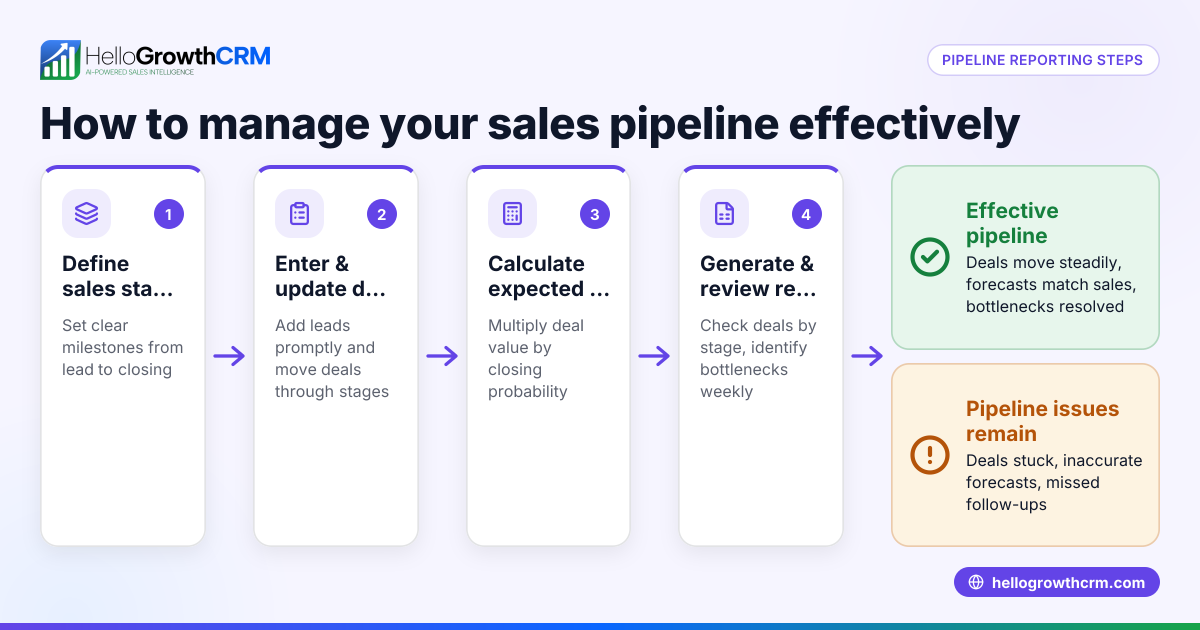
- Define your sales stages: Identify key steps from first contact to closing the sale. Typical stages include Lead Captured, Contacted, Qualified, Proposal Sent, Negotiation, and Closed (Won or Lost). Check that these stages reflect your actual sales process.
- Set clear criteria for each stage: Specify what qualifies a deal to move from one stage to the next. For example, "Qualified" means the prospect has budget and authority. This helps maintain consistency.
- Capture leads systematically: Use web forms, email inquiries, or direct contacts to enter leads into your pipeline. Check that each lead has essential info like contact details and source.
- Assign follow-up tasks and deadlines: For every deal, set a next action (call, email, meeting) with a due date. This prevents deals from stalling.
- Update deal status regularly: After each interaction, move the deal to the appropriate stage and update notes. Check that no deal stays too long in one stage without progress.
- Track deal values and probabilities: Assign expected deal amounts and likelihood of closing at each stage. This helps with forecasting.
- Review and analyze your pipeline weekly: Look for bottlenecks or stalled deals. Adjust your process or focus resources accordingly.
- Train your team on pipeline use: Make sure everyone understands the stages, criteria, and how to update deals.
- Use pipeline data for forecasting: Combine deal values and probabilities to estimate future revenue.
- Continuously improve your pipeline: Refine stages, criteria, and follow-up based on results and feedback.
For more on pipeline forecasting and AI insights, see sales forecasting.
Example (fictional figures)
A B2B software reseller in Denver, Colorado, builds a sales pipeline starting 05/01/2024 with these stages: Lead Captured, Contacted, Qualified, Proposal Sent, Negotiation, Closed Won, Closed Lost.
- On 05/01/2024, they capture 3 leads valued at $10,000, $15,000, and $25,000.
- Lead 1 moves to Contacted with 50% probability.
- Lead 2 moves to Qualified with 70% probability.
- Lead 3 moves to Proposal Sent with 90% probability.
Calculating expected revenue:
$10,000 × 50% = $5,000
$15,000 × 70% = $10,500
$25,000 × 90% = $22,500
Total expected revenue = $5,000 + $10,500 + $22,500 = $38,000
This pipeline view helps the owner forecast $38,000 in potential revenue from current deals.
Common mistakes
- Skipping clear stage definitions: Without clear criteria, deals get stuck or move prematurely. Prevent this by documenting and training on stage rules.
- Failing to update deal status promptly: Leads to outdated pipeline views. Prevent by assigning responsibility and setting reminders.
- Ignoring follow-up tasks: Deals stall without next steps. Prevent by making task assignment mandatory.
- Overcomplicating the pipeline: Too many stages confuse the team. Prevent by keeping stages simple and relevant.
- Not reviewing pipeline regularly: Bottlenecks go unnoticed. Prevent by scheduling weekly pipeline reviews.
- Relying on manual spreadsheets only: Increases errors and lost leads. Prevent by using dedicated CRM tools like HelloGrowthCRM.
See how HelloGrowthCRM helps avoid these mistakes with AI CRM.
Doing this in HelloGrowthCRM
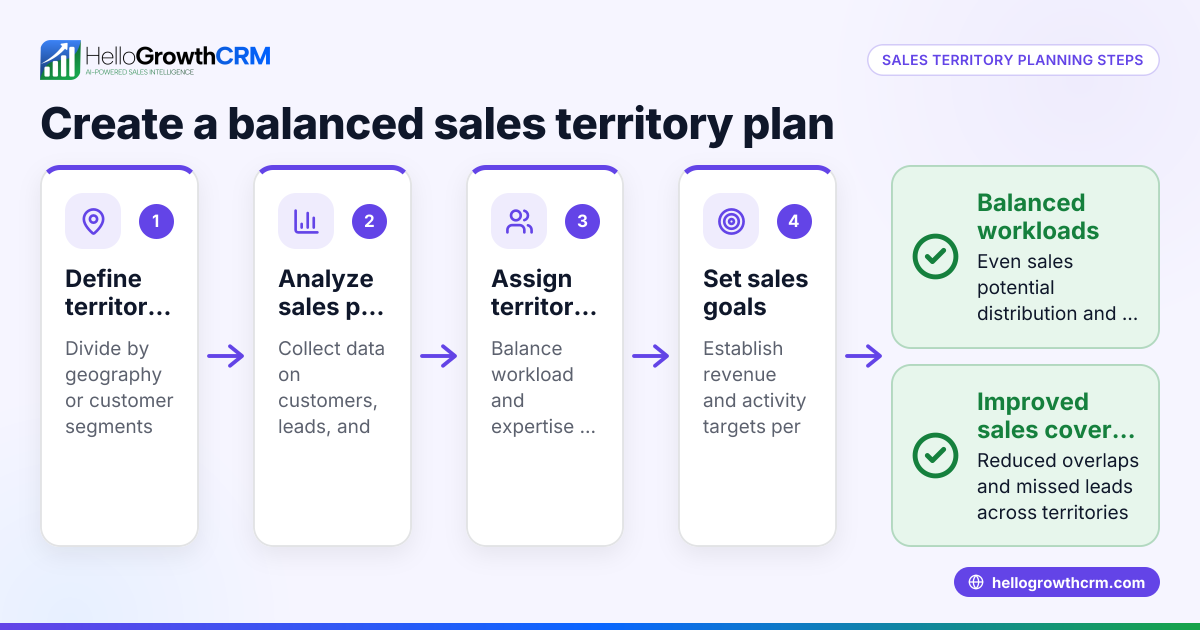
HelloGrowthCRM offers Deals (pipeline) to track open opportunities from first contact through close, with stage movement, probability, and expected value. For example, a quotation sent last week appears as a deal at the 'quote sent' stage with a follow-up date, ensuring it is not forgotten. The pipeline forecast and AI insights feature helps owners see which stage deals are stalling without building spreadsheets. For businesses with field sales teams, territories and field operations tools allow reps to log visits from their phones, and managers can view the day's beat. Learn more about HelloGrowthCRM for the United States at hellogrowthcrm.com/usa.
Frequently asked questions
What stages should I include in my sales pipeline? Your stages should reflect your actual sales process. Common stages include Lead Captured, Contacted, Qualified, Proposal Sent, Negotiation, and Closed (Won or Lost). Make sure each stage has clear criteria for moving deals forward.
How often should I update my sales pipeline? Update your pipeline after every significant interaction with a prospect. Regular updates keep your sales forecast accurate and prevent deals from stalling.
Can I use a spreadsheet instead of a CRM for my sales pipeline? While spreadsheets can work for very small teams, they often lead to errors and missed follow-ups as your business grows. A CRM like HelloGrowthCRM helps automate tracking, follow-ups, and forecasting.
How does AI help with sales pipeline management? AI can analyze your pipeline data to forecast revenue, identify stalled deals, and provide insights on rep performance, helping you focus your efforts effectively.
How do I ensure my sales team uses the pipeline consistently? Provide clear training, set expectations for updates, and regularly review pipeline data in team meetings. Tools like HelloGrowthCRM make pipeline updates easy and visible.
Key takeaways
- Define clear sales stages and criteria based on your process.
- Capture leads systematically and assign follow-up tasks with deadlines.
- Update deal status regularly to keep the pipeline accurate.
- Use deal values and probabilities for revenue forecasting.
- Review your pipeline weekly to spot bottlenecks and improve.
- Avoid common mistakes by training your team and using CRM tools.
Start managing your sales pipeline effectively today with HelloGrowthCRM. Start on the Free Forever plan (200 leads, no credit card).
Ready to put this into practice?
Set up your pipeline, WhatsApp follow-ups, and AI lead scoring in minutes — free, no credit card.
Try HelloGrowthCRM freeGet CRM tips in your inbox
Join thousands of sales professionals who get weekly insights on CRM strategy, AI automation, and pipeline optimization.

The HelloGrowthCRM team publishes guides on CRM strategy, AI sales tools, and revenue operations for small business sales teams.