HelloGrowthCRM software
Built for real small-business sales teams
HelloGrowthCRM helps reps qualify faster, follow up on time, and close more deals—with practical automation in one place.
- AI lead scoring and pipeline visibility
- Built-in dialer, WhatsApp, and email automation
- Sales forecasting and RevOps-ready reporting
To follow up with course applicants in New Zealand effectively, contact each applicant promptly after their initial enquiry, schedule follow-up tasks with clear due dates, and use personalised messages to keep them engaged. This article covers why follow-up matters, detailed steps to follow, a worked example with NZD figures, common mistakes to avoid, and how HelloGrowthCRM features support this process.
Why this comes up / what goes wrong
Small business owners running courses in New Zealand often struggle to convert applicants into enrolled students because follow-up is inconsistent or slow. Many rely on text messages, emails, or spreadsheets without a clear system, leading to missed leads or forgotten applicants. Without scheduled reminders or personalised follow-ups, applicants can lose interest or choose competitors. This wastes marketing spend and lowers course fill rates.
Step-by-step
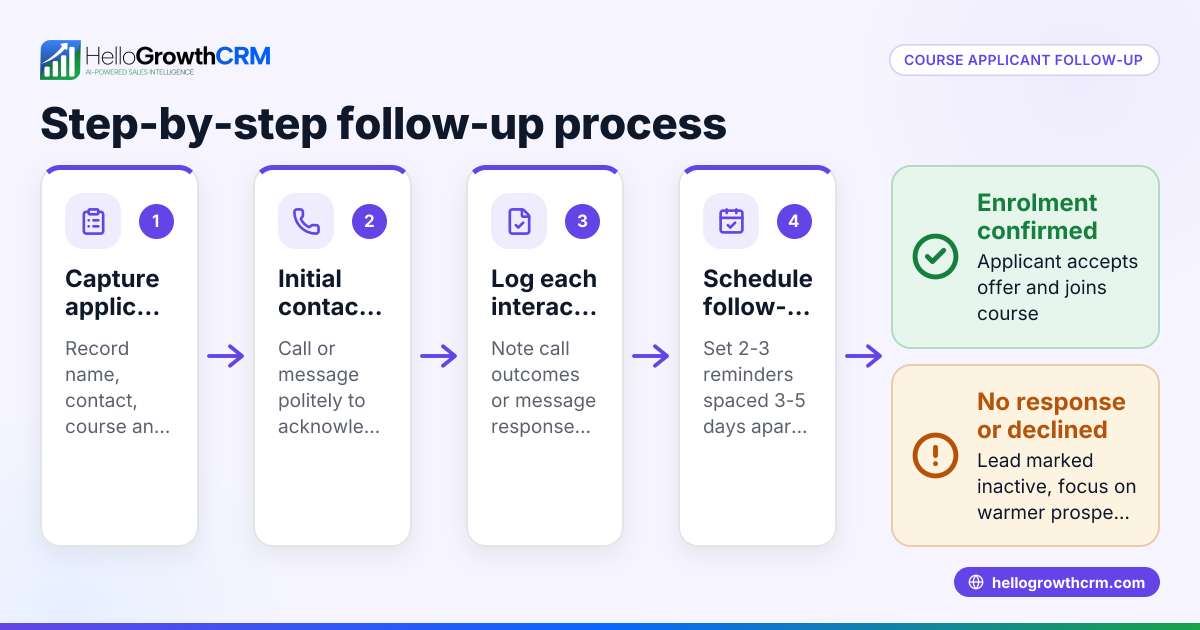
- Collect applicant details accurately: Ensure you capture full name, contact number, email, course of interest, and date of application.
- Initial contact within 24 hours: Call or message each applicant to confirm receipt of their application and answer any questions.
- Schedule a follow-up task: Set a clear due date for the next contact, typically 3-5 days after the initial contact.
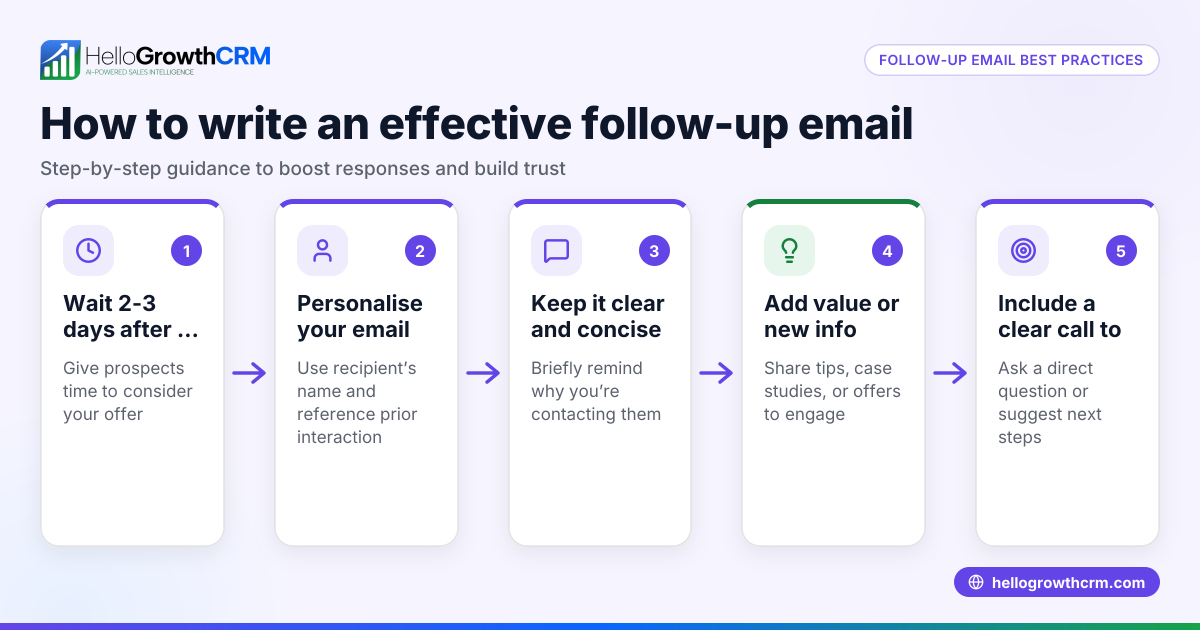
- Send personalised follow-up messages: Use email or WhatsApp to remind applicants of course benefits, upcoming start dates, and answer FAQs.
- Track responses and update records: Mark applicants as contacted, interested, or not interested to prioritise further follow-ups.
- Second follow-up after one week: Contact those who haven’t responded with a gentle reminder and offer to help with enrolment.
- Final follow-up two weeks after application: Send a last message highlighting limited spots or closing enrolment dates.
- Record every interaction: Log calls, messages, and notes to avoid duplication and maintain context.
Check at each step that contact details are correct and that the applicant’s status is updated. Keep the tone helpful and professional.
Example (fictional figures)
A Queenstown tourism operator runs a guided photography course starting 01/08/2024. On 15/07/2024, 20 applicants submit applications.
- Initial contact call on 16/07/2024: 20 calls made.
- Schedule follow-up tasks for 20/07/2024 (4 days later).
- On 20/07/2024, send personalised WhatsApp messages reminding applicants about the course start date and benefits.
- Second follow-up calls on 23/07/2024 to applicants who did not reply (10 people).
- Final follow-up email on 29/07/2024 highlighting limited spots.
Costs:
- Staff time per call: 5 minutes × 30 calls = 150 minutes = 2.5 hours
- Staff hourly rate: NZ$30
- Total call cost = 2.5 × NZ$30 = NZ$75
- Messaging cost: negligible if using WhatsApp/SMS included in plan
This schedule ensures all 20 applicants are contacted multiple times, increasing enrolment chances.
Common mistakes
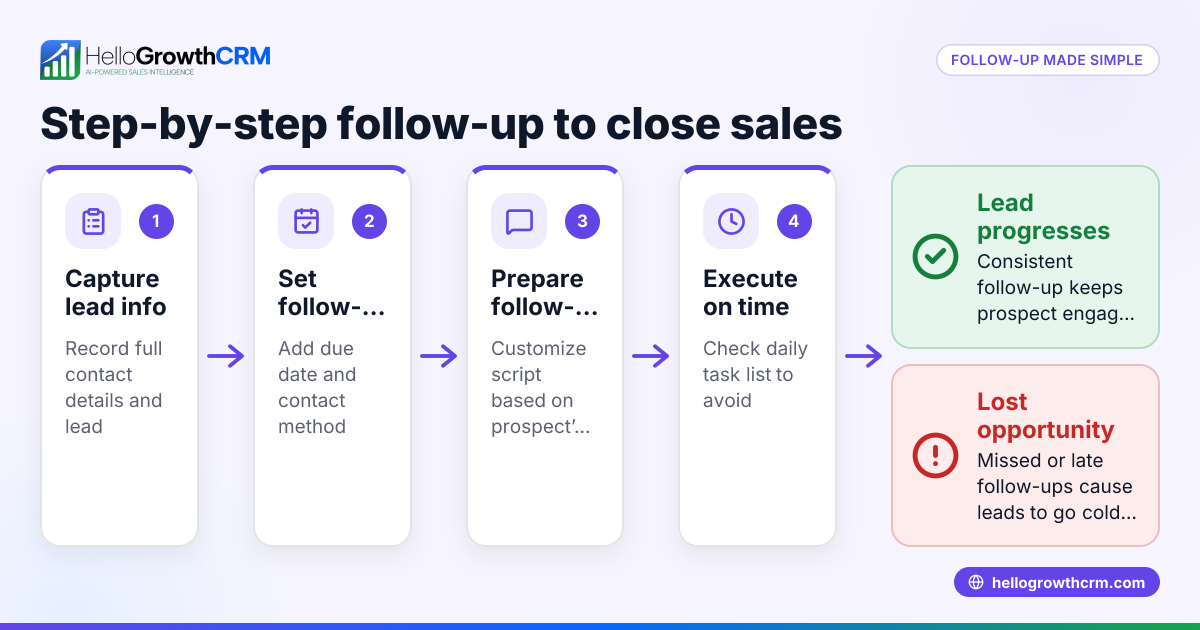
- Delaying initial contact: Contact applicants within 24 hours to keep interest high. Use task boards to avoid delays (sales task boards).
- Using generic messages: Personalise follow-ups to the applicant’s course interest to show you value them.
- Forgetting to log interactions: Always record calls and messages to track progress and avoid repeated outreach.
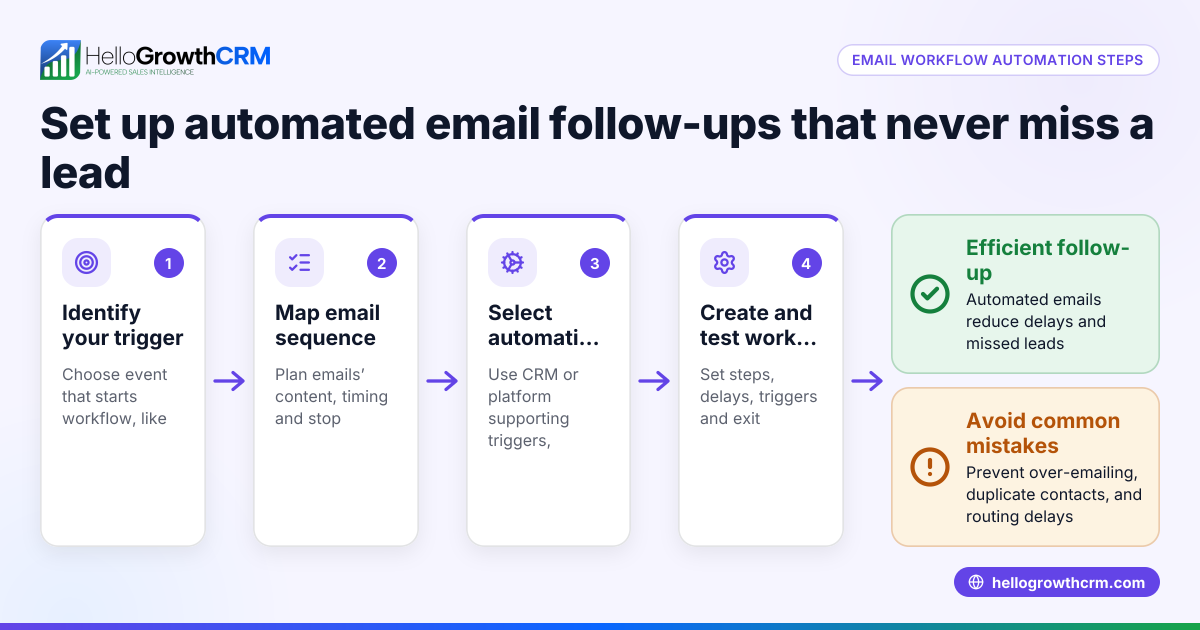
- Failing to schedule follow-ups: Without set due dates, leads slip through the cracks. Automated sequences help keep timing consistent (email automation and sequences).
- Ignoring applicant responses: Stop follow-ups once an applicant replies to avoid annoyance.
Doing this in HelloGrowthCRM
HelloGrowthCRM helps by turning each follow-up into a task with a due date, so your team sees the day’s calls as a list, not a memory test. Automated sequences can run a five-step follow-up over two weeks, sending messages on email, WhatsApp, or SMS until the applicant responds. AI agents (in beta) draft follow-up messages after calls, letting your team review and send quickly. Learn more about these features on sales task boards, email automation and sequences, and HelloGrowthCRM for New Zealand.
Frequently asked questions
How soon should I follow up with course applicants? Contact applicants within 24 hours of their application to keep their interest and answer questions while they are fresh. This improves conversion rates.
What is the best way to follow up—call, email, or message? Use a mix: start with a call or WhatsApp message, then follow up by email or SMS. Personalised WhatsApp messages are effective and widely used in New Zealand.
How many follow-ups are appropriate before stopping? Typically, a sequence of 3-5 follow-ups over two weeks works well. Stop immediately if the applicant replies or declines.
How can I keep track of all follow-ups without missing anyone? Use a CRM with task boards to schedule calls and messages, log every interaction, and get daily to-do lists. HelloGrowthCRM offers these tools to keep your team organised.
Can I automate follow-ups without losing personal touch? Yes. Automated sequences can send personalised messages based on applicant data and stop when the applicant replies, maintaining relevance and respect.
Key takeaways
- Contact course applicants within 24 hours to maintain their interest.
- Schedule follow-up tasks with clear due dates to stay organised.
- Use personalised messages via WhatsApp, email, or SMS for better engagement.
- Log every interaction to avoid duplicate or missed contacts.
- Automate follow-ups with sequences that stop when applicants respond.
- Use a CRM with task boards and automation to manage leads effectively.
Start following up with your course applicants confidently today. Start on the Free Forever plan (200 leads, no credit card) with HelloGrowthCRM to organise your follow-ups and improve enrolments.
Ready to put this into practice?
Set up your pipeline, WhatsApp follow-ups, and AI lead scoring in minutes — free, no credit card.
Try HelloGrowthCRM freeGet CRM tips in your inbox
Join thousands of sales professionals who get weekly insights on CRM strategy, AI automation, and pipeline optimization.

The HelloGrowthCRM team publishes guides on CRM strategy, AI sales tools, and revenue operations for small business sales teams.