HelloGrowthCRM software
Built for real small-business sales teams
HelloGrowthCRM helps reps qualify faster, follow up on time, and close more deals—with practical automation in one place.
- AI lead scoring and pipeline visibility
- Built-in dialer, WhatsApp, and email automation
- Sales forecasting and RevOps-ready reporting
To follow up with unresponsive prospects in India, schedule 4-5 polite follow-ups spaced 3-4 days apart using calls, WhatsApp messages, and emails. Keep messages concise and personalized, log every attempt, and stop follow-ups immediately after a response. This article explains why prospects go silent, provides detailed step-by-step instructions, a worked example with Indian figures, common mistakes to avoid, and how HelloGrowthCRM can help automate the process.
Why this comes up / what goes wrong
Small-business owners and sales teams in India often struggle with unresponsive prospects because they lack a clear follow-up system. Many rely on WhatsApp chats, phone call memories, or Excel sheets, which can lead to missed follow-ups or inconsistent communication. Prospects may be busy, indecisive, or overwhelmed with options, so they delay or avoid replying. Without a structured plan and reminders, leads slip away unnoticed, causing lost sales and wasted effort.
Step-by-step
- Identify unresponsive prospects: Review your lead list and mark those who have not replied after your initial contact or proposal.
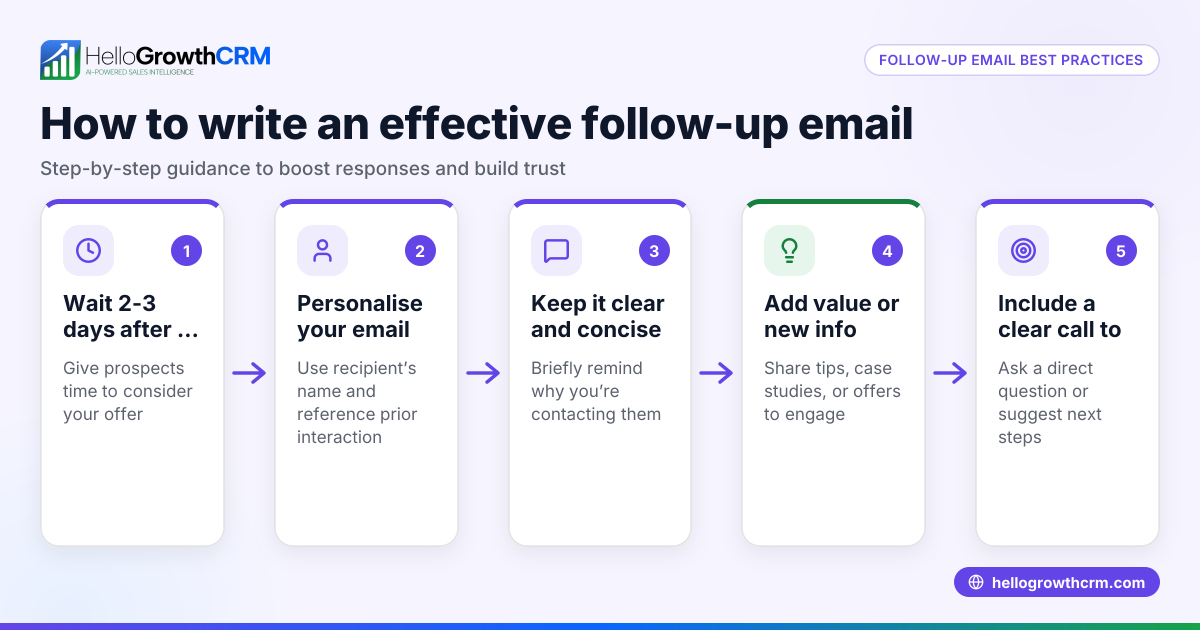
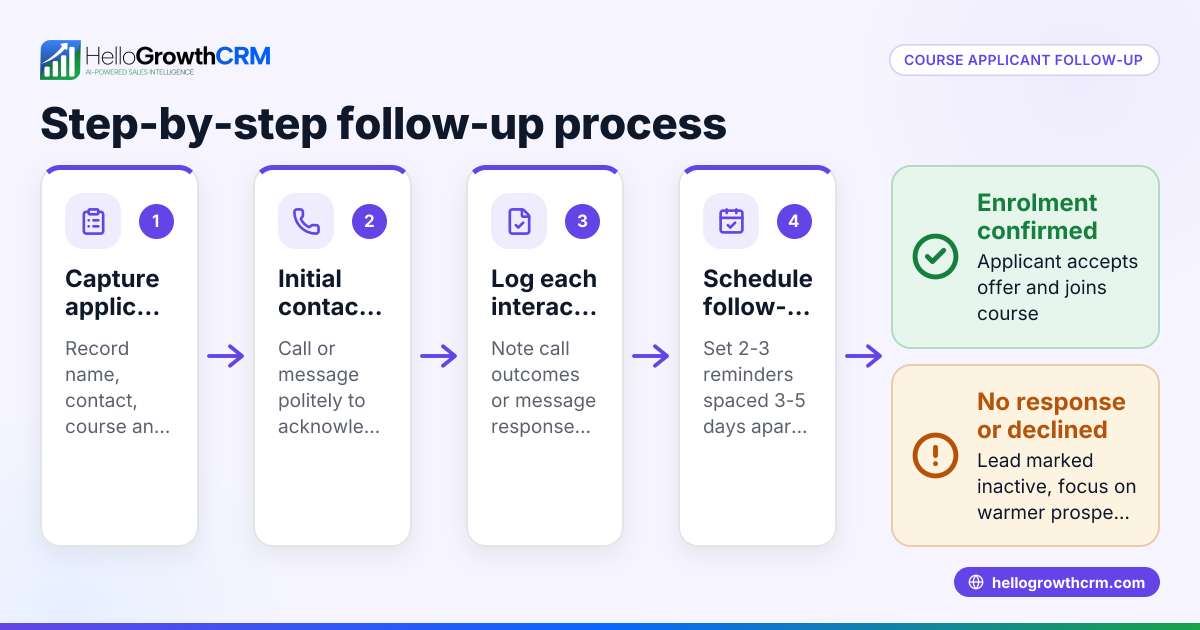
- Set a follow-up schedule: Plan 4 to 5 follow-ups over a period of two weeks. Space them every 3 to 4 days to stay on the prospect’s radar without being intrusive.
- Select communication channels: Use a combination of calls, WhatsApp messages, and emails. Begin with a call or WhatsApp message for a personal touch, then follow with an email if there is no response.
- Draft clear, polite messages: Each message should be concise, respectful, and focused on the prospect’s needs. Reference your earlier conversation or proposal and offer assistance or answers.
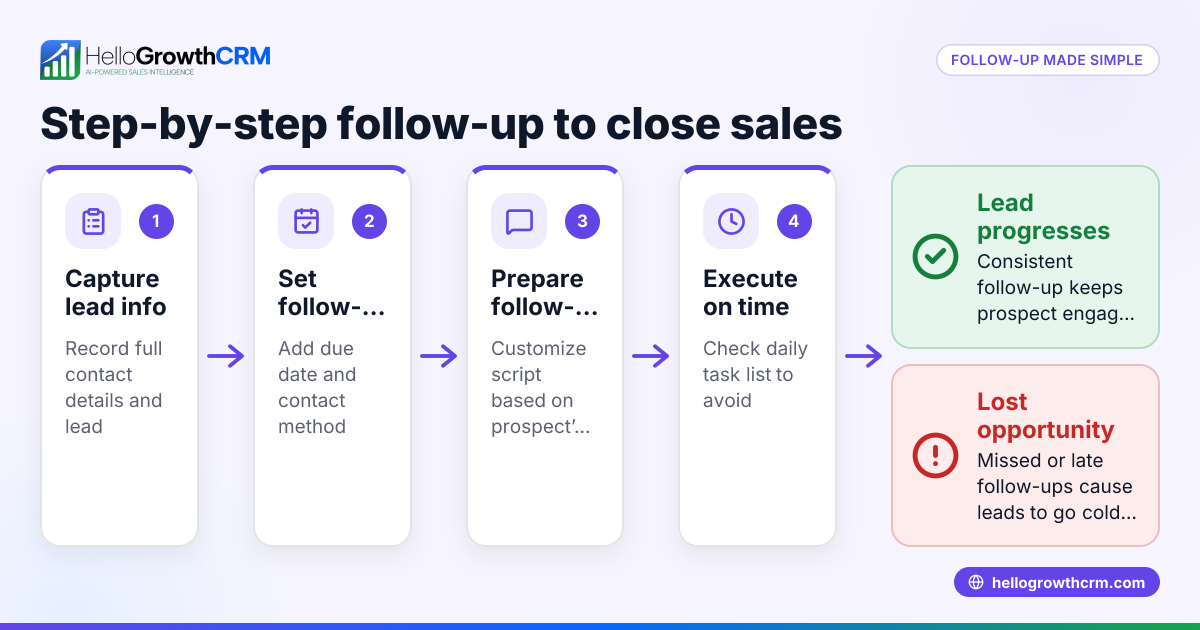
- Log every follow-up attempt: Keep detailed notes of calls made, messages sent, and any responses. This prevents repeating the same message and helps tailor future communication.
- Use reminders and task boards: Assign due dates for each follow-up to ensure timely outreach. This avoids forgetting or delaying important contacts.
- Stop follow-ups once a response arrives: When the prospect replies, pause the sequence immediately and engage based on their feedback.
- Evaluate unresponsive leads after two weeks: Decide whether to mark them as cold, schedule a later re-engagement, or remove them from active follow-up.
Using tools like sales task boards can help you organize and track these follow-ups efficiently.
Example (fictional figures)
Sunita owns a small textile business in Surat. On 01/04/2024, she sends a quotation of ₹2,00,000 to a potential customer. The customer does not respond.
- Day 1 (01/04/2024): Sent initial quote of ₹2,00,000.
- Day 4 (04/04/2024): Made a follow-up call; no answer.
- Day 7 (07/04/2024): Sent a WhatsApp message: “Hello, just checking if you had a chance to review the quote of ₹2,00,000. Please let me know if you have any questions.”
- Day 10 (10/04/2024): Emailed product brochures and wrote, “Happy to clarify any details or assist you further.”
- Day 14 (14/04/2024): Final follow-up call made; prospect answered and requested a meeting.
Calculations for follow-up intervals:
Day 4 - Day 1 = 3 days
Day 7 - Day 4 = 3 days
Day 10 - Day 7 = 3 days
Day 14 - Day 10 = 4 days
This schedule spaces follow-ups every 3 to 4 days, maintaining contact without overwhelming the prospect.
Common mistakes
- Following up too frequently or too infrequently: Avoid daily follow-ups or waiting more than a week between attempts. Stick to a 3-4 day interval to balance persistence and respect.
- Using only one communication channel: Relying solely on WhatsApp or calls limits your reach. Mix calls, WhatsApp, and emails to improve chances of a reply.
- Not logging follow-ups: Without recording each attempt, you risk repeating messages or missing follow-ups. Use task boards to track every contact.
- Being pushy or generic: Avoid aggressive or copy-paste messages. Personalize communication and keep a polite tone to maintain a good relationship.
- Continuing follow-ups after a response: Once the prospect replies, stop automated follow-ups immediately to avoid frustration.
Using email automation and sequences can help you automate polite, timed follow-ups and reduce errors.
Doing this in HelloGrowthCRM
HelloGrowthCRM offers features to manage follow-ups efficiently. Activities and task boards let you create follow-up tasks with due dates so your team knows exactly which calls or messages to make daily, avoiding missed contacts. Sequences and campaigns allow you to automate a five-step follow-up over two weeks, sending messages across email, WhatsApp, and SMS until the prospect replies, at which point the sequence stops. AI agents (currently in Beta) can draft follow-up messages after calls, so sales reps only need to review and send, saving time and ensuring consistent communication.
Learn more about these features at HelloGrowthCRM for India.
Frequently asked questions
How many times should I follow up with an unresponsive prospect? Four to five follow-ups spaced over two weeks are generally effective. This approach balances being persistent without overwhelming the prospect.
What is the best time to follow up with prospects in India? Mid-morning (10-11 AM) and mid-afternoon (3-4 PM) on weekdays are usually good times. Avoid early mornings, lunch hours, and late evenings for better chances of response.
Should I use WhatsApp or email for follow-ups? Use both channels. Start with WhatsApp or calls for a personal touch, then send emails for detailed information or attachments.
How can I keep track of follow-ups without getting overwhelmed? Use task boards to assign due dates and reminders for each follow-up. This helps you stay organized and prevents missed or repeated attempts.
What if a prospect never responds after all follow-ups? After your planned sequence, mark the lead as cold but keep their contact for future campaigns or re-engagement efforts.
Key takeaways
- Plan 4-5 polite follow-ups over two weeks spaced 3-4 days apart.
- Use a mix of calls, WhatsApp messages, and emails for better engagement.
- Log every follow-up attempt and use task boards to stay organized.
- Personalize messages and stop follow-ups immediately after a response.
- Automate follow-ups with sequences and AI agents in HelloGrowthCRM for efficiency.
Start your follow-ups today with a clear plan and stay consistent. To manage this process easily, Start on the Free Forever plan (200 leads, no credit card) with HelloGrowthCRM.
Ready to put this into practice?
Set up your pipeline, WhatsApp follow-ups, and AI lead scoring in minutes — free, no credit card.
Try HelloGrowthCRM freeGet CRM tips in your inbox
Join thousands of sales professionals who get weekly insights on CRM strategy, AI automation, and pipeline optimization.

The HelloGrowthCRM team publishes guides on CRM strategy, AI sales tools, and revenue operations for small business sales teams.