HelloGrowthCRM software
Built for real small-business sales teams
HelloGrowthCRM helps reps qualify faster, follow up on time, and close more deals—with practical automation in one place.
- AI lead scoring and pipeline visibility
- Built-in dialer, WhatsApp, and email automation
- Sales forecasting and RevOps-ready reporting
Generating B2B sales leads in Singapore requires a clear process tailored to your business and market. You must identify potential customers, capture their contact details, qualify leads effectively, and maintain timely follow-up to convert them into sales. This article guides you through each step with practical instructions, a realistic example, common pitfalls, and how HelloGrowthCRM can help you manage leads efficiently.
Why this comes up / what goes wrong
Small and mid-sized business owners in Singapore often struggle to generate consistent B2B sales leads because they rely on manual methods such as spreadsheets, WhatsApp chats, or email threads. These methods cause delays, lost leads, and missed follow-ups. Without a clear, repeatable process, sales teams waste time chasing low-quality leads or forgetting to follow up on promising enquiries. This results in lost sales opportunities and slow business growth.
Step-by-step
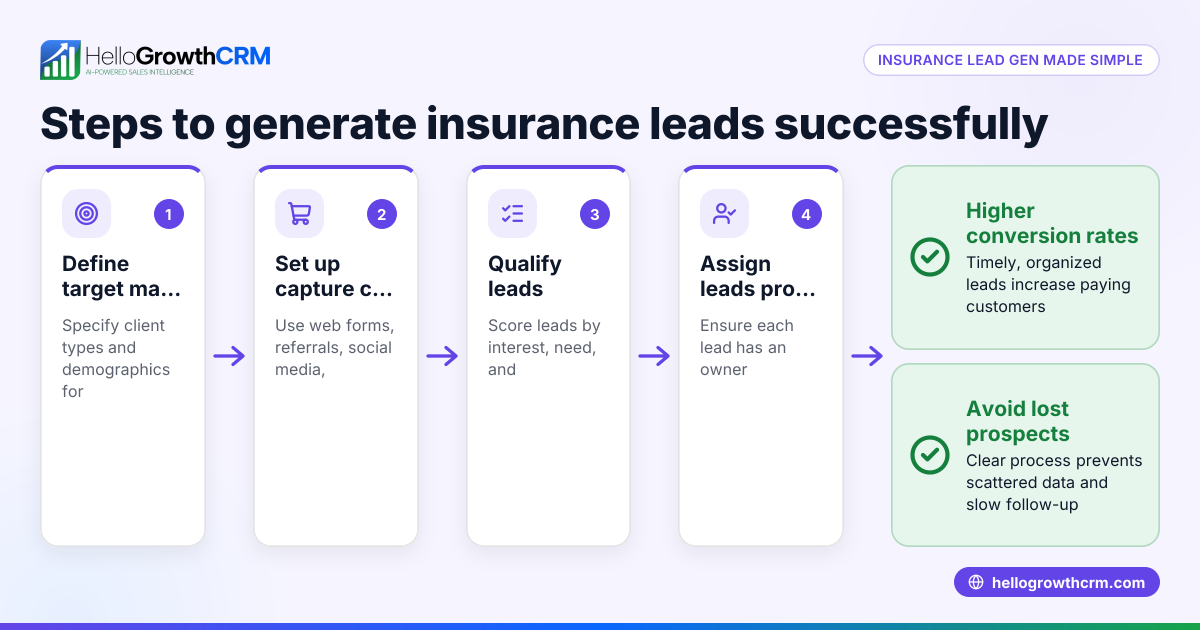
- Define your target market: Specify the industry sectors, company sizes, and decision-maker roles you want to reach in Singapore. For example, if you sell office equipment, target SMEs with 10-100 employees in the central business district.
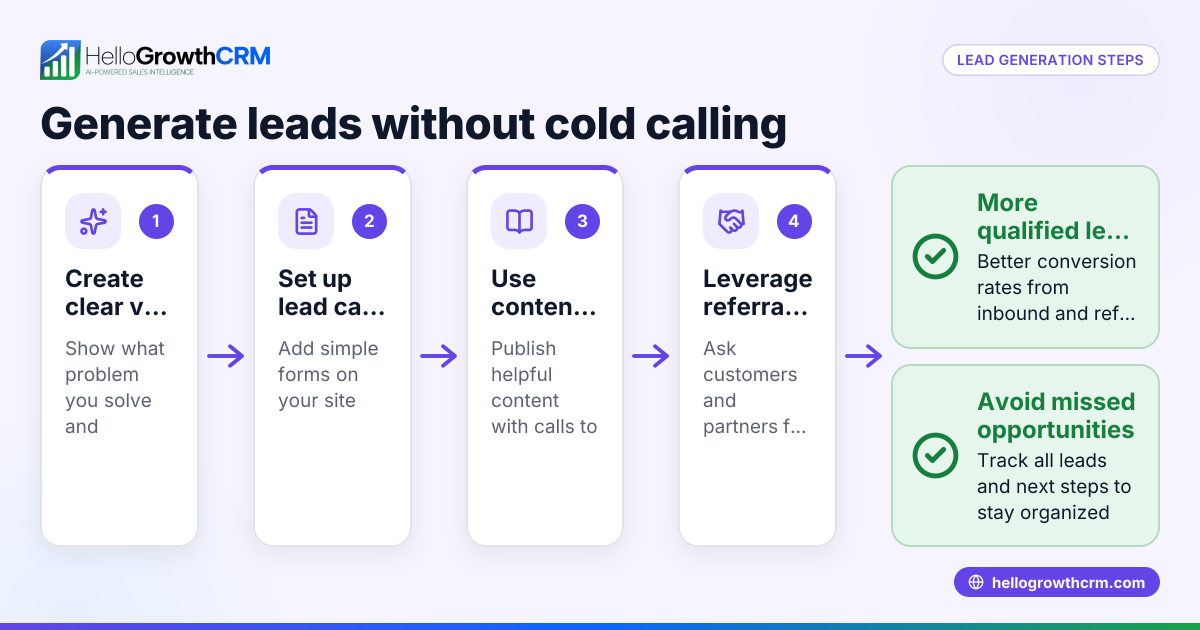
- Create lead capture channels: Set up web forms on your website, LinkedIn lead gen forms, or WhatsApp Business links where prospects can easily enquire. Ensure forms collect essential data like name, company, email, phone number, and enquiry details.
- Drive traffic to your lead forms: Use LinkedIn ads targeting your chosen sectors, Google Ads with relevant keywords, or email campaigns to your existing contacts. Monitor which channels bring the most enquiries.
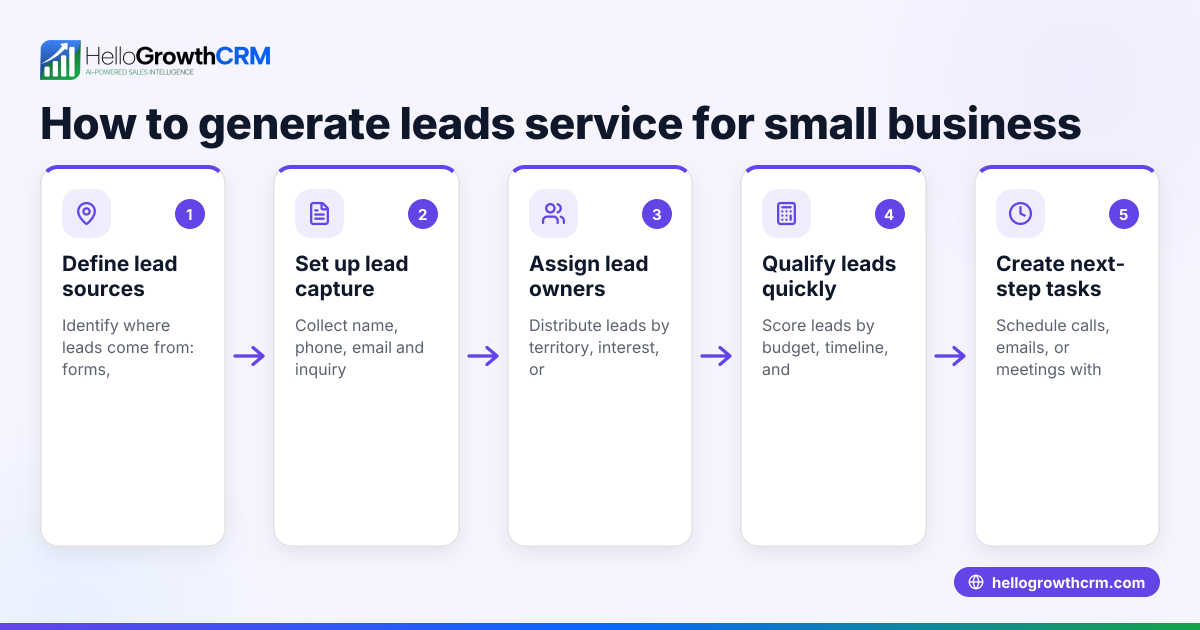
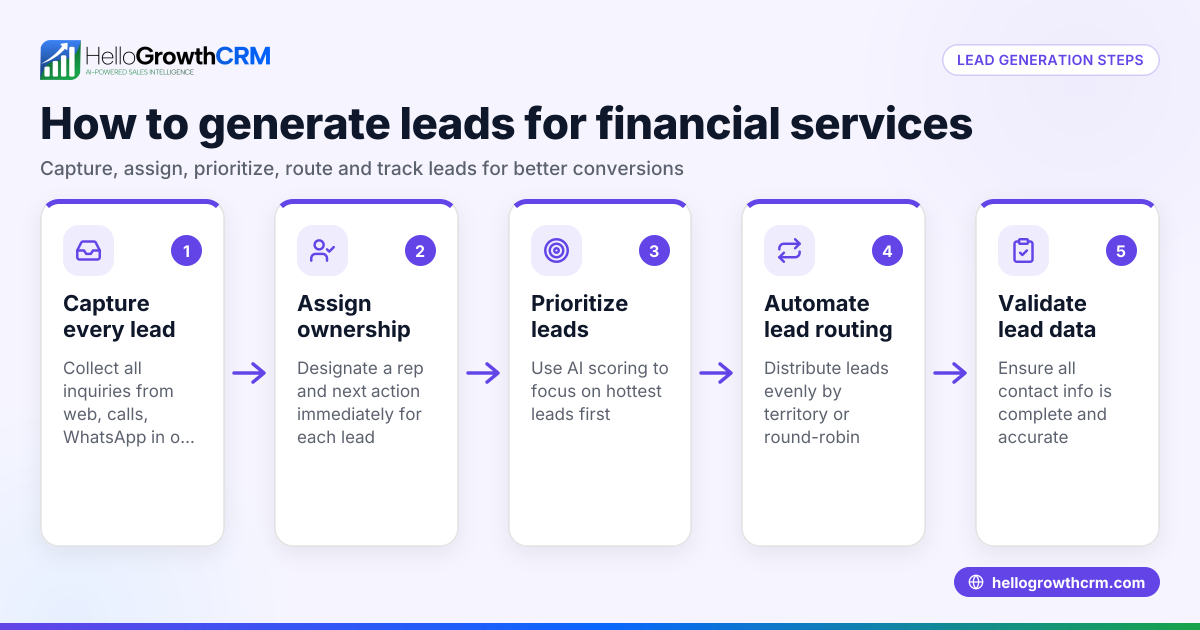
- Capture leads and assign ownership: When leads come in, record them immediately with an owner responsible for follow-up. Avoid manual logging by using a CRM or a system that automatically assigns leads.
- Qualify leads quickly: Contact new leads within 24 hours to assess their needs and buying intent. Prioritise leads based on urgency and fit.
- Use a lead scoring method: Score leads based on criteria such as company size, budget, and readiness to buy. This helps sales teams focus on leads most likely to convert.
- Track leads in a sales pipeline: Move leads through stages like "Contacted", "Demo Scheduled", "Quotation Sent", and "Closed". Set reminders for follow-ups at each stage.
- Follow up consistently: Use email, WhatsApp, or SMS sequences to nurture leads who are not ready to buy immediately. Personalise messages based on previous interactions.
- Analyse and optimise lead sources: Regularly review which channels and campaigns generate the highest quality leads and adjust your marketing spend accordingly.
- Record and report sales forecasts: Keep track of expected deal values and closing dates to forecast revenue and manage resources.
Example (fictional figures)
A tuition centre in Tampines wants to generate B2B leads to sell online learning software to other tuition centres and schools. Here is their process for March 2024:
- Target market: Tuition centres in eastern Singapore with 5-50 staff.
- Lead capture: Website form and WhatsApp link.
- Marketing: LinkedIn ads costing S$1,500 for March.
- Leads received: 30 enquiries from LinkedIn ads.
- Lead qualification calls: 30 leads called within 24 hours.
- Lead scoring: 15 leads scored above threshold and prioritised.
- Pipeline stages: 10 leads progressed to "Quotation Sent".
Calculations:
LinkedIn ad cost = S$1,500
Leads received = 30
Cost per lead = S$1,500 ÷ 30 = S$50
Qualified leads = 15
Cost per qualified lead = S$1,500 ÷ 15 = S$100
Deals expected to close = 5
Average deal size = S$3,000
Expected revenue = 5 × S$3,000 = S$15,000
This example shows how to track costs, lead volume, qualification, and expected revenue clearly.
Common mistakes
- Slow follow-up: Waiting more than 24 hours to contact leads causes loss of interest. Prevent this by assigning lead owners and using reminders.
- Disorganised lead data: Storing leads in spreadsheets or WhatsApp chats leads to missed opportunities. Use a CRM with automatic lead capture and ownership.
- Ignoring lead scoring: Calling all leads equally wastes time. Use AI lead scoring or manual criteria to prioritise.
- No pipeline tracking: Without tracking stages, leads fall through the cracks. Maintain a sales pipeline with follow-up dates.
- Lack of personalised communication: Sending generic messages reduces response rates. Personalise follow-ups based on lead data.
- Not measuring channel effectiveness: Spending on ads without tracking ROI leads to wasted budget. Analyse leads by source regularly.
Doing this in HelloGrowthCRM
HelloGrowthCRM helps Singapore businesses organise and convert leads efficiently. Every enquiry from a form, call, or WhatsApp lands as a lead with an owner and a next step, instead of in a notebook. AI lead scoring lets telecallers call the leads most likely to convert first, saving time. Deals (pipeline) track quotations and follow-ups, so no opportunity is forgotten. Learn more about AI lead scoring, WhatsApp and SMS CRM, and HelloGrowthCRM for Singapore.
Frequently asked questions
How can I find B2B leads in Singapore without a big budget? Start with free or low-cost channels like LinkedIn networking, business events, and your existing contacts. Use web forms and WhatsApp links to capture enquiries and follow up promptly.
What is the best way to qualify B2B leads? Contact leads within 24 hours to assess their needs, budget, and decision-making timeline. Use a lead scoring system to prioritise those most likely to buy soon.
How often should I follow up with B2B leads? Follow up within 24 hours of first contact, then schedule regular check-ins every 3-7 days depending on the lead’s interest level. Use personalised messages rather than generic reminders.
Can WhatsApp be used for B2B lead generation? Yes, WhatsApp is widely used in Singapore for business communication. Provide a WhatsApp link for enquiries and use sequences to nurture leads effectively.
What is the role of a CRM in B2B lead generation? A CRM organises lead data, assigns ownership, tracks pipeline stages, and automates follow-ups. This prevents lost leads and improves conversion rates.
Key takeaways
- Define your target market clearly and focus your lead generation efforts.
- Use web forms and WhatsApp links to capture leads efficiently.
- Follow up quickly and qualify leads to prioritise sales efforts.
- Track leads in a pipeline with assigned owners and next steps.
- Avoid common mistakes like slow follow-up and disorganised data.
- Use tools like HelloGrowthCRM to automate lead capture, scoring, and pipeline management.
Generating B2B sales leads in Singapore is achievable with a structured approach and the right tools. To get started without upfront cost, try HelloGrowthCRM’s Free Forever plan, which supports up to 200 leads and requires no credit card. Start on the Free Forever plan today and organise your leads for better sales results.
Ready to put this into practice?
Set up your pipeline, WhatsApp follow-ups, and AI lead scoring in minutes — free, no credit card.
Try HelloGrowthCRM freeGet CRM tips in your inbox
Join thousands of sales professionals who get weekly insights on CRM strategy, AI automation, and pipeline optimization.

The HelloGrowthCRM team publishes guides on CRM strategy, AI sales tools, and revenue operations for small business sales teams.