HelloGrowthCRM software
Built for real small-business sales teams
HelloGrowthCRM helps reps qualify faster, follow up on time, and close more deals—with practical automation in one place.
- AI lead scoring and pipeline visibility
- Built-in dialer, WhatsApp, and email automation
- Sales forecasting and RevOps-ready reporting
To get feedback from customers in a restaurant, start by choosing easy and convenient ways for customers to share their opinions, such as printed feedback cards, quick verbal questions, or digital surveys sent by email or SMS. Ensure you collect feedback promptly while the experience is fresh. This article explains why this is important, provides numbered steps to follow, a detailed example from a US restaurant, common pitfalls, and a brief look at how HelloGrowthCRM supports feedback management.
Why this comes up / what goes wrong
Restaurant owners and managers want to improve service and customer satisfaction but often struggle to get useful feedback. Customers may leave without saying what they liked or disliked. Feedback forms can be ignored if they are too long or complicated. Without structured feedback, it’s hard to identify issues or spot opportunities for improvement. Many restaurants rely on informal comments or social media reviews, which may not represent the full customer experience or may come too late to act on.
Step-by-step
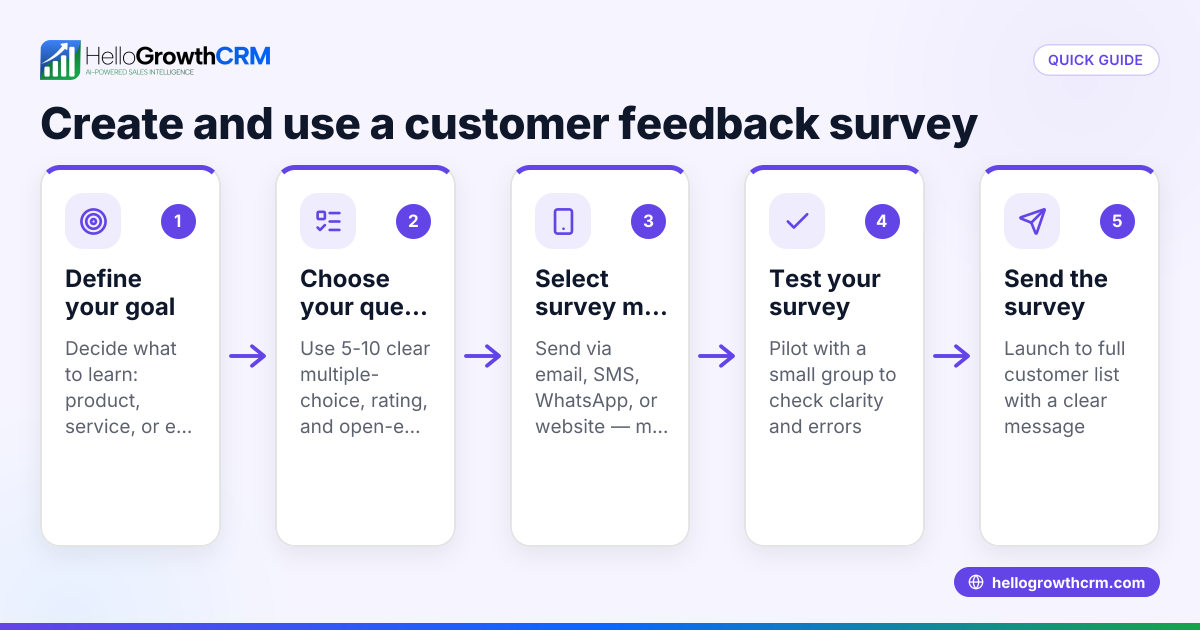
- Decide what feedback to collect: Focus on key areas like food quality, service speed, staff friendliness, and cleanliness. Keep questions short and specific.
- Choose feedback methods: Use a combination of printed feedback cards on tables, verbal questions by servers, and digital surveys (via email or SMS) after the visit. Check that the method suits your customer base.
- Prepare feedback materials: Design simple cards or digital forms with rating scales (e.g., 1 to 5 stars) and space for comments. Include clear instructions and estimated time to complete (1-2 minutes).
- Train staff to ask for feedback: Servers or hosts should politely invite customers to share their thoughts, emphasizing that feedback helps improve their experience.
- Collect feedback promptly: For printed cards, provide a collection box or collect them directly. For digital surveys, send a message within 24 hours after the visit.
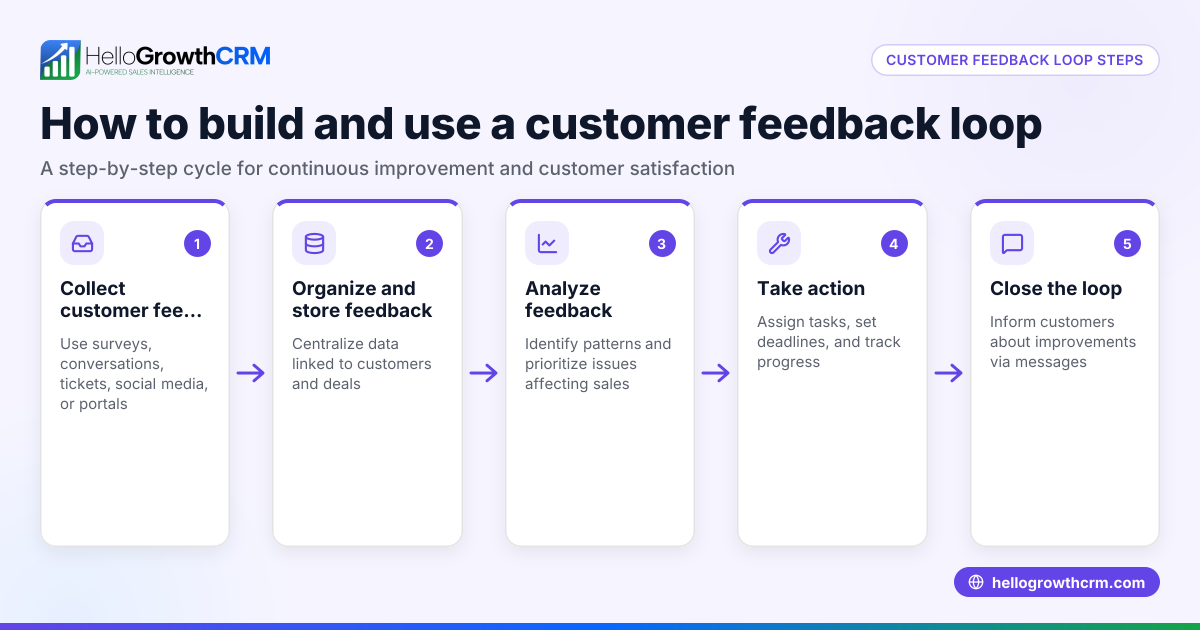
- Record and organize feedback: Log responses in a spreadsheet or CRM system, categorizing by date, location, and type of feedback.
- Analyze feedback regularly: Identify trends, common complaints, and positive comments. Share insights with your team.
- Act on feedback: Implement changes based on feedback and inform customers about improvements where possible.
- Follow up with customers: Thank them for their input and offer incentives for future visits if appropriate.
Include checks at each step to ensure materials are clear, staff are consistent in asking, and feedback data is complete and organized.
Example (fictional figures)
A two-location restaurant in Columbus, Ohio, "TasteBuds," wants to improve customer feedback collection starting 07/01/2026.
Step 1: They decide to ask about food taste, service, and cleanliness, rating each 1-5.
Step 2: They print 200 feedback cards for each location (400 total) and prepare an email survey for customers with reservations.
Step 3: Cards are designed with 3 questions and a comment box, estimated completion time 2 minutes.
Step 4: Staff are trained on 06/28/2026 to ask customers at the end of meals.
Step 5: Cards collected daily in a box; email surveys sent within 24 hours after reservation.
Step 6: Feedback logged into a spreadsheet daily.
Step 7: After 30 days, they receive 300 card responses and 150 digital survey replies.
Step 8: Analysis shows average food taste rating 4.2, service 3.8, cleanliness 4.5.
Step 9: They decide to retrain staff on service and improve table clearing speed.
Calculations:
Total feedback responses = 300 + 150 = 450
Average food taste rating = (sum of all food ratings) / 450 = 4.2 (assumed)
Average service rating = 3.8 (assumed)
Average cleanliness rating = 4.5 (assumed)
This example shows how a typical US restaurant can collect and use feedback efficiently.
Common mistakes
- Making feedback too long or complicated: Prevent by limiting questions to 3-5 and using simple scales.
- Not training staff to ask consistently: Prevent by holding brief training and role-playing sessions.
- Collecting feedback too late: Prevent by offering surveys immediately or within 24 hours.
- Ignoring negative feedback: Prevent by reviewing all feedback impartially and addressing issues.
- Failing to organize feedback data: Prevent by using a structured spreadsheet or CRM to track responses.
- Not following up with customers: Prevent by setting reminders to thank customers and inform them about changes.
For more on managing customer relationships, see Restaurants, cafes and cloud kitchens.
Doing this in HelloGrowthCRM
HelloGrowthCRM helps restaurants manage customer feedback by keeping service requests and feedback on the same customer record as their deal. The built-in dialer allows your team to follow up easily by phone, logging each call outcome directly on the customer record. This keeps feedback organized and actionable without switching tools. Learn more about these features at HelloGrowthCRM for the United States.
Frequently asked questions
What is the best way to get honest feedback from restaurant customers? Offer anonymous options like feedback cards or digital surveys, and train staff to ask in a non-pressuring way. Customers are more honest when they feel their input is valued and confidential.
How often should I collect feedback from customers? Collect feedback continuously but analyze it weekly or monthly to spot trends. Frequent collection ensures you catch issues early without overwhelming your team.
Can I use digital tools to get feedback instead of paper forms? Yes, digital surveys via email or SMS are effective, especially for customers who made reservations or provided contact info. Combine with paper forms for walk-ins.
How do I encourage customers to complete feedback surveys? Keep surveys short, explain their purpose, and consider small incentives like discounts or loyalty points for completing them.
How can I track customer satisfaction over time? Use a CRM or spreadsheet to log feedback scores by date and customer. This helps you measure improvements and identify recurring issues. See customer health score for related CRM features.
Key takeaways
- Use simple, focused questions on food, service, and cleanliness.
- Combine printed cards, verbal requests, and digital surveys.
- Train staff to ask consistently and collect feedback promptly.
- Organize and analyze feedback regularly to identify trends.
- Act on feedback and follow up with customers.
- Use CRM tools like HelloGrowthCRM to keep feedback and follow-up organized.
Collecting customer feedback is essential for restaurant success. Start today with these steps to understand your customers better and improve their experience.
Start on the Free Forever plan (200 leads, no credit card) at HelloGrowthCRM.
Ready to put this into practice?
Set up your pipeline, WhatsApp follow-ups, and AI lead scoring in minutes — free, no credit card.
Try HelloGrowthCRM freeGet CRM tips in your inbox
Join thousands of sales professionals who get weekly insights on CRM strategy, AI automation, and pipeline optimization.

The HelloGrowthCRM team publishes guides on CRM strategy, AI sales tools, and revenue operations for small business sales teams.