HelloGrowthCRM software
Built for real small-business sales teams
HelloGrowthCRM helps reps qualify faster, follow up on time, and close more deals—with practical automation in one place.
- AI lead scoring and pipeline visibility
- Built-in dialer, WhatsApp, and email automation
- Sales forecasting and RevOps-ready reporting
Handling customer objections is a critical skill for small and mid-sized US business owners who want to close more sales and build trust. When a customer raises an objection, the best approach is to listen fully, understand their concern, respond thoughtfully, and confirm that their issue is resolved before moving forward.
Why this comes up / what goes wrong
Small-business owners often encounter objections during sales conversations because customers worry about price, value, timing, or trustworthiness. For example, a customer might say a competitor offers a lower price or question how your service fits their schedule. Without a clear process to handle these concerns, sales conversations can stall or end without a deal.
Objections often arise when customers feel their concerns are not heard or understood. Owners who respond defensively, interrupt the customer, or rush to close the sale risk losing trust and the opportunity. A structured approach helps keep the conversation productive and focused on the customer's needs.
Step-by-step
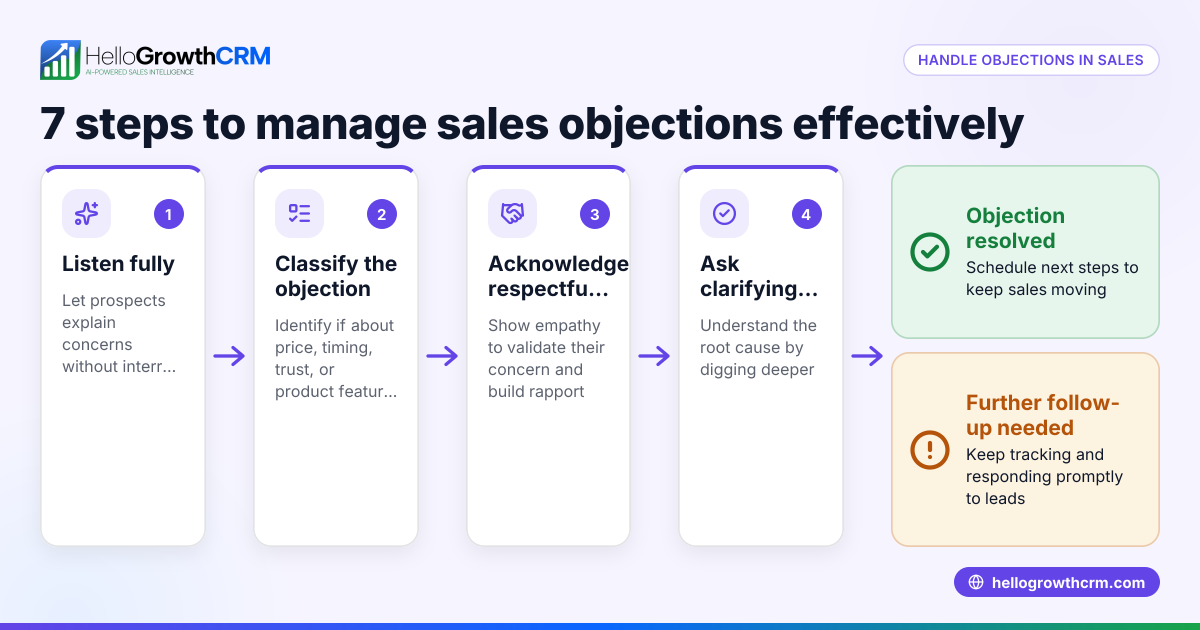
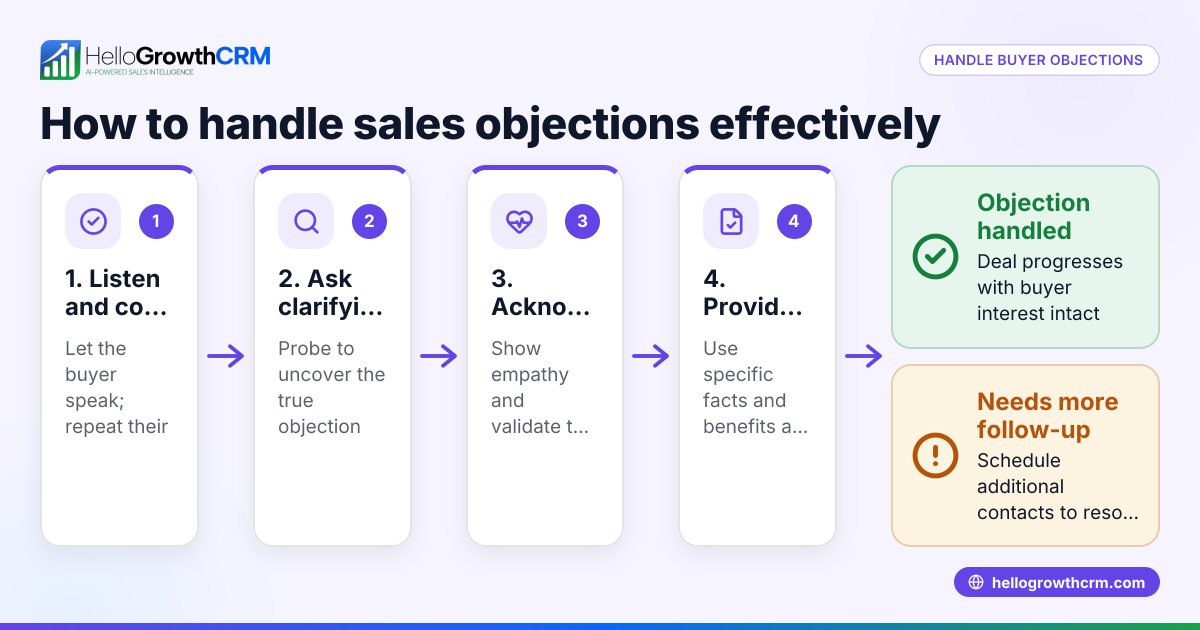
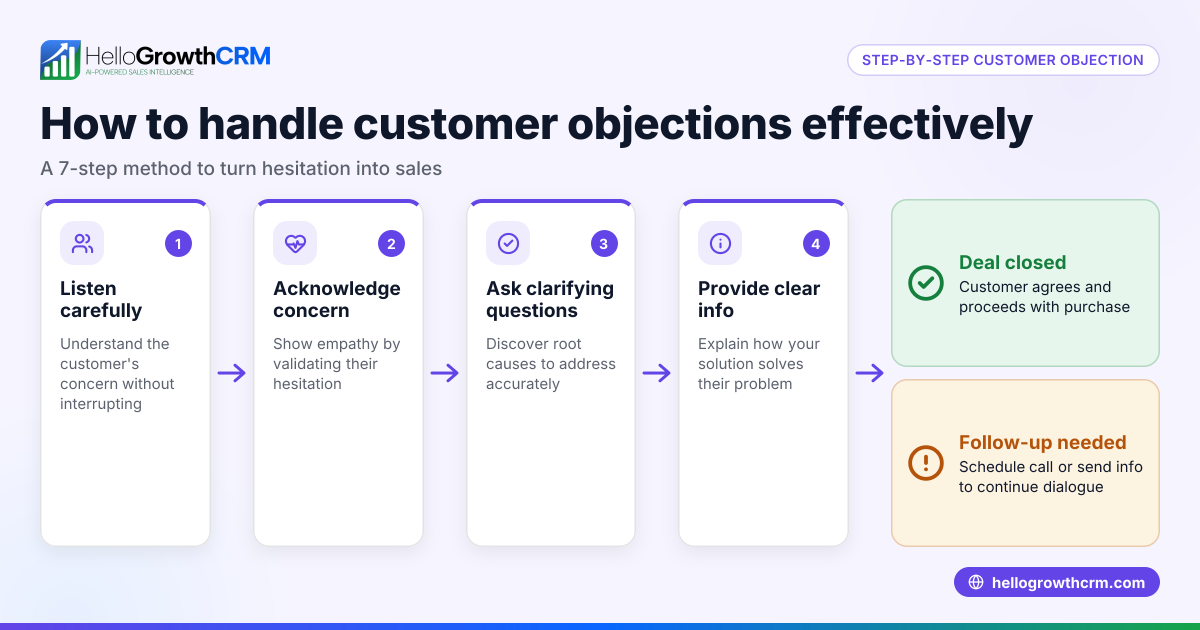
- Listen fully without interrupting. Give the customer your full attention. Avoid jumping in or defending too early. Confirm you heard them by paraphrasing: "I hear you're concerned about the cost."
- Clarify the objection. Ask open-ended questions to understand the root cause. For example, "Can you tell me more about what worries you regarding the delivery timeline?"
- Validate the concern. Show empathy and acknowledge their feelings: "I understand that timing is critical for your project."
- Respond with clear, relevant information. Address the objection with facts, benefits, or alternatives. Use specific examples or data: "Our expedited service guarantees delivery within 3 days, which helps avoid project delays."
- Check for agreement. Ask, "Does this address your concern?" to confirm the customer feels their objection is resolved.
- Explore further if needed. If objections remain, gently ask, "What else might be holding you back?" This uncovers additional concerns.
- Close or arrange follow-up. If resolved, move toward closing or schedule the next step. If not, agree on a follow-up plan.
- Document the objection and outcome. Record details in your CRM or notes for future reference and team alignment.
Throughout, stay calm, patient, and professional. Avoid rushing or pressuring the customer.
Example (fictional figures)
A plumbing company in Austin, Texas, receives an objection on 11/15/2025 about their service price.
- Customer says: "Your $1,200 quote is higher than another plumber’s $900."
- Step 1: Listen and clarify: "Can you share what services the other plumber includes in their quote?"
- Step 2: Customer replies the other plumber excludes emergency call-out fees.
- Step 3: Validate: "I understand that having emergency service available is important to you."
- Step 4: Respond: "Our $1,200 quote includes emergency call-out service and a 1-year warranty. The other quote excludes these, which could cost you more if urgent repairs are needed."
- Step 5: Check agreement: "Does this explanation help clarify the value?"
- Step 6: Customer agrees but asks about payment options.
- Step 7: Offer payment plan: "We can split $1,200 into two payments of $600 each over 30 days."
- Step 8: Customer agrees to proceed.
Calculations: $1,200 ÷ 2 = $600 (per installment)
This approach turns an objection into a sale by clarifying value and offering payment flexibility.
Common mistakes
- Interrupting the customer: Prevent by listening fully before responding.
- Ignoring the real objection: Prevent by asking clarifying questions to uncover the true concern.
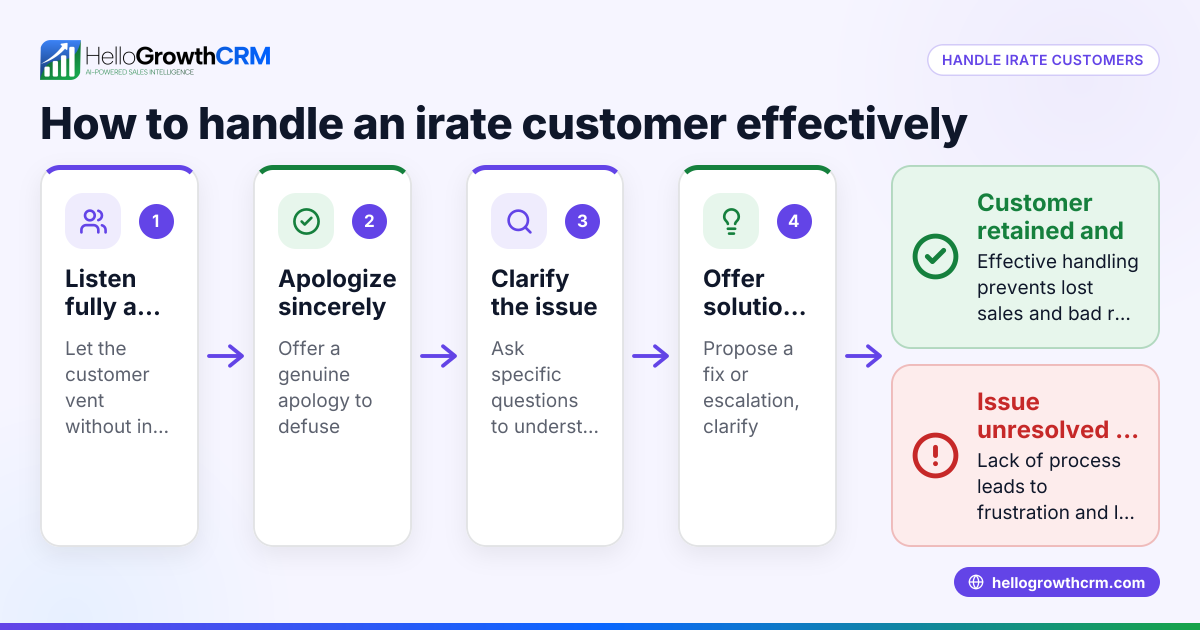
- Responding defensively: Prevent by staying calm, empathetic, and professional.
- Failing to confirm resolution: Prevent by checking if the customer feels satisfied before moving on.
- Not documenting objections: Prevent by recording details for team reference and follow-up.
- Rushing to close: Prevent by ensuring all concerns are addressed first.
Using a CRM with a customer portal and ticket system helps track objections and service requests linked to deals, improving follow-up and customer satisfaction. Learn more about the customer health score and WhatsApp and SMS CRM features.
Doing this in HelloGrowthCRM
HelloGrowthCRM offers a branded self-service customer portal where customers can submit service requests or tickets after the sale. These requests stay linked to the same customer record as the deal, making it easy to track ongoing concerns and referrals. This centralized approach helps your team respond quickly and maintain a clear history of objections and resolutions.
Frequently asked questions
What is the best way to respond to price objections? Focus on the value and benefits your product or service provides. Clarify what is included and offer flexible payment options if possible. Always validate the customer's concern before explaining.
How do I handle objections I can't immediately answer? Acknowledge the question, tell the customer you will find the information, and follow up promptly. Document the objection in your CRM to ensure no details are missed.
Should I prepare for objections before sales calls? Yes, anticipate common objections and prepare clear responses. This preparation helps you stay confident and handle objections smoothly.
Can HelloGrowthCRM help manage customer objections? Yes, by keeping service tickets and customer interactions linked to deals, HelloGrowthCRM helps your team track and resolve objections efficiently. See more at HelloGrowthCRM for the United States.
How does documenting objections improve sales follow-up? Documenting objections creates a record for your team to review and address recurring issues. It helps maintain consistent responses and improves customer satisfaction by showing you take concerns seriously.
Key takeaways
- Listen carefully and clarify customer objections before responding.
- Validate concerns with empathy to build trust.
- Respond with clear, relevant information and check for agreement.
- Avoid common mistakes like interrupting or rushing the sale.
- Document objections and outcomes for better team follow-up.
- Use HelloGrowthCRM’s customer portal and tickets to manage service requests linked to deals.
Start handling customer objections confidently today. Start on the Free Forever plan (200 leads, no credit card).
Ready to put this into practice?
Set up your pipeline, WhatsApp follow-ups, and AI lead scoring in minutes — free, no credit card.
Try HelloGrowthCRM freeGet CRM tips in your inbox
Join thousands of sales professionals who get weekly insights on CRM strategy, AI automation, and pipeline optimization.

The HelloGrowthCRM team publishes guides on CRM strategy, AI sales tools, and revenue operations for small business sales teams.