HelloGrowthCRM software
Built for real small-business sales teams
HelloGrowthCRM helps reps qualify faster, follow up on time, and close more deals—with practical automation in one place.
- AI lead scoring and pipeline visibility
- Built-in dialer, WhatsApp, and email automation
- Sales forecasting and RevOps-ready reporting
To manage accounting firm client enquiries in the USA effectively, establish a clear process for capturing, responding, and tracking enquiries promptly. This involves organizing contact details, prioritizing leads, assigning follow-ups, and reviewing outcomes regularly. This article covers why managing enquiries matters, detailed steps to handle them, a US-based example, common mistakes to avoid, and FAQs to help you implement the process today.
Why this comes up / what goes wrong
Accounting firms in the US often face challenges managing client enquiries because they receive requests through multiple channels like phone calls, emails, text messages, and web forms. Without a centralized system, enquiries can be overlooked or responded to late, resulting in lost clients and wasted staff effort. Founders, sales leaders, and inside-sales teams may struggle to track which enquiries need attention, who is responsible for follow-up, or which clients have specific deadlines, especially during tax season. This scattered approach leads to inefficient workflows, missed deadlines, and decreased client satisfaction.
Step-by-step
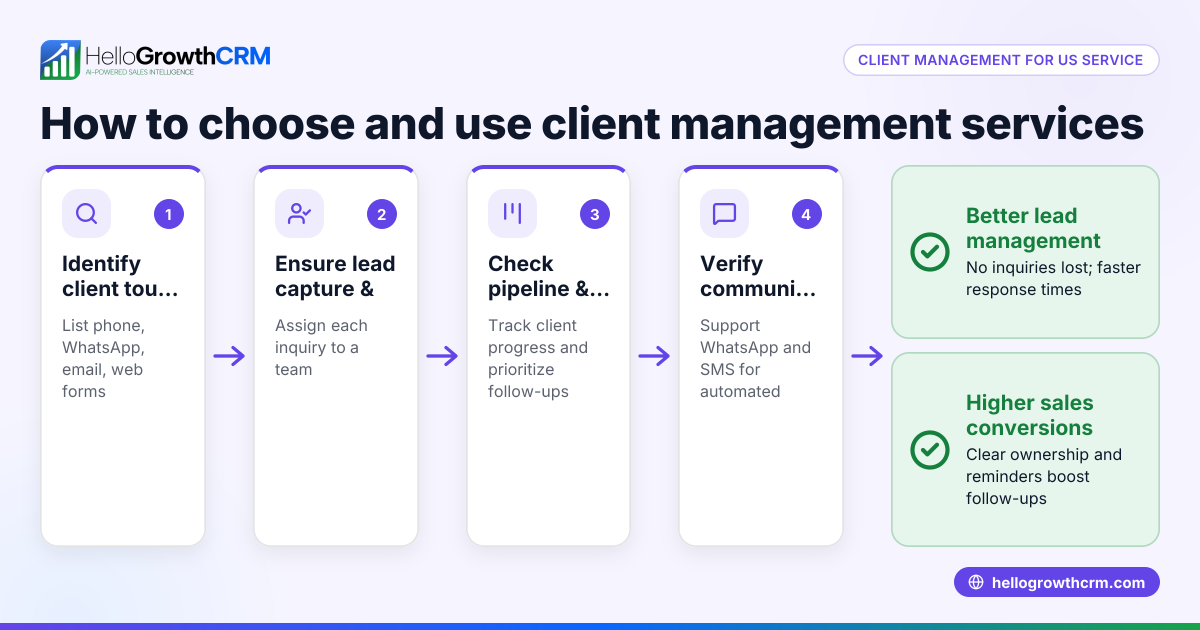
- Centralize enquiry capture: Collect all client enquiries from phone, email, web forms, and messaging apps into one central log or system. Ensure you record the client's full name, contact details (phone, email), enquiry date, and the specific service they are interested in. Check that no enquiry is missed or duplicated.
- Categorize and prioritize enquiries: Sort enquiries based on urgency, potential revenue, and deadlines such as tax filing dates. Mark enquiries that require immediate attention or are related to seasonal services. Verify that prioritization criteria align with your firm’s goals.
- Assign follow-up responsibility: Allocate each enquiry to a specific team member with clear instructions and deadlines. Confirm the assignee has all necessary information and understands the priority level.
- Respond promptly and professionally: Contact the client within 24 hours of receiving their enquiry. Ensure your response addresses their questions clearly, outlines next steps, and sets expectations for further communication.
- Track follow-up tasks and status: Use a task board, spreadsheet, or CRM to monitor each enquiry’s progress. Check regularly that follow-ups are completed on time and update the status until the enquiry is resolved or converted.
- Record client communication preferences and notes: Document how the client prefers to be contacted (phone, email, WhatsApp) and any special instructions or details shared during conversations.
- Review enquiry outcomes regularly: Hold weekly or monthly meetings to analyze enquiry volumes, response times, conversion rates, and common client questions. Identify bottlenecks or process gaps.
- Improve enquiry forms and communication channels: Update your web forms to capture all necessary information efficiently. Test that enquiries from all channels feed correctly into your central system. Consider automation tools to acknowledge enquiries immediately.
Following these steps helps prevent lost leads and builds client trust through timely, organized responses. Many accounting firms benefit from industry-specific tools designed for Chartered accountants and bookkeeping firms to streamline enquiry management.
Example (fictional figures)
Greenfield Accounting, a small firm in Austin, Texas, received 50 client enquiries throughout March 2024. They aimed to respond within 24 hours and track conversion progress carefully.
- Total enquiries: 50
- Average client value: $3,000
Steps taken:
- On 03/01/2024, they captured all 50 enquiries in a central spreadsheet.
- They prioritized 20 enquiries as urgent due to upcoming tax deadlines.
- Two team members were assigned, each handling 25 enquiries.
- All enquiries received responses within 24 hours, by 03/02/2024.
- Weekly follow-ups were tracked and updated.
- After one month, 18 enquiries converted to clients.
Calculations:
Revenue = 18 clients × $3,000 average value
Revenue = $54,000
This example shows how a structured enquiry process can turn leads into significant revenue.
Common mistakes
- Ignoring or delaying responses: Set clear response time goals and automated reminders to prevent delays.
- Using multiple unlinked communication tools: Centralize all enquiries to maintain visibility and avoid lost leads.
- Not assigning responsibility: Designate a team member for each enquiry to ensure accountability.
- Failing to record client preferences: Always ask and note how clients prefer to communicate for smoother follow-up.
- Skipping regular reviews: Schedule frequent analysis meetings to identify and fix process inefficiencies.
- Overcomplicating enquiry forms: Keep forms short but comprehensive to encourage completion and capture essential data.
Using a CRM designed for WhatsApp and SMS CRM helps avoid these mistakes by streamlining communication and tracking.
Frequently asked questions
How quickly should an accounting firm respond to client enquiries? Responding within 24 hours is a good practice to show professionalism and increase conversion chances. Prompt replies build client trust and help meet deadlines, especially during tax season.
What information should I collect from a client enquiry? Collect the client’s full name, contact details (phone, email), enquiry date, type of service they need, and any deadline or urgency notes. This information helps prioritize and personalize follow-up communications.
How can I track multiple enquiries efficiently? Use a centralized system or task board that lists all enquiries with their status and assigned team members. This prevents leads from being forgotten or duplicated.
Can I handle client enquiries without a CRM? Yes, but it requires disciplined manual tracking with spreadsheets or shared documents. A CRM designed for HelloGrowthCRM for the United States can automate and simplify this process.
What if I get enquiries outside business hours? Set up an auto-reply or chatbot to acknowledge receipt and inform clients when they can expect a response. This maintains professionalism and manages expectations.
How do I improve enquiry forms to capture better leads? Make sure forms ask for essential information only, are easy to complete on any device, and include clear instructions. Test regularly to ensure enquiries feed correctly into your tracking system.
Key takeaways
- Centralize all client enquiries in one system for visibility.
- Prioritize and assign enquiries promptly to responsible team members.
- Respond within 24 hours with clear, professional communication.
- Track follow-up tasks and record client communication preferences.
- Review enquiry outcomes regularly to improve your process.
- Prevent common mistakes by using organized tools and clear responsibilities.
Managing accounting firm client enquiries efficiently helps convert leads into clients and supports business growth. For specialized support, explore solutions tailored for Chartered accountants and bookkeeping firms.
Start managing your client enquiries today by trying the Free Forever plan (200 leads, no credit card) to organize and track all your leads in one place.
Ready to put this into practice?
Set up your pipeline, WhatsApp follow-ups, and AI lead scoring in minutes — free, no credit card.
Try HelloGrowthCRM freeGet CRM tips in your inbox
Join thousands of sales professionals who get weekly insights on CRM strategy, AI automation, and pipeline optimization.

The HelloGrowthCRM team publishes guides on CRM strategy, AI sales tools, and revenue operations for small business sales teams.