HelloGrowthCRM software
Built for real small-business sales teams
HelloGrowthCRM helps reps qualify faster, follow up on time, and close more deals—with practical automation in one place.
- AI lead scoring and pipeline visibility
- Built-in dialer, WhatsApp, and email automation
- Sales forecasting and RevOps-ready reporting
A client management dashboard is a centralized tool that helps business owners track, organize, and manage all client interactions and sales activities in one place. It provides a clear overview of leads, ongoing deals, and next steps, enabling faster follow-up and better sales outcomes. This article explains why small-business owners need a client management dashboard, how to set one up step-by-step, common mistakes to avoid, and how HelloGrowthCRM can simplify client management.
Why this comes up / what goes wrong
Many small-business owners lose leads or waste time because they manage client information across multiple apps, spreadsheets, or even notebooks. Without a single dashboard, it’s hard to track which clients need follow-up, which deals are progressing, and where sales efforts are stalling. This leads to missed opportunities, slow responses, and poor visibility into sales performance. A client management dashboard solves this by consolidating all client data and sales stages into one view.
Step-by-step
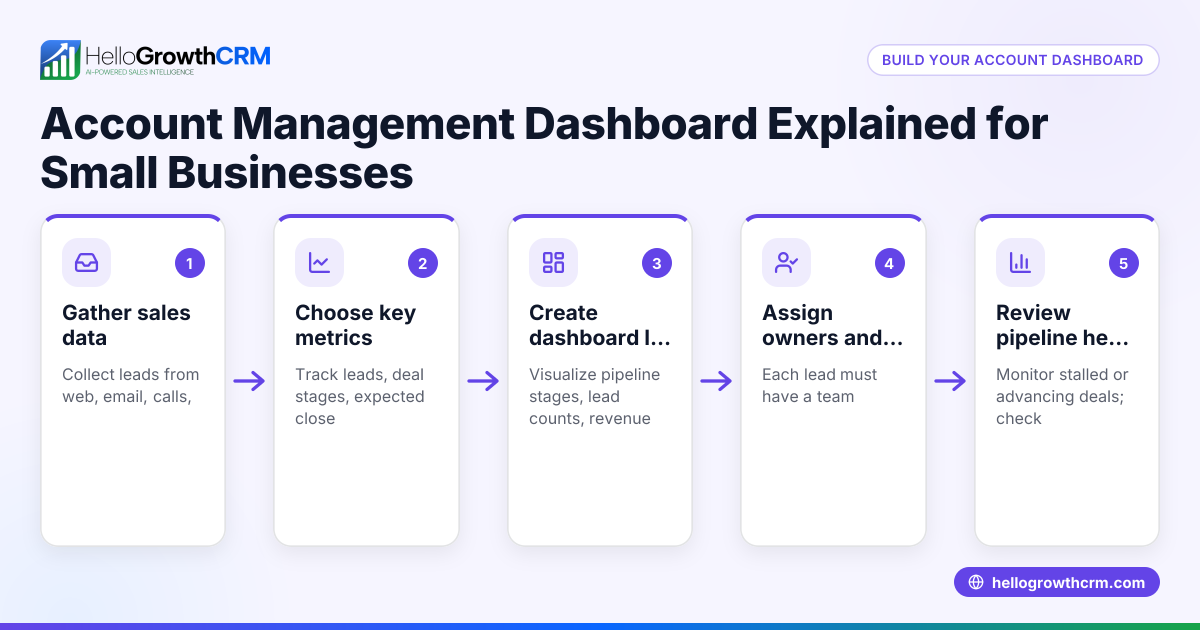
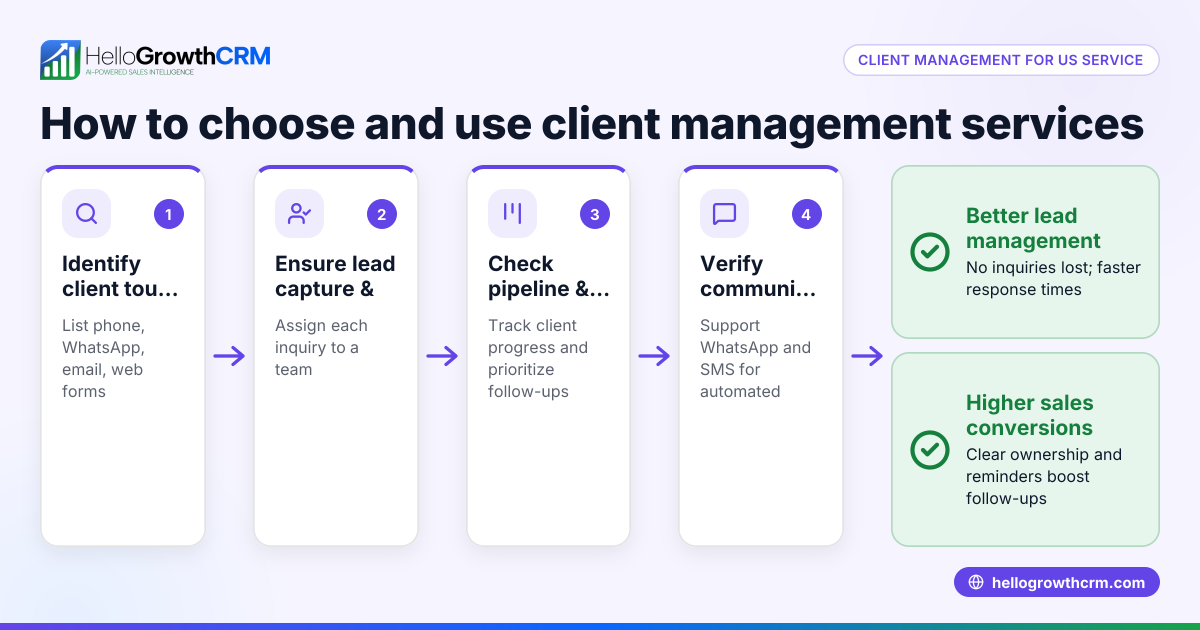
- Choose a dashboard platform: Select software that supports client tracking, lead management, and sales pipeline visualization. Check it can integrate with your communication channels like email, WhatsApp, or phone.
- Import or capture leads: Gather all existing client contacts and incoming inquiries into the dashboard to avoid scattered information. Ensure each lead has an assigned owner and a next step.
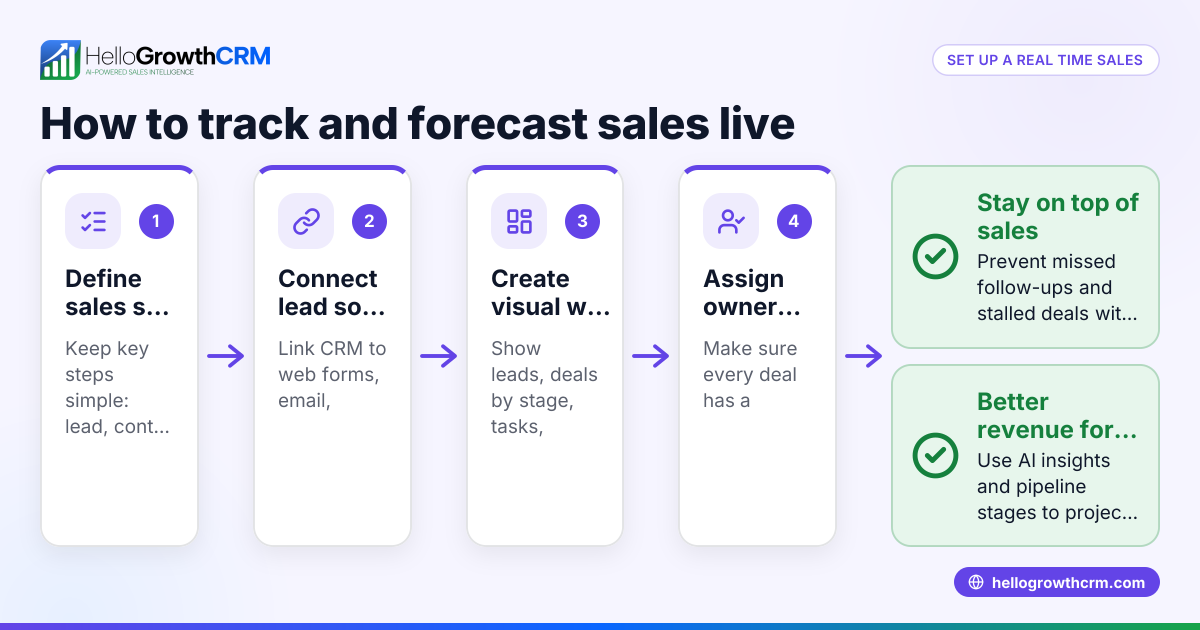
- Set up sales stages: Define clear stages for your sales process (e.g., New Lead, Contacted, Proposal Sent, Negotiation, Closed Won/Lost). This helps track deal progress.
- Assign tasks and follow-ups: For each client or deal, schedule next actions with reminders to keep the sales process moving.
- Monitor pipeline health: Regularly review the dashboard to see where deals are stalling or dropping off. Use this insight to focus efforts where needed.
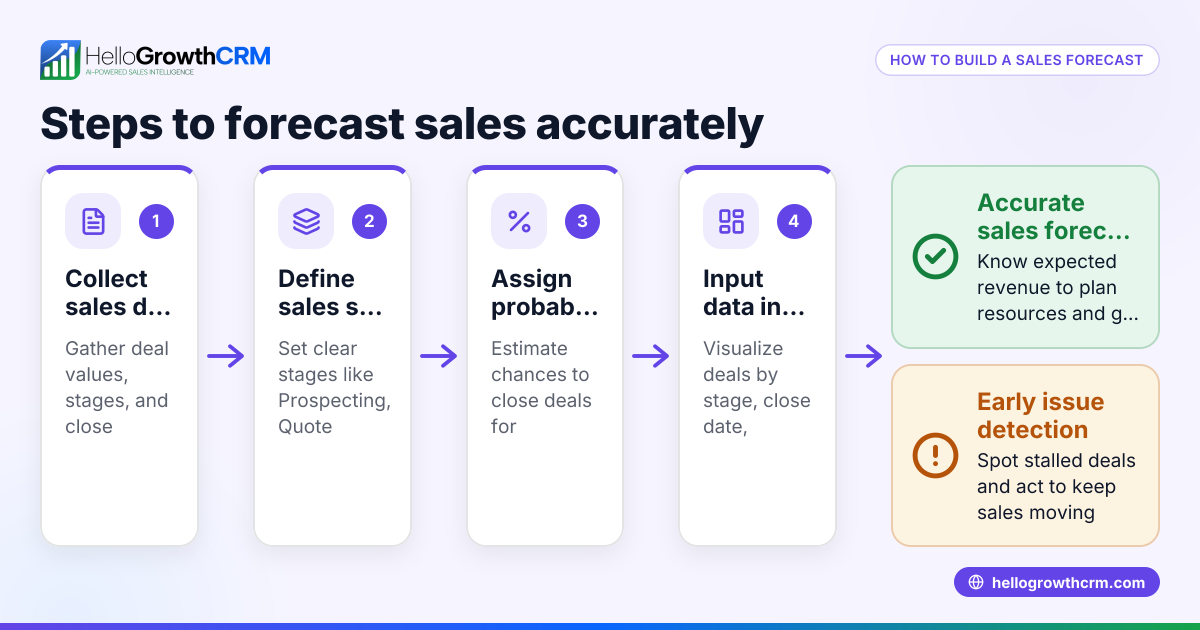
- Analyze performance: Use any forecasting or AI insights available to predict revenue and identify bottlenecks without building manual spreadsheets.
For small businesses using HelloGrowthCRM, its pipeline forecast and AI insights show which sales stages stall deals, and its leads feature captures every inquiry with an owner and next step automatically. Learn more about the built-in CRM dialer and WhatsApp and SMS CRM capabilities.
Example (fictional figures)
A two-location dental practice in Columbus, Ohio, uses a client management dashboard to track patient inquiries and treatment proposals. On 06/01/2026, they have 50 active leads distributed across these stages:
- New Lead: 20
- Contacted: 15
- Proposal Sent: 10
- Negotiation: 3
- Closed Won: 2
They expect the following revenue per stage:
- New Lead: $0 (not yet qualified)
- Contacted: $1,000 average per lead
- Proposal Sent: $2,500 average per lead
- Negotiation: $5,000 average per lead
- Closed Won: $10,000 per deal
Calculating expected revenue:
Contacted stage: 15 × $1,000 = $15,000 Proposal Sent stage: 10 × $2,500 = $25,000 Negotiation stage: 3 × $5,000 = $15,000 Closed Won stage: 2 × $10,000 = $20,000
Total expected revenue = $15,000 + $25,000 + $15,000 + $20,000 = $75,000
The dashboard alerts the owner that the Negotiation stage has fewer leads but high expected value, signaling a need to focus on closing these deals.
Common mistakes
- Scattered client data: Using multiple spreadsheets or apps leads to lost info. Prevent this by consolidating all leads into one dashboard.
- No assigned owner or next step: Leads without clear responsibility or follow-up plans stall. Always assign an owner and next action.
- Ignoring pipeline stages: Without defined sales stages, it’s hard to track progress. Define and use clear stages.
- Not reviewing dashboard regularly: A dashboard is only useful if checked often. Schedule regular reviews.
- Overcomplicating setup: Trying to track too many metrics at once can confuse the team. Start simple and expand.
Doing this in HelloGrowthCRM
HelloGrowthCRM helps small businesses manage clients with two key features. Its Leads tool captures every inquiry from forms, calls, or WhatsApp messages, assigning each lead an owner and a next step automatically, so no leads get lost in notebooks. The Pipeline forecast and AI insights feature shows which sales stages deals are stalling in without needing to build spreadsheets, helping owners focus their efforts where it matters most.
Frequently asked questions
What is the main benefit of a client management dashboard? A client management dashboard centralizes all client and sales data, making it easier to track leads, follow-ups, and deal progress in one place. This helps speed up responses and close more deals.
Can I use a client management dashboard without technical skills? Yes. Many dashboards are designed for small businesses with simple interfaces. Start by capturing leads and defining sales stages, then gradually add features as you get comfortable.
How does HelloGrowthCRM handle client communication? HelloGrowthCRM integrates client communication via WhatsApp and SMS directly into the CRM, keeping conversations linked to leads and deals. This reduces the need to switch between apps.
What is AI lead scoring and how does it help? AI lead scoring uses data patterns to rank leads by their likelihood to convert, helping sales teams prioritize follow-up on the most promising clients.
Is a client management dashboard the same as a CRM? A client management dashboard is often a feature within a CRM system. It provides visual summaries and tracking of client interactions and sales pipelines within the CRM.
Key takeaways
- A client management dashboard centralizes client data and sales activities for better visibility.
- Assign owners and next steps to every lead to keep deals moving.
- Define clear sales stages to track progress and identify bottlenecks.
- Regularly review the dashboard to focus on stalled deals and forecast revenue.
- HelloGrowthCRM captures leads automatically and provides AI-driven pipeline insights to simplify client management.
Start managing your clients more effectively today. Start on the Free Forever plan (200 leads, no credit card).
Ready to put this into practice?
Set up your pipeline, WhatsApp follow-ups, and AI lead scoring in minutes — free, no credit card.
Try HelloGrowthCRM freeGet CRM tips in your inbox
Join thousands of sales professionals who get weekly insights on CRM strategy, AI automation, and pipeline optimization.

The HelloGrowthCRM team publishes guides on CRM strategy, AI sales tools, and revenue operations for small business sales teams.