HelloGrowthCRM software
Built for real small-business sales teams
HelloGrowthCRM helps reps qualify faster, follow up on time, and close more deals—with practical automation in one place.
- AI lead scoring and pipeline visibility
- Built-in dialer, WhatsApp, and email automation
- Sales forecasting and RevOps-ready reporting
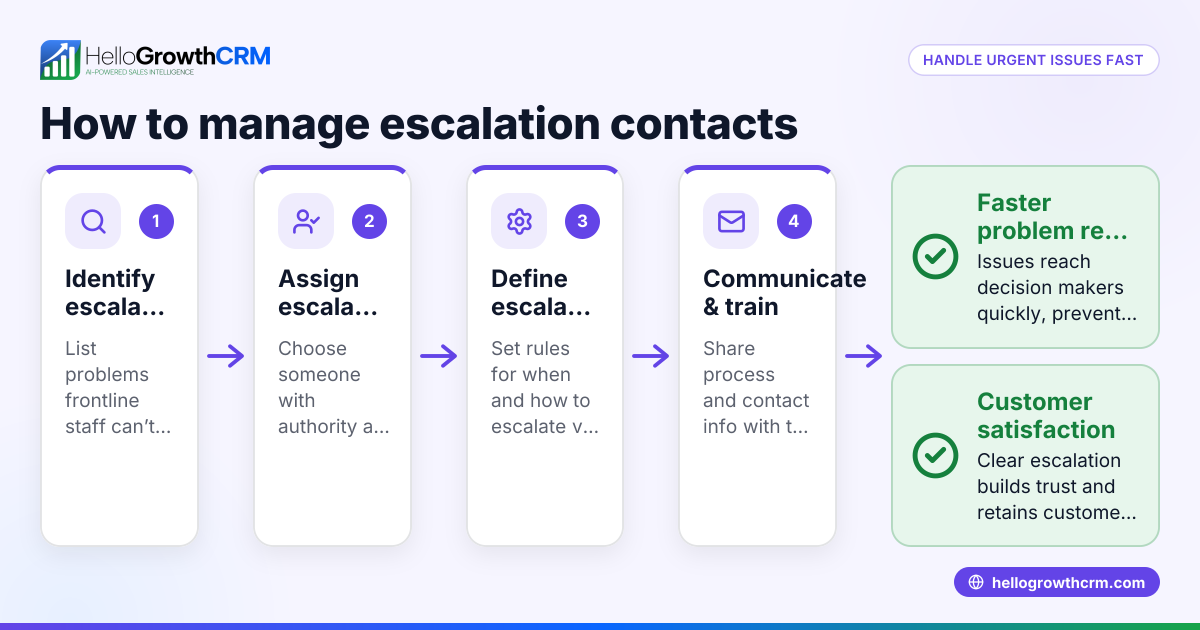
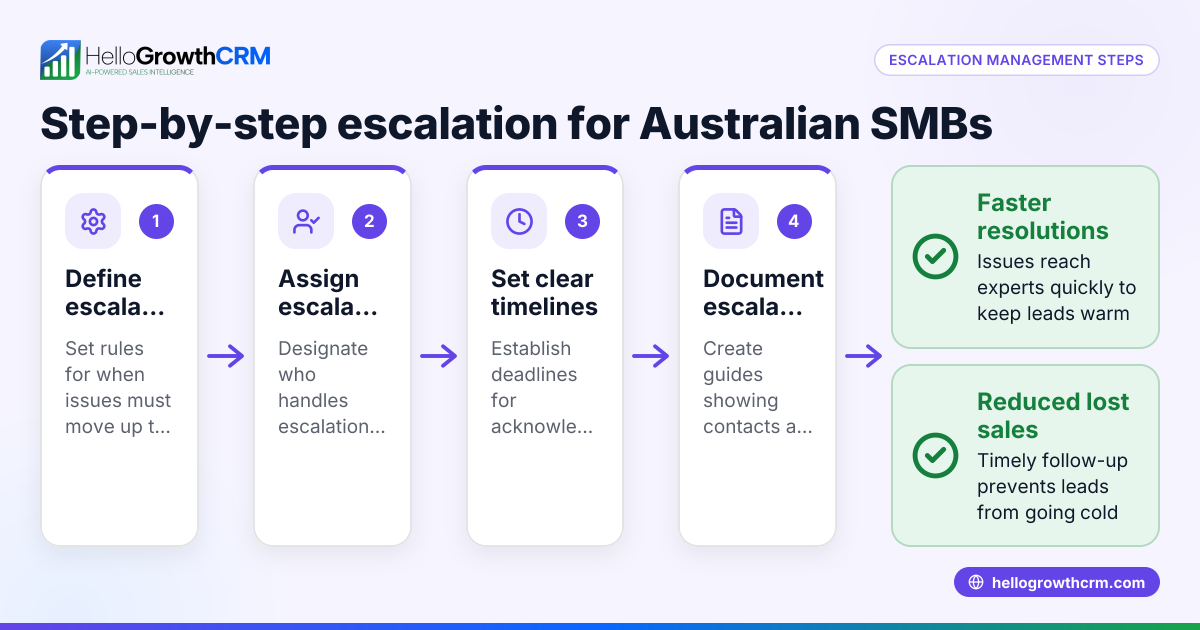
To manage customer service escalations in Canada, promptly acknowledge the issue, gather all necessary information, assign the case to the right team member, communicate clearly with the customer, track progress, and resolve the issue fully. This article explains why escalations happen, provides detailed steps, a worked example with CAD figures, common mistakes to avoid, and how HelloGrowthCRM can support escalation management.
Why this comes up / what goes wrong
Small and mid-sized businesses in Canada often encounter customer service escalations when initial support responses do not resolve issues quickly or clearly. Common causes include slow follow-up, unclear communication, and lack of a consistent tracking system. Without a clear escalation process, businesses risk losing customers and damaging their reputation. Escalations happen because customers feel their concerns are not being addressed satisfactorily at first contact, or because complex issues require higher-level intervention.
Step-by-step
- Acknowledge the escalation immediately
- Respond within a clear timeframe (e.g., within 2 hours) to confirm receipt.
- Ensure the customer feels heard and valued by using empathetic language.
- Gather all relevant information
- Review the original complaint and any prior communications.
- Collect supporting documents, emails, or logs related to the issue.
- Verify customer details and history to understand context fully.
- Assign the escalation to the appropriate team member
- Select someone with the right expertise and authority to resolve the issue.
- Confirm they have access to all customer records and previous interactions.
- Communicate clearly and transparently with the customer
- Explain the steps you will take to resolve the issue.
- Provide estimated timelines and schedule updates.
- Maintain professional and empathetic tone throughout.
- Track the escalation progress
- Use a ticketing or tracking system to monitor the status.
- Set reminders for follow-ups and deadlines.
- Update the customer regularly until the issue is resolved.
- Resolve and close the escalation
- Confirm the customer is satisfied with the solution.
- Document the resolution and any lessons learned.
- Formally close the ticket or escalation record.
- Review and improve your process
- Analyze recurring issues to prevent future escalations.
- Train staff on common causes and handling techniques.
Use tools like a customer health score to monitor satisfaction trends and reduce escalation frequency.
Example (fictional figures)
A mortgage brokerage in Mississauga, Ontario, received an escalation on 2024-04-10 regarding a delayed loan approval.
- Customer: John Smith
- Issue: Delay caused by missing income verification documents
- Initial complaint received: 2024-04-08
Step 1: Acknowledge escalation Response sent on 2024-04-10 at 10:00 am.
Step 2: Gather information Reviewed previous emails and found missing income verification documents.
Step 3: Assign to loan officer Sarah Sarah has authority to request documents and approve loans.
Step 4: Communicate Sarah emailed John at 11:00 am explaining the delay and requesting documents by 2024-04-12.
Step 5: Track progress Set reminders to follow up on 2024-04-13.
Step 6: Resolve John sent documents on 2024-04-12. Loan approved on 2024-04-14.
Calculations: Loan amount: C$450,000 Interest rate: 4.5% per annum Monthly interest = C$450,000 × 4.5% ÷ 12 = C$1,687.50 Approval delay cost estimate (2 days): C$1,687.50 × 2 ÷ 30 = C$112.50
Step 7: Review Noted frequent delays due to unclear document requests; updated client checklist to prevent future issues.
Common mistakes
- Delaying acknowledgment: Always respond quickly to show you value the customer's concern. Prevent by setting internal response time targets.
- Incomplete information gathering: Missing details can delay resolution. Prevent by reviewing all communications and documents before proceeding.
- Assigning to wrong team member: Mismatched expertise causes repeated handoffs. Prevent by clearly defining roles and escalation paths.
- Poor communication: Vague or infrequent updates frustrate customers. Prevent by scheduling regular, clear updates.
- No tracking system: Without a system, escalations can be forgotten. Prevent by using a ticketing tool or CRM with tracking.
- Skipping review: Missing lessons from escalations leads to repeated issues. Prevent by conducting regular post-escalation reviews.
Use a customer health score to spot at-risk customers early.
Doing this in HelloGrowthCRM
HelloGrowthCRM keeps service requests linked to the same customer record as the deal, ensuring your team has full context when handling escalations. Its branded customer portal allows customers to submit tickets and access a knowledge base, reducing repetitive queries. Referral tracking and support tickets help you manage ongoing service issues efficiently. Learn more about HelloGrowthCRM for Canada.
Frequently asked questions
How quickly should I respond to a customer escalation? Aim to acknowledge escalations within a few hours to reassure the customer their concern is being addressed. Prompt responses reduce frustration and build trust.
What if the escalation involves multiple departments? Assign a lead coordinator to manage communication across teams. Ensure all teams have access to the same customer record to avoid confusion and duplicated efforts.
Can escalations be prevented? Yes. Monitoring customer satisfaction with tools like a customer health score and providing clear, proactive communication can reduce escalation frequency.
How do I keep customers updated without overwhelming them? Set clear expectations about update frequency and stick to them. Use concise, professional messages and invite customers to ask questions.
What role does a CRM play in managing escalations? A CRM centralizes customer data, tracks tickets, and records communication history. HelloGrowthCRM supports escalation management with a customer portal and integrated support tickets, simplifying follow-up.
Key takeaways
- Acknowledge escalations promptly to show customers you care.
- Gather complete information before assigning responsibility.
- Communicate clearly about next steps and timelines.
- Track progress with a system to avoid missed follow-ups.
- Review escalations regularly to improve your process.
- Use CRM features like customer portals and ticket tracking to streamline management.
Start managing your customer service escalations more effectively today. Start on the Free Forever plan (200 leads, no credit card).
Ready to put this into practice?
Set up your pipeline, WhatsApp follow-ups, and AI lead scoring in minutes — free, no credit card.
Try HelloGrowthCRM freeGet CRM tips in your inbox
Join thousands of sales professionals who get weekly insights on CRM strategy, AI automation, and pipeline optimization.

The HelloGrowthCRM team publishes guides on CRM strategy, AI sales tools, and revenue operations for small business sales teams.