HelloGrowthCRM software
Built for real small-business sales teams
HelloGrowthCRM helps reps qualify faster, follow up on time, and close more deals—with practical automation in one place.
- AI lead scoring and pipeline visibility
- Built-in dialer, WhatsApp, and email automation
- Sales forecasting and RevOps-ready reporting
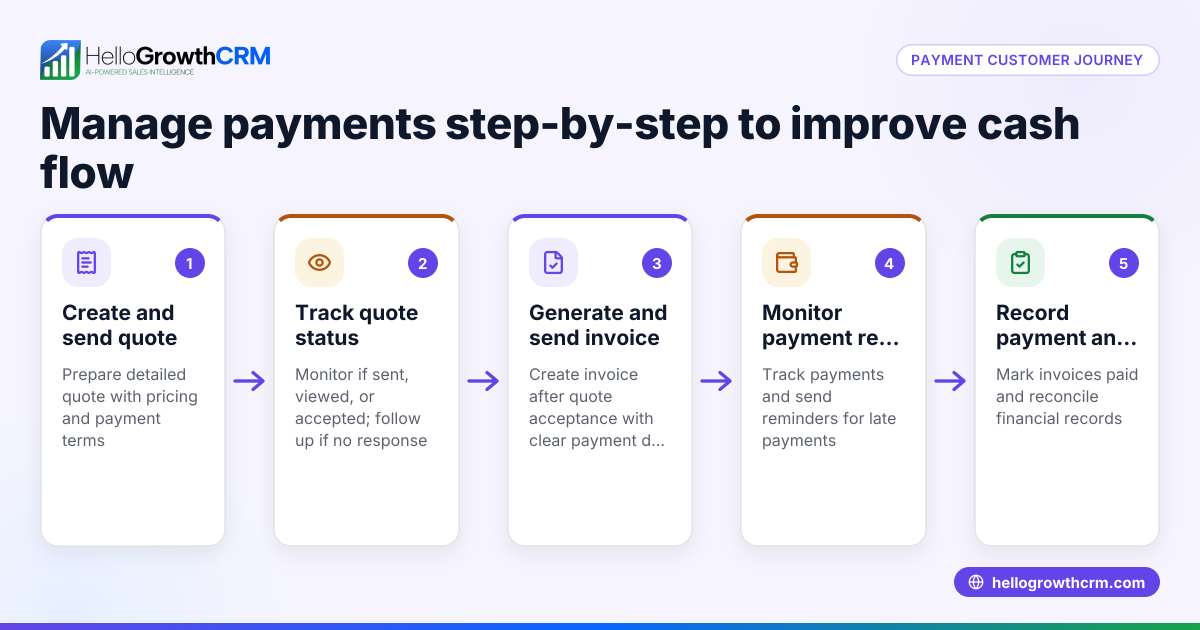
Managing payment follow ups is a crucial part of running a small business in the UAE. Without a clear process, you risk delayed payments that affect your cash flow and business operations. This article explains why payment follow ups often go wrong, provides a step-by-step method to manage them, illustrates the process with a worked example, highlights common mistakes, and shows how HelloGrowthCRM can help streamline follow ups.
Why this comes up / what goes wrong
Small business owners in the UAE often juggle multiple roles, including sales, operations, and finance. Payment follow ups can be overlooked due to busy schedules or lack of a structured system. Many businesses rely on manual tracking using spreadsheets, WhatsApp, or phone calls, which can lead to missed reminders, forgotten invoices, or inconsistent communication. Without clear payment terms communicated upfront, customers may delay payments unintentionally. All these factors contribute to late payments and cash flow issues.
Step-by-step
- Set Clear Payment Terms
- Define payment due dates (e.g., 30 days from invoice date).
- Communicate these terms clearly in your quotation and invoice documents.
- Check that the customer acknowledges these terms before starting work.
- Issue Professional Invoices Promptly
- Send invoices as soon as the service or product is delivered.
- Include all necessary details: invoice number, date, due date, payment methods, and your contact information.
- Verify that the invoice matches the agreed quotation or proposal.
- Track Invoices and Payments
- Maintain a log or use software to track which invoices are sent, paid, or overdue.
- Check payment status regularly, at least weekly.
- Schedule Follow Up Reminders
- Set reminders to contact customers before and after the payment due date.
- Use polite messages or calls to remind about upcoming or overdue payments.
- Record each follow-up interaction for reference.
- Communicate Clearly and Politely
- Use professional language in all correspondence.
- Offer assistance if customers face payment difficulties.
- Confirm receipt of payment once received.
- Escalate When Necessary
- If payments are significantly overdue, escalate to a higher authority or consider formal notices.
- Keep records of all communications.
- Review and Improve Your Process
- Regularly review your follow-up effectiveness.
- Adjust payment terms or communication style based on customer feedback and results.
Example (fictional figures)
A business-setup consultancy in Business Bay, Dubai, invoices a client AED 48,000 on 01/03/2024 with payment terms of 30 days.
- Invoice amount: AED 48,000
- Payment due date: 31/03/2024 (01/03/2024 + 30 days)
Step 1: Send invoice on 01/03/2024.
Step 2: Schedule a reminder to follow up on 25/03/2024 (6 days before due date).
Step 3: On 25/03/2024, send a polite reminder message.
Step 4: If no payment by 31/03/2024, send a second reminder on 01/04/2024.
Step 5: If payment is still not received by 10/04/2024, call the client to discuss.
Step 6: Once payment of AED 48,000 is received on 15/04/2024, send a payment confirmation.
This process helps keep communication clear and consistent, reducing delays.
Common mistakes
- Not setting clear payment terms upfront: Prevent by including terms in quotations and confirming customer agreement.
- Delaying invoice sending: Prevent by issuing invoices immediately after delivery.
- Relying on memory for follow ups: Prevent by scheduling reminders and using task boards like sales task boards to organise calls and messages.
- Using inconsistent communication channels: Prevent by standardising follow up methods, for example, using WhatsApp and email sequences to keep track and automate reminders.
- Failing to record follow-up activities: Prevent by logging calls and messages to maintain a clear history.
- Ignoring overdue payments too long: Prevent by escalating follow ups systematically and involving a specialist if needed.
Doing this in HelloGrowthCRM
HelloGrowthCRM helps manage payment follow ups with these features:
- Quotes, proposals, invoices and payments received: Create and send quotations and invoices directly from the deal record. Track the status of each quotation (sent, viewed, accepted) alongside follow-up tasks.
- Managed RevOps: If you don’t have a sales manager, HelloGrowthCRM can assign a revenue specialist to work your follow-up queue weekly, ensuring no payment is missed.
- Activities and task boards: Turn every payment follow-up into a task with a due date. Use the sales task boards to view your day’s calls and reminders as a list, not relying on memory.
Learn more about these features at HelloGrowthCRM for the United Arab Emirates, sales task boards, and email automation and sequences.
Frequently asked questions
How soon should I follow up on unpaid invoices? Start with a polite reminder about a week before the invoice due date. Follow up again immediately after the due date, then escalate if payment is not received within 10-15 days.
What is the best way to communicate payment reminders? Use a mix of professional emails, WhatsApp messages, and phone calls. Keep the tone polite and helpful, and record all communications.
How can I avoid late payments from customers? Set clear payment terms upfront and confirm them in writing. Send invoices promptly and schedule reminders. Offering multiple payment options can also help.
Can I automate payment follow ups? Yes, tools like HelloGrowthCRM offer email and WhatsApp sequences to automate reminders, reducing manual effort while keeping communication timely.
What if a customer consistently pays late? Consider revising payment terms, requesting deposits before work starts, or limiting credit. Keep detailed records and escalate as necessary.
Is it important to confirm receipt of payment? Yes, confirming payment builds trust and closes the communication loop professionally.
Key takeaways
- Set and communicate clear payment terms before starting work.
- Send invoices promptly and track payment status regularly.
- Schedule and record follow-up reminders using task boards.
- Use polite, consistent communication channels like WhatsApp and email.
- Escalate overdue payments systematically if necessary.
- Tools like HelloGrowthCRM can centralise quotations, invoices, and follow-ups efficiently.
Managing payment follow ups doesn’t have to be stressful or inconsistent. By following these steps and using tools designed for small businesses, you can improve cash flow and customer relationships.
Start on the Free Forever plan (200 leads, no credit card) at HelloGrowthCRM free CRM for small business.
Ready to put this into practice?
Set up your pipeline, WhatsApp follow-ups, and AI lead scoring in minutes — free, no credit card.
Try HelloGrowthCRM freeGet CRM tips in your inbox
Join thousands of sales professionals who get weekly insights on CRM strategy, AI automation, and pipeline optimization.

The HelloGrowthCRM team publishes guides on CRM strategy, AI sales tools, and revenue operations for small business sales teams.