HelloGrowthCRM software
Built for real small-business sales teams
HelloGrowthCRM helps reps qualify faster, follow up on time, and close more deals—with practical automation in one place.
- AI lead scoring and pipeline visibility
- Built-in dialer, WhatsApp, and email automation
- Sales forecasting and RevOps-ready reporting
Managing repeat customer complaints is essential for Canadian small businesses to maintain customer trust and improve service. When complaints repeat, it signals unresolved issues that can harm your reputation and sales. This guide explains why repeat complaints occur, provides a clear step-by-step process to handle them, and includes a worked example with realistic figures. It also highlights common mistakes to avoid and how HelloGrowthCRM features like the customer portal and tickets can help.
Why this comes up / what goes wrong
Small business owners in Canada often face repeat complaints because issues are not fully resolved the first time. Complaints may be recorded in scattered places like emails, text messages, or spreadsheets, making it hard to track the problem’s history. Slow follow-up or lack of a central record for service requests causes frustration for customers and staff alike. Without identifying root causes, the same problems recur, leading to lost customers and negative word of mouth.
Step-by-step
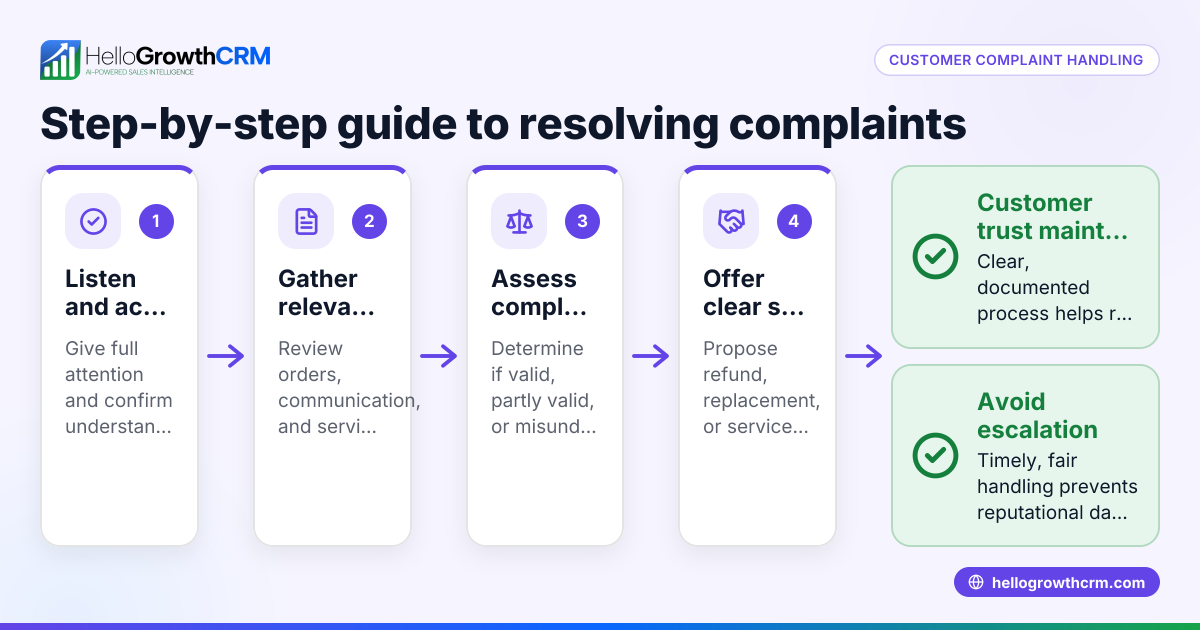
- Record every complaint on the customer’s profile: Use a system where all complaints and service requests are logged on the same customer record. This helps see history and patterns. Check that details include the date, issue description, and customer contact.
- Categorize complaints: Group complaints by type (e.g., product defect, delivery delay, billing error). This helps identify common issues. Check that categories are clear and consistent.
- Prioritize repeat complaints: Identify customers who have complained more than once about the same or related issues. Prioritize their cases for faster resolution.
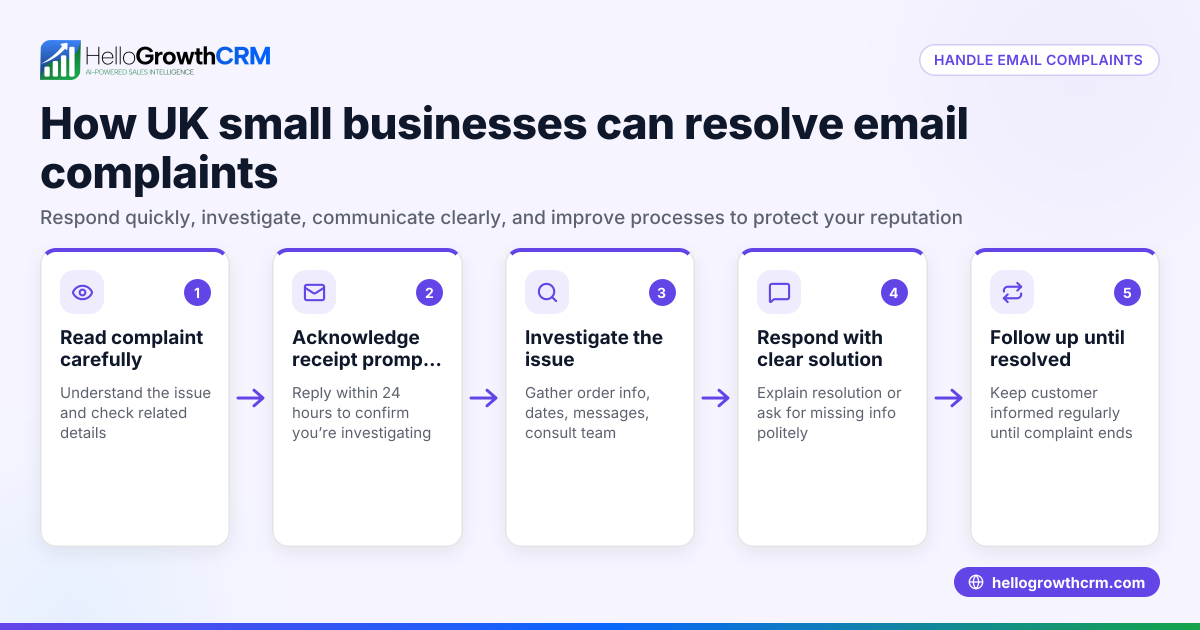
- Respond promptly and communicate clearly: Contact the customer quickly to acknowledge the complaint and explain next steps. Check that response times meet your service level expectations.
- Investigate root causes: Analyze complaint data to find underlying problems causing repeats. Check for process gaps, supplier issues, or training needs.
- Implement corrective actions: Fix the root causes identified. This may involve product changes, process improvements, or staff retraining. Check that actions are documented and assigned to responsible team members.
- Follow up with customers: After resolving the issue, follow up to confirm satisfaction and prevent further complaints. Check that follow-ups are tracked and completed.
- Use a knowledge base: Create and maintain an internal knowledge base of common issues and solutions to help staff resolve complaints faster.
- Monitor complaint trends regularly: Review complaint reports weekly or monthly to spot new or recurring problems early.
- Encourage customer feedback: Use a referral or feedback programme to keep communication open and improve service.
Example (fictional figures)
A mortgage brokerage in Mississauga, Ontario, receives repeat complaints about slow loan application responses.
- On 2024-04-01, C$1,000,000 worth of loan applications had an average response time of 10 days.
- Customer complaints logged: 15 in March, 10 of which were repeats.
Steps taken:
- Logged all complaints on customer records.
- Categorized complaints as "response delay."
- Prioritized repeat complaints.
- Committed to responding within 3 days.
- Investigated and found loan approval process bottlenecks.
- Streamlined approval steps, reducing time from 10 to 3 days.
- Followed up with customers to confirm satisfaction.
Calculation of improvement impact:
Original average response time = 10 days Target response time = 3 days Improvement = 10 days - 3 days = 7 days faster
Estimated customer retention increase due to faster response (assumed) = 5 repeat complaints avoided
By tracking complaints and acting on root causes, the brokerage improved customer satisfaction and reduced repeat complaints.
Common mistakes
- Not centralizing complaint records: Prevent by logging all complaints on the same customer profile to track history easily.
- Ignoring repeat complaints: Prevent by prioritizing customers with multiple complaints to address persistent issues.
- Slow or unclear communication: Prevent by setting response time targets and providing clear updates.
- Failing to investigate root causes: Prevent by analyzing complaint data regularly to find systemic problems.
- Not following up after resolution: Prevent by scheduling follow-ups to ensure customer satisfaction.
- Lack of staff training and resources: Prevent by maintaining a knowledge base and training team members on complaint handling.
Doing this in HelloGrowthCRM
HelloGrowthCRM helps manage repeat customer complaints by keeping all service requests on the same customer record after the sale. Its customer portal allows customers to submit tickets and track their issues, while the built-in knowledge base supports your team with solutions. Referral programme tracking can encourage positive feedback. Learn more about HelloGrowthCRM for Canada and its customer health score features.
Frequently asked questions
How can I track repeat complaints efficiently? Use a CRM that logs all complaints on the same customer record with timestamps and categories. This helps identify patterns and prioritize issues.
What is the best way to communicate with customers about complaints? Respond quickly and clearly, acknowledging the issue and explaining the steps you will take. Use multiple channels like email, WhatsApp, or SMS as appropriate.
How often should I review complaint data? Review complaint trends weekly or monthly to catch recurring problems early and adjust your processes.
Can I use automation to handle complaints? Yes, automation in CRM sequences for follow-ups and reminders can ensure timely responses and consistent communication.
How does a knowledge base help with complaints? A knowledge base provides staff with quick access to solutions for common problems, reducing resolution time and improving consistency.
Key takeaways
- Centralize complaint records on customer profiles to track history.
- Prioritize and respond promptly to repeat complaints.
- Investigate root causes and implement corrective actions.
- Follow up with customers to confirm resolution.
- Use a knowledge base and monitor complaint trends regularly.
- HelloGrowthCRM supports complaint management with customer portals and tickets.
Start managing repeat customer complaints today to improve customer satisfaction and business reputation. Start on the Free Forever plan (200 leads, no credit card).
Ready to put this into practice?
Set up your pipeline, WhatsApp follow-ups, and AI lead scoring in minutes — free, no credit card.
Try HelloGrowthCRM freeGet CRM tips in your inbox
Join thousands of sales professionals who get weekly insights on CRM strategy, AI automation, and pipeline optimization.

The HelloGrowthCRM team publishes guides on CRM strategy, AI sales tools, and revenue operations for small business sales teams.