HelloGrowthCRM software
Built for real small-business sales teams
HelloGrowthCRM helps reps qualify faster, follow up on time, and close more deals—with practical automation in one place.
- AI lead scoring and pipeline visibility
- Built-in dialer, WhatsApp, and email automation
- Sales forecasting and RevOps-ready reporting
Resolving customer complaints means promptly listening to the issue, understanding the problem clearly, and offering a fair solution to keep the customer satisfied. This article covers why complaints arise, a step-by-step method to handle them, common mistakes to avoid, a realistic example, and how HelloGrowthCRM’s customer portal and ticket system can help manage complaints effectively.
Why this comes up / what goes wrong
Small-business owners in the US often face customer complaints when service expectations are not met or communication breaks down. For example, a local landscaping company might get complaints about missed appointments or unclear pricing. These problems usually happen because customers expect timely service, transparency, and clear communication. Without a formal complaint resolution process, issues can escalate, damaging customer trust and your business reputation. Many small businesses rely on scattered methods like texts, emails, or spreadsheets to track complaints, which leads to slow responses, missed details, and inconsistent handling.
Step-by-step
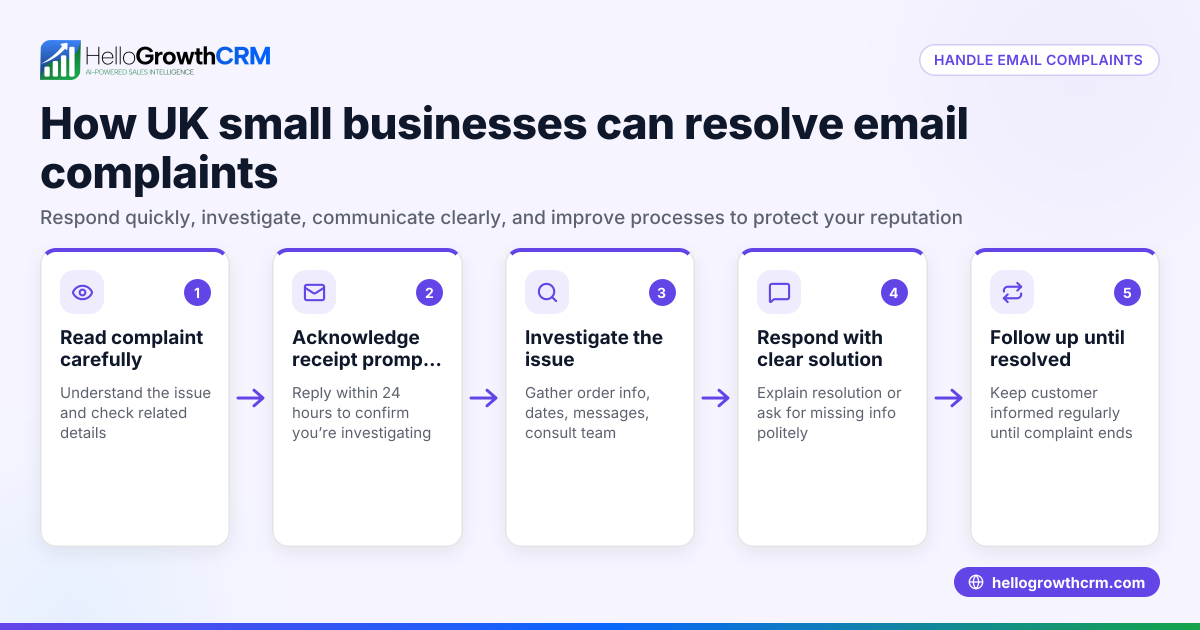
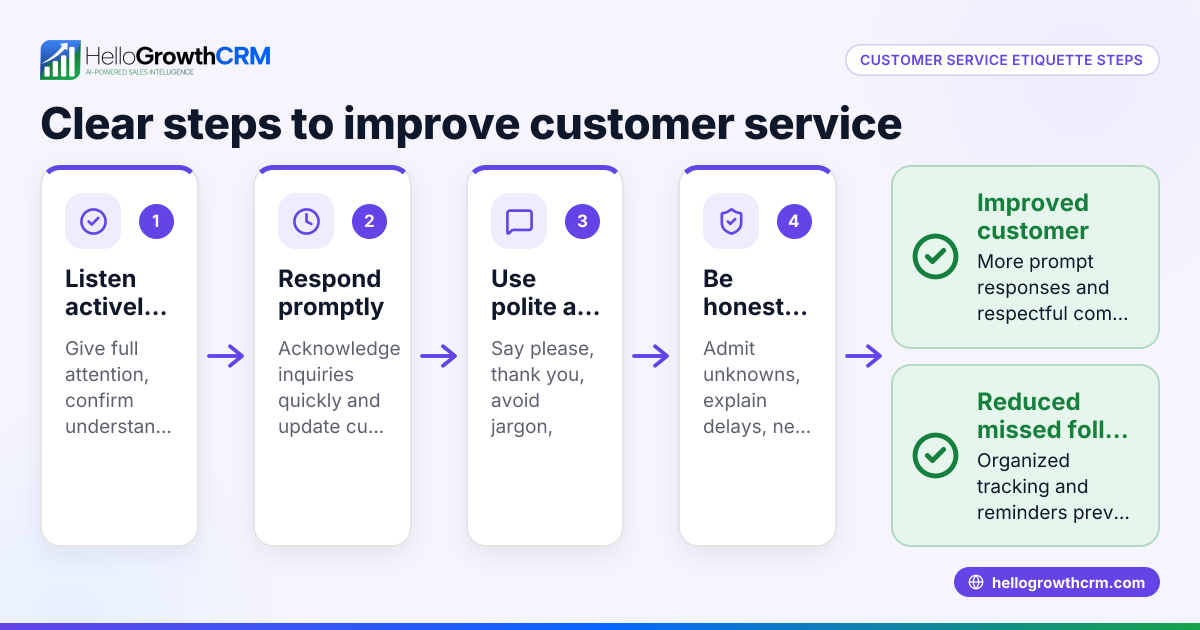
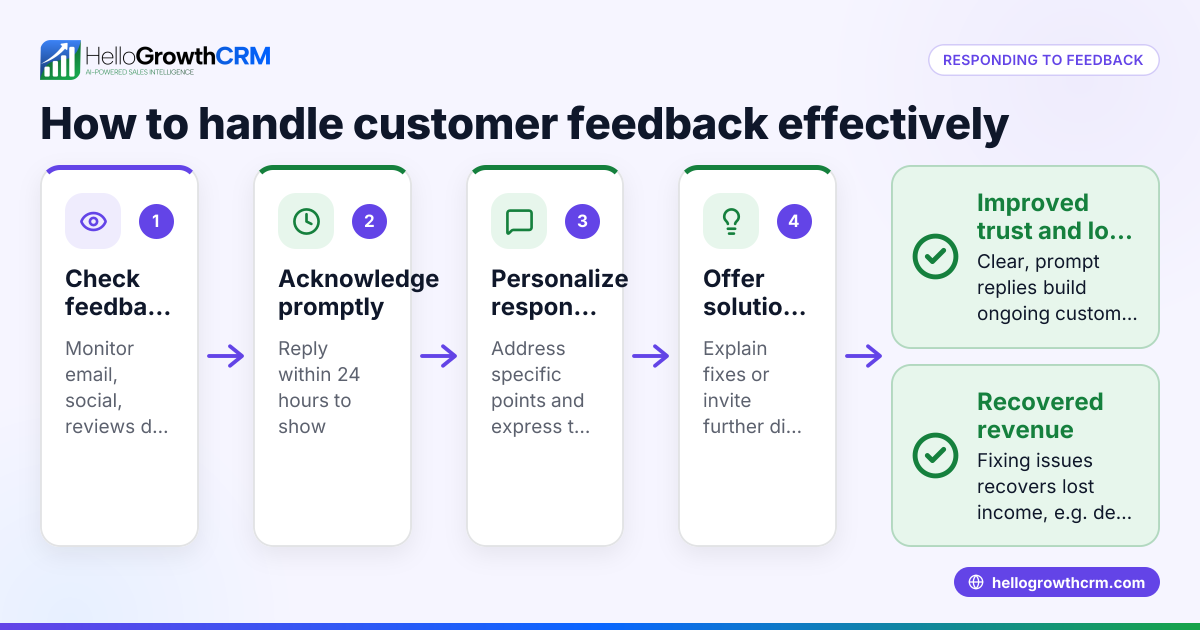
- Listen carefully and acknowledge the complaint immediately: Give the customer your full attention and repeat their concern back to confirm you understand it.
- Gather all relevant information: Review order details, past communications, and service records. Use a centralized system to avoid missing facts or repeating work.
- Assess the complaint objectively: Determine if the complaint is valid, partly valid, or a misunderstanding. This helps decide the appropriate solution.
- Offer a clear, fair solution: Propose remedies such as a refund, replacement, or service redo. Be honest about what you can do and set clear expectations.
- Take swift action: Implement the agreed solution quickly to rebuild trust.
- Follow up with the customer: Contact the customer after resolution to confirm satisfaction and see if further help is needed.
- Record the complaint and resolution details: Document everything for future reference and to identify recurring issues.
Check if your team communicated clearly and if the customer’s expectations were realistic. Using a customer health score can help prioritize complaints needing urgent attention.
Example (fictional figures)
A residential real-estate team in Phoenix, Arizona, received a complaint on 03/15/2026 about a delayed property viewing appointment. The client had paid a $5,000 deposit and expected the showing within 3 days. The team responded on 03/17/2026 and offered a $200 credit toward closing costs as compensation.
- Deposit paid = $5,000
- Credit offered = $200
- Percentage credit = ($200 ÷ $5,000) × 100
- Percentage credit = 0.04 × 100
- Percentage credit = 4%
Steps taken:
- Listened and acknowledged the delay.
- Verified scheduling records and found internal miscommunication.
- Assessed the complaint as valid.
- Offered the $200 credit.
- Applied the credit to the client's account.
- Followed up on 03/20/2026 to confirm satisfaction.
This clear, documented process helped retain the client and maintain trust.
Common mistakes
- Ignoring or delaying responses: Prevent this by setting SLA policies and monitoring response times.
- Failing to document complaints: Use a ticketing system to keep all issues on the same customer record.
- Offering vague or no solutions: Train staff to provide clear, fair remedies.
- Not following up after resolution: Schedule follow-ups to confirm the customer’s satisfaction.
- Using scattered communication channels: Consolidate messages in a CRM with WhatsApp and SMS support like HelloGrowthCRM’s WhatsApp and SMS CRM.
- Not prioritizing urgent complaints: Use tools like a customer health score to identify cases needing immediate attention.
Checklist to Evaluate Your Complaint Resolution Process
To ensure your complaint handling is effective, regularly review your approach using this checklist:
- Are complaints acknowledged promptly, ideally within a day?
- Is all relevant information collected before deciding on a solution?
- Do you objectively assess the validity of each complaint?
- Are solutions clear, fair, and communicated transparently to the customer?
- Is the agreed-upon remedy implemented quickly?
- Do you follow up with customers after resolution to confirm satisfaction?
- Are all complaints and outcomes documented consistently?
- Do you analyze complaint data to identify recurring issues or trends?
- Is your team trained to avoid common mistakes like delayed responses or vague solutions?
- Do you prioritize urgent complaints to prevent escalation?
Use this checklist periodically to spot gaps and improve your process, helping you maintain strong customer relationships and protect your business reputation.
Doing this in HelloGrowthCRM
HelloGrowthCRM helps by keeping service requests and support tickets linked to the same customer record as the deal. Its branded customer portal allows customers to submit tickets and access a knowledge base for self-service. Referral tracking and a centralized ticket system ensure no complaint gets lost, helping small businesses respond faster and more consistently.
Frequently asked questions
How quickly should I respond to customer complaints? Respond as soon as possible, ideally within 24 hours. Quick acknowledgment shows customers you value their concerns and helps prevent escalation.
What if the customer is unreasonable? Listen respectfully and try to understand their perspective. If the complaint is not valid, explain your policies clearly and offer alternatives if possible. Maintaining professionalism is key.
Should I offer refunds or discounts for every complaint? Not necessarily. Evaluate each case fairly. Sometimes a sincere apology or corrective action is enough. Use tools like a customer health score to prioritize serious cases.
How can I prevent complaints from recurring? Track complaint trends and identify root causes. Improve communication and processes accordingly. Using a CRM system that integrates tickets and customer data can highlight patterns.
Can I manage all complaint communications in one place? Yes, HelloGrowthCRM integrates WhatsApp, SMS, and email communications with tickets and customer records, making it easier to track and resolve complaints.
Key takeaways
- Listen carefully and acknowledge complaints promptly.
- Gather facts and assess complaints fairly before offering solutions.
- Use a clear, documented process to resolve and follow up.
- Avoid common mistakes like delayed responses and poor documentation.
- Centralize complaint management with tools like HelloGrowthCRM’s customer portal and ticket system.
- Prioritize urgent cases using customer health scores and clear communication channels.
Resolving customer complaints efficiently protects your business reputation and builds customer loyalty. To manage complaints and customer communications in one place, consider starting with HelloGrowthCRM’s Free Forever plan for up to 200 leads with no credit card required.
Ready to put this into practice?
Set up your pipeline, WhatsApp follow-ups, and AI lead scoring in minutes — free, no credit card.
Try HelloGrowthCRM freeGet CRM tips in your inbox
Join thousands of sales professionals who get weekly insights on CRM strategy, AI automation, and pipeline optimization.

The HelloGrowthCRM team publishes guides on CRM strategy, AI sales tools, and revenue operations for small business sales teams.