HelloGrowthCRM software
Built for real small-business sales teams
HelloGrowthCRM helps reps qualify faster, follow up on time, and close more deals—with practical automation in one place.
- AI lead scoring and pipeline visibility
- Built-in dialer, WhatsApp, and email automation
- Sales forecasting and RevOps-ready reporting
To sell anything, start by understanding your customer’s needs and pain points. Then clearly explain how your product or service solves their problem. Listen carefully, respond to objections, and guide the conversation toward a commitment. Finally, confirm the next steps to complete the sale. This article will help you sell with confidence by walking you through the process, showing an example, and highlighting common pitfalls.
Why this comes up / what goes wrong
Small-business owners often struggle to sell because they jump to pitching without knowing the customer’s real needs. They may lose leads by slow follow-up or by managing sales on scattered tools like text messages, email, and spreadsheets. Without a clear process, leads get lost, and sales opportunities slip away. This guide addresses these common problems by giving you a clear, repeatable method to sell anything effectively.
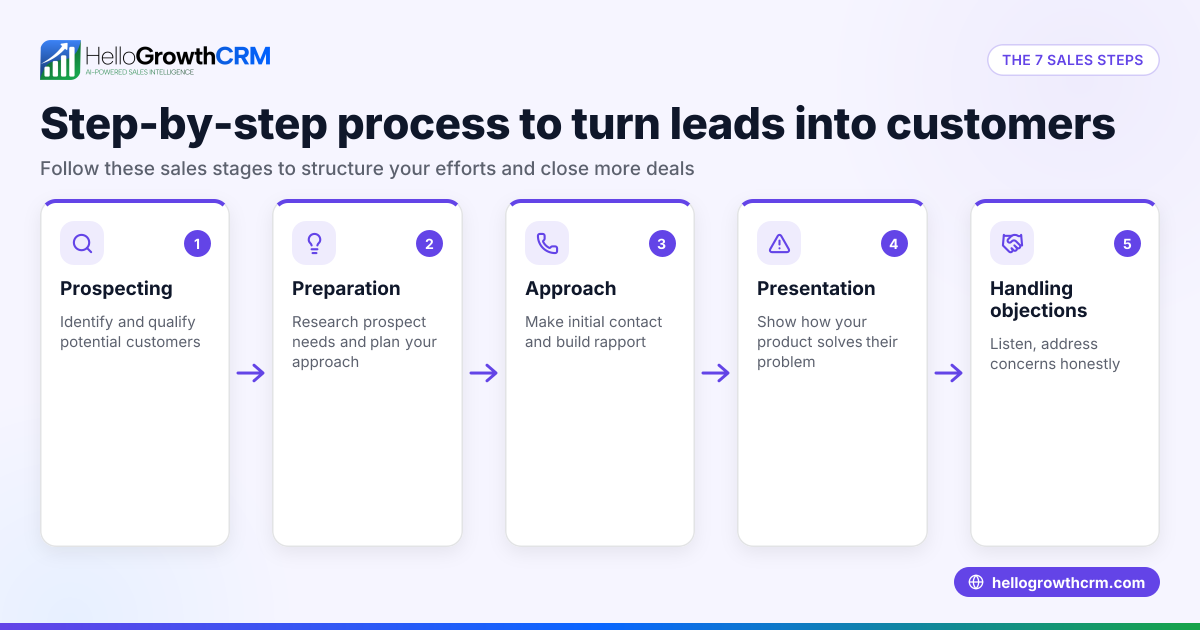
Step-by-step
- Identify your target customer and their problem
- Research who benefits most from your product.
- Ask questions to understand their challenges.
- Prepare your value proposition
- Clearly state how your product solves their problem.
- Keep it simple and focused on benefits.
- Make contact and build rapport
- Reach out via phone, email, or WhatsApp.
- Use a friendly tone and show genuine interest.
- Ask open-ended questions
- Encourage the customer to talk about their needs.
- Listen carefully to their answers.
- Present your solution tailored to their needs
- Highlight features that matter most to them.
- Use examples or demos if possible.
- Handle objections calmly
- Understand concerns fully.
- Provide clear, honest answers.
- Ask for the sale
- Suggest the next step clearly (e.g., sign a contract, schedule delivery).
- Be confident but not pushy.
- Follow up promptly
- Send a summary or proposal.
- Check in regularly until the sale closes.
- Keep records organized
- Track leads, conversations, and next steps.
- Avoid losing information by using tools instead of scattered notes.
Example (fictional figures)
Imagine a landscaping contractor in Charlotte, North Carolina, selling a lawn maintenance package.
- Target customer: Homeowners with medium-sized yards.
- Problem: Customers want a well-kept lawn but lack time.
- Value proposition: “We keep your lawn healthy and beautiful so you can relax without the hassle.”
Step 1: The contractor calls a lead on 05/10/2026.
Step 2: They ask about the yard size and current lawn care.
Step 3: The customer says they spend 5 hours weekly but still have patchy grass.
Step 4: The contractor presents a $150 monthly package including mowing, fertilizing, and weed control.
Step 5: The customer objects about cost.
Step 6: The contractor explains that DIY supplies cost about $75 monthly plus 5 hours of work, which is worth more than $75 in their time.
Step 7: The contractor asks if they can start service on 05/20/2026.
Step 8: The customer agrees.
Step 9: The contractor sends a confirmation email and schedules the first visit.
Calculations for customer time saved per month:
5 hours × $20/hour (assumed value of customer’s time) = $100
DIY supplies $75 + $100 time = $175 total cost
Service cost $150 < $175 total DIY cost, so it’s a good deal.
Common mistakes
- Not understanding the customer’s real needs
- Prevent by asking open questions and listening actively.
- Pitching too soon without rapport
- Build trust first through genuine conversation.
- Ignoring objections or getting defensive
- Welcome objections as a chance to clarify and reassure.
- Failing to ask for the sale clearly
- Always propose the next step explicitly.
- Slow or no follow-up
- Follow up within 24 hours to keep momentum.
- Using scattered tools for sales tracking
- Organize leads and next actions to avoid losing opportunities; consider a CRM with features like a built-in CRM dialer or WhatsApp and SMS CRM for better communication and tracking (see WhatsApp and SMS CRM, built-in CRM dialer, and HelloGrowthCRM for the United States).
Frequently asked questions
What’s the best way to start a sales conversation? Start by introducing yourself and asking about the customer’s current situation or challenges. Use open-ended questions to encourage them to share more. This builds rapport and helps you tailor your pitch.
How do I handle price objections? Listen fully to the objection, then explain the value and cost savings clearly. Compare your offer to alternatives, including the customer’s time and effort. Avoid lowering your price immediately; focus on benefits.
How can I follow up without seeming pushy? Send a polite message summarizing your last conversation and asking if they have questions. Space follow-ups reasonably, such as every few days, and always add value or new information.
Should I use a CRM to manage sales? Yes. A CRM helps track leads, conversations, and follow-ups so you never lose a sale due to disorganization. Tools with integrated communication like WhatsApp and SMS CRM or a built-in CRM dialer can streamline your process.
How do I know when to close the sale? Look for buying signals like questions about price, delivery, or contract terms. When the customer shows interest, ask for the sale by proposing a clear next step.
Key takeaways
- Understand your customer’s needs before pitching.
- Use clear, benefit-focused messages.
- Handle objections with calm, honest answers.
- Always ask for the sale with a clear next step.
- Follow up promptly and keep organized records.
- Use tools like a CRM with WhatsApp and SMS CRM or a built-in CRM dialer to streamline sales communication.
Selling is a skill you can improve by following these steps and avoiding common mistakes. For a practical start, consider managing your leads and communication effectively with a CRM designed for US small businesses.
Start on the Free Forever plan (200 leads, no credit card) at HelloGrowthCRM.
Ready to put this into practice?
Set up your pipeline, WhatsApp follow-ups, and AI lead scoring in minutes — free, no credit card.
Try HelloGrowthCRM freeGet CRM tips in your inbox
Join thousands of sales professionals who get weekly insights on CRM strategy, AI automation, and pipeline optimization.

The HelloGrowthCRM team publishes guides on CRM strategy, AI sales tools, and revenue operations for small business sales teams.