HelloGrowthCRM software
Built for real small-business sales teams
HelloGrowthCRM helps reps qualify faster, follow up on time, and close more deals—with practical automation in one place.
- AI lead scoring and pipeline visibility
- Built-in dialer, WhatsApp, and email automation
- Sales forecasting and RevOps-ready reporting
Tracking inbound customer enquiries is crucial for New Zealand small and mid-sized businesses to convert leads into customers efficiently. It involves capturing every enquiry with key details, entering it into a system where the team can access and act on it, assigning follow-up responsibilities, and reviewing progress to ensure no lead is lost.
Why this comes up / what goes wrong
Many small businesses in New Zealand receive enquiries through various channels such as text messages, emails, phone calls, or walk-ins. Often, these enquiries are tracked using disconnected tools like spreadsheets or personal notes. This causes problems like:
- Slow or missed follow-ups
- Confusion about who owns the enquiry
- Lost sales opportunities
- Poor customer experience
Business owners want a clear, step-by-step method to track enquiries that works for their team size and sales process, preventing leads from slipping through the cracks.
Step-by-step
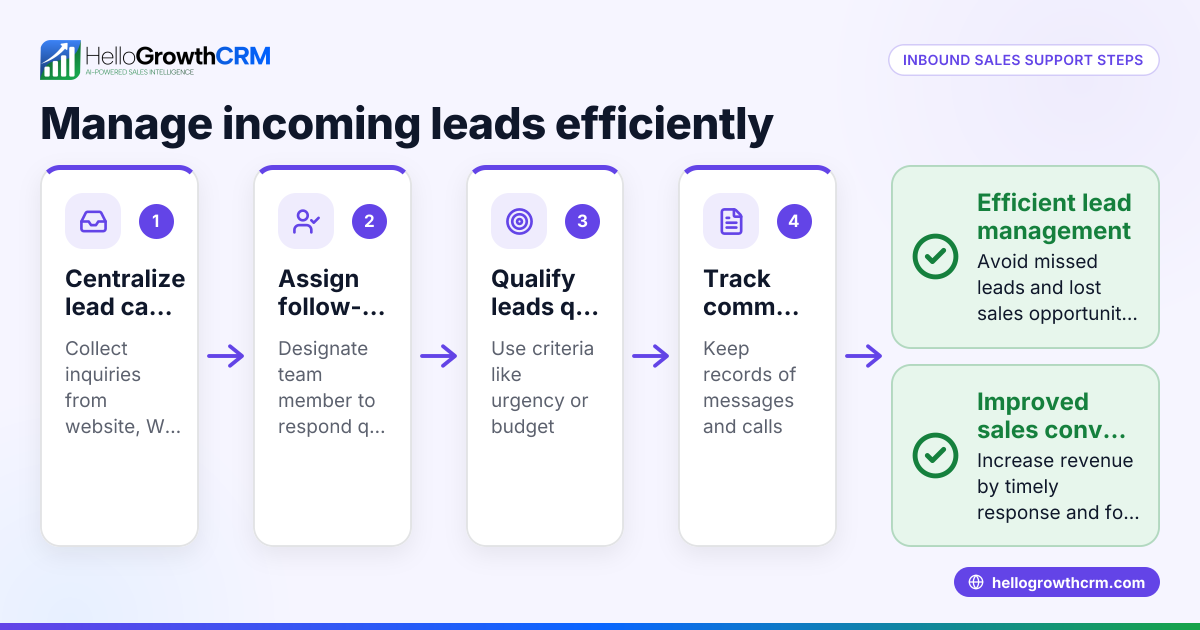
- Capture enquiry details immediately
- Record the customer's full name, contact information (phone number, email, WhatsApp), and the date and time of the enquiry.
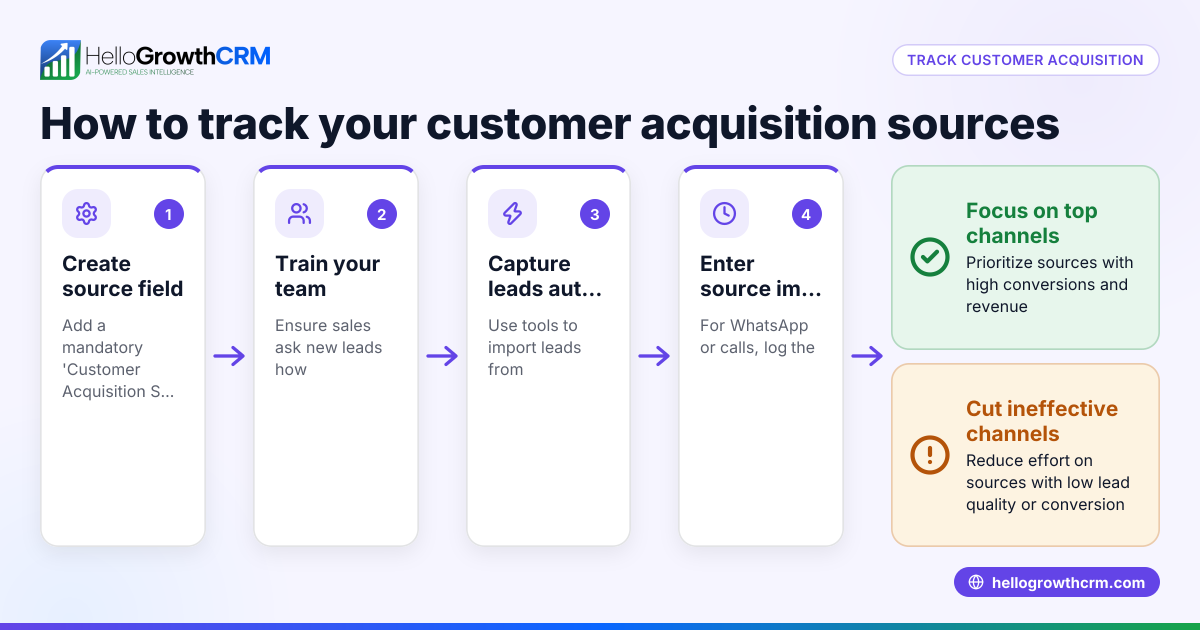
- Note the enquiry source (e.g., website form, phone call, walk-in, social media).
- Write a brief description of the enquiry.
- Enter the enquiry into a central tracking system
- Use a CRM, spreadsheet, or database accessible by your sales or service team.
- Ensure all fields are completed: contact info, enquiry description, source, and date.
- Assign a team member to follow up
- Decide who will be responsible for this enquiry.
- Set a clear deadline for follow-up, such as within 24 hours.
- Schedule reminders and tasks
- Use calendar alerts, task boards, or CRM reminders.
- Check daily for outstanding follow-ups.
- Log all follow-up actions and outcomes
- Record calls made, messages sent, and customer responses.
- Update the enquiry status: contacted, interested, not interested, or converted.
- Review enquiry data weekly
- Look for delays or bottlenecks.
- Analyse which enquiry sources bring the most leads.
- Keep customer history in one place
- After a sale or service, keep all enquiries and support tickets linked to the same customer record.
Refer to customer health score to improve ongoing customer tracking.
Example (fictional figures)
A real-estate agency in Auckland receives an enquiry on 10/04/2024 from a website form.
- Customer: Jane Smith
- Contact: 021 123 4567
- Enquiry: Interested in a 3-bedroom house in Mt Eden
- Source: Website form
Step 1: Capture details immediately on 10/04/2024.
Step 2: Enter enquiry into the tracking system with all fields filled.
Step 3: Assign agent Mike to follow up.
Step 4: Set follow-up task for 11/04/2024.
Step 5: Mike calls Jane on 11/04/2024 and logs the call.
Step 6: Weekly review shows website forms generate 20 enquiries per month.
Worked example with figures:
- Total enquiries from website forms this month: 20
- Average conversion rate: 25% (assumed for illustration) NEEDS EXPERT REVIEW
- Converted leads = 20 × 25% = 5
If each sale averages NZ$750,000:
- Total sales value = 5 × NZ$750,000 = NZ$3,750,000
This process ensures Jane’s enquiry is tracked and followed up promptly, contributing to sales.
Common mistakes
- Not logging enquiries immediately: Leads get lost. Prevent by capturing details as soon as enquiries arrive.
- Using multiple unconnected tools: Causes confusion and errors. Use one system or integrate tools.
- No assigned follow-up owner: Leads fall through cracks. Always assign responsibility.
- Ignoring follow-up deadlines: Lose customer interest. Use reminders and daily checks.
- Not updating enquiry status: Team doesn’t know progress. Log every action and status change.
- Separating service requests from customer records: Misses context and history. Keep all info linked.
Avoid these mistakes by following a consistent process and using tools designed for sales and service teams.
Doing this in HelloGrowthCRM
HelloGrowthCRM offers a customer portal, referrals tracking, support tickets, and a knowledge base that keep service requests on the same customer record as the deal. This helps your team see all enquiries and support tickets in one place, improving follow-up and customer experience. Learn more about how HelloGrowthCRM supports New Zealand businesses at HelloGrowthCRM for New Zealand.
Frequently asked questions
How do I keep track of enquiries from different channels like email and WhatsApp? Capture all enquiries in one system, noting the source for each enquiry. Using a CRM helps centralise messages from phone, email, WhatsApp, and other channels for easy tracking. See WhatsApp and SMS CRM.
How often should I review inbound enquiries? Review enquiries daily to handle urgent follow-ups and weekly to analyse trends and improve your process.
What is the best way to assign follow-ups? Assign each enquiry to a single team member responsible for follow-up. Use task boards or reminders to track deadlines.
Can I track how well my enquiry sources perform? Yes. By recording the source of each enquiry, you can analyse which channels bring the most leads and focus your marketing efforts accordingly.
How do I keep customers engaged after the initial enquiry? Use a CRM with a customer portal and support tickets to manage ongoing service requests linked to the same customer record, ensuring continuity and better service.
Key takeaways
- Capture all enquiry details immediately and completely.
- Use a central system to log and track enquiries.
- Assign responsibility and set clear follow-up deadlines.
- Schedule reminders and check daily for outstanding follow-ups.
- Review enquiry progress weekly to identify trends.
- Keep all customer interactions and service requests linked.
- Avoid multiple disconnected tools to reduce errors.
Start tracking your inbound customer enquiries today by following these steps. For New Zealand businesses, HelloGrowthCRM offers tools to keep all enquiries and service requests organised on one customer record.
Get started with Start on the Free Forever plan (200 leads, no credit card) and improve your enquiry tracking now.
Ready to put this into practice?
Set up your pipeline, WhatsApp follow-ups, and AI lead scoring in minutes — free, no credit card.
Try HelloGrowthCRM freeGet CRM tips in your inbox
Join thousands of sales professionals who get weekly insights on CRM strategy, AI automation, and pipeline optimization.

The HelloGrowthCRM team publishes guides on CRM strategy, AI sales tools, and revenue operations for small business sales teams.