HelloGrowthCRM software
Built for real small-business sales teams
HelloGrowthCRM helps reps qualify faster, follow up on time, and close more deals—with practical automation in one place.
- AI lead scoring and pipeline visibility
- Built-in dialer, WhatsApp, and email automation
- Sales forecasting and RevOps-ready reporting
Customer journey measurement is the process of tracking and analyzing every interaction a customer has with your business from first contact to post-sale support. It helps you understand how customers move through awareness, consideration, purchase, and loyalty stages. This article explains why measuring the customer journey matters, how to do it step-by-step, common mistakes to avoid, and how HelloGrowthCRM supports this process.
Why this comes up / what goes wrong
Small-business owners often struggle to understand where their leads come from, how prospects interact with their marketing and sales efforts, and why some leads convert while others don’t. Without measuring the customer journey, businesses rely on guesswork or fragmented data from text messages, emails, and spreadsheets. This leads to slow follow-up, lost leads, and missed opportunities to improve sales processes or customer service.
Measuring the customer journey helps you identify which channels and touchpoints are most effective, where prospects drop off, and what actions increase conversions and loyalty. For small and mid-sized businesses, this insight is crucial to focus limited resources on the highest-impact activities.
Step-by-step
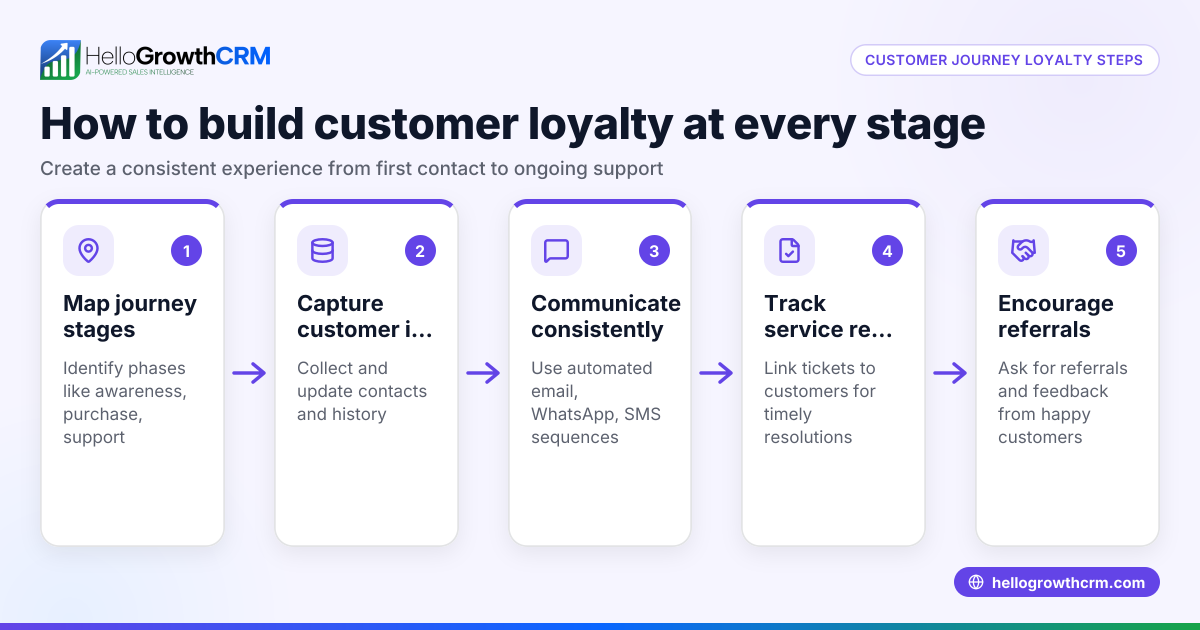
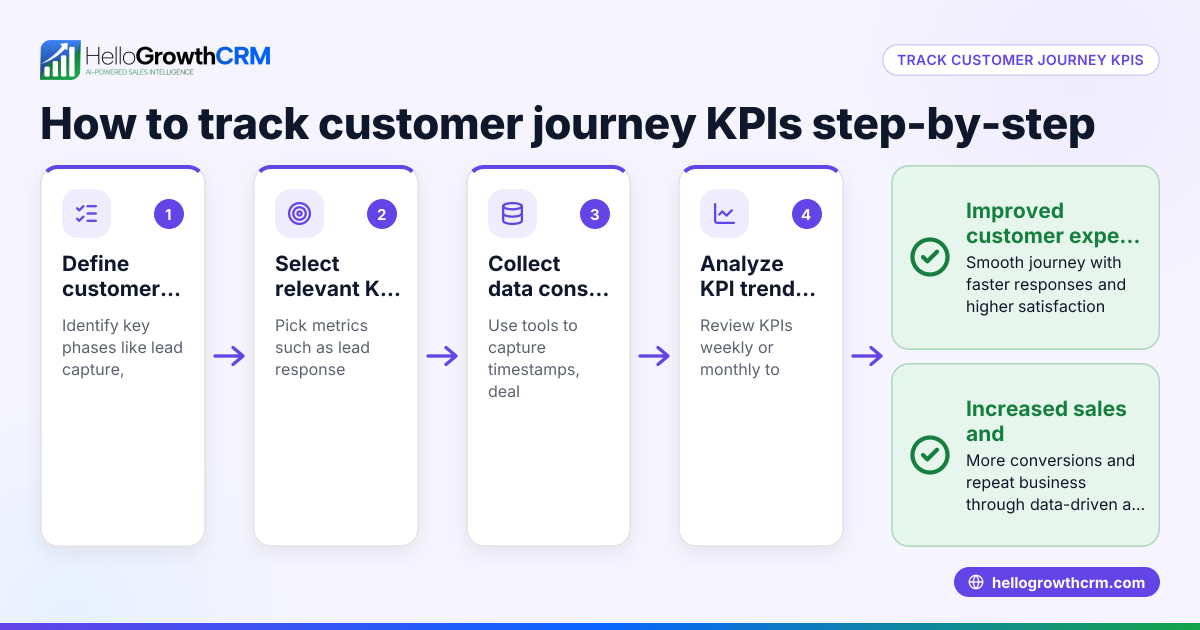
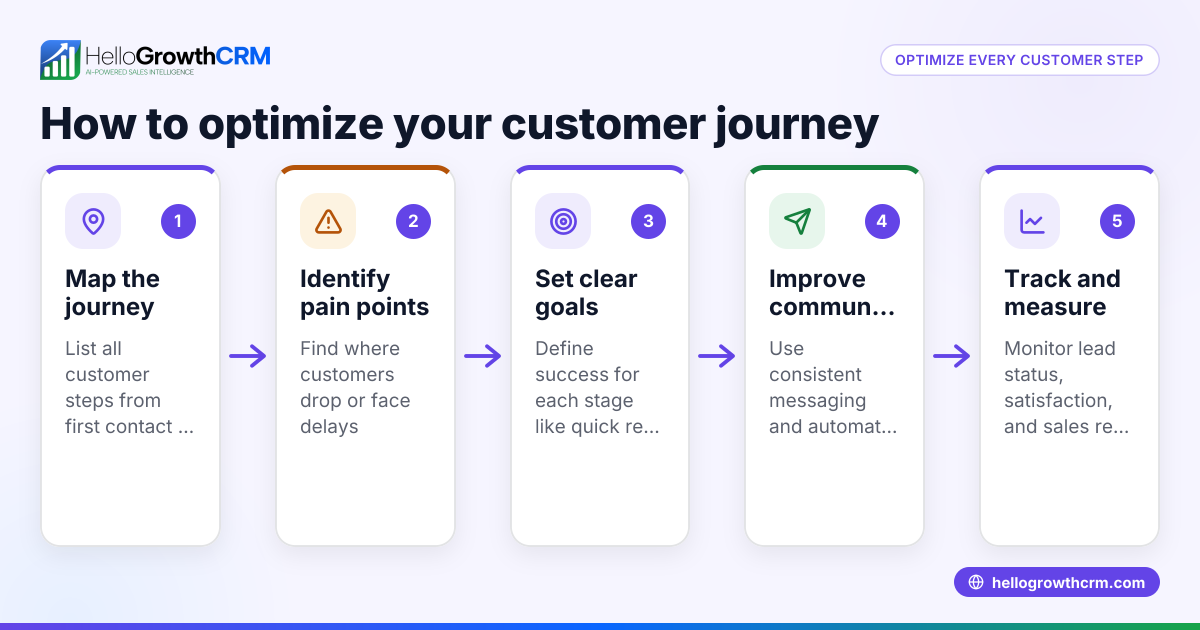
- Map your customer touchpoints. List all ways customers interact with your business: website visits, phone calls, WhatsApp messages, emails, social media, in-person meetings, and post-sale service requests. Check your current tools and channels to ensure no touchpoint is missed.
- Collect data consistently. Use forms, CRM logs, and communication records to capture customer interactions. Check that your data includes timestamps, channel source, and customer identification to link interactions.
- Segment your customers. Group customers by characteristics like lead source, industry, or purchase type. This helps identify patterns in journey paths.
- Track movement through stages. Define stages such as Awareness, Consideration, Purchase, and Loyalty. Check where each customer is in the journey based on their interactions and update this status regularly.
- Analyze drop-offs and delays. Identify where prospects stop engaging or experience slow follow-up. Check response times and conversion rates at each stage.
- Use customer feedback. Collect surveys or support tickets to understand customer satisfaction and post-sale experience.
- Adjust marketing and sales strategies. Based on findings, focus efforts on high-performing channels and improve weak touchpoints.
- Monitor continuously. Customer journeys evolve, so regularly review your data and update your measurement approach.
For more on maintaining customer engagement after sale, see how HelloGrowthCRM supports customer service with integrated tickets and a customer portal.
Example (fictional figures)
A B2B software reseller in Denver, Colorado, wants to measure their customer journey for Q1 2026.
- They identify 1,000 website visitors who filled contact forms.
- Of these, 300 responded to follow-up WhatsApp messages.
- 150 scheduled product demos.
- 60 made a purchase.
Calculate conversion rates:
Website visitors to WhatsApp responders:
1,000 × 30% = 300
WhatsApp responders to demos scheduled:
300 × 50% = 150
Demos to purchases:
150 × 40% = 60
Overall conversion from visitor to purchase:
60 ÷ 1,000 = 6%
The reseller notices a drop from 300 to 150 between WhatsApp response and demo scheduling. They decide to speed up follow-ups and personalize messages to improve this stage.
Common mistakes
- Ignoring post-sale interactions. Prevent by tracking service requests and support tickets on the same customer record to understand loyalty and repeat business. HelloGrowthCRM keeps service requests linked to deals.
- Using fragmented tools. Prevent by centralizing communication and data collection to avoid lost leads or incomplete journeys. Consider a CRM that integrates WhatsApp, SMS, and email.
- Not updating journey stages. Prevent by reviewing customer status regularly to reflect current engagement.
- Failing to act on data. Prevent by setting clear goals for each stage and adjusting strategies based on insights.
- Overlooking customer feedback. Prevent by collecting and analyzing support tickets and surveys to improve the journey.
Doing this in HelloGrowthCRM
HelloGrowthCRM helps track the entire customer journey by keeping service requests, tickets, and referrals linked to the same customer record as the deal. Its branded self-service customer portal allows customers to interact post-sale, while the knowledge base supports quick issue resolution. This integration helps small and mid-sized businesses maintain a complete view of customer interactions from lead to loyalty. Learn more about HelloGrowthCRM’s customer health score and portal features in HelloGrowthCRM for the United States and WhatsApp and SMS CRM.
Frequently asked questions
What is customer journey measurement? Customer journey measurement tracks all customer interactions with your business, from first contact through purchase and beyond. It helps you understand how customers move through stages and where to improve.
Why is measuring the customer journey important for small businesses? It reveals which marketing and sales efforts work best, reduces lead loss from slow follow-up, and improves customer satisfaction by addressing pain points.
How can I start measuring customer journeys without complex tools? Begin by listing touchpoints and manually tracking interactions using spreadsheets or simple CRM features. Focus on key stages and regularly update customer status.
What role does customer feedback play in journey measurement? Feedback highlights issues and satisfaction levels after purchase, helping improve loyalty and service quality.
Can HelloGrowthCRM help with customer journey measurement? Yes, it links service requests, tickets, and referrals to deals on one customer record and provides a branded customer portal for ongoing engagement.
Key takeaways
- Customer journey measurement tracks every interaction from lead to loyalty.
- Mapping touchpoints and collecting consistent data are essential first steps.
- Analyze conversion rates and drop-offs to improve sales and service.
- Avoid fragmented tools and keep post-sale interactions linked to deals.
- Use customer feedback and support tickets to enhance the journey.
- HelloGrowthCRM supports journey measurement with integrated customer portals and ticketing.
Start measuring your customer journey today to improve follow-up speed, conversion rates, and customer loyalty. Start on the Free Forever plan (200 leads, no credit card).
Ready to put this into practice?
Set up your pipeline, WhatsApp follow-ups, and AI lead scoring in minutes — free, no credit card.
Try HelloGrowthCRM freeGet CRM tips in your inbox
Join thousands of sales professionals who get weekly insights on CRM strategy, AI automation, and pipeline optimization.

The HelloGrowthCRM team publishes guides on CRM strategy, AI sales tools, and revenue operations for small business sales teams.