HelloGrowthCRM software
Built for real small-business sales teams
HelloGrowthCRM helps reps qualify faster, follow up on time, and close more deals—with practical automation in one place.
- AI lead scoring and pipeline visibility
- Built-in dialer, WhatsApp, and email automation
- Sales forecasting and RevOps-ready reporting
To track overdue support tickets in New Zealand, begin by compiling a list of all active support tickets including their due dates. Identify tickets that have passed their resolution deadlines and prioritise them for immediate follow-up. Assign responsibility for each overdue ticket and monitor progress until closure. This article explains why tracking overdue tickets is important, provides step-by-step instructions, a practical example, common mistakes to avoid, and how HelloGrowthCRM supports this process.
Why this comes up / what goes wrong
Small business owners in New Zealand often struggle with managing customer support because tickets can pile up without clear visibility on which ones are overdue. This leads to slow responses, unhappy customers, and lost sales or repeat business. Support requests may come via email, phone, or text, and without a central tracking system, it’s easy to miss deadlines. Overdue tickets often happen because of unclear ownership, lack of regular review, or poor prioritisation.
Step-by-step
- Gather all active support tickets: Collect every open ticket from your support channels, whether email, phone logs, or spreadsheets. Make sure each ticket has a clear creation date and an expected resolution due date.
- Create an overdue tickets list: Filter tickets where the current date is past the due date. These are your overdue tickets needing urgent attention.
- Assign responsibility: For each overdue ticket, assign a staff member responsible for follow-up and resolution.
- Prioritise tickets: Rank overdue tickets by severity or customer impact, so the most critical issues are handled first.
- Set reminders and follow-ups: Use calendar alerts or task boards to remind the responsible person to update or resolve the ticket.
- Communicate with customers: Keep customers informed about delays and expected resolution times.
- Review regularly: Schedule daily or weekly reviews of overdue tickets to ensure none are overlooked.
- Update ticket status: Mark tickets as resolved or escalate them if needed.
- Record resolution details: For each closed ticket, note how the issue was resolved for future reference.
- Analyse trends: Periodically check for recurring issues or bottlenecks causing delays.
For managing these steps digitally, consider tools that integrate ticket tracking with customer communication channels like WhatsApp and SMS CRM for easier follow-up and visibility. See how HelloGrowthCRM supports this with its customer health score and WhatsApp and SMS CRM features.
Example (fictional figures)
A Christchurch building company, KiwiBuild Ltd, tracks support tickets for after-sales service. They have 20 open tickets with due dates and want to find overdue ones as of 15/06/2024.
Ticket #1 due 10/06/2024 — overdue Ticket #2 due 16/06/2024 — not overdue Ticket #3 due 13/06/2024 — overdue
They list all tickets and filter those with due dates before 15/06/2024:
Number of tickets overdue = 2
They assign their support manager to follow up on these two tickets immediately.
For Ticket #1, the issue cost was NZ$1,200 for parts replacement.
For Ticket #3, the issue was delayed due to supplier backorder.
They prioritise Ticket #1 as high because it affects a critical project deadline.
They set reminders for daily updates and inform the customers of expected resolution dates.
This process helps KiwiBuild Ltd reduce overdue tickets and improve customer satisfaction.
Common mistakes
- Ignoring overdue tickets: Prevent by scheduling regular reviews and assigning clear responsibility.
- No clear due dates: Always set and record due dates when tickets are created.
- Poor communication: Keep customers updated to manage expectations.
- Using multiple disconnected tools: Consolidate ticket tracking and communication to avoid missed follow-ups. HelloGrowthCRM’s integrated customer portal can help here.
- Not prioritising tickets: Rank tickets by urgency to focus resources effectively.
- Failing to document resolutions: Record details for future reference and training.
Doing this in HelloGrowthCRM
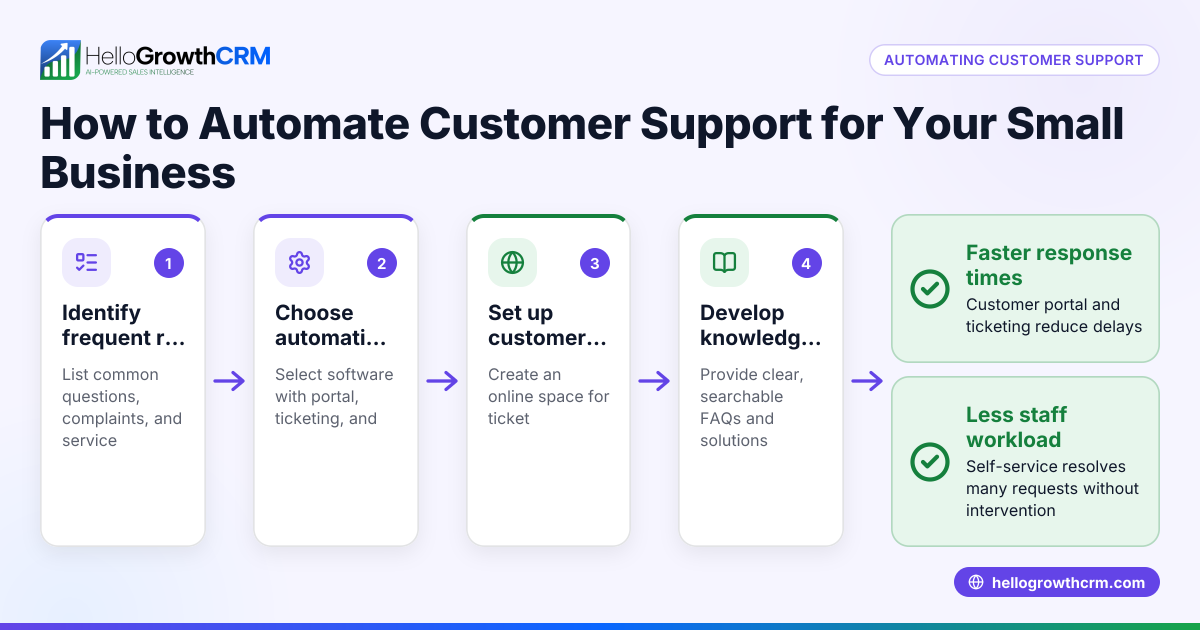
HelloGrowthCRM offers a branded self-service customer portal where support tickets and knowledge base articles live alongside the customer record and deal. This means after the sale, service requests stay connected to the same customer record, simplifying tracking and follow-up. The portal supports ticket management and referral tracking, helping your team stay organised and responsive. Learn more about these features in HelloGrowthCRM for New Zealand at hellogrowthcrm.com/new-zealand.
Frequently asked questions
How can I quickly identify overdue support tickets? Use a ticketing system or spreadsheet with due dates and filter tickets where the due date is before today’s date. This gives a clear list of overdue tickets requiring immediate action.
What’s the best way to prioritise overdue tickets? Assess the impact on the customer and business, such as safety issues or project delays. High-impact tickets should be resolved first, while less urgent ones can wait.
How often should I review overdue tickets? Daily or at least weekly reviews are recommended to ensure timely follow-up and avoid backlog.
Can I track support tickets and customer communication in one place? Yes, using a CRM with integrated ticketing and communication channels like WhatsApp and SMS CRM helps keep all information together, reducing missed follow-ups.
What should I do if tickets remain overdue for a long time? Escalate to management or reassign to another team member. Analyse the cause of delay and adjust processes accordingly.
Key takeaways
- Compile all open tickets with due dates to identify overdue ones.
- Assign responsibility and prioritise tickets by impact.
- Use reminders and regular reviews to keep overdue tickets visible.
- Communicate proactively with customers about delays.
- Avoid disconnected tools by consolidating ticket tracking and communication.
- Document resolutions for future reference and improvement.
Tracking overdue support tickets effectively improves customer satisfaction and business reputation. Start managing your tickets better today.
Start on the Free Forever plan (200 leads, no credit card) at free CRM for small business.
Ready to put this into practice?
Set up your pipeline, WhatsApp follow-ups, and AI lead scoring in minutes — free, no credit card.
Try HelloGrowthCRM freeGet CRM tips in your inbox
Join thousands of sales professionals who get weekly insights on CRM strategy, AI automation, and pipeline optimization.

The HelloGrowthCRM team publishes guides on CRM strategy, AI sales tools, and revenue operations for small business sales teams.