HelloGrowthCRM software
Built for real small-business sales teams
HelloGrowthCRM helps reps qualify faster, follow up on time, and close more deals—with practical automation in one place.
- AI lead scoring and pipeline visibility
- Built-in dialer, WhatsApp, and email automation
- Sales forecasting and RevOps-ready reporting
Tracking sales targets by rep is essential for small and mid-sized UK businesses to ensure sales goals are met and performance is visible. Many business owners struggle with inconsistent data, missed follow-ups, and unclear reporting, especially when sales run across WhatsApp, email and spreadsheets. This guide explains why accurate tracking matters, walks you through the steps to set up and maintain sales target tracking by rep, shows a realistic example, highlights common mistakes, and explains how HelloGrowthCRM supports this process.
Why this comes up / what goes wrong
Small UK business owners often have growing sales teams but lack a structured way to track each sales rep’s targets and achievements. Without a clear system, leads and deals get lost in WhatsApp chats or emails, follow-ups slip, and it’s hard to know who is on track. Sales targets may be set at a high level, but daily or weekly tracking by rep is missing. This causes delays in course correction and lost revenue.
Step-by-step
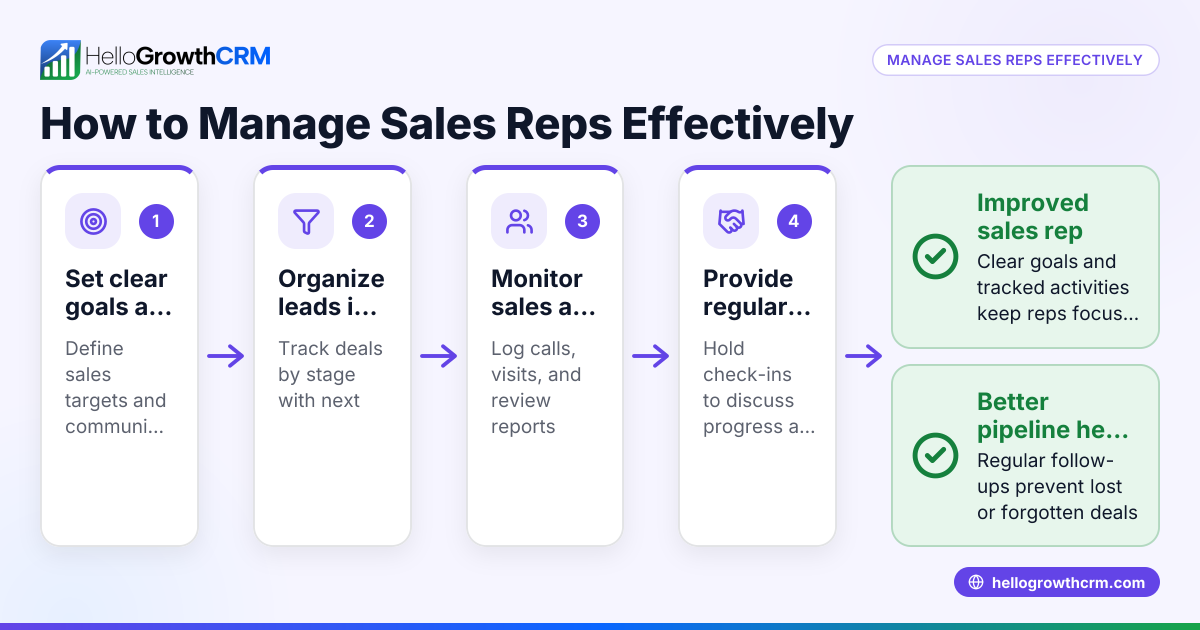
- Define clear sales targets per rep: Assign a specific sales target for each rep for the period (monthly or quarterly). Write down the target value in GBP, e.g. £50,000 for April.
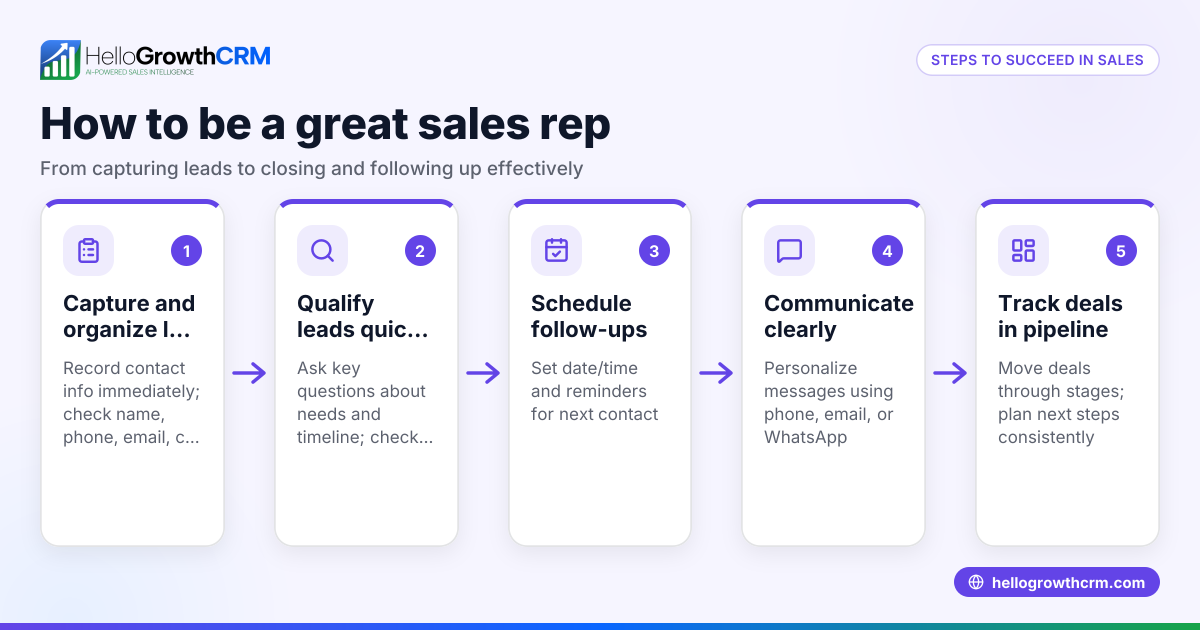
- Set up a tracking sheet or CRM pipeline: Create a spreadsheet or use a CRM pipeline to log each rep’s deals. Include columns for deal value, stage, expected close date, and follow-up actions.
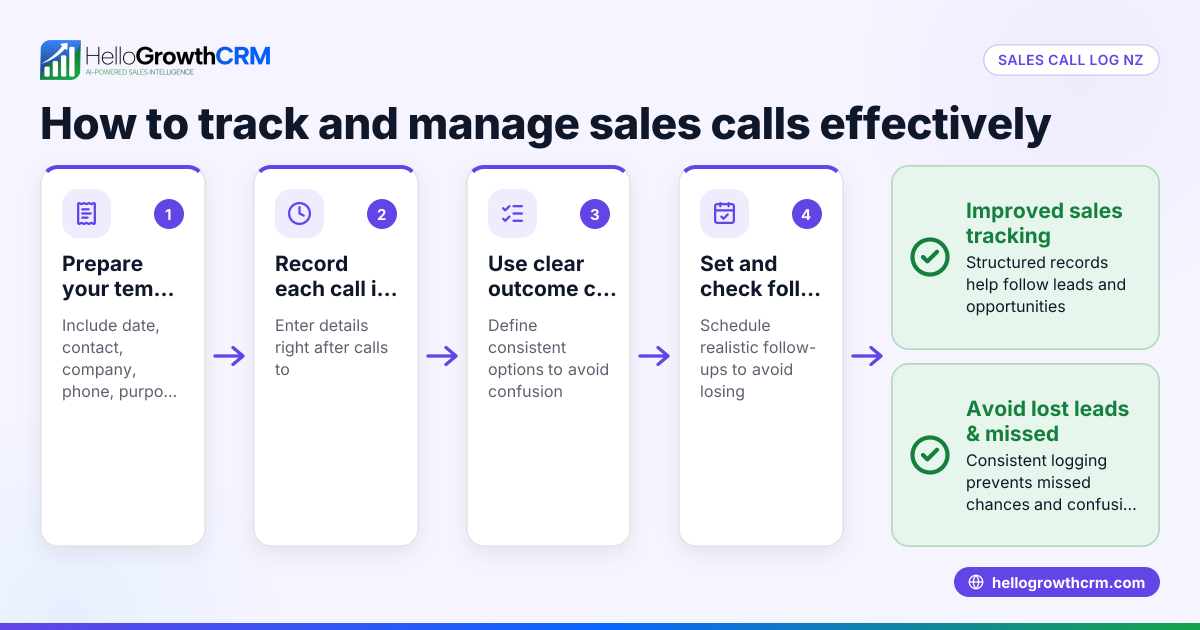
- Record all sales activities and deals promptly: Instruct reps to enter deals as soon as a quotation or offer is sent. This keeps the pipeline live and visible.
- Update deal stages and expected values weekly: Move deals through stages like ‘quote sent’, ‘negotiation’, and ‘closed won’ regularly. Adjust expected values if deals change.
- Compare actual sales to targets weekly: At the end of each week, total the value of closed deals per rep and compare with the target.
- Analyse gaps and plan follow-ups: For reps below target, identify deals to push forward or new leads to contact. Set follow-up tasks and dates.
- Hold brief weekly review meetings: Discuss progress, challenges, and next steps with each rep.
- Adjust targets or resources if needed: If a rep consistently misses targets, review whether the target is realistic or if extra support is needed.
- Keep all data in one place for easy reporting: Use a CRM or central spreadsheet to avoid scattered information.
- Ensure accountability and transparency: Share progress reports with the team to motivate and align efforts.
Example (fictional figures)
A solar-panel installer in Glasgow sets April sales targets by rep:
- Rep A: £60,000
- Rep B: £40,000
On 01/04/2024, the tracking sheet is created with columns: Rep, Deal Name, Deal Value, Stage, Expected Close Date, Follow-up Date.
Week 1 (ending 07/04/2024):
- Rep A closes a deal worth £20,000.
- Rep B has two deals: one at £10,000 in ‘quote sent’ stage, one at £5,000 in ‘negotiation’.
Calculations:
Rep A actual sales = £20,000
Rep A target = £60,000
Rep A progress = £20,000 ÷ £60,000 = 33.3%
Rep B actual sales = £0 (no closed deals yet)
Rep B target = £40,000
Rep B progress = £0 ÷ £40,000 = 0%
Week 2 (ending 14/04/2024):
Rep A closes another £30,000 deal. Rep B closes the £10,000 deal and advances the £5,000 deal to ‘quote sent’.
Calculations:
Rep A total sales = £20,000 + £30,000 = £50,000
Rep A progress = £50,000 ÷ £60,000 = 83.3%
Rep B total sales = £10,000
Rep B progress = £10,000 ÷ £40,000 = 25%
The manager sets follow-up tasks for Rep B to close the £5,000 deal and find new leads.
Common mistakes
- Not updating deal stages regularly: Leads to outdated data and missed follow-ups. Prevent by scheduling weekly updates.
- Using multiple disconnected tools: Causes data loss and confusion. Prevent by centralising data in one CRM or sheet.
- Setting unrealistic targets without input: Leads to demotivation. Prevent by involving reps in target setting.
- Ignoring pipeline hygiene: Old or dead deals clog the system. Prevent by cleaning the pipeline monthly.
- Failing to review progress frequently: Delays corrective action. Prevent by holding weekly review meetings.
- Not assigning follow-up tasks: Leads to lost deals. Prevent by setting clear next steps with deadlines.
Doing this in HelloGrowthCRM
HelloGrowthCRM offers Deals (pipeline) management where quotations sent appear as deals at the 'quote sent' stage with follow-up dates, so no deal is forgotten. Territory and field operations tools allow field reps to log visits from their phone, with managers able to see the day's activity. For founders without a sales manager, Managed RevOps provides a weekly follow-up execution service to keep the sales queue active. Learn more about HelloGrowthCRM for the United Kingdom, its WhatsApp and SMS CRM, and the built-in CRM dialer.
Frequently asked questions
How often should I update sales targets by rep? Sales targets are typically set monthly or quarterly, but progress should be updated weekly to track deals and adjust actions promptly.
What is the best way to record sales activity for tracking? Using a CRM pipeline is best as it centralises data, shows deal stages, and sets follow-up tasks. Alternatively, a well-structured spreadsheet can work if updated regularly.
How can I motivate reps to meet their sales targets? Set realistic targets with input from reps, provide regular feedback, recognise achievements, and offer support where needed.
What should I do if a rep consistently misses targets? Review whether targets are realistic, check for obstacles, provide coaching or resources, and adjust plans as necessary.
Can HelloGrowthCRM help with tracking sales targets? Yes, HelloGrowthCRM’s Deals pipeline and Managed RevOps services help keep deals visible, follow-ups timely, and sales activity organised.
Key takeaways
- Define clear sales targets per rep and period.
- Track deals and sales activity weekly in one place.
- Update deal stages and expected values regularly.
- Compare actual sales to targets and plan follow-ups.
- Hold weekly reviews to keep reps accountable.
- Use tools like HelloGrowthCRM to centralise and automate tracking.
Start tracking your sales targets by rep today with a system that keeps leads and deals visible. To try a CRM designed for UK businesses and growing sales teams, start on the Free Forever plan (200 leads, no credit card).
Ready to put this into practice?
Set up your pipeline, WhatsApp follow-ups, and AI lead scoring in minutes — free, no credit card.
Try HelloGrowthCRM freeGet CRM tips in your inbox
Join thousands of sales professionals who get weekly insights on CRM strategy, AI automation, and pipeline optimization.

The HelloGrowthCRM team publishes guides on CRM strategy, AI sales tools, and revenue operations for small business sales teams.