HelloGrowthCRM software
Built for real small-business sales teams
HelloGrowthCRM helps reps qualify faster, follow up on time, and close more deals—with practical automation in one place.
- AI lead scoring and pipeline visibility
- Built-in dialer, WhatsApp, and email automation
- Sales forecasting and RevOps-ready reporting
The ideal marketing email length balances enough information to engage readers without overwhelming them. Typically, 50 to 125 words work best for marketing emails aimed at small and mid-sized business prospects. This article explains why length matters, how to find your ideal email size, a step-by-step approach, common pitfalls, and how HelloGrowthCRM supports your email marketing efforts.
Why this comes up / what goes wrong
Many small-business owners struggle with marketing emails that either lose attention or fail to convey enough value. Writing too long an email can cause prospects to skim or ignore it, while too short an email may leave them confused or uninterested. Business owners often send emails from spreadsheets or text messages, lacking tools to test or automate follow-up. This leads to inconsistent engagement and lost leads. Understanding ideal email length helps improve open rates, click-throughs, and conversions.
Small teams without dedicated marketing software find it hard to track which email lengths work best. They might send a long email once and a short email another time, but without data, they can’t tell which performs better. This trial-and-error wastes time and risks losing potential customers.
Step-by-step
- Define Your Goal: Decide if the email’s purpose is to inform, invite, or sell. Shorter emails (50-75 words) work well for invitations or quick offers. Longer emails (100-125 words) suit detailed product introductions or explanations.
- Write Your Draft: Keep sentences concise and clear. Use short paragraphs and bullet points to make the email easy to scan. Include a clear call to action so readers know what to do next.
- Check Readability: Read your draft aloud or use online tools to ensure the tone is conversational and jargon-free. Make sure the message is easy to understand on both desktop and mobile devices.
- Test Email Length: Send different versions of your email with varying lengths to small segments of your contact list. Track open rates, click-through rates, and response rates to see which length performs best.
- Analyze Results: Compare the engagement metrics from each version. Choose the email length that yields the highest positive response and best meets your goal.
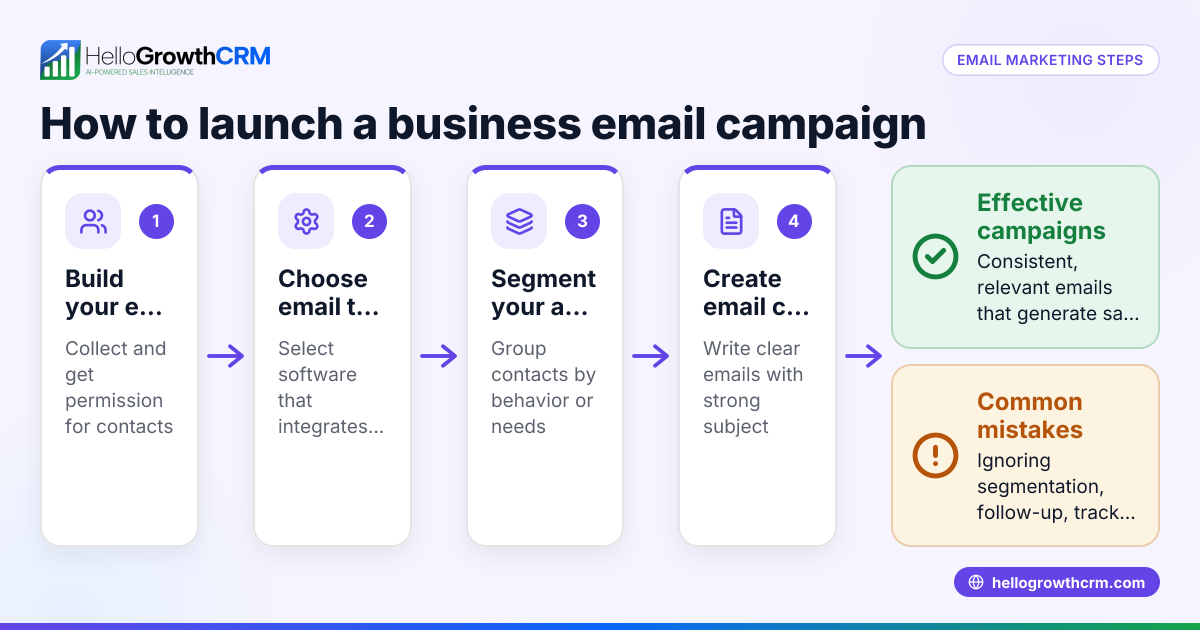
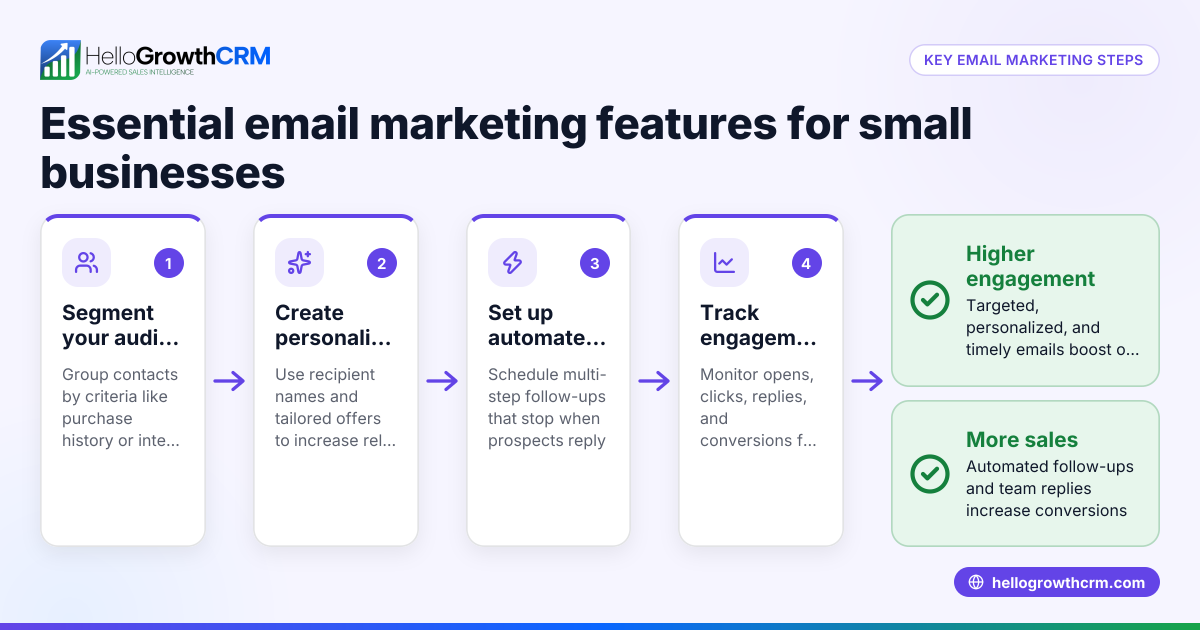
- Refine and Automate: Once you find the ideal length, set up automated follow-up sequences to nurture leads without extra manual work. Stop the sequence immediately when a prospect replies to avoid overwhelming them.
- Use a Shared Inbox: Manage replies in a shared inbox so your sales or support team stays aligned and can respond quickly. This avoids missed opportunities or duplicated efforts.
For more on automating your email outreach, see email automation and sequences.
Example (fictional figures)
A landscaping contractor in Charlotte, North Carolina, wants to increase leads from a spring promotion. They draft two emails:
- Short email: 60 words
- Longer email: 120 words
They send each to 500 prospects and track responses over one week.
Short email results: Open rate = 200 / 500 = 40% Response rate = 30 / 500 = 6%
Long email results: Open rate = 180 / 500 = 36% Response rate = 45 / 500 = 9%
Revenue from short email: 30 responses × $1,200 average sale = $36,000
Revenue from long email: 45 responses × $1,200 average sale = $54,000
The longer email generated $54,000 compared to $36,000 from the shorter one, indicating a better fit for this audience and offer.
Common mistakes
- Too long without clear focus: Emails that ramble or include unnecessary details lose readers. Prevent this by outlining key points before writing and cutting filler.
- Too short and vague: Emails that don’t explain the offer or next steps leave prospects confused. Prevent this by including a clear call to action and essential information.
- Ignoring testing: Sending the same email length to all contacts without testing misses opportunities to optimize. Prevent this by running A/B tests on email length and content.
- No follow-up sequence: Sending one email and giving up loses leads who might need reminders. Prevent this by automating multi-step follow-ups that stop immediately when prospects reply.
- Using multiple email clients: Managing replies in separate email apps causes confusion and missed messages. Prevent this by using a shared inbox so your team can see all conversations.
- Neglecting mobile formatting: Emails too long or dense don’t display well on phones. Prevent this by keeping paragraphs short and using bullet points for easy scanning.
Learn more about managing email replies and sequences with HelloGrowthCRM at HelloGrowthCRM for the United States.
Doing this in HelloGrowthCRM
HelloGrowthCRM helps you manage marketing emails with features like the HelloMail shared inbox, where replies to quotation emails are visible to your entire team, ensuring no lead slips through. You can set up sequences and campaigns to automate a five-step follow-up over two weeks that stops immediately when a prospect replies. This automation improves your response rates without extra manual work. Learn more about email automation and sequences and how HelloGrowthCRM supports US businesses at HelloGrowthCRM for the United States.
Frequently asked questions
What is the best email length for mobile users? Most users check emails on mobile devices, so shorter emails around 50-75 words perform better on small screens. Keep paragraphs brief and use bullet points for easy scanning.
How often should I send marketing emails? A consistent but not overwhelming schedule is best. Sending one to two emails per week is typical for small businesses. Use sequences to space follow-ups automatically and stop when prospects reply.
Can I use the same email length for all campaigns? No, ideal length depends on your goal and audience. Testing different lengths per campaign helps find what works best. For example, product launches may require longer emails than quick promotions.
How do I measure if my email length is effective? Track open rates, click-through rates, and response rates. Higher engagement usually indicates a good length and content fit. Use A/B testing to compare versions.
Does email length affect deliverability? Not directly, but very long emails with heavy images or links can trigger spam filters. Keep emails concise and relevant to improve deliverability.
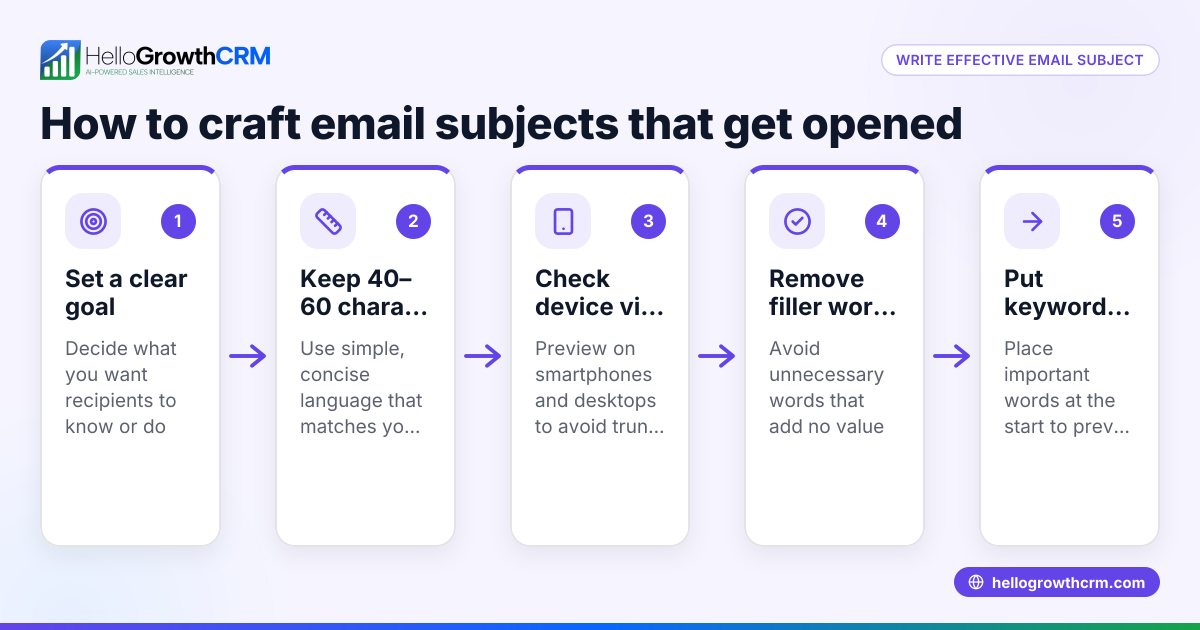
What should I include in a marketing email besides length? Include a clear subject line, a strong call to action, and personalized content. The message should be relevant to the recipient’s needs and easy to read.
Key takeaways
- Ideal marketing email length is typically 50 to 125 words depending on purpose.
- Test different lengths to see what your audience prefers.
- Use clear calls to action and concise language.
- Automate follow-ups with sequences that stop on reply to avoid spamming.
- Manage emails in a shared inbox for team visibility and faster response.
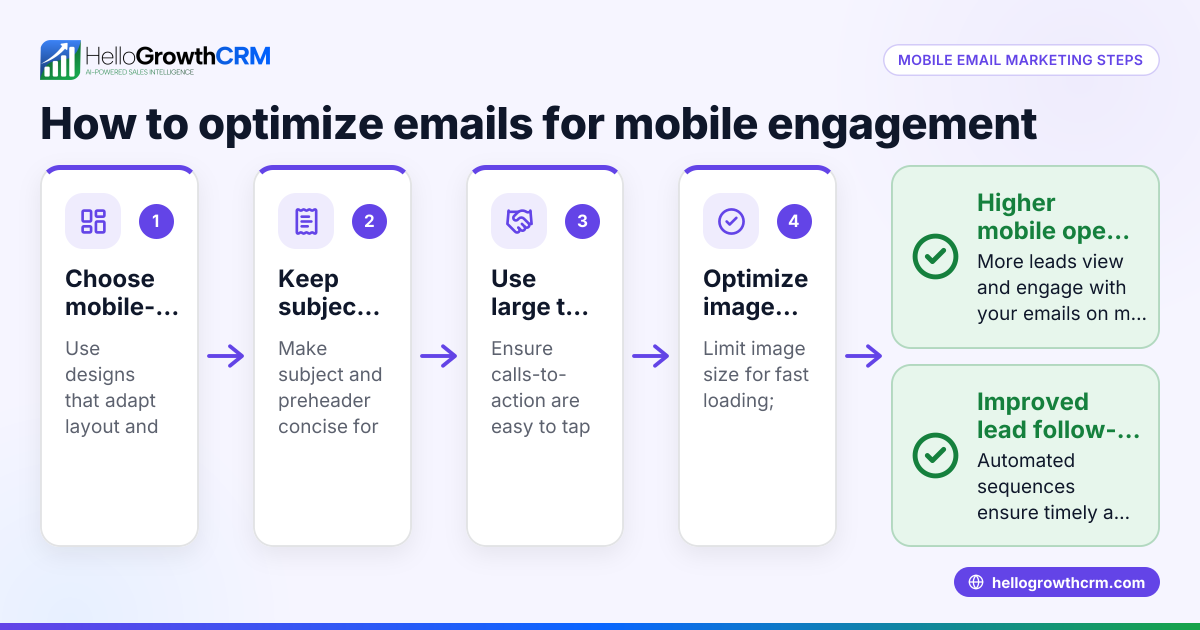
- Format emails for easy reading on mobile devices.
Start improving your marketing emails with practical tools and automation. Start on the Free Forever plan (200 leads, no credit card) today to streamline your sales and marketing.
Ready to put this into practice?
Set up your pipeline, WhatsApp follow-ups, and AI lead scoring in minutes — free, no credit card.
Try HelloGrowthCRM freeGet CRM tips in your inbox
Join thousands of sales professionals who get weekly insights on CRM strategy, AI automation, and pipeline optimization.

The HelloGrowthCRM team publishes guides on CRM strategy, AI sales tools, and revenue operations for small business sales teams.