HelloGrowthCRM software
Built for real small-business sales teams
HelloGrowthCRM helps reps qualify faster, follow up on time, and close more deals—with practical automation in one place.
- AI lead scoring and pipeline visibility
- Built-in dialer, WhatsApp, and email automation
- Sales forecasting and RevOps-ready reporting
A quote is a document or communication from a seller that outlines the price and terms for goods or services. However, a quote alone does not create a binding contract. For a contract to exist, the buyer must accept the quote, and both parties must agree on the essential terms. This article covers why confusion arises, the step-by-step process to confirm a contract, a detailed example, common mistakes to avoid, and how HelloGrowthCRM helps manage quotes and contracts efficiently.
Why this comes up / what goes wrong
Small business owners often send quotes to potential customers to outline pricing and terms. Confusion happens when the buyer assumes the quote itself is a contract, but the seller expects a formal acceptance or purchase order first. Without clear acceptance, the quote remains an offer, not a contract. This can lead to disputes about whether work should begin or payment is due. For example, a landscaping contractor might send a quote but wait weeks without a response, unsure if the customer agreed. This uncertainty can delay projects and cash flow.
Another common scenario is when a customer requests changes to the quote terms, and the seller starts work without confirming agreement on those changes. This can cause misunderstandings about pricing or scope, leading to unpaid invoices or disputes.
Step-by-step
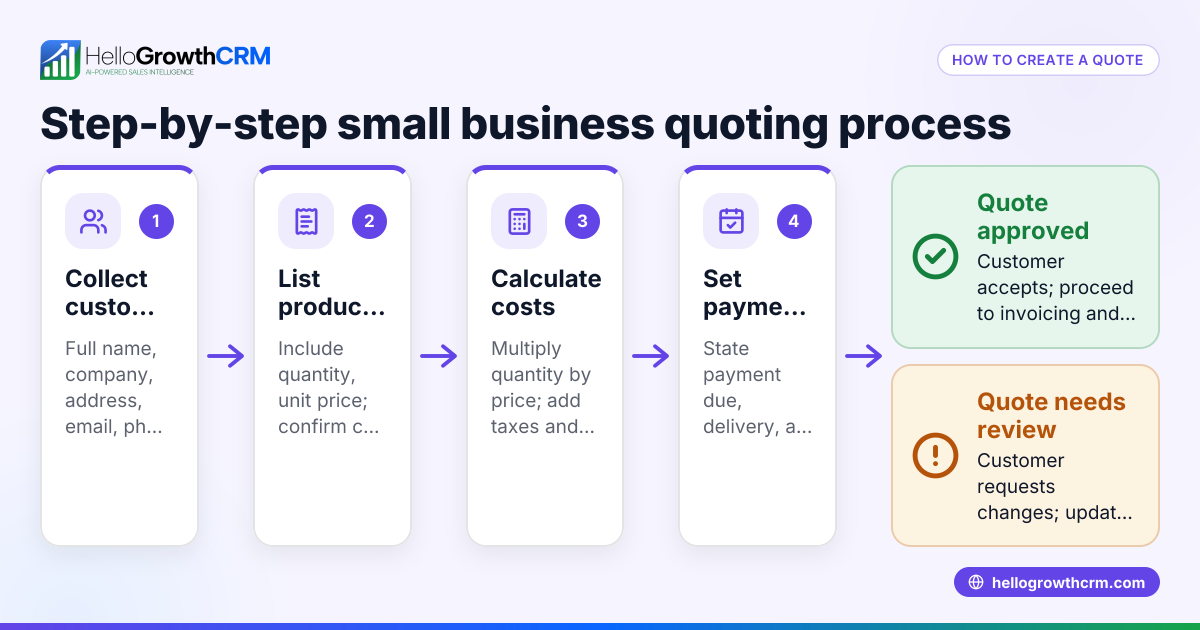
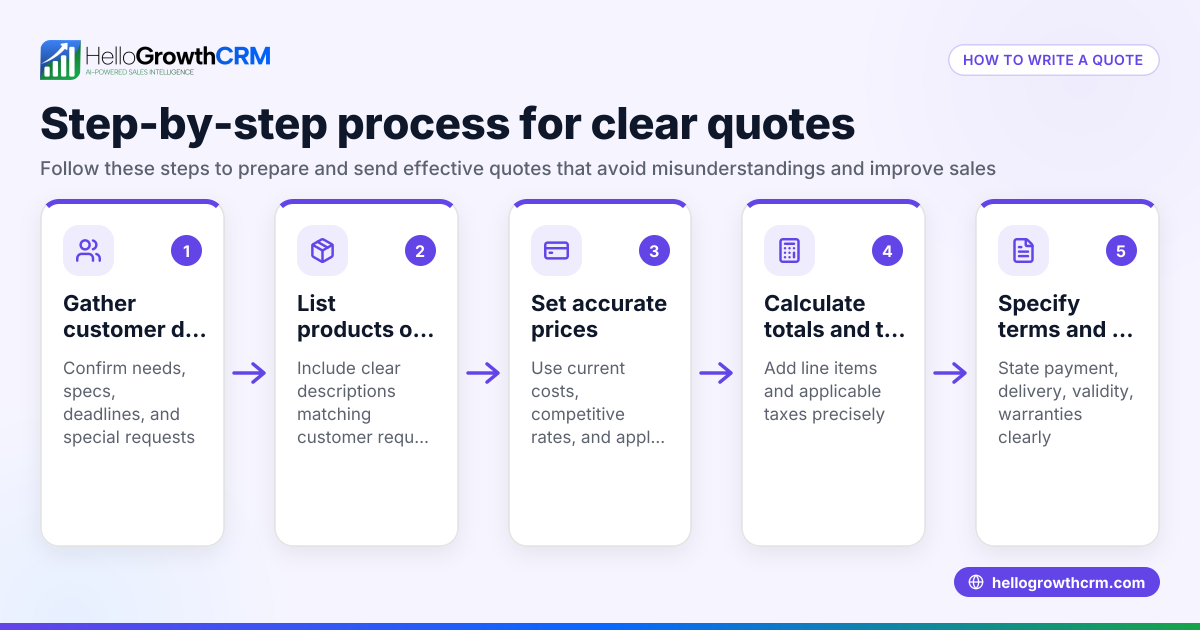
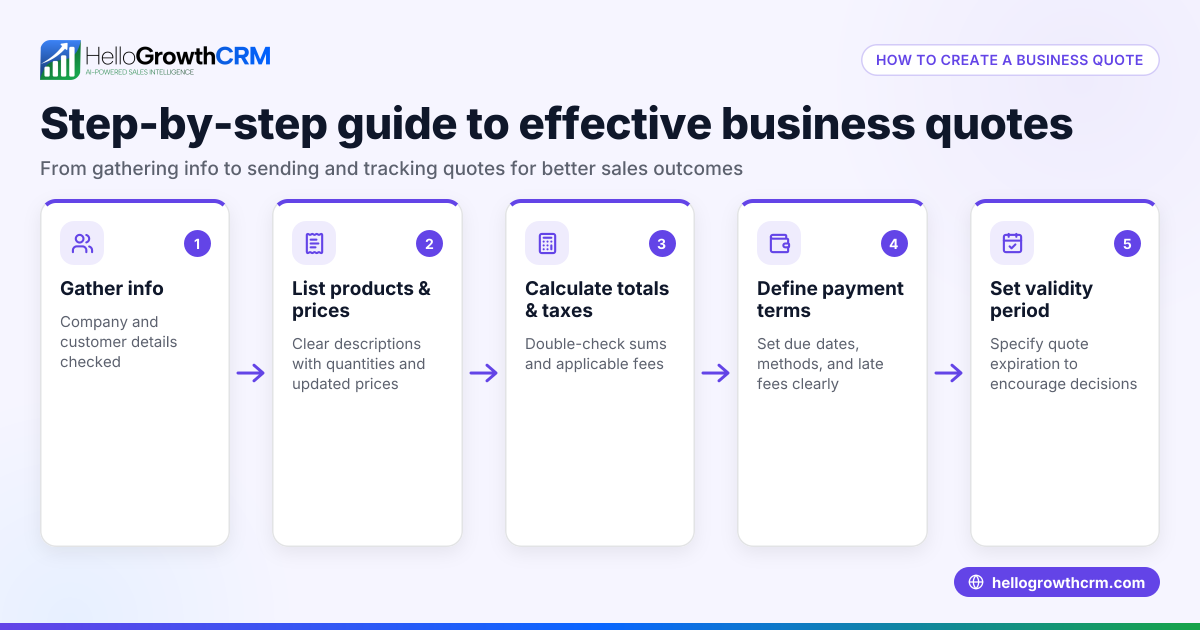
- Prepare a clear quote: Detail the price, scope of work, and terms. Include expiration dates or conditions to limit how long the offer stands.
- Send the quote formally: Use email or a quoting tool that tracks delivery and viewing to know when the customer has seen the offer.
- Request explicit acceptance: Ask the buyer to confirm acceptance in writing, such as a signed quote, email confirmation, or purchase order. This step turns the quote into a contract.
- Check for mutual agreement: Ensure both parties agree on the exact terms without changes. If the buyer proposes changes, treat it as a counteroffer and get new acceptance.
- Record the acceptance: Save the acceptance communication for your records to avoid future disputes.
- Begin work only after acceptance: Treat the accepted quote as the contract basis to protect your business from unpaid work.
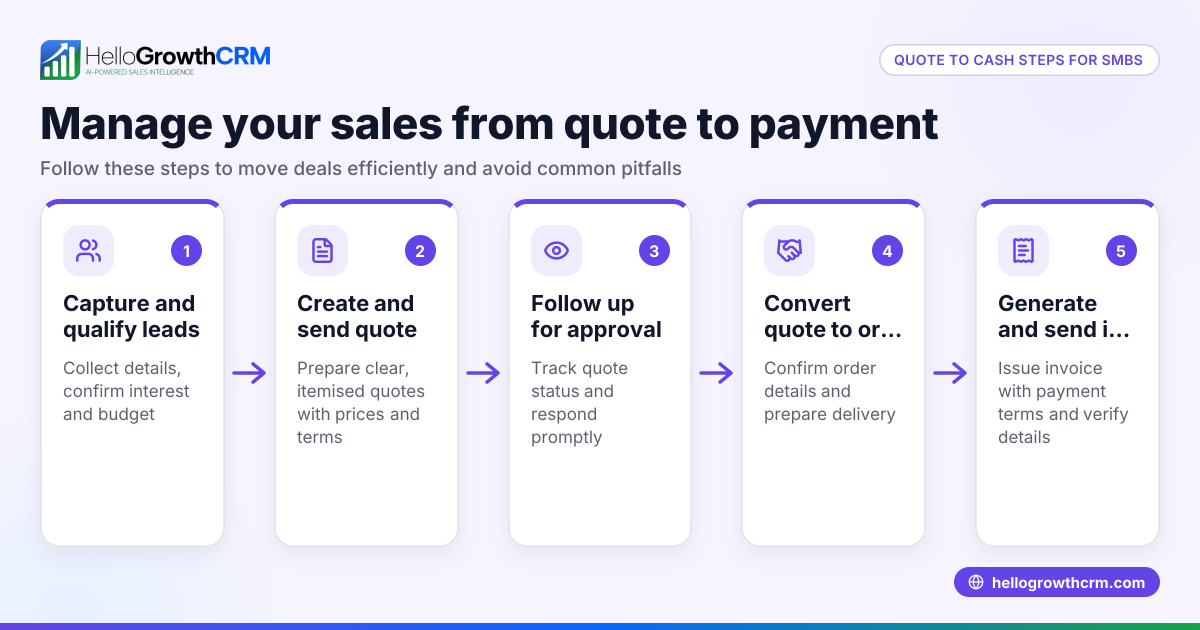
- Follow up on status: Use CRM tools to track when quotes are sent, viewed, and accepted, so you never lose a lead or contract opportunity.
Using a CRM with quoting capabilities helps keep all information in one place and reminds you to follow up promptly. See how HelloGrowthCRM supports this process with WhatsApp and SMS CRM and a built-in CRM dialer.
Example (fictional figures)
A landscaping company in Charlotte, North Carolina, sends a quote on 05/01/2026 for lawn care services:
- Lawn care service for 6 months: $1,200/month
- Total price = $1,200 × 6 = $7,200
The quote states payment terms and expires on 05/15/2026.
Step 1: Send quote on 05/01/2026. Step 2: Customer views the quote on 05/03/2026. Step 3: Customer emails acceptance on 05/05/2026.
At this point, the quote becomes a contract because the customer accepted the terms as offered. The landscaper can start work confidently, knowing the agreement is in place.
Common mistakes
- Assuming a quote is a contract: Prevent this by always requesting explicit acceptance in writing before starting work.
- Not specifying expiration dates: Prevent indefinite offers by including a clear expiry date on the quote.
- Ignoring changes or counteroffers: Prevent disputes by confirming agreement on any changes before proceeding.
- Poor record keeping: Prevent confusion by saving all communications and using a CRM to organize quotes and acceptances.
- Starting work too early: Prevent unpaid work by waiting for acceptance confirmation.
- Not following up promptly: Prevent lost deals by tracking quote status and setting reminders.
Use tools like HelloGrowthCRM for the United States to track quotes and follow-ups efficiently.
Doing this in HelloGrowthCRM
HelloGrowthCRM offers a built-in quoting and proposal tool that lets you build, send, and track commercial documents directly from the deal record. The quotation’s status—sent, viewed, accepted—is visible on the same screen as your follow-up task. This centralized view helps you manage quotes, proposals, invoices, and payments received without switching apps. Learn more about the quoting features and how they integrate with your sales workflow on the built-in CRM dialer page.
Frequently asked questions
Is a quote legally binding? A quote is generally an invitation to negotiate or an offer. It becomes legally binding only after acceptance by the buyer and agreement on the terms.
Can a quote be accepted verbally? Verbal acceptance may form a contract but is harder to prove. Written acceptance is safer and recommended for small businesses.
What if the buyer wants to change the quote terms? Changes create a counteroffer, not acceptance. You must agree to any changes before a contract forms.
How long is a quote valid? Quotes should specify an expiration date. Without one, validity can be uncertain, so include clear expiry terms.
Can I start work before a quote is accepted? Starting work without acceptance risks nonpayment. Wait for confirmation to protect your business.
How can I keep track of multiple quotes and follow-ups? Using a CRM like HelloGrowthCRM helps you monitor quote statuses and schedule follow-ups to avoid missed opportunities. See HelloGrowthCRM for the United States for details.
Key takeaways
- A quote alone is not a contract; acceptance is required.
- Request clear, written acceptance to confirm contracts.
- Use expiration dates and confirm agreement on terms.
- Keep detailed records of quotes and acceptances.
- Wait for acceptance before starting work.
- Use a CRM like HelloGrowthCRM to track quotes and follow-ups.
Start managing your quotes and contracts more confidently today. Start on the Free Forever plan (200 leads, no credit card) to try HelloGrowthCRM’s quoting and sales features.
Ready to put this into practice?
Set up your pipeline, WhatsApp follow-ups, and AI lead scoring in minutes — free, no credit card.
Try HelloGrowthCRM freeGet CRM tips in your inbox
Join thousands of sales professionals who get weekly insights on CRM strategy, AI automation, and pipeline optimization.

The HelloGrowthCRM team publishes guides on CRM strategy, AI sales tools, and revenue operations for small business sales teams.