HelloGrowthCRM software
Built for real small-business sales teams
HelloGrowthCRM helps reps qualify faster, follow up on time, and close more deals—with practical automation in one place.
- AI lead scoring and pipeline visibility
- Built-in dialer, WhatsApp, and email automation
- Sales forecasting and RevOps-ready reporting
A keep in touch email is a message sent to prospects or customers to maintain contact without a hard sales pitch. It helps nurture relationships, remind leads of your business, and keep your brand top of mind. This article explains why keep in touch emails matter, how to craft and schedule them, common pitfalls to avoid, and how to manage them efficiently with HelloGrowthCRM.
Why this comes up / what goes wrong
Small-business owners often find that leads or past customers go silent after initial contact or a purchase. Without regular, thoughtful follow-up, these contacts forget about your business or turn to competitors. A keep in touch email solves this by providing a gentle, value-driven reminder that you’re still available and interested in helping. The challenge is balancing frequency and content so you don’t annoy recipients or appear pushy. Many businesses also struggle with tracking these emails and follow-ups, leading to missed opportunities.
Step-by-step
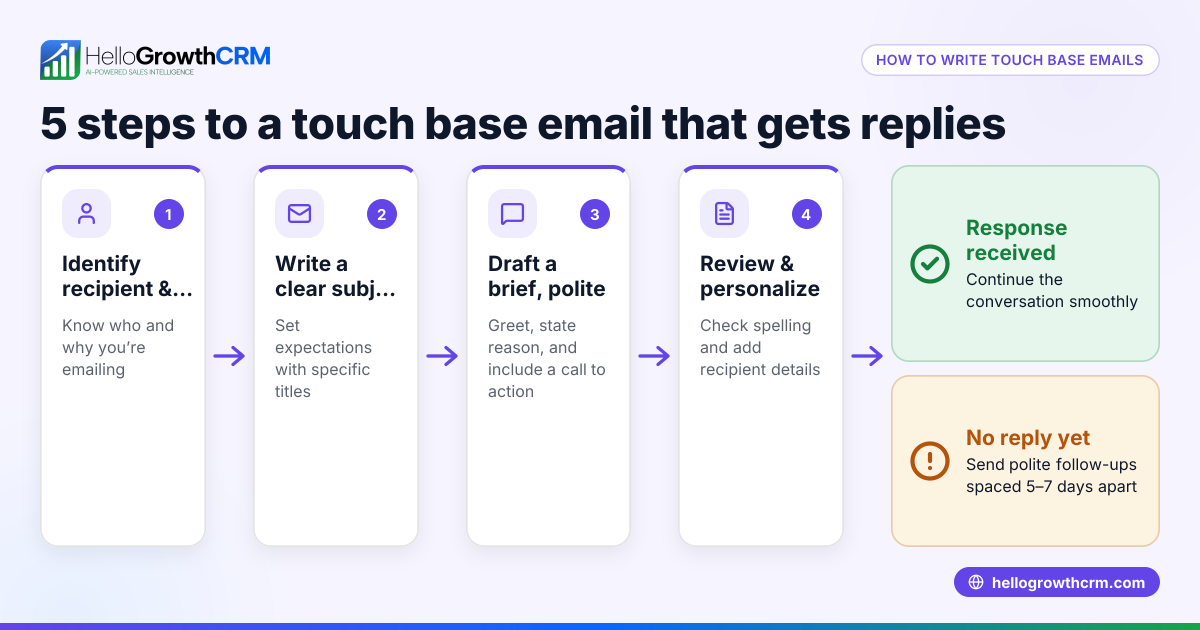
- Identify your audience: Decide who should receive keep in touch emails. This might be leads who haven’t responded in 30 days or past customers who haven’t bought recently. Check your CRM or contact list for this segment.
- Craft your message: Write a short, friendly email that adds value without a sales push. Mention helpful tips, company updates, or ask a simple question to invite reply. Check that the tone is casual and respectful.
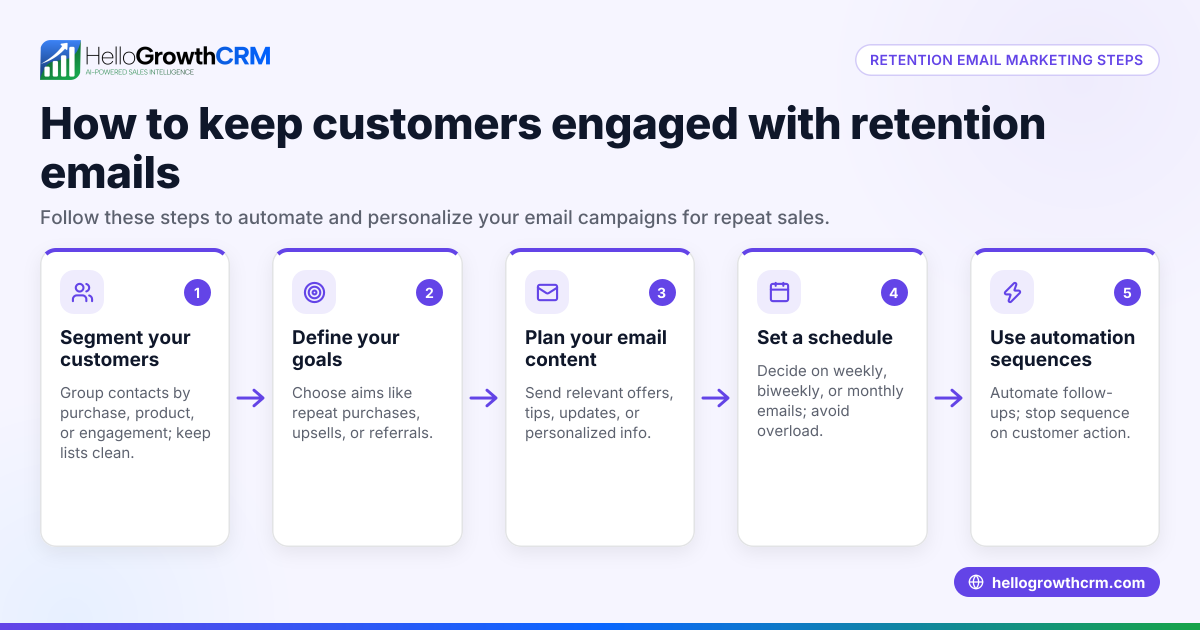
- Set a schedule: Determine how often to send these emails. A common approach is every 4-6 weeks. Avoid flooding inboxes.
- Use automation tools: Load your email sequence into an automation system that sends follow-ups automatically and stops if the contact replies. Check that the automation is set up correctly and test it.
- Track responses and update records: Monitor replies and update your CRM contact notes accordingly. Check that all team members can see replies to avoid duplicate outreach.
- Adjust based on feedback: If you notice low engagement or complaints, revise your message or frequency. Check open and reply rates regularly.
Example (fictional figures)
A plumbing company in Austin, Texas, wants to keep in touch with 500 leads who requested a quote but did not book service. They plan a five-step email sequence over two months.
- Cost to send each email: $0.05
- Number of emails per lead: 5
- Total emails sent: 500 leads × 5 emails = 2,500 emails
- Total sending cost: 2,500 × $0.05 = $125
If some leads respond and a portion of those book a $350 service, the revenue generated depends on those response and conversion rates. This example shows the investment in keep in touch emails involves manageable costs and the potential to generate additional revenue.
Common mistakes
- Sending generic sales pitches: Prevent by personalizing emails and focusing on value, not just selling.
- Over-emailing contacts: Prevent by setting a reasonable schedule and stopping sequences when a reply occurs.
- Ignoring replies: Prevent by using a shared inbox so the whole team sees responses and can act.
- Not tracking email results: Prevent by monitoring open, reply, and conversion rates to optimize your approach.
- Using multiple tools separately: Prevent by managing emails and calls in one CRM to reduce errors and missed follow-ups. See WhatsApp and SMS CRM.
Doing this in HelloGrowthCRM
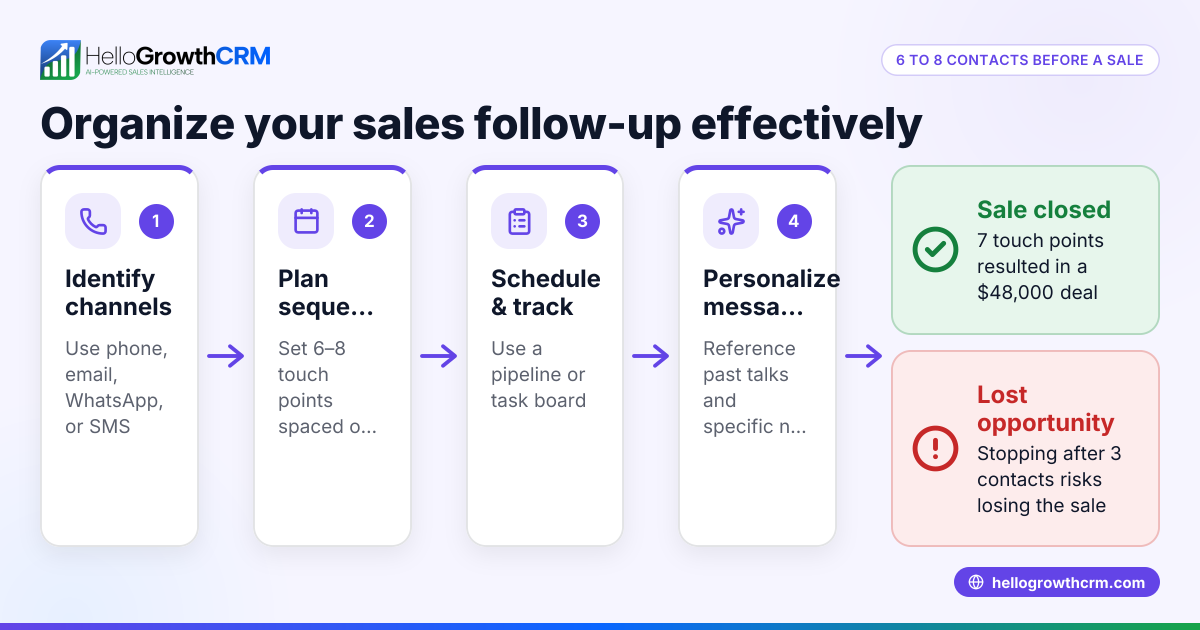
HelloGrowthCRM supports keep in touch emails with its HelloMail shared inbox, where replies to emails like quotations are visible to your whole team on the deal. Its built-in dialer lets your rep call leads directly from the CRM and log call outcomes. You can also set up automated sequences and campaigns that run a five-step follow-up over two weeks, automatically stopping when a prospect replies. These tools help small and mid-sized businesses keep leads engaged without manual tracking.
Frequently asked questions
What is a keep in touch email? A keep in touch email is a non-sales, friendly message sent periodically to prospects or customers to maintain contact and build relationships. It often includes helpful information or updates.
How often should I send keep in touch emails? Typically, sending keep in touch emails regularly is effective to keep your business top of mind without overwhelming recipients. Adjust based on engagement and feedback.
What should I include in a keep in touch email? Include relevant tips, company news, or questions that invite a reply. Avoid hard selling; the goal is to nurture the relationship.
How can I track responses to keep in touch emails? Use a CRM with a shared inbox feature so your team can see replies and update lead records. This prevents duplicate outreach and missed opportunities.
Can I automate keep in touch emails? Yes, automation tools let you schedule multi-step follow-ups that stop automatically when a prospect replies. This saves time and ensures consistent contact. See email automation and sequences.
What if a lead replies negatively? Respect their response by removing them from follow-ups. Use the CRM to update their status and avoid further emails.
Key takeaways
- Keep in touch emails maintain relationships without hard selling.
- Send them every 4-6 weeks with helpful, friendly content.
- Use automation to schedule follow-ups and stop on reply.
- Track replies in a shared inbox to coordinate your team.
- Avoid over-emailing and generic sales pitches.
- Manage calls and emails together in one CRM for efficiency.
Keep your leads engaged and your sales pipeline active by sending thoughtful keep in touch emails. To try managing your follow-ups with automation, shared inboxes, and a built-in dialer, start on the Free Forever plan (200 leads, no credit card).
Ready to put this into practice?
Set up your pipeline, WhatsApp follow-ups, and AI lead scoring in minutes — free, no credit card.
Try HelloGrowthCRM freeGet CRM tips in your inbox
Join thousands of sales professionals who get weekly insights on CRM strategy, AI automation, and pipeline optimization.

The HelloGrowthCRM team publishes guides on CRM strategy, AI sales tools, and revenue operations for small business sales teams.