HelloGrowthCRM software
Built for real small-business sales teams
HelloGrowthCRM helps reps qualify faster, follow up on time, and close more deals—with practical automation in one place.
- AI lead scoring and pipeline visibility
- Built-in dialer, WhatsApp, and email automation
- Sales forecasting and RevOps-ready reporting
Lead generation law in the US sets legal requirements for how businesses collect, use, and protect personal data from potential customers. It demands clear consent before contacting leads, secure storage of their information, and respect for opt-out requests. These rules help protect consumer privacy and prevent deceptive marketing. This article covers why these laws matter to small businesses, practical steps to comply, a detailed example with USD figures, common mistakes to avoid, and how HelloGrowthCRM supports compliant lead management.
Why this comes up / what goes wrong
Small-business owners often juggle multiple lead sources such as web forms, phone calls, WhatsApp messages, and emails. Without clear processes, leads can be lost, mishandled, or contacted without proper permission. This can result in slow follow-up, lost sales, or legal issues. For instance, contacting leads without documented consent or ignoring their opt-out requests can violate laws like the Telephone Consumer Protection Act (TCPA) or the CAN-SPAM Act. (fcc.gov) Many businesses track leads with spreadsheets or text messages, which can cause confusion about consent status and lead to noncompliance.
Step-by-step
- Identify applicable laws: Determine which US laws apply to your lead generation and communication methods, such as TCPA for calls and texts, CAN-SPAM for emails, and state privacy laws like the California Consumer Privacy Act (CCPA). Always get consent before marketing calls or texts and honor opt-outs.
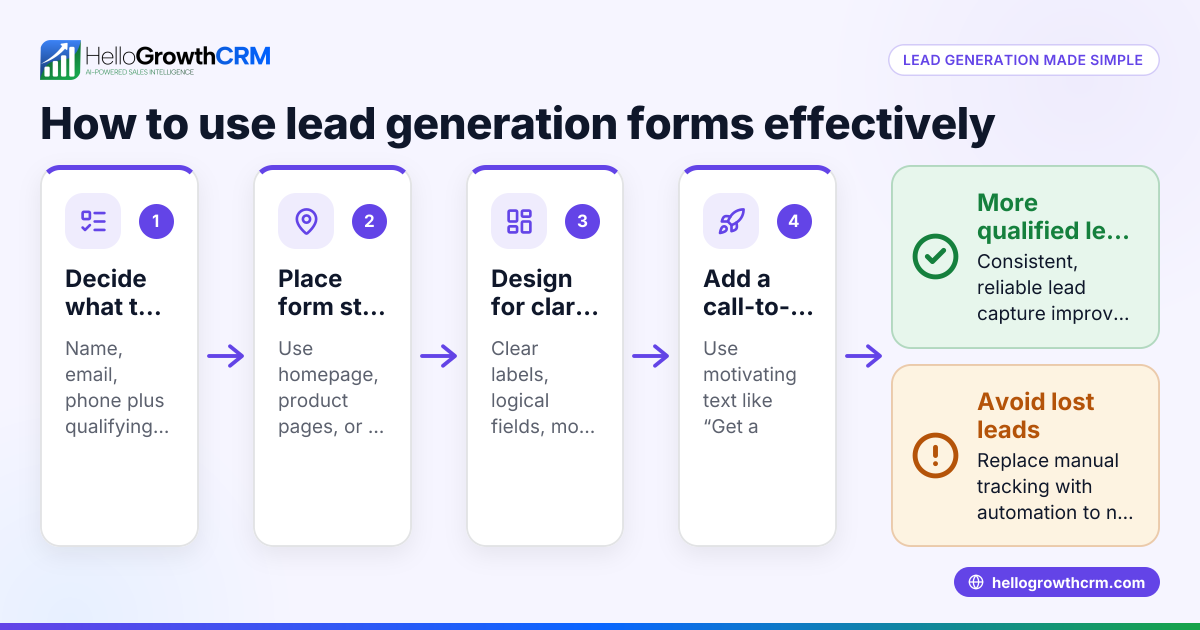
- Collect explicit consent: Use clear opt-in forms or verbal confirmations to get permission before contacting leads. Make sure consent covers the communication types you plan to use.
- Record consent details: Document when and how each lead gave consent, including their communication preferences and any opt-out requests.
- Use compliant communication practices: Follow rules about message content, timing, and frequency. For example, avoid calling before 8 a.m. or after 9 p.m., and always include an easy opt-out link in marketing emails.
- Securely store lead data: Protect personal information using secure systems and limit access to authorized personnel only.
- Train your team: Educate sales and marketing staff on lead generation laws and your company’s compliance policies.
- Regularly audit and update: Periodically review your lead generation and communication processes to ensure ongoing compliance with changing laws.
Example (fictional figures)
A two-location dental practice in Columbus, Ohio, collects leads through its website and phone calls. On 03/15/2026, it received 300 new leads.
- Total leads collected: 300
- Leads with explicit consent via web form checkbox: 280
- Leads who called in and gave verbal consent (documented): 20
They record consent dates and contact preferences in a CRM.
The practice sends marketing emails only to the 280 web leads.
They make follow-up calls between 9 a.m. and 6 p.m. to all 300 leads.
If 15 leads opt out of emails, they are immediately removed from the mailing list.
This approach helps avoid violations of consent and unwanted contact rules.
Calculations:
300 total leads = 280 web leads + 20 phone leads
280 web leads - 15 opt-outs = 265 leads receiving marketing emails
300 total leads receive calls during allowed hours
Common mistakes
- Not obtaining explicit consent: Prevent by using clear opt-in forms and documenting verbal confirmations.
- Ignoring opt-out requests: Prevent by promptly updating contact lists and respecting preferences.
- Storing leads insecurely: Prevent by using secure CRM systems instead of spreadsheets or notebooks.
- Failing to train staff: Prevent by regular training on compliance and company policies.
- Mixing personal and business communications: Prevent by using dedicated business tools like WhatsApp and SMS CRM for sales communications.
- Neglecting to review legal changes: Prevent by scheduling periodic compliance audits.
Doing this in HelloGrowthCRM
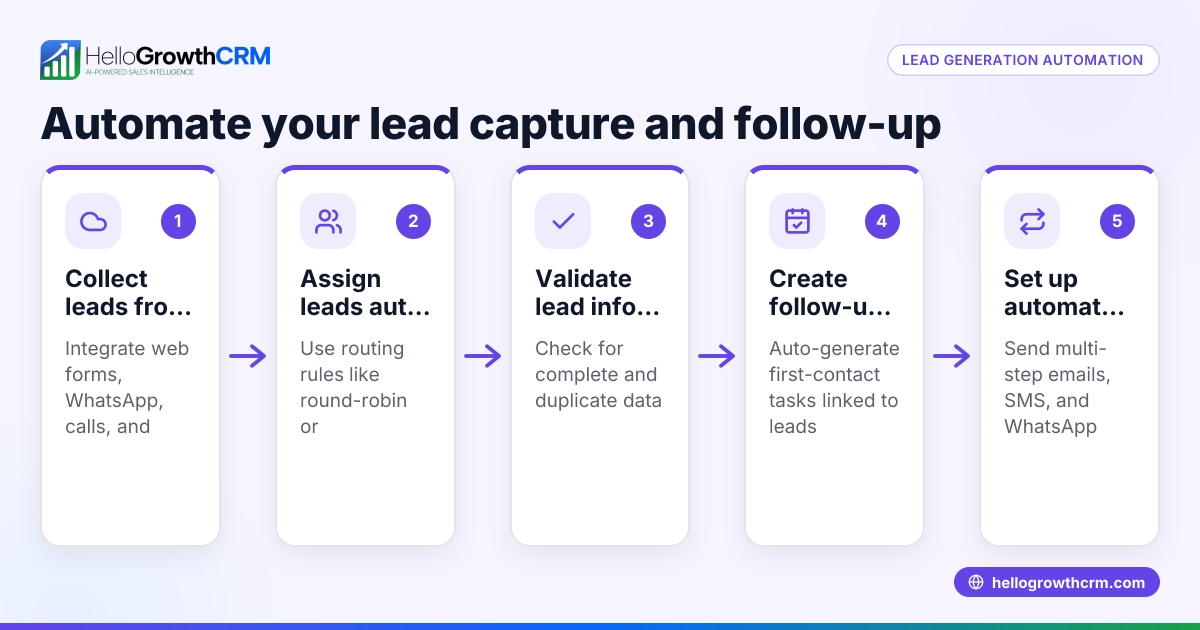
HelloGrowthCRM helps US small businesses comply with lead generation law by capturing every inquiry from forms, calls, or WhatsApp as a lead with an assigned owner and next step, avoiding lost or undocumented leads. Its AI lead scoring lets reps prioritize leads most likely to convert first, improving efficiency and respecting contact preferences. Automated workflows and lead routing assign inquiries fairly and create first-call tasks automatically, ensuring consistent follow-up without manual errors. Learn more about AI lead scoring and how HelloGrowthCRM supports WhatsApp and SMS CRM for compliant lead management.
Frequently asked questions
What is lead generation law? Lead generation law consists of regulations that govern how businesses collect, use, and protect personal information from potential customers. These laws protect consumer privacy and prevent deceptive marketing.
Do I need consent to contact leads? Yes, US laws generally require explicit consent before contacting leads by calls, texts, or emails. Consent must be clear, documented, and provide an easy way to opt out.
How can I keep lead data secure? Use secure CRM systems rather than spreadsheets or notebooks. Control access rights, encrypt data, and back up information regularly.
What happens if I ignore opt-out requests? Ignoring opt-out requests can lead to legal penalties and harm your business reputation. Always promptly remove leads who opt out from your contact lists.
Can HelloGrowthCRM help with compliance? Yes, HelloGrowthCRM organizes leads with owners and next steps, automates lead routing, and uses AI lead scoring to prioritize contacts, helping your team follow legal and efficient processes.
How do I keep track of consent and preferences? Maintain detailed records in your CRM of when and how consent was given, including communication preferences and any opt-out requests. This documentation supports compliance and audit readiness.
Key takeaways
- Lead generation law requires explicit consent, secure data handling, and respecting opt-out requests.
- Small businesses should document consent and train their teams on compliance.
- Use dedicated tools like HelloGrowthCRM to organize leads and automate workflows.
- Regularly review and update your lead generation and communication practices.
- Ignoring legal requirements risks penalties and lost customer trust.
Start managing your leads legally and efficiently with HelloGrowthCRM. Start on the Free Forever plan (200 leads, no credit card).
Ready to put this into practice?
Set up your pipeline, WhatsApp follow-ups, and AI lead scoring in minutes — free, no credit card.
Try HelloGrowthCRM freeGet CRM tips in your inbox
Join thousands of sales professionals who get weekly insights on CRM strategy, AI automation, and pipeline optimization.

The HelloGrowthCRM team publishes guides on CRM strategy, AI sales tools, and revenue operations for small business sales teams.