HelloGrowthCRM software
Built for real small-business sales teams
HelloGrowthCRM helps reps qualify faster, follow up on time, and close more deals—with practical automation in one place.
- AI lead scoring and pipeline visibility
- Built-in dialer, WhatsApp, and email automation
- Sales forecasting and RevOps-ready reporting
Lead sourcing means identifying and collecting contact details and relevant information about potential customers or clients interested in your products or services. It is the first stage in building a sales pipeline and turning prospects into paying customers. This article covers why lead sourcing is important for small businesses, a practical step-by-step guide to doing it, a worked example with UK figures, common mistakes to avoid, and how HelloGrowthCRM can help you manage leads efficiently.
Why this comes up / what goes wrong
Small business owners in the UK often face the challenge of finding enough quality leads to keep their sales pipelines full. Without a clear lead sourcing process, enquiries can get lost in notebooks, WhatsApp chats, emails, or spreadsheets. This leads to slow follow-up, missed opportunities, and frustrated sales teams. Many businesses rely on informal methods like WhatsApp or email, which do not track leads systematically or assign ownership. As a result, leads go cold and sales targets are missed.
Lead sourcing becomes a priority when you realise that your business needs a steady stream of potential customers and a reliable way to capture and organise their details. Without it, you cannot prioritise leads, assign follow-up tasks, or measure your sales pipeline health.
Step-by-step
- Define your ideal customer profile: Decide who your target customers are based on industry, company size, location, or other relevant criteria. This helps focus your lead sourcing efforts.
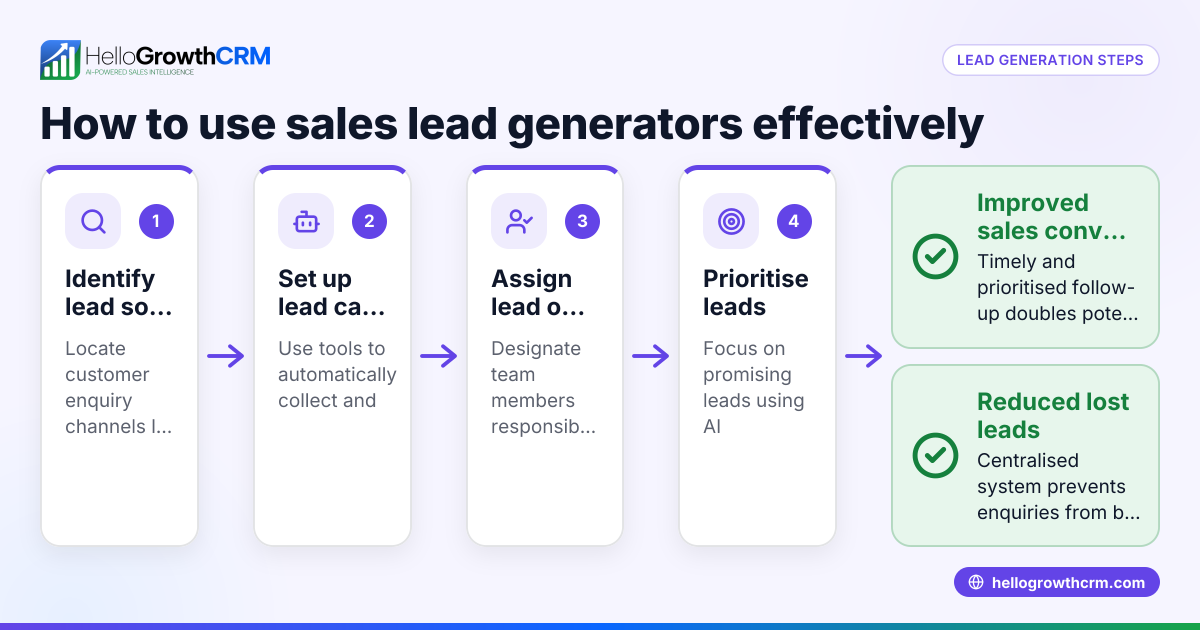
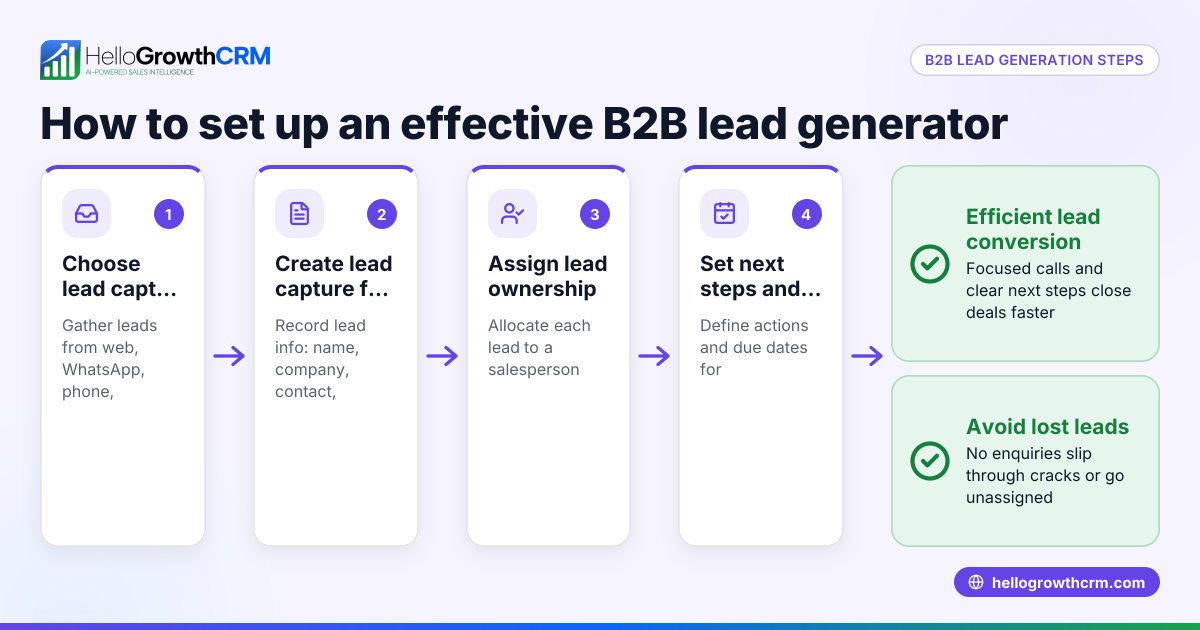
- Choose lead sources: Identify where potential leads come from, such as web enquiry forms, social media, WhatsApp messages, phone calls, trade shows, or referrals. Check that these sources are relevant and regularly used by your target customers.
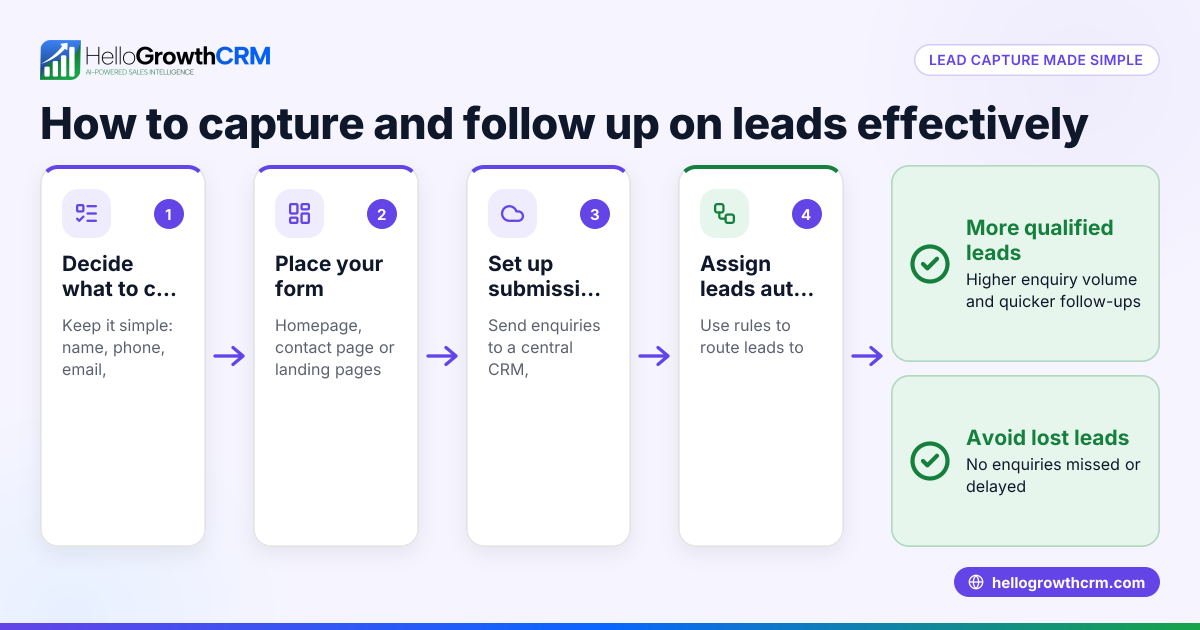
- Set up lead capture methods: Use online forms, WhatsApp business tools, or phone systems to collect lead contact information consistently. Ensure each enquiry automatically creates a lead record instead of being noted down manually.
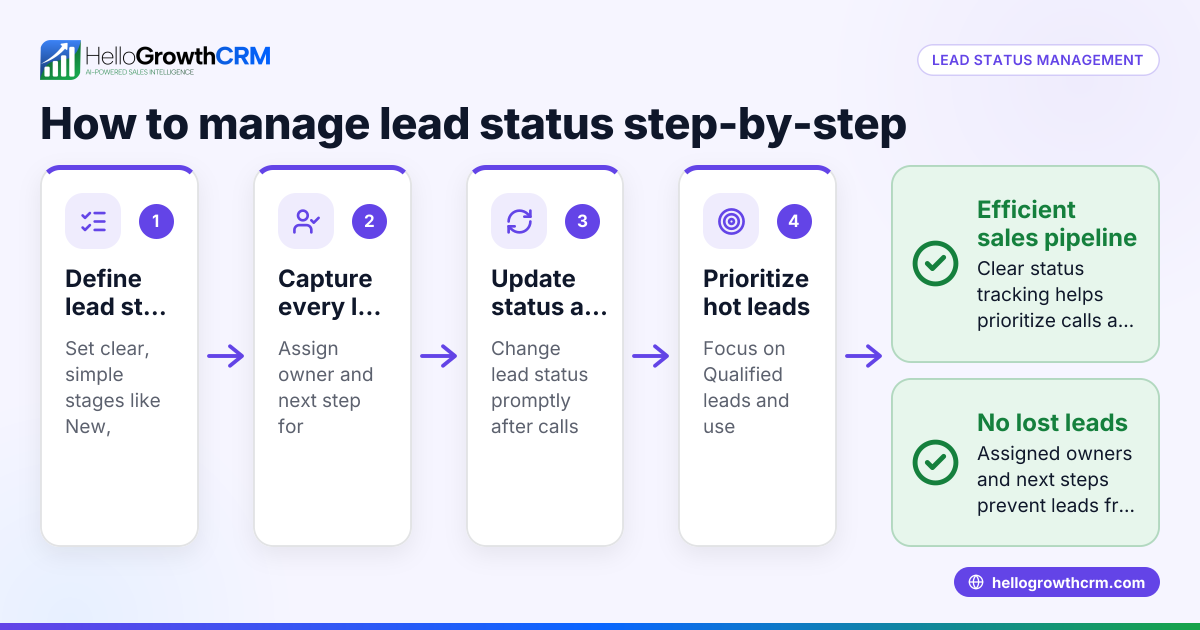
- Assign lead ownership and next steps: Allocate each lead to a sales team member responsible for follow-up. Define the next action, like a phone call or email, and set reminders.
- Qualify leads quickly: Use criteria such as budget, need, and decision timeframe to score or prioritise leads. Focus on those most likely to convert first.
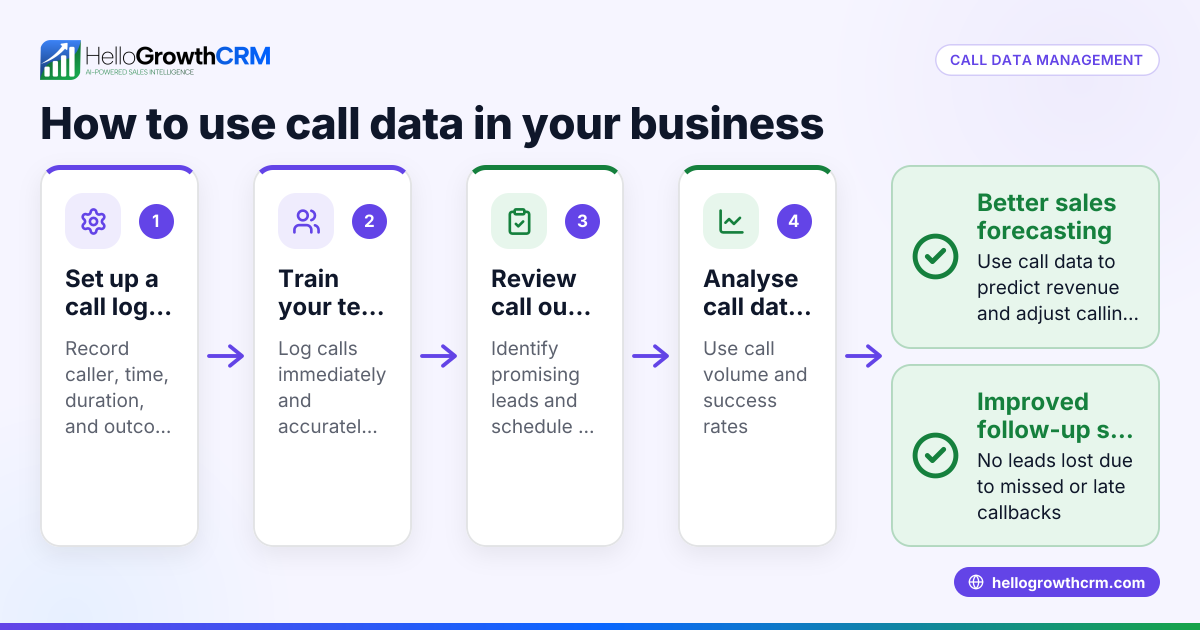
- Track and update lead status: Record every contact and progress in a central system so the whole team knows the lead’s current position in the sales process.
- Review sources regularly: Analyse which lead sources bring the best prospects and adjust your efforts accordingly.
- Ensure compliance: Check that your lead sourcing respects data protection laws like GDPR, including consent for marketing communications.
Example (fictional figures)
A letting agency in Manchester wants to improve lead sourcing for new tenant enquiries.
- They receive 200 enquiries per month via their website form and WhatsApp.
- Each lead is assigned to one of 4 agents in rotation.
- Agents aim to call each lead within 24 hours.
Calculations for March 2026:
Total enquiries = 200
Leads per agent = 200 ÷ 4 = 50
Average call time per lead = 10 minutes
Total call time per agent = 50 × 10 minutes = 500 minutes
Total call time per agent in hours = 500 ÷ 60 = 8.33 hours
If the agency pays agents £15 per hour, cost per agent for calls = 8.33 × £15 = £124.95
Total call cost for all agents = £124.95 × 4 = £499.80
By assigning leads evenly and tracking follow-up, the agency ensures no enquiry is missed and agents’ time is planned.
Common mistakes
- Not capturing leads centrally: Leads scattered across WhatsApp, email, or notebooks cause lost enquiries. Prevent this by using a CRM that captures every enquiry automatically.
- No clear ownership or next steps: Without assigning leads and follow-up tasks, leads go cold. Always allocate a lead owner and define the next action.
- Ignoring lead qualification: Calling all leads in random order wastes time. Use lead scoring to prioritise leads likely to convert first. See AI lead scoring.
- Failing to review lead sources: Continuing to invest in poor-quality lead sources reduces efficiency. Regularly analyse and adjust your sources.
- Manual lead routing errors: Assigning leads manually can cause delays or uneven workloads. Automate lead routing with workflows and round-robin assignment to prevent this. See HelloGrowthCRM for the United Kingdom.
- Non-compliance with data protection: Collecting leads without consent risks legal issues. Always obtain and record marketing consent.
Doing this in HelloGrowthCRM
HelloGrowthCRM helps UK small businesses by automatically capturing every enquiry from forms, calls or WhatsApp as a lead with an assigned owner and a next step. Its AI lead scoring lets reps focus on leads most likely to convert first. Automated workflows and lead routing assign enquiries round-robin and create first-call tasks automatically, reducing manual errors and speeding up follow-up. Learn more about WhatsApp and SMS CRM and AI lead scoring.
Frequently asked questions
What is the difference between lead sourcing and lead generation? Lead sourcing is the process of finding and collecting potential customers’ contact details, while lead generation includes all marketing activities to attract and stimulate interest. Lead sourcing focuses on capturing and organising the leads once they show interest.
How can I improve the quality of leads sourced? Improve quality by defining your ideal customer profile, choosing relevant lead sources, and qualifying leads using criteria like budget and readiness to buy. Using AI lead scoring can help prioritise high-quality leads.
Can I use WhatsApp for lead sourcing? Yes, WhatsApp is widely used for lead enquiries. Using a CRM that integrates WhatsApp ensures these leads are captured automatically and assigned for follow-up, avoiding lost messages.
How do I ensure my lead sourcing complies with GDPR? Always get explicit consent before collecting personal data for marketing. Inform leads how their data will be used and allow them to opt out. Keep records of consent.
What is lead routing and why is it important? Lead routing is the process of assigning leads to salespeople based on rules like territory or round-robin. It ensures leads are followed up promptly and workload is balanced among the team.
Key takeaways
- Lead sourcing is gathering potential customers’ contact details to build your sales pipeline.
- Capture leads centrally and assign ownership with clear next steps.
- Use lead qualification or AI lead scoring to prioritise follow-up.
- Automate lead routing and task creation to avoid delays and errors.
- Regularly review lead sources and comply with data protection laws.
- HelloGrowthCRM supports lead sourcing with automated capture, AI scoring, and workflows.
Start managing your leads more effectively today. Start on the Free Forever plan (200 leads, no credit card) and see how HelloGrowthCRM can improve your sales follow-up.
Ready to put this into practice?
Set up your pipeline, WhatsApp follow-ups, and AI lead scoring in minutes — free, no credit card.
Try HelloGrowthCRM freeGet CRM tips in your inbox
Join thousands of sales professionals who get weekly insights on CRM strategy, AI automation, and pipeline optimization.

The HelloGrowthCRM team publishes guides on CRM strategy, AI sales tools, and revenue operations for small business sales teams.