HelloGrowthCRM software
Built for real small-business sales teams
HelloGrowthCRM helps reps qualify faster, follow up on time, and close more deals—with practical automation in one place.
- AI lead scoring and pipeline visibility
- Built-in dialer, WhatsApp, and email automation
- Sales forecasting and RevOps-ready reporting
Lead status is the current stage or condition of a sales lead as it moves through your sales process. It helps you track where each lead stands—whether they are new, contacted, qualified, or lost—so you can prioritize follow-up and improve conversion. This article explains why lead status matters, how to define and update it step-by-step, common pitfalls to avoid, and how HelloGrowthCRM can help you manage lead status efficiently.
Why this comes up / what goes wrong
Small-business owners often face challenges managing leads because inquiries come in from multiple sources like web forms, calls, or WhatsApp messages. Without a clear way to label and track the lead status, leads can get lost in notebooks, spreadsheets, or chat threads. This results in slow follow-up, missed opportunities, and confused sales teams. Understanding and using lead status lets you organize leads by their progress and urgency, so your team knows exactly what to do next and when.
Step-by-step
- Define your lead status categories: Decide on clear, simple stages that reflect your sales process. Common examples include New, Contacted, Qualified, Proposal Sent, Negotiation, Won, and Lost.
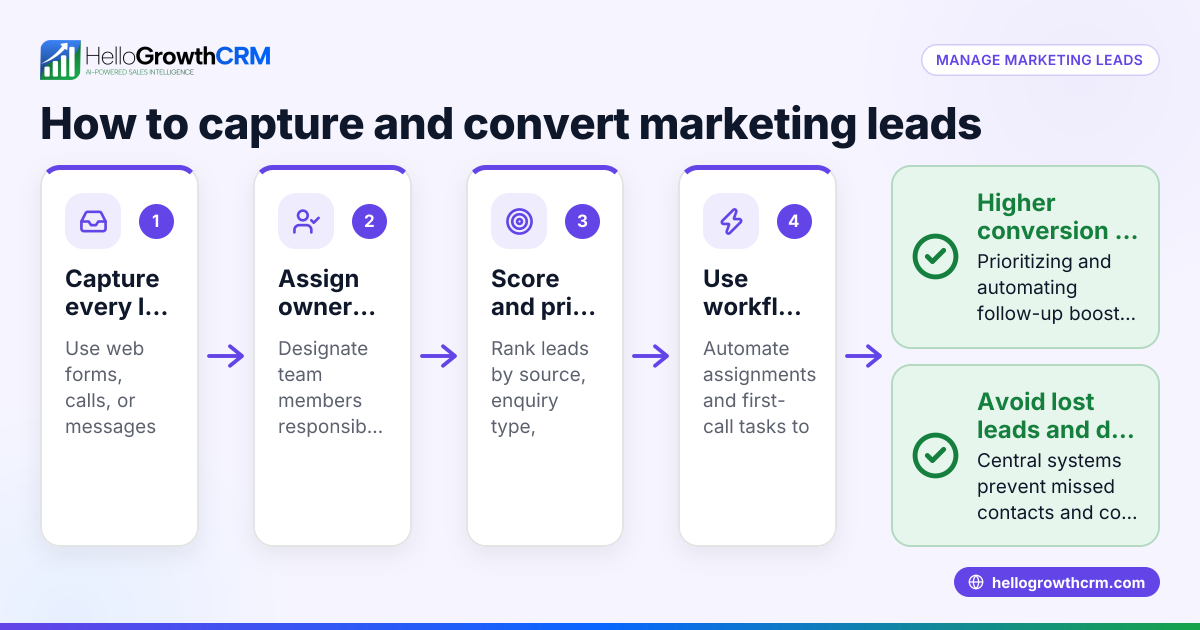
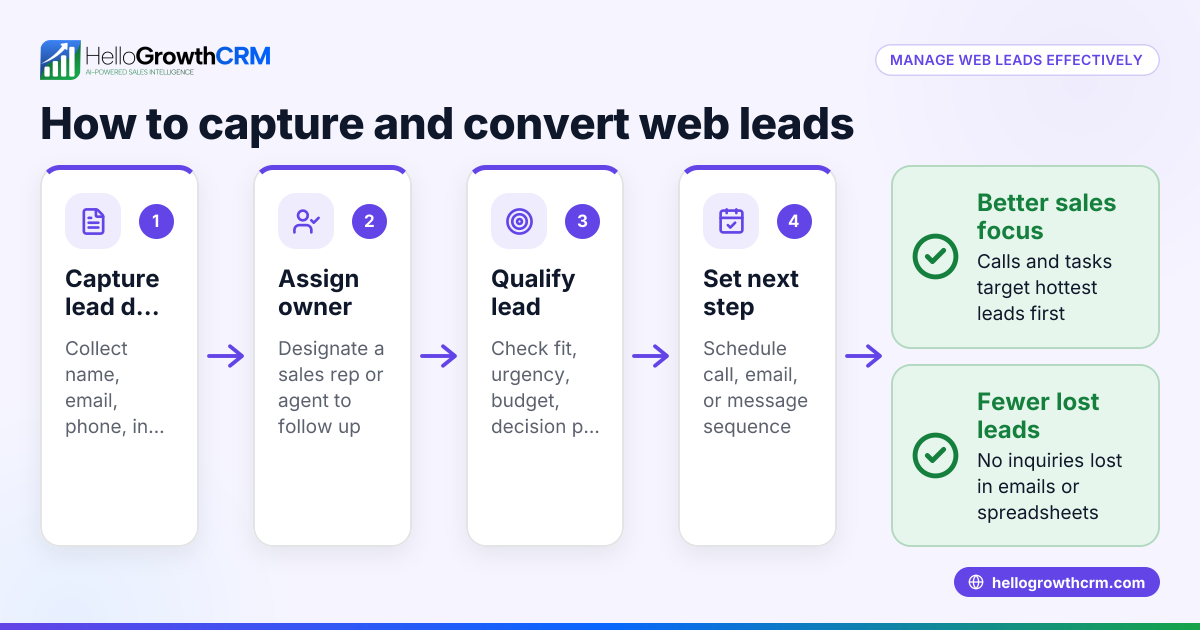
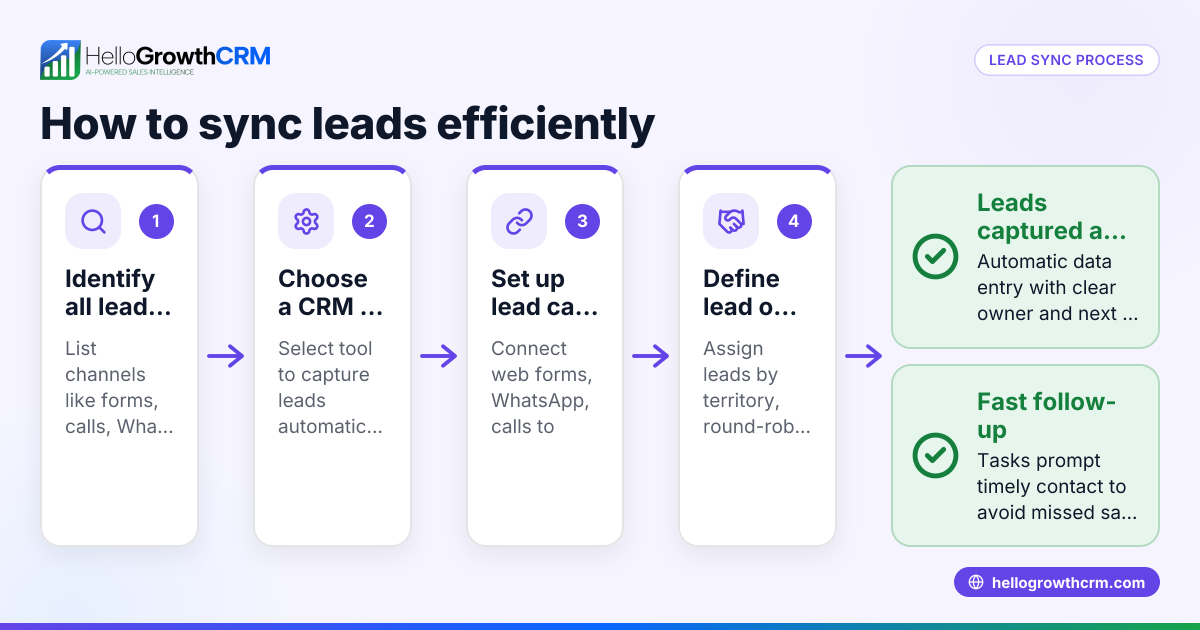
- Capture every lead with an owner and next step: When a new inquiry arrives via form, call, or WhatsApp, assign it to a specific team member and set the immediate next action, such as a first call or email.
- Update the lead status after each interaction: After contacting a lead, update their status to reflect progress (e.g., from New to Contacted or Qualified). This keeps your pipeline accurate.
- Prioritize leads based on status and likelihood to convert: Focus on leads marked as Qualified or those ready for follow-up. Use AI lead scoring to identify the hottest leads.
- Review and clean your lead list regularly: Remove or archive leads marked as Lost or inactive for a long time to keep your list manageable.
- Use workflows and automation to streamline status updates: Automate task creation and lead assignment based on status changes or lead source to maintain momentum.
Example (fictional figures)
A plumbing company in Austin, Texas, receives a new lead on 03/10/2026 from their website form.
- Lead captured with status = New
- Assigned to sales rep John with next step = First call on 03/11/2026
John calls the lead and learns they need a water heater replacement.
- Lead status updated to Qualified
- Proposal sent on 03/12/2026 for $3,500
Lead requests a discount, negotiation starts.
- Lead status updated to Negotiation
After discussion, the lead agrees to the original price.
- Lead status updated to Won
Calculation example for proposal value:
$3,500 × 1 (no discount) = $3,500 total contract value
This clear tracking of lead status helps John prioritize follow-up and close the sale efficiently.
Common mistakes
- Not defining clear lead statuses: Without distinct categories, leads get stuck or confused. Prevent this by setting simple, well-understood stages.
- Failing to update lead status promptly: If status isn’t updated after contact, the team loses visibility. Prevent by making status updates part of every call or email.
- Ignoring lead ownership and next steps: Leads without an assigned owner or next action tend to fall through the cracks. Prevent by always assigning responsibility and a clear next step.
- Overloading with too many statuses: Too many stages can confuse the team and slow updates. Prevent by keeping the list concise and relevant.
- Not using automation to manage leads: Manual tracking leads to errors and delays. Prevent by using workflows and lead routing to automate repetitive tasks.
- Neglecting low-priority leads: Leads marked Lost or inactive clutter the pipeline. Prevent by reviewing and archiving regularly.
Doing this in HelloGrowthCRM
HelloGrowthCRM captures every inquiry from forms, calls, or WhatsApp as a lead with an assigned owner and a next step, keeping leads organized and active instead of lost in notebooks. It uses AI lead scoring to help reps prioritize calling leads most likely to convert first. Automated workflows and lead routing assign new enquiries automatically and create first-call tasks, helping your team follow up promptly and keep lead status accurate. Learn more about AI lead scoring and WhatsApp and SMS CRM features in HelloGrowthCRM.
Frequently asked questions
What is the difference between lead status and lead stage? Lead status usually refers to the current condition or progress of a lead (e.g., New, Contacted), while lead stage can mean the broader phase in your sales funnel. The terms are often used interchangeably but focus on tracking progress clearly.
How often should I update lead status? Update lead status immediately after each interaction or when new information changes the lead’s position in the sales process. Frequent updates keep your pipeline accurate and your team aligned.
Can I customize lead statuses for my business? Yes, lead statuses should reflect your unique sales process. Choose clear, simple categories that your team understands and uses consistently.
How does AI lead scoring affect lead status management? AI lead scoring ranks leads by their likelihood to convert, helping you prioritize which lead statuses to focus on first. This ensures your team calls the hottest leads promptly.
What happens if I don’t assign an owner to a lead? Leads without an owner often get neglected, causing missed opportunities. Assigning an owner ensures accountability and timely follow-up.
Key takeaways
- Lead status is essential to track where each lead stands and what action to take next.
- Define clear, simple lead statuses that match your sales process.
- Always assign a lead owner and next step to prevent leads from falling through.
- Update lead status promptly after each contact or new information.
- Use automation and AI lead scoring to prioritize and manage leads efficiently.
- Regularly review and clean your lead list to focus on active opportunities.
Start managing your leads with clear status tracking today. Start on the Free Forever plan (200 leads, no credit card) with HelloGrowthCRM and see how organized lead status can improve your sales follow-up and conversions.
Ready to put this into practice?
Set up your pipeline, WhatsApp follow-ups, and AI lead scoring in minutes — free, no credit card.
Try HelloGrowthCRM freeGet CRM tips in your inbox
Join thousands of sales professionals who get weekly insights on CRM strategy, AI automation, and pipeline optimization.

The HelloGrowthCRM team publishes guides on CRM strategy, AI sales tools, and revenue operations for small business sales teams.