HelloGrowthCRM software
Built for real small-business sales teams
HelloGrowthCRM helps reps qualify faster, follow up on time, and close more deals—with practical automation in one place.
- AI lead scoring and pipeline visibility
- Built-in dialer, WhatsApp, and email automation
- Sales forecasting and RevOps-ready reporting
Loyalty examples include reward programs, exclusive offers, personalized communication, and consistent customer service that encourage repeat business. This article explains why loyalty matters for small businesses, provides step-by-step ways to build it, shares a detailed example with figures, highlights common mistakes to avoid, and answers frequently asked questions.
Why this comes up / what goes wrong
Small-business owners often focus heavily on attracting new customers but overlook the importance of keeping existing ones coming back. Without clear loyalty strategies, customers may drift to competitors offering better incentives or more personalized attention. Many small businesses run sales using disconnected tools like text messages, email, and spreadsheets, which makes tracking and rewarding loyal customers difficult. This fragmentation leads to lost revenue and wasted marketing spend because opportunities to deepen customer relationships slip through the cracks.
Additionally, small teams may lack the time or resources to design and maintain loyalty programs that truly engage customers. Without a simple, clear system, customers might not understand how to earn rewards or why they should stay loyal. This confusion reduces participation and weakens the program’s impact.
Step-by-step
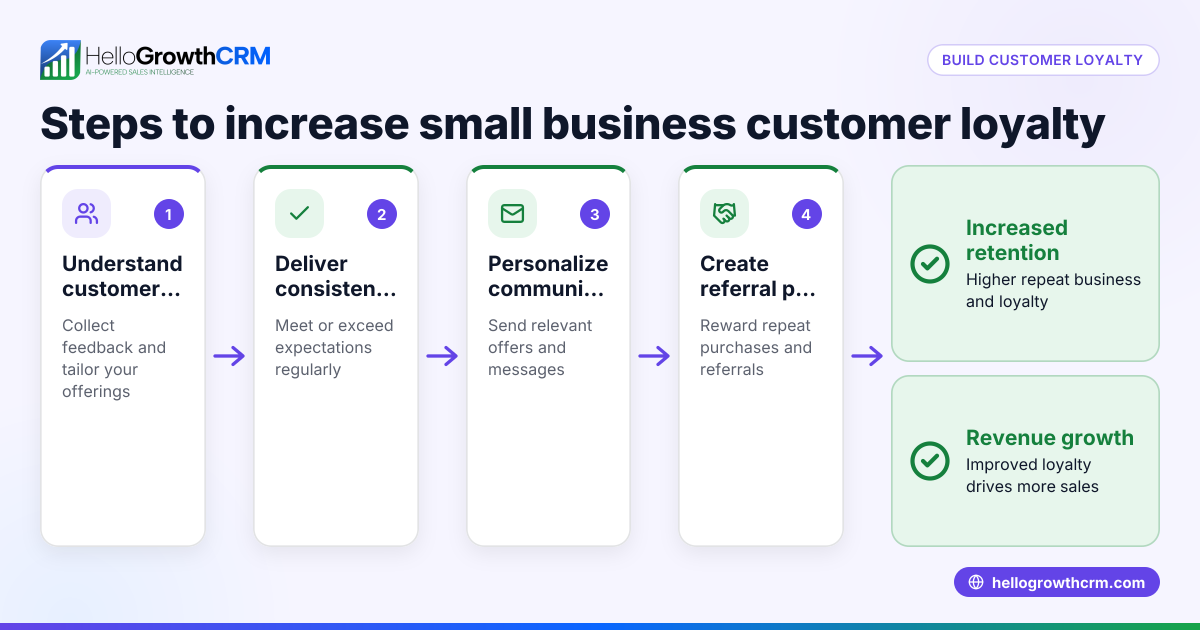
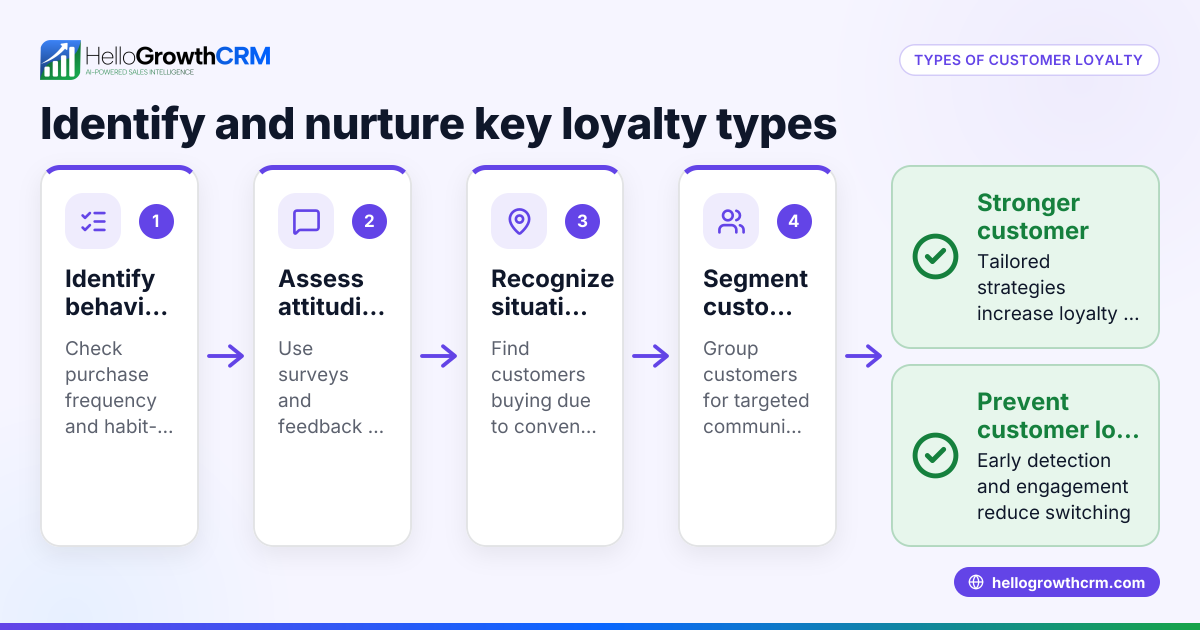
- Identify your loyal customers: Start by analyzing your sales data to find customers who buy repeatedly or engage frequently. Look for patterns in purchase frequency, average spend, and customer feedback. This helps you focus loyalty efforts where they matter most.
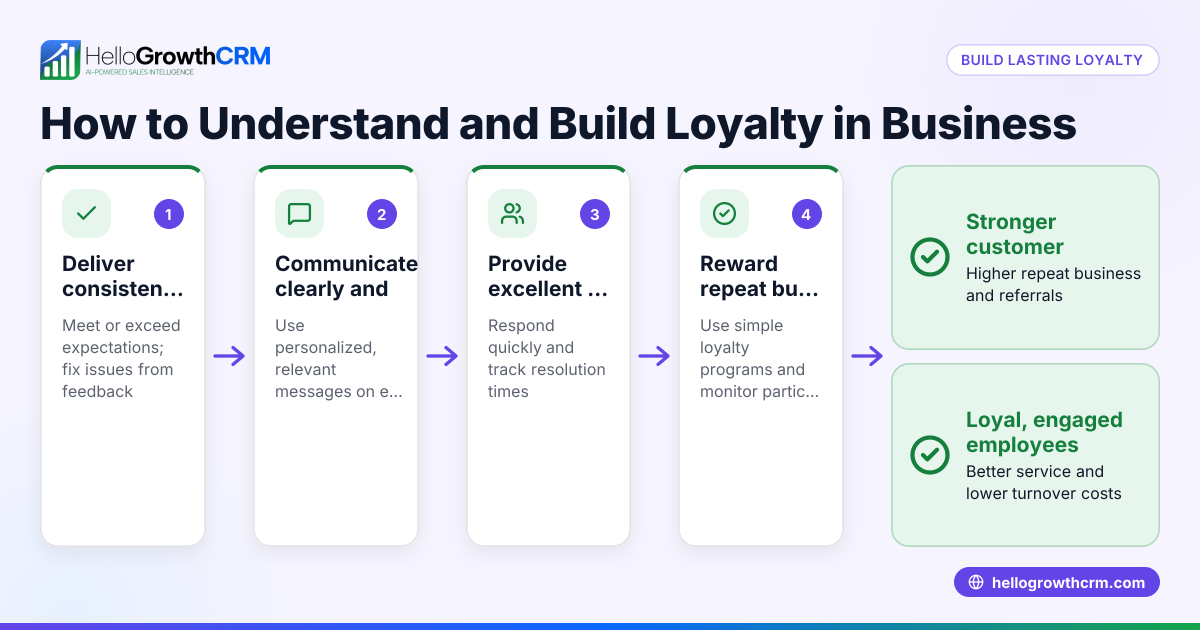
- Choose loyalty methods that fit your business: Decide on loyalty tactics that suit your products, sales channels, and customer preferences. Common examples include points programs, punch cards, exclusive discounts, referral rewards, or VIP events. Make sure your choice is manageable for your team and attractive to your customers.
- Set clear rewards and rules: Define how customers earn rewards and what those rewards are. Keep the system simple and transparent to encourage participation. For example, "Earn 1 point per $10 spent; 50 points earn a $20 discount." Avoid complex tiers or confusing conditions.
- Communicate consistently and personally: Use email, SMS, or WhatsApp to inform customers about their points, rewards, and special offers. Personalized messages increase engagement and make customers feel valued. Consistent communication keeps your brand top of mind and encourages repeat visits.
- Track and analyze loyalty program results: Monitor reward redemptions, repeat purchases, and customer feedback regularly. Use this data to refine your program, adjusting rewards or communication frequency to improve effectiveness.
- Integrate loyalty tracking with your sales tools: Use platforms that combine lead capture, messaging, and pipeline management to streamline loyalty efforts. This integration reduces the risk of lost leads or missed follow-ups and saves time. For example, a WhatsApp and SMS CRM combined with a built-in CRM dialer can help manage customer communication and sales pipelines in one place.
- Promote your loyalty program actively: Make sure customers know about your loyalty program at every touchpoint—on your website, in-store, and through your messaging channels. Clear signage, staff reminders, and website banners help boost participation.
Example (fictional figures)
A two-location dental practice in Columbus, Ohio, wants to increase repeat visits by rewarding loyal patients.
- They launch a points program: patients earn 1 point per $10 spent.
- After 50 points, patients get a $20 discount on their next cleaning.
In one year, the practice has 1,000 patients spending an average of $300 each.
Points earned per patient = $300 ÷ $10 = 30 points
Since 30 points < 50 points, most patients have not yet earned rewards, so the practice promotes extra points for referrals.
If 200 patients refer friends and earn 20 extra points:
New points per patient = 30 + 20 = 50 points
Reward cost per patient = $20
Total reward cost = 200 × $20 = $4,000
If these 200 patients return twice more in the year, each visit worth $300:
Additional revenue = 200 × 2 × $300 = $120,000
Net gain = $120,000 - $4,000 = $116,000
This example shows how a simple loyalty program can increase revenue significantly by encouraging referrals and repeat visits.
Common mistakes
- Overcomplicating the program: Complex rules confuse customers and reduce participation. Prevent this by keeping rewards straightforward and easy to understand.
- Ignoring communication: Customers won’t use rewards they don’t know about. Prevent this by sending regular updates via email, SMS, or WhatsApp.
- Not tracking results: Without tracking, you can’t know if your program works. Prevent this by monitoring participation rates, sales impact, and customer feedback.
- Failing to integrate tools: Using separate systems for leads, messaging, and rewards leads to lost opportunities and extra work. Prevent this by using integrated tools like a WhatsApp and SMS CRM and a built-in CRM dialer to keep everything in one place.
- Rewarding too little or too late: If goals are too hard or rewards too rare, customers lose interest. Prevent this by setting achievable milestones and offering rewards regularly.
- Not promoting the program enough: Customers can’t join what they don’t know about. Prevent this by advertising your loyalty program clearly and often.
Frequently asked questions
What are some simple loyalty examples I can start with? Simple loyalty examples include punch cards, points per purchase, exclusive discounts, or early access to new products. Choose one that fits your business size and customer habits. For example, a coffee shop might offer a free drink after 10 purchases, while a boutique could give 10% off after spending $100.
How do I know if my loyalty program is working? Track repeat customer rates, reward redemptions, and overall sales growth. Use customer feedback to see if they value the program. If repeat purchases increase and customers engage with rewards, your program is effective.
Can I run a loyalty program without special software? Yes, but managing it manually with spreadsheets and messaging can be time-consuming and error-prone. A CRM with integrated messaging like WhatsApp and SMS CRM helps automate follow-ups and tracking, reducing mistakes and saving time.
How often should I communicate with loyal customers? Aim for regular but not overwhelming contact, such as monthly updates or after each purchase. Use personalized messages to keep engagement high without annoying customers.
Is it better to offer discounts or exclusive experiences? Both work, but exclusive experiences can build stronger emotional loyalty. Discounts appeal to price-sensitive customers. Consider your audience when choosing. For example, a gym might offer members-only classes, while a retailer might give a discount on future purchases.
How can I integrate loyalty programs with my sales process? Using tools that combine lead capture, messaging, and pipeline management helps keep loyalty tracking aligned with sales efforts. For instance, a WhatsApp and SMS CRM with a built-in CRM dialer can streamline communication and reward tracking, ensuring no loyal customer is overlooked.
Key takeaways
- Loyalty examples include reward points, exclusive offers, and personalized communication.
- Start simple with clear rules and achievable rewards.
- Communicate regularly using email, SMS, or WhatsApp.
- Track program results and adjust accordingly.
- Integrate your loyalty efforts with sales tools to avoid lost leads.
- Promote your program actively to maximize participation.
Start building loyalty today and keep your customers coming back. To manage your leads and communication efficiently, consider starting on the Free Forever plan (200 leads, no credit card) at HelloGrowthCRM.
Ready to put this into practice?
Set up your pipeline, WhatsApp follow-ups, and AI lead scoring in minutes — free, no credit card.
Try HelloGrowthCRM freeGet CRM tips in your inbox
Join thousands of sales professionals who get weekly insights on CRM strategy, AI automation, and pipeline optimization.

The HelloGrowthCRM team publishes guides on CRM strategy, AI sales tools, and revenue operations for small business sales teams.