HelloGrowthCRM software
Built for real small-business sales teams
HelloGrowthCRM helps reps qualify faster, follow up on time, and close more deals—with practical automation in one place.
- AI lead scoring and pipeline visibility
- Built-in dialer, WhatsApp, and email automation
- Sales forecasting and RevOps-ready reporting
Customer loyalty is about more than just repeat purchases. It involves understanding why customers return and how they feel about your brand. The main types of customer loyalty are behavioral, attitudinal, and situational loyalty. Knowing these helps you create strategies that keep customers coming back and referring others.
Why this comes up / what goes wrong
Small-business owners often notice some customers keep buying while others leave, but they may not understand the reasons behind this. Without recognizing the different types of loyalty, you might spend money on discounts that only encourage repeated buying without building a lasting emotional connection. This can cause customers to switch to competitors easily. Losing leads or customers often happens because businesses do not track customer satisfaction or engagement properly, missing opportunities to strengthen loyalty.
Step-by-step
- Identify behavioral loyalty: Review your sales records to find customers who make frequent purchases. Check if they buy out of habit or convenience rather than preference.
- Assess attitudinal loyalty: Use surveys or feedback tools to measure how customers feel about your brand. Look for those who recommend you or engage with your content regularly.
- Recognize situational loyalty: Identify customers who buy mainly because of location, price, or lack of alternatives. Monitor if they switch when a better option appears.
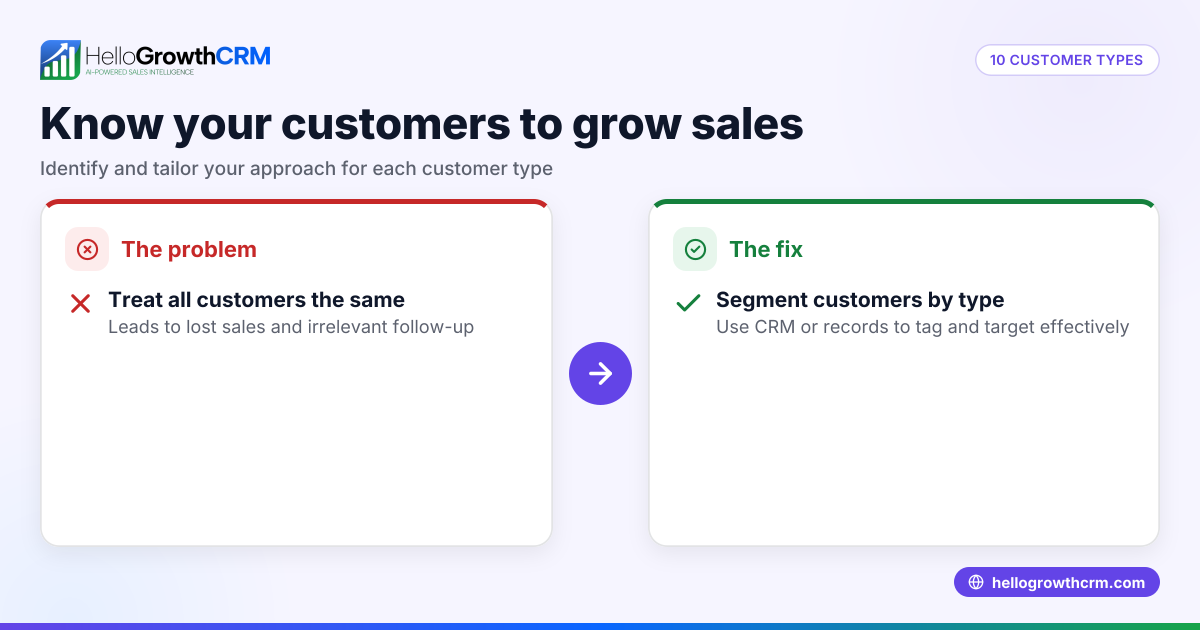
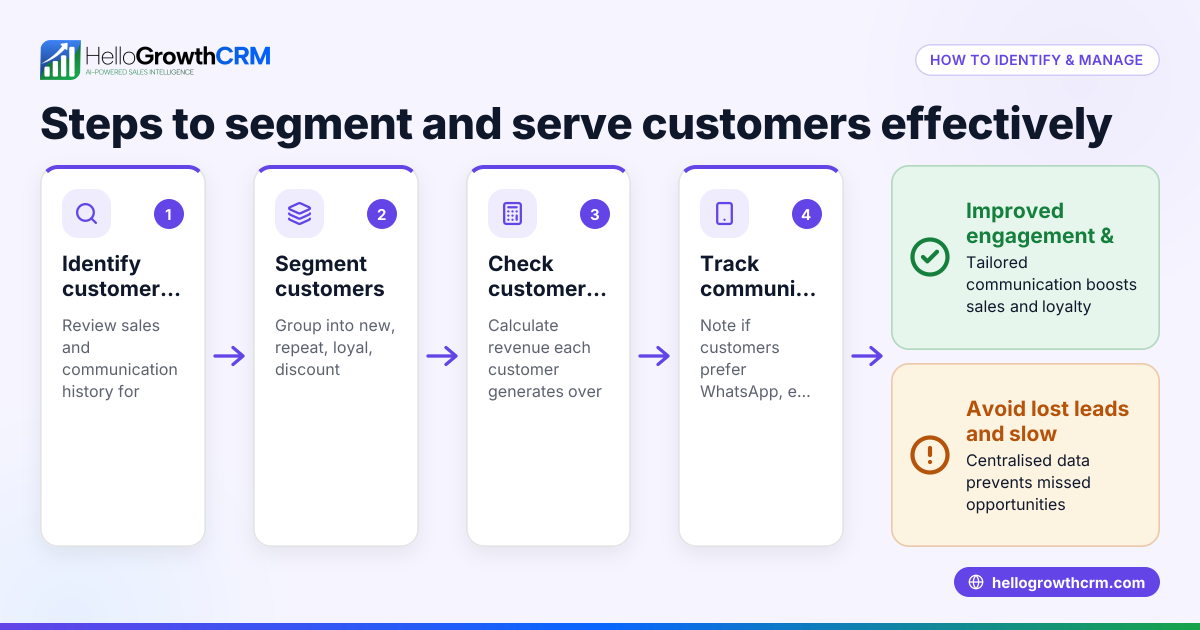
- Segment customers by loyalty type: Group customers based on your findings to tailor your communication and offers effectively.
- Build attitudinal loyalty: Create personalized experiences, provide excellent customer service, and connect emotionally through storytelling.
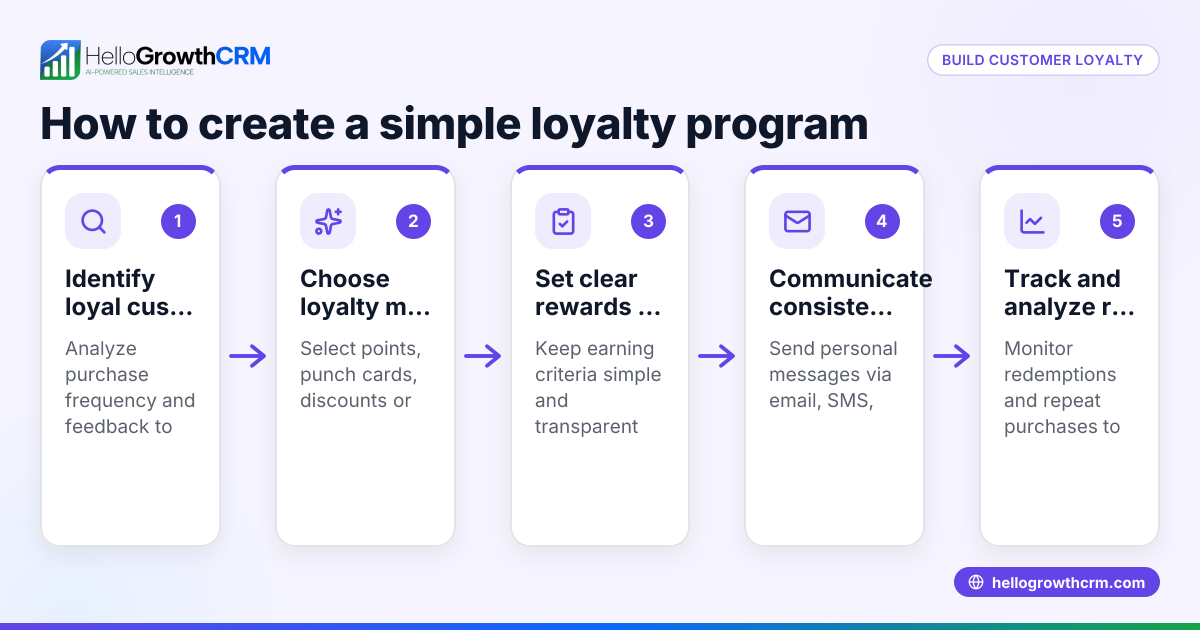
- Support behavioral loyalty: Implement loyalty programs or rewards to encourage repeat purchases.
- Address situational loyalty: Improve convenience, competitive pricing, and product availability to retain these customers.
- Track customer health score: Regularly monitor loyalty indicators and customer satisfaction to spot changes early. Learn more about this at customer health score.
Example (fictional figures)
A plumbing company in Austin, Texas, wants to understand its customer loyalty types over the year 2025.
- Total customers: 1,000
- Behavioral loyalty: 600 customers made 3 or more service calls.
- Attitudinal loyalty: 300 customers answered a survey; 150 showed strong positive feelings and recommended the company.
- Situational loyalty: 100 customers used the company because it was the closest option.
The company decides to:
- Reward the 600 behavioral loyal customers with a referral program.
- Engage the 150 attitudinal loyal customers with personalized emails and a customer portal.
- Improve service speed and pricing to convert situational loyal customers.
Calculations for referral rewards:
Assuming each referral is worth $150 in profit and each behavioral loyal customer refers 0.5 new customers:
600 customers × 0.5 referrals each = 300 referrals 300 referrals × $150 profit per referral = $45,000 total referral profit
This shows the potential value of rewarding behavioral loyalty through referrals.
Common mistakes
- Mistake 1: Treating all repeat customers the same. Prevent this by segmenting customers by loyalty type to tailor your approach.
- Mistake 2: Ignoring emotional connection. Prevent this by collecting feedback and engaging customers personally to build attitudinal loyalty.
- Mistake 3: Over-relying on discounts. Prevent this by adding value through excellent service and personalized experiences.
- Mistake 4: Not tracking loyalty changes. Prevent this by using tools like customer health score regularly to monitor shifts.
- Mistake 5: Losing service requests after sale. Prevent this by keeping service tickets on the same customer record to maintain context and improve follow-up.
Doing this in HelloGrowthCRM
HelloGrowthCRM helps manage customer loyalty by keeping service requests, referrals, and tickets linked on the same customer record after the sale. The branded customer portal allows customers to find answers and request service easily, supporting attitudinal loyalty. Referral program tracking encourages behavioral loyalty by rewarding repeat customers who bring new leads. For more on how HelloGrowthCRM supports customer relationships, see WhatsApp and SMS CRM.
Frequently asked questions
What is the difference between behavioral and attitudinal loyalty? Behavioral loyalty means customers repeatedly buy your products or services, often out of habit or convenience. Attitudinal loyalty means customers feel an emotional connection, trust, or preference for your brand, which often leads to recommendations and resistance to competitors.
How can I measure customer loyalty effectively? Measure loyalty by tracking repeat purchases, customer feedback, referral rates, and engagement with your brand. Tools like customer health scores help combine these data points into actionable insights. See customer health score for more.
Can situational loyalty turn into attitudinal loyalty? Yes, by improving customer experience, offering personalized service, and building emotional connections, situationally loyal customers can develop stronger brand attachment.
Why do some loyal customers still leave? Customers may leave if their needs change, competitors offer better value, or if their loyalty was situational rather than emotional. Regular engagement and monitoring help prevent this.
How does HelloGrowthCRM help maintain customer loyalty? It keeps all customer interactions, including service requests and referrals, on the same record, simplifying follow-up and personalized communication. The customer portal also empowers your customers to self-serve, increasing satisfaction.
Key takeaways
- Customer loyalty includes behavioral, attitudinal, and situational types.
- Identifying loyalty types helps tailor marketing and service strategies.
- Emotional attitudinal loyalty is stronger and more sustainable than just repeat buying.
- Track loyalty changes regularly using tools like customer health score.
- HelloGrowthCRM supports loyalty management with customer portals, referrals, and integrated service tickets.
Start growing your customer loyalty today. Start on the Free Forever plan (200 leads, no credit card).
Ready to put this into practice?
Set up your pipeline, WhatsApp follow-ups, and AI lead scoring in minutes — free, no credit card.
Try HelloGrowthCRM freeGet CRM tips in your inbox
Join thousands of sales professionals who get weekly insights on CRM strategy, AI automation, and pipeline optimization.

The HelloGrowthCRM team publishes guides on CRM strategy, AI sales tools, and revenue operations for small business sales teams.