HelloGrowthCRM software
Built for real small-business sales teams
HelloGrowthCRM helps reps qualify faster, follow up on time, and close more deals—with practical automation in one place.
- AI lead scoring and pipeline visibility
- Built-in dialer, WhatsApp, and email automation
- Sales forecasting and RevOps-ready reporting
Marketing automation segmentation means dividing your marketing contacts into specific groups based on characteristics such as behavior, demographics, or purchase history. You then use automated marketing tools to send personalized messages tailored for each group. This improves engagement and conversion by delivering relevant content to the right audience at the right time.
Why this comes up / what goes wrong
Small business owners often find themselves sending the same generic marketing messages to all their contacts. This happens because managing leads and customers manually is time-consuming and complicated. Without segmentation, your messages may seem irrelevant or spammy to many recipients. This leads to low response rates, wasted marketing effort, and lost sales opportunities. Additionally, small teams may struggle to follow up promptly or personalize communication without automation, causing leads to go cold.
Step-by-step
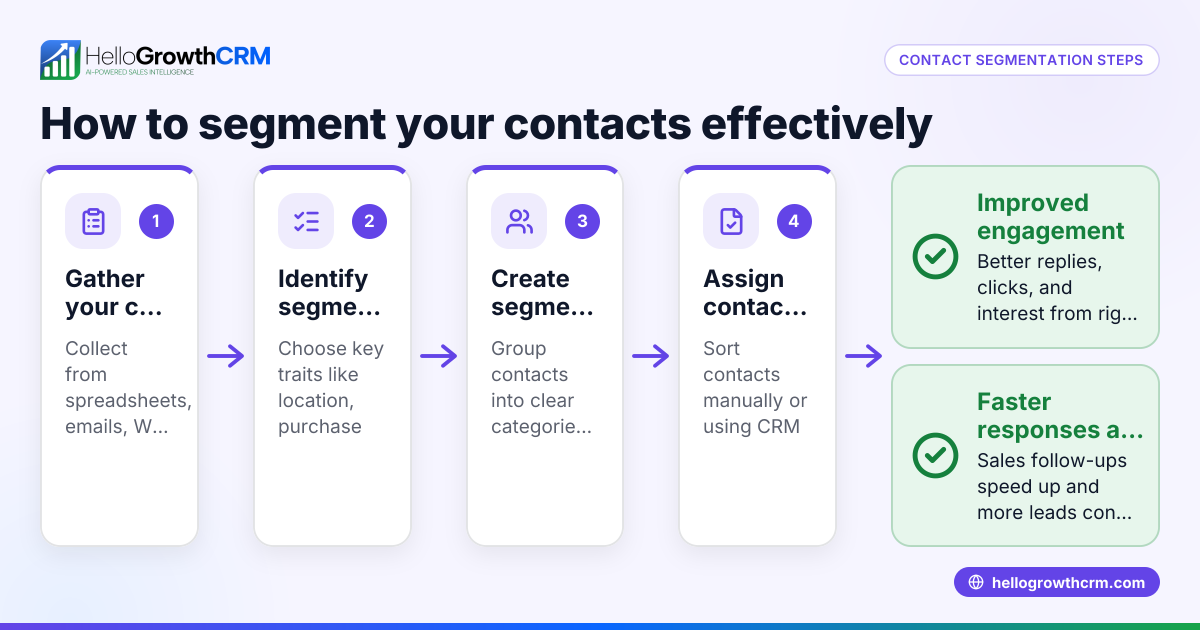
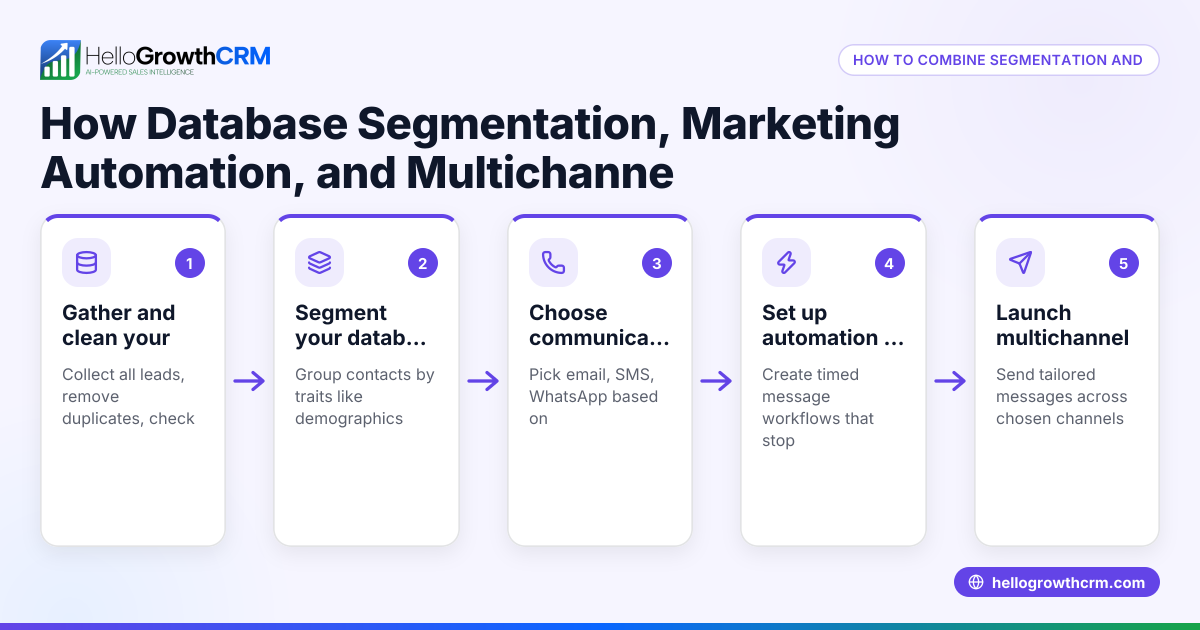
- Collect and organize your contact data. Gather information including demographics (age, location), purchase history, lead source, and engagement levels. Check that your data is accurate, complete, and up-to-date to avoid targeting errors.
- Define segmentation criteria. Decide how to split your contacts into meaningful groups. Common segments include new leads, repeat customers, geographic location, product interest, or engagement level.
- Create segments in your CRM or marketing tool. Use filters, tags, or custom fields to group contacts based on your chosen criteria. Verify that each segment contains the right contacts and no one is mistakenly excluded or duplicated.
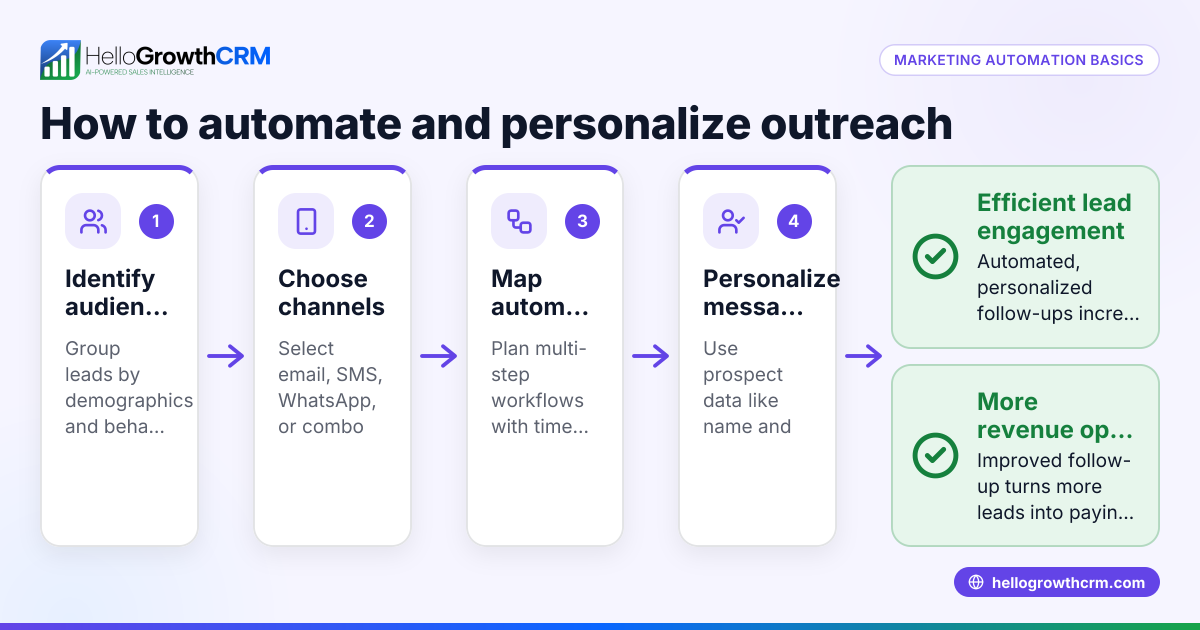
- Develop targeted messaging for each segment. Tailor your email, SMS, or WhatsApp messages to address the specific needs, interests, or pain points of each group. Personalization improves response rates.
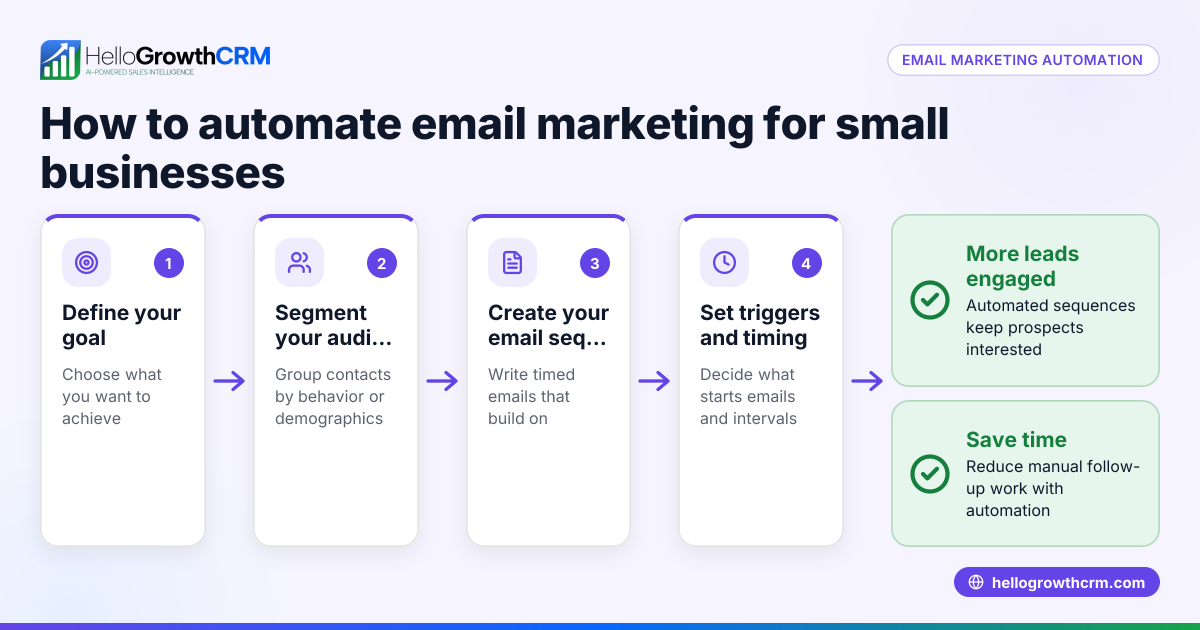
- Set up automated workflows or sequences. Schedule multi-step follow-ups that send messages over time and pause when the contact responds. Check your automation triggers, timing, and message content carefully to ensure smooth operation.
- Monitor results and adjust segments or messaging. Track open rates, replies, and conversions for each segment. Use this data to refine your segments and improve your messaging strategy.
- Repeat and update regularly. Customer behavior and business goals change over time. Regularly update your data and segmentation criteria to keep marketing relevant.
Example (fictional figures)
A residential real-estate team in Phoenix, Arizona has collected 1,000 leads over the past year. They want to segment leads into two groups: "First-time homebuyers" and "Investors." They set up a five-step email and SMS sequence over two weeks for each segment.
- Total leads: 1,000
- First-time homebuyers: 600
- Investors: 400
They assume a 5% conversion rate for first-time homebuyers and 8% for investors.
Conversions from first-time homebuyers: 600 × 5% = 30 sales
Conversions from investors: 400 × 8% = 32 sales
Total conversions = 30 + 32 = 62 sales
Average sale price = $350,000
Estimated revenue: 62 × $350,000 = $21,700,000
By segmenting and automating targeted follow-ups, the team increases engagement and closes more deals.
Common mistakes
- Not defining clear segmentation criteria: Prevent this by identifying specific, actionable groups based on relevant data. Avoid vague or overlapping segments.
- Using outdated or incomplete data: Prevent this by regularly cleaning and updating your CRM records to maintain accuracy.
- Sending generic messages to all segments: Prevent this by customizing content for each segment’s unique needs and interests.
- Over-automating without monitoring: Prevent this by reviewing campaign results frequently and adjusting sequences as needed to maintain effectiveness.
- Ignoring responses and engagement signals: Prevent this by setting your automation to pause immediately when a prospect replies, avoiding spamming and improving customer experience.
- Failing to update segments over time: Prevent this by scheduling regular reviews to adjust segments based on new data or changing business goals.
Doing this in HelloGrowthCRM
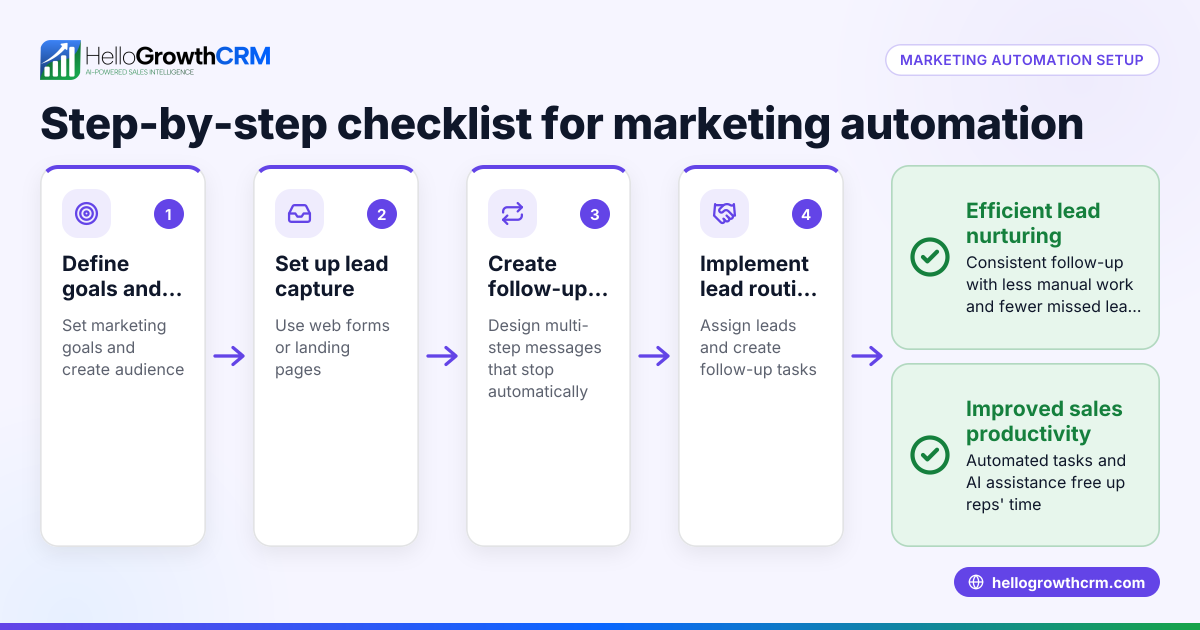
HelloGrowthCRM supports marketing automation segmentation with several features. You can create sequences and campaigns that run automated five-step follow-ups over two weeks, stopping immediately when a prospect replies. AI agents can draft follow-up messages after calls, so reps only need to review and send. Workflows, lead routing, and validation rules let you assign leads automatically and create first-call tasks, streamlining your segmented outreach. Learn more about these features at AI CRM and WhatsApp and SMS CRM.
Frequently asked questions
What is the difference between segmentation and targeting in marketing automation? Segmentation divides your contacts into groups based on shared characteristics. Targeting is sending specific messages to those groups. Segmentation organizes your audience; targeting delivers relevant content.
How often should I update my segments? Update segments regularly, ideally monthly or after major campaigns, to reflect new data, changes in customer behavior, or updated business goals. This keeps your marketing relevant and effective.
Can small businesses benefit from marketing automation segmentation? Yes. Even small teams can improve lead engagement and sales by automating personalized follow-ups for different customer types, saving time and increasing conversion rates.
What data points are best for segmentation? Common useful data includes demographics (age, location), purchase history, lead source, engagement level, and product interest. Choose criteria most relevant to your business and customers.
How do I avoid overwhelming customers with automated messages? Set your automation to pause when a prospect replies and space out messages appropriately. Monitor engagement metrics and adjust frequency to avoid fatigue.
How can I track the success of my segmentation strategy? Use your CRM’s reporting tools to monitor open rates, response rates, and conversions by segment. Compare results over time and adjust your segments and messaging accordingly.
Key takeaways
- Marketing automation segmentation divides contacts into groups for targeted messaging.
- Clear criteria and accurate, up-to-date data are essential for effective segmentation.
- Automated sequences deliver timed, personalized follow-ups that stop immediately on reply.
- Regular monitoring and updating of segments improve campaign performance.
- Avoid common pitfalls like generic messaging and ignoring responses.
- HelloGrowthCRM features like sequences, AI agents, and workflows support segmentation and automation.
Start improving your marketing outreach by organizing your contacts into segments and automating personalized follow-ups. Start on the Free Forever plan (200 leads, no credit card).
Ready to put this into practice?
Set up your pipeline, WhatsApp follow-ups, and AI lead scoring in minutes — free, no credit card.
Try HelloGrowthCRM freeGet CRM tips in your inbox
Join thousands of sales professionals who get weekly insights on CRM strategy, AI automation, and pipeline optimization.

The HelloGrowthCRM team publishes guides on CRM strategy, AI sales tools, and revenue operations for small business sales teams.