HelloGrowthCRM software
Built for real small-business sales teams
HelloGrowthCRM helps reps qualify faster, follow up on time, and close more deals—with practical automation in one place.
- AI lead scoring and pipeline visibility
- Built-in dialer, WhatsApp, and email automation
- Sales forecasting and RevOps-ready reporting
Database segmentation marketing automation and multichannel communication means dividing your customer database into specific groups based on characteristics or behavior, then automating outreach across channels like email, SMS, and WhatsApp to engage each group effectively. This approach helps small businesses follow up faster, personalize messaging, and increase lead conversion without manual hassle.
Why this comes up / what goes wrong
Small-business owners often struggle with slow or inconsistent follow-up, losing leads because they treat all contacts the same. They might keep leads in spreadsheets or text messages, missing the chance to segment customers by interest or buying stage. Without automation, sales teams spend too much time sending individual messages and forget to use multiple communication channels. This leads to lost revenue and wasted effort.
Step-by-step
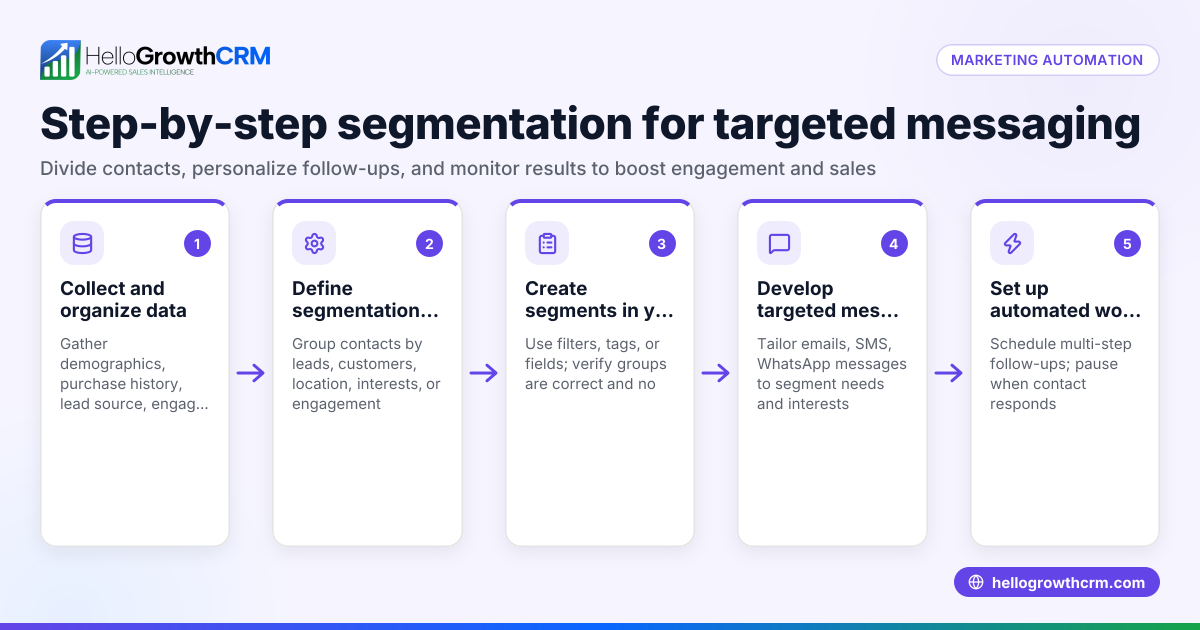
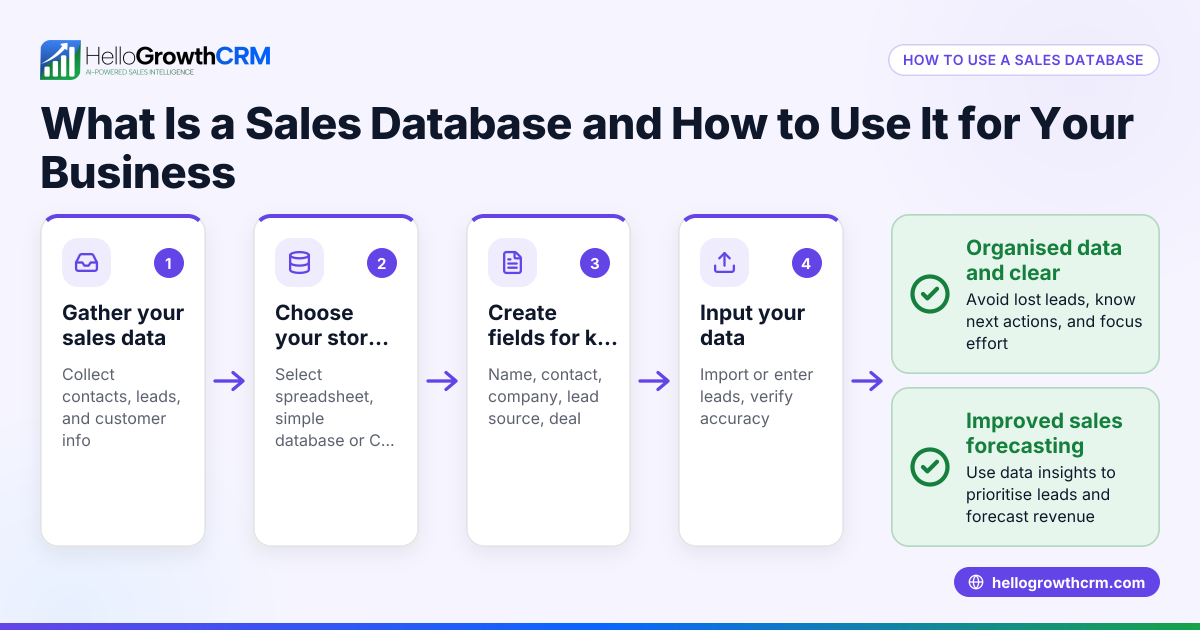
- Gather and clean your database: Collect your leads and customers into one place. Remove duplicates and outdated contacts. Check for missing info that helps segmentation, like location or purchase history.
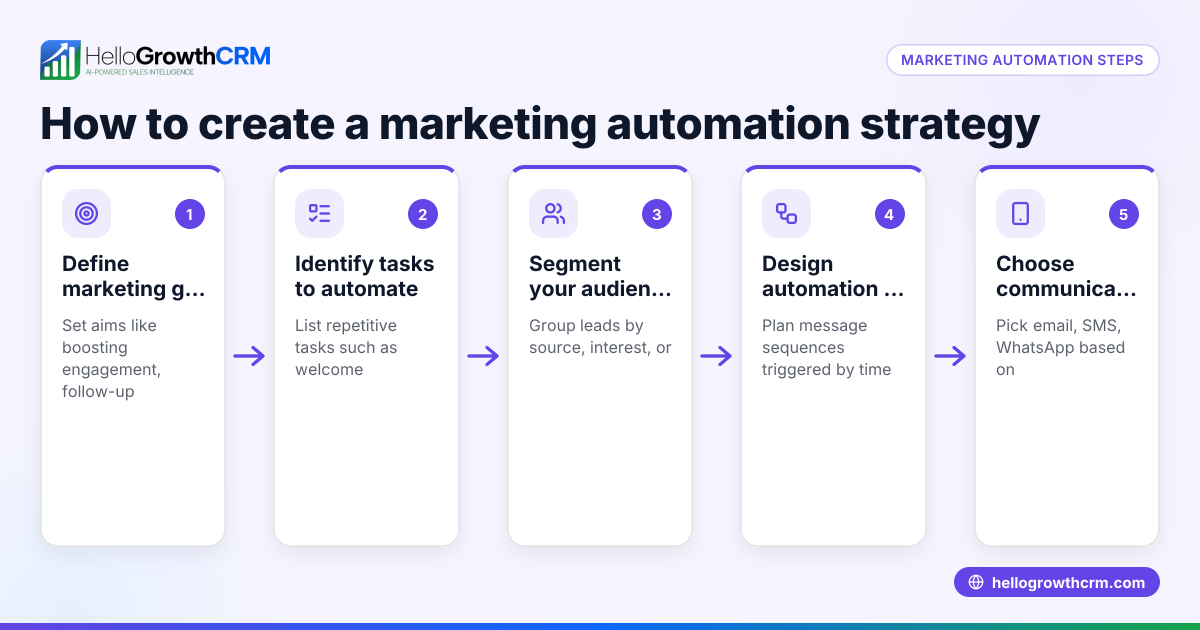
- Segment your database: Divide contacts into groups based on criteria such as demographics, purchase behavior, or lead source. For example, segment by new leads, repeat customers, or high-value prospects. Check that each segment is large enough to justify targeted messaging.
- Choose communication channels: Decide which channels work best for each segment—email for newsletters, SMS for quick alerts, WhatsApp for personal follow-ups. Ensure you have consent to message contacts on these channels.
- Set up marketing automation sequences: Create automated workflows that send a series of timed messages over days or weeks. For example, a five-step follow-up sequence that stops automatically when a prospect replies. Check that messages are relevant and spaced to avoid overwhelming recipients.
- Launch multichannel campaigns: Use campaigns to broadcast messages tailored to each segment across chosen channels. Monitor engagement and adjust content or timing based on response rates.
- Track and analyze results: Regularly review which segments respond best and which channels perform well. Use this data to refine segmentation and automation rules.
- Maintain data quality: Continuously update your database to add new leads, remove inactive contacts, and validate information to keep segmentation effective.
Example (fictional figures)
A residential real-estate team in Phoenix, Arizona, has 5,000 leads in their database on 06/01/2026. They segment leads into three groups:
- New home buyers: 2,000 leads
- Investors: 1,500 leads
- Past clients: 1,500 leads
They set up a five-step email and SMS sequence over two weeks for new home buyers to nurture interest.
Assuming an average sale value of $350,000 and a 2% conversion rate from the sequence:
Number of sales = 2,000 × 2% = 40 sales
Total revenue from sequence = 40 × $350,000 = $14,000,000
The team also sends a one-time WhatsApp campaign to investors promoting a new property listing. If 5% respond and 8 investors make a purchase (an assumed figure for illustration):
Responders = 1,500 × 5% = 75
Sales from responders = 8 (assumed for this example)
Revenue from investor campaign = 8 × $350,000 = $2,800,000
This example shows how segmentation and multichannel automation can generate substantial revenue by targeting the right groups with appropriate messages.
Common mistakes
- Not segmenting at all: Sending the same message to all contacts wastes opportunities. Prevent by defining clear segments based on data.
- Overloading contacts with messages: Too many messages can annoy leads. Prevent by spacing sequence steps and stopping automation when prospects reply.
- Ignoring channel preferences: Using only one channel limits reach. Prevent by mixing email, SMS, and WhatsApp based on segment preferences.
- Failing to update the database: Old or incorrect data reduces segmentation accuracy. Prevent by regular cleaning and validation.
- Not measuring results: Without tracking, you won’t know what works. Prevent by setting KPIs and reviewing campaign analytics.
Doing this in HelloGrowthCRM
HelloGrowthCRM supports database segmentation marketing automation and multichannel communication through several features. Its Sequences and campaigns run automated five-step follow-ups over two weeks that stop automatically when a prospect replies, across email, SMS, and WhatsApp channels. Workflows, lead routing and validation rules automate lead assignment and task creation, ensuring timely follow-up. The system’s AI agents draft follow-up messages after calls for reps to review and send, saving time. Learn more about these features at AI CRM and WhatsApp and SMS CRM.
Frequently asked questions
What is database segmentation in marketing? Database segmentation divides your contacts into groups based on shared traits like demographics or behavior. This lets you send targeted messages that are more relevant and effective than generic outreach.
How does marketing automation help small businesses? Marketing automation saves time by sending scheduled messages automatically, ensuring consistent follow-up. It reduces manual work and helps sales teams engage more leads efficiently.
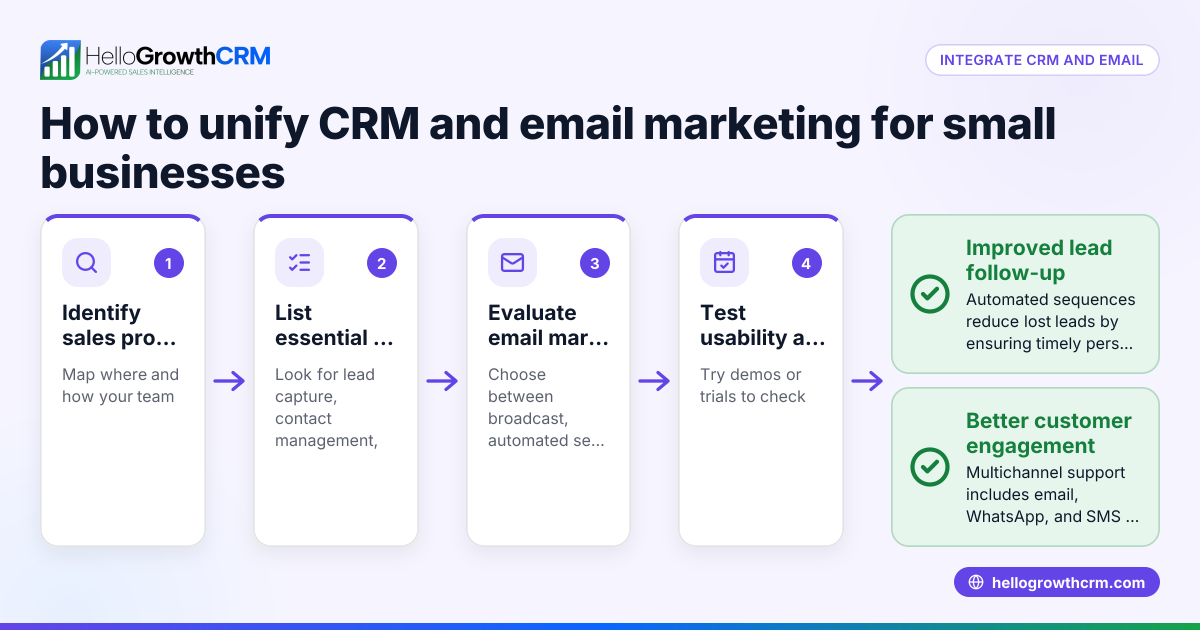
Why use multichannel communication? Using multiple channels like email, SMS, and WhatsApp increases your chances of reaching prospects where they prefer to communicate. It also allows varied messaging styles suited to each channel.
Can automation sequences stop when a lead replies? Yes, automation sequences can be set to stop immediately when a prospect responds, preventing redundant or annoying messages.
How do I start segmenting my database effectively? Begin by collecting clean data and identifying key traits that affect buying decisions. Use these traits to create meaningful groups, then tailor your messaging and channels accordingly.
Does HelloGrowthCRM support multichannel campaigns? Yes, HelloGrowthCRM offers campaigns and sequences that run across email, SMS, and WhatsApp, helping you reach leads on their preferred platforms.
Key takeaways
- Segment your database to target groups with relevant messages.
- Automate follow-up sequences that stop when prospects reply.
- Use multiple communication channels like email, SMS, and WhatsApp.
- Regularly clean and update your database for accurate segmentation.
- Track engagement to refine your automation and messaging.
- HelloGrowthCRM supports these tasks with sequences, workflows, and AI agents.
Start improving your lead follow-up and sales efficiency today. Start on the Free Forever plan (200 leads, no credit card).
Ready to put this into practice?
Set up your pipeline, WhatsApp follow-ups, and AI lead scoring in minutes — free, no credit card.
Try HelloGrowthCRM freeGet CRM tips in your inbox
Join thousands of sales professionals who get weekly insights on CRM strategy, AI automation, and pipeline optimization.

The HelloGrowthCRM team publishes guides on CRM strategy, AI sales tools, and revenue operations for small business sales teams.