HelloGrowthCRM software
Built for real small-business sales teams
HelloGrowthCRM helps reps qualify faster, follow up on time, and close more deals—with practical automation in one place.
- AI lead scoring and pipeline visibility
- Built-in dialer, WhatsApp, and email automation
- Sales forecasting and RevOps-ready reporting
Contact segmentation is the process of dividing your business contacts into meaningful groups that share traits such as location, buying preferences, or engagement level. This allows you to tailor your marketing and sales outreach, improving response rates and customer satisfaction.
Why this comes up / what goes wrong
Small-business owners often collect contacts from various sources—website forms, events, referrals, or purchases—but keep them all mixed in one list. Without segmentation, every contact receives the same messages or offers, which may not fit their needs or interests. This can lead to slower sales follow-up, lost leads, and wasted effort. For example, a residential real-estate team in Phoenix might have buyers, sellers, and investors in one list, making it hard to prioritize or customize communication.
Step-by-step
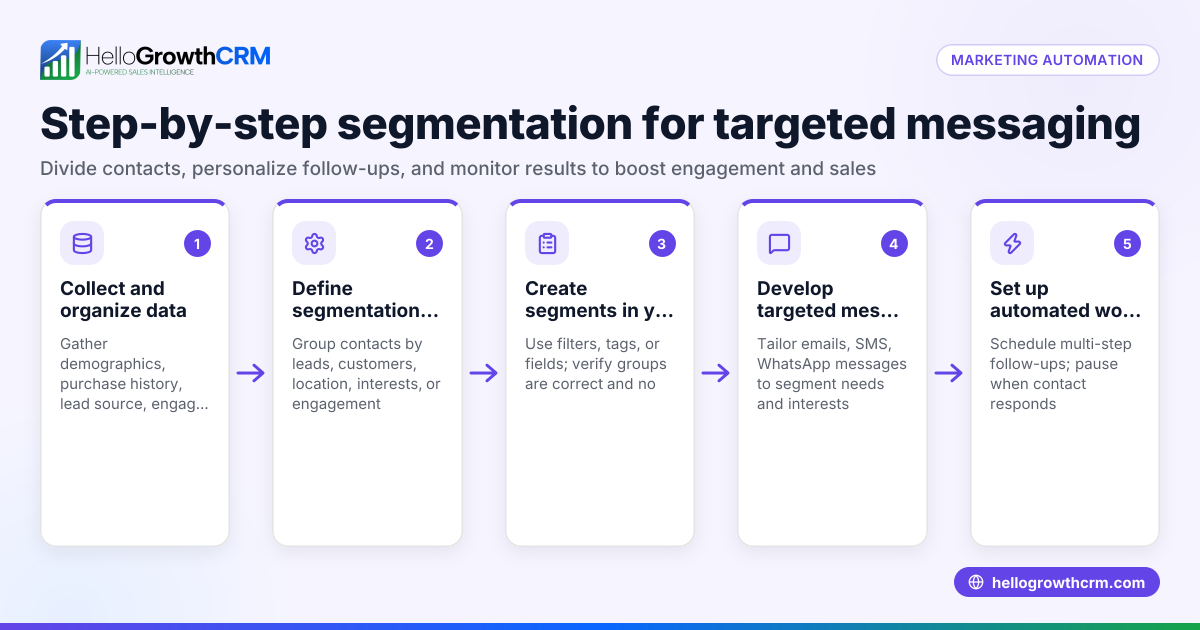
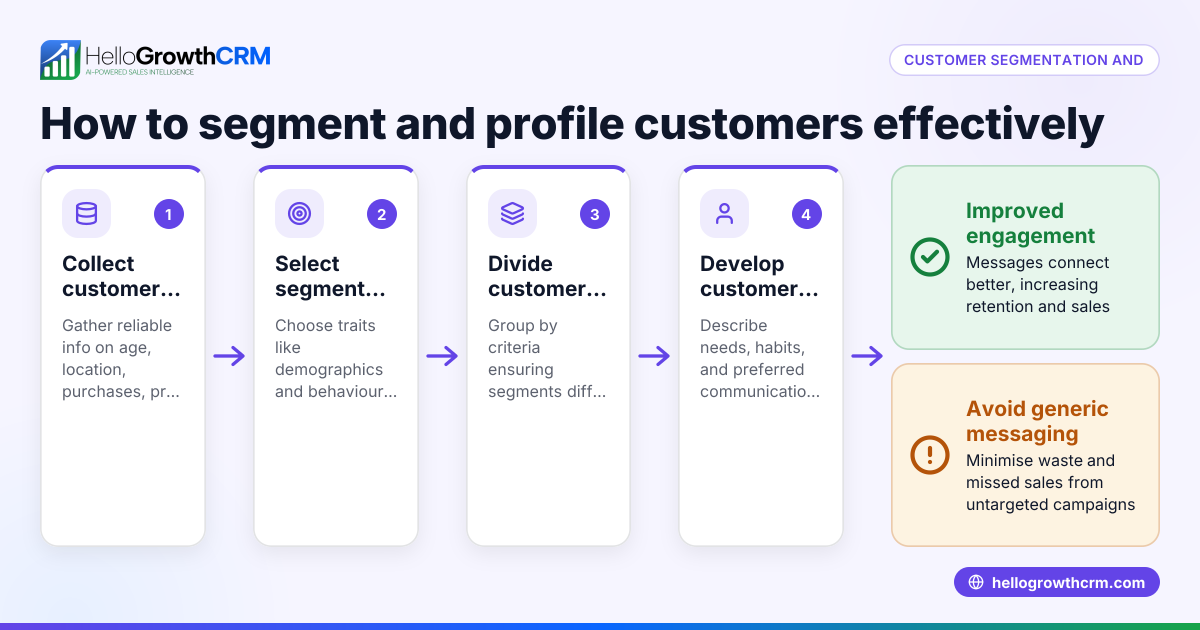
- Gather your contact data: Collect all contacts from your spreadsheets, email lists, and messaging platforms like WhatsApp or SMS. Check for duplicates and outdated information.
- Identify segmentation criteria: Decide which attributes matter most for your business, such as location, purchase history, lead source, or stage in the sales pipeline. For example, segment by city, product interest, or engagement level.
- Create segments: Group contacts based on your criteria. Use simple categories like “New leads,” “Hot prospects,” or “Past customers.” Ensure each contact fits clearly into one or more groups.
- Assign contacts to segments: Sort your contacts into these groups manually or using filters in your spreadsheet or CRM. Check for accuracy and completeness.
- Use segments for targeted outreach: Tailor your emails, texts, or WhatsApp messages to each segment’s interests or needs. For example, send a special offer only to recent buyers or a reminder call to hot prospects.
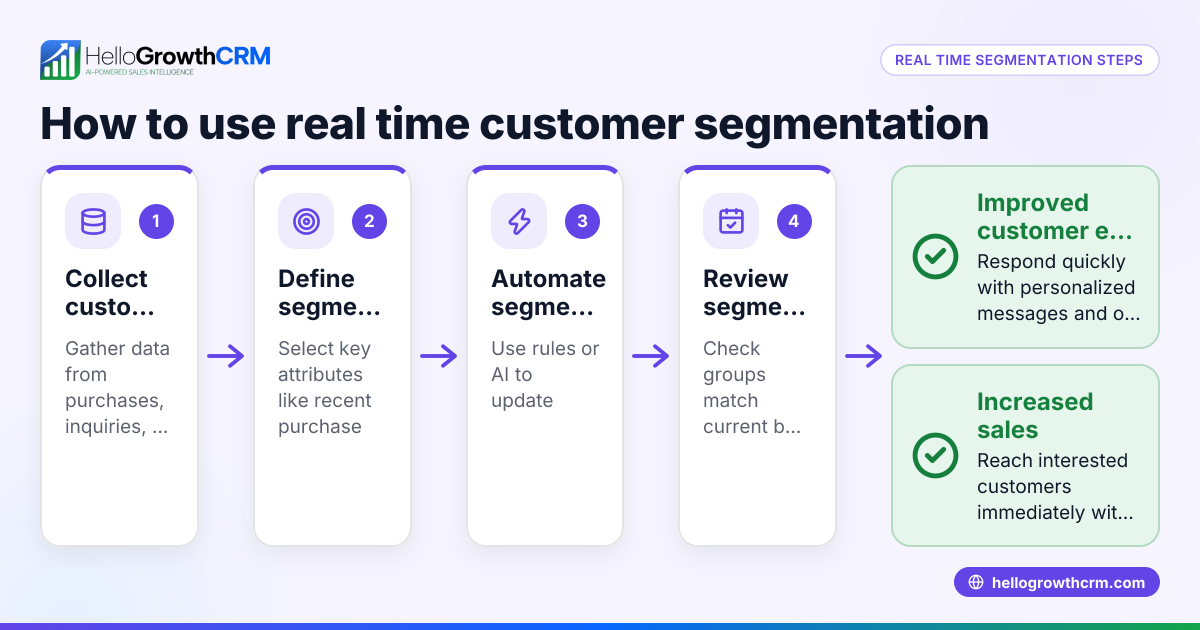
- Review and update regularly: Segmentation is not a one-time task. Periodically check your contact data and segments to add new contacts and remove inactive ones.
For managing contacts and outreach, consider tools designed for WhatsApp and SMS CRM or a built-in CRM dialer to streamline follow-ups and keep your team aligned. Learn more about WhatsApp and SMS CRM and the built-in CRM dialer to support your segmentation efforts.
Example (fictional figures)
A residential real-estate team in Phoenix, Arizona, has 1,200 contacts as of 06/01/2026. They want to segment contacts into three groups: Buyers, Sellers, and Investors.
- Total contacts = 1,200
- Buyers = 600 contacts
- Sellers = 400 contacts
- Investors = 200 contacts
They plan a targeted email campaign costing $0.50 per contact.
Calculate the cost per segment:
Buyers cost = 600 × $0.50 = $300 Sellers cost = 400 × $0.50 = $200 Investors cost = 200 × $0.50 = $100
Total campaign cost = $300 + $200 + $100 = $600
By segmenting, they can tailor messages:
- Buyers get listings of available homes.
- Sellers get market valuation tips.
- Investors get opportunities for rental properties.
This focused approach improves engagement and sales efficiency.
Common mistakes
- Over-segmentation: Creating too many tiny groups can complicate management and dilute your efforts. Prevent this by focusing on the most impactful criteria.
- Using outdated data: Segments based on old or incorrect information lead to irrelevant communication. Regularly clean and update your contact lists.
- Ignoring contact preferences: Not considering how contacts prefer to be contacted (email, text, WhatsApp) reduces response rates. Segment by communication channel if possible.
- Not aligning segmentation with sales stages: Mixing contacts at different sales stages in one segment can confuse messaging. Separate leads by where they are in your sales pipeline.
- Failing to review segments: Static segments lose relevance over time. Schedule periodic reviews to keep segments current.
For better organization and follow-up, explore HelloGrowthCRM for the United States to see how CRM tools can help manage segments and communications.
How to Know If Your Segmentation Strategy Is Working
You want to make sure your segmentation efforts pay off. Here are some signs to watch for:
- Improved engagement: If your emails or messages get more replies, clicks, or opens, your segments likely match your contacts’ interests.
- Faster responses: When leads respond quickly or sales follow-ups happen sooner, your segmentation is helping prioritize the right contacts.
- Higher conversion rates: More contacts moving from inquiry to sale indicates your targeted messaging is effective.
- Reduced unsubscribes or complaints: Fewer people opting out or reporting irrelevant messages shows your segments respect their preferences.
Regularly review these indicators and adjust your segments if results plateau or decline. This ongoing check helps you fine-tune your approach and keep your outreach relevant and productive.
Frequently asked questions
What is the difference between contact segmentation and lead scoring? Contact segmentation groups contacts based on shared traits like demographics or behavior, while lead scoring assigns a numerical value to prioritize leads based on their likelihood to buy. Both help sales teams but serve different purposes.
How often should I update my contact segments? Update segments regularly, at least quarterly or whenever you add a significant number of new contacts. This keeps your outreach relevant and effective.
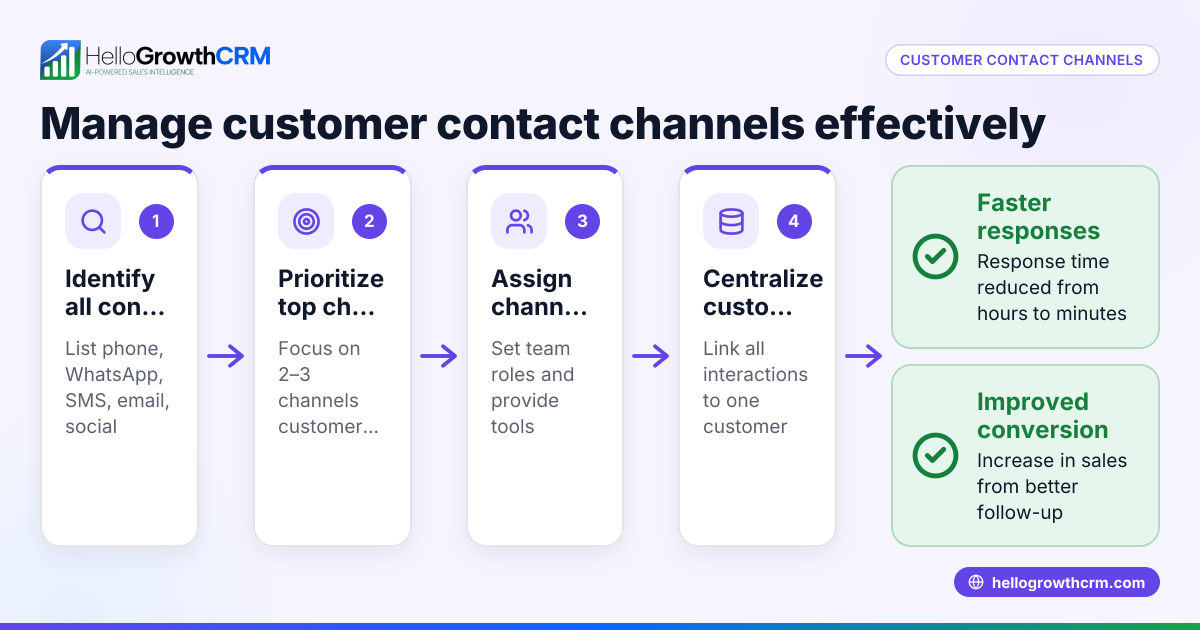
Can I segment contacts across multiple channels like email, SMS, and WhatsApp? Yes. Segmenting contacts by preferred communication channel improves engagement. Tools that support WhatsApp and SMS CRM can help manage multi-channel segmentation efficiently.
Is manual segmentation enough for a small business? Manual segmentation can work initially but becomes time-consuming as your contact list grows. Using CRM software with segmentation features saves time and reduces errors.
How does segmentation improve sales follow-up? Segmentation allows your team to focus on the right contacts with personalized messages, speeding up follow-up and increasing conversion rates.
Key takeaways
- Contact segmentation divides your contacts into meaningful groups for targeted communication.
- Start by gathering data, choosing criteria, creating groups, and assigning contacts.
- Avoid over-segmentation and keep data current to maintain effectiveness.
- Use segmentation to tailor messages across channels like email, SMS, and WhatsApp.
- Regularly review and update segments to reflect changing customer information.
Start organizing your contacts today to improve your sales and marketing efforts. You can Start on the Free Forever plan (200 leads, no credit card) to try a CRM that supports your growing business needs.
Ready to put this into practice?
Set up your pipeline, WhatsApp follow-ups, and AI lead scoring in minutes — free, no credit card.
Try HelloGrowthCRM freeGet CRM tips in your inbox
Join thousands of sales professionals who get weekly insights on CRM strategy, AI automation, and pipeline optimization.

The HelloGrowthCRM team publishes guides on CRM strategy, AI sales tools, and revenue operations for small business sales teams.