HelloGrowthCRM software
Built for real small-business sales teams
HelloGrowthCRM helps reps qualify faster, follow up on time, and close more deals—with practical automation in one place.
- AI lead scoring and pipeline visibility
- Built-in dialer, WhatsApp, and email automation
- Sales forecasting and RevOps-ready reporting
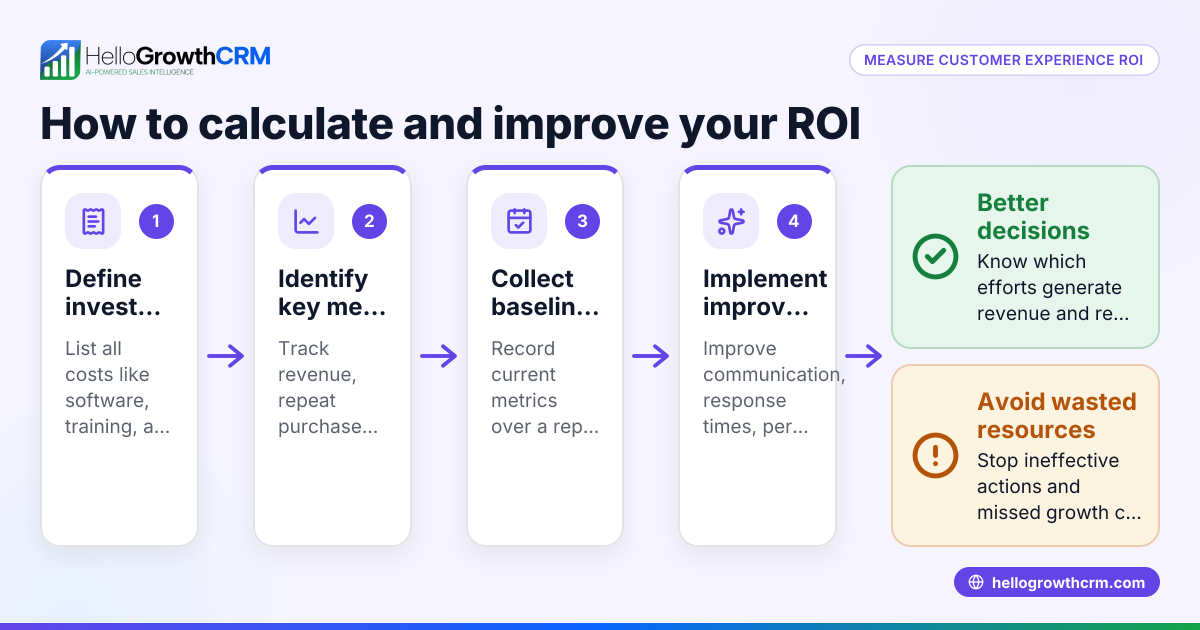
Measuring customer experience means tracking how your customers feel about every interaction with your business, from first contact to post-sale support. To do this, collect feedback, monitor customer behavior, and analyze service data. This article covers why measuring customer experience matters, step-by-step methods, a practical example, common mistakes, and how HelloGrowthCRM can help with customer engagement and support features.
Why this comes up / what goes wrong
Many small-business owners in the US find they lose customers or miss growth opportunities because they don’t know what their customers really think. They might rely only on sales numbers or occasional compliments, but these don’t reveal issues like slow follow-up, confusing communication, or poor after-sale support. Without measuring customer experience, businesses can’t fix problems promptly or improve loyalty. This often leads to lost leads, unhappy customers, and missed referrals.
Step-by-step
- Define key touchpoints to measure: Identify every stage customers interact with your business, such as inquiry, purchase, delivery, support, and follow-up.
- Collect direct feedback: Use surveys, interviews, or feedback forms after key touchpoints. Keep questions simple and focused on satisfaction and ease.
- Track customer behavior data: Monitor repeat purchases, referral rates, support ticket volume, and resolution times to see how customers act beyond feedback.
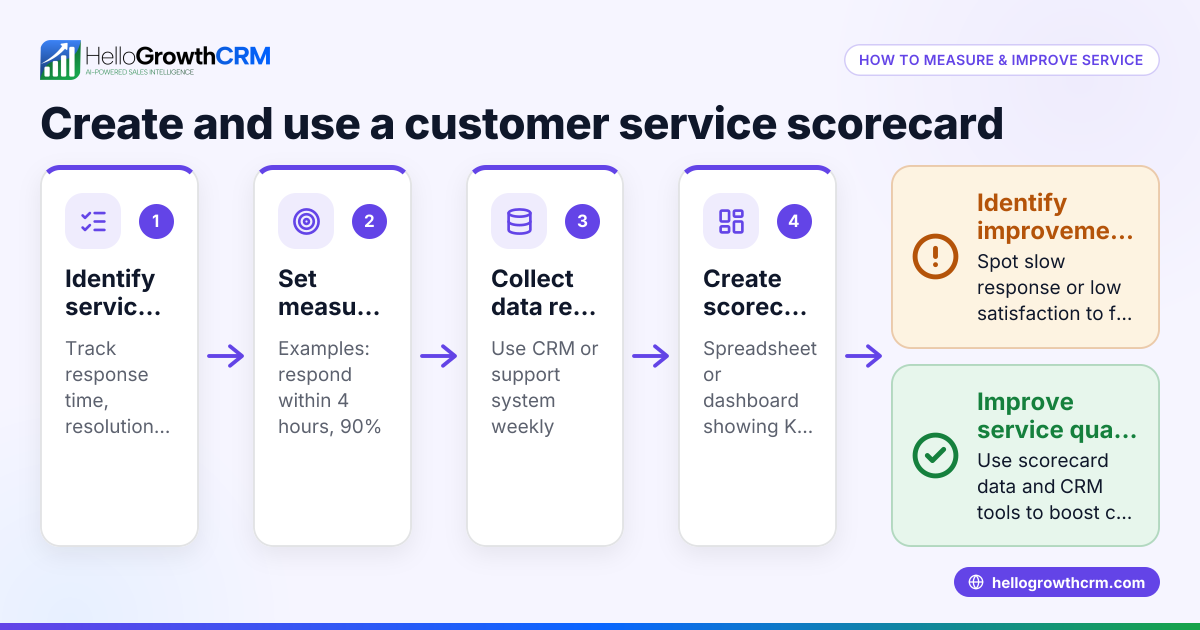
- Analyze service requests and complaints: Review tickets and support history to find common issues and response effectiveness.
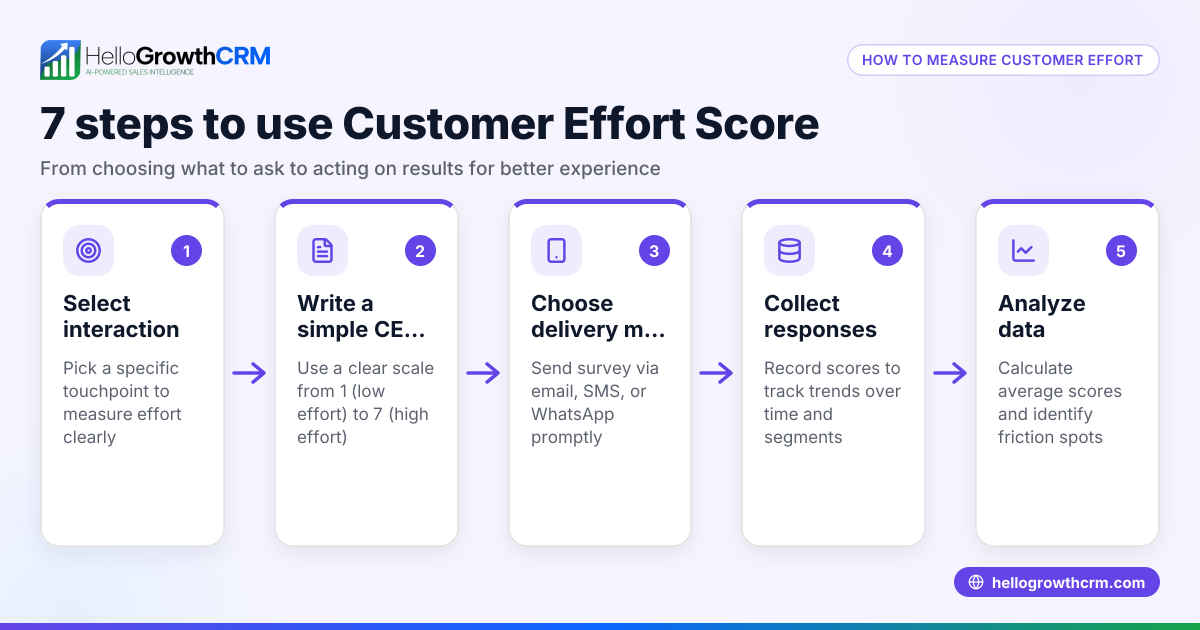
- Calculate customer experience metrics: Use scores like Net Promoter Score (NPS), Customer Satisfaction (CSAT), or Customer Effort Score (CES) to quantify experience.
- Review and act on insights regularly: Schedule monthly or quarterly reviews to identify trends and make improvements.
- Integrate customer experience data with sales and marketing: Link customer feedback to lead sources and sales outcomes to improve targeting and messaging.
Check how your CRM can support these steps by managing customer records, tracking tickets, and storing feedback in one place.
Example (fictional figures)
A two-location dental practice in Columbus, Ohio, wants to measure customer experience for April 2026.
They start by collecting feedback from 120 patients via a simple satisfaction survey after appointments.
- 120 patients surveyed
- 90% responded (108 responses)
- Average CSAT score: 4.2 out of 5
They track service requests logged in April:
- 30 service tickets created
- 28 tickets resolved within 24 hours
Calculate the resolution rate:
28 tickets resolved / 30 tickets created = 0.933 or 93.3%
They also measure referral rate:
- 15 new patients came by referral
- Total new patients in April: 60
Referral rate:
15 referred patients / 60 total new patients = 0.25 or 25%
With these figures, the practice identifies a high satisfaction score and fast ticket resolution but wants to increase referrals. They plan to launch a referral program next month.
Common mistakes
- Ignoring feedback channels: Not collecting customer feedback regularly. Prevent by setting automated surveys or follow-ups.
- Focusing only on sales data: Sales numbers don’t reveal customer feelings. Prevent by combining sales with direct feedback and support data.
- Overlooking after-sale service: Neglecting support tickets and complaints misses critical experience points. Prevent by tracking tickets linked to customer records.
- Not acting on data: Collecting data but failing to review or improve. Prevent by scheduling regular analysis meetings.
- Using complicated metrics: Confusing customers or staff with too many or unclear scores. Prevent by choosing simple, proven metrics like NPS or CSAT.
- Separating sales and customer data: Disconnected systems make insights harder. Prevent by using a CRM that keeps all customer info in one place, including support and referrals.
Learn more about improving customer health score with HelloGrowthCRM’s customer health score feature.
Doing this in HelloGrowthCRM
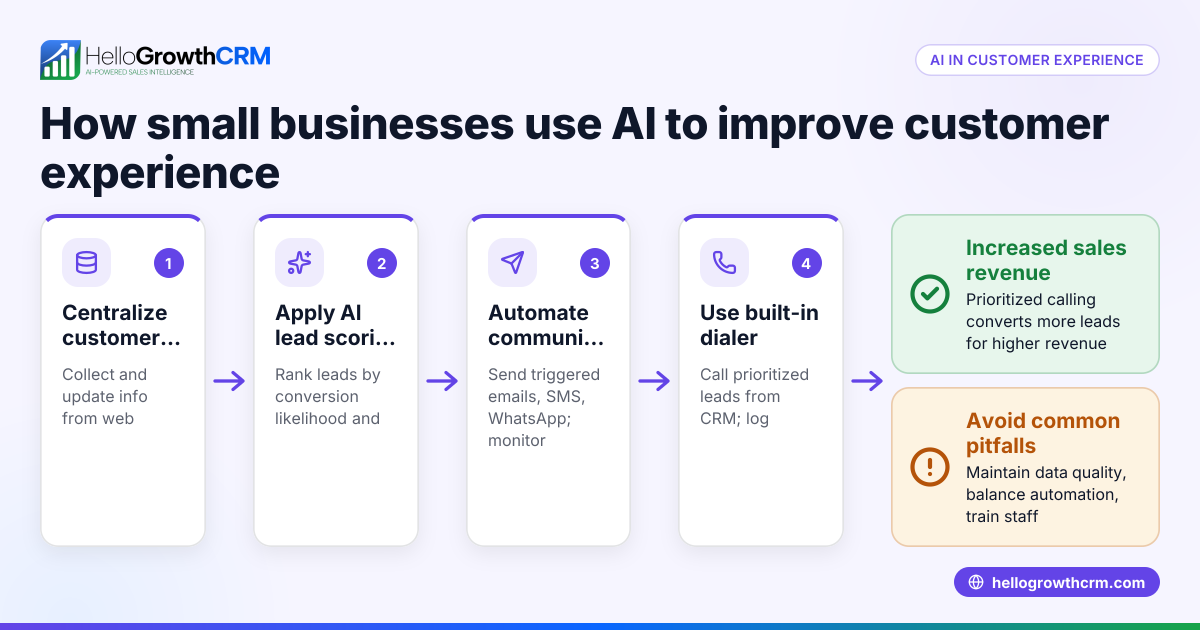
HelloGrowthCRM helps you measure customer experience by keeping all service requests on the same customer record as the deal. Its customer portal lets clients submit tickets and access your knowledge base, while referral tracking helps you monitor word-of-mouth growth. This centralized approach makes it easier to follow up, resolve issues, and improve satisfaction after the sale. Explore the full capabilities of HelloGrowthCRM for your US business at HelloGrowthCRM for the United States.
Frequently asked questions
What is the best way to measure customer experience for a small business? Start with simple surveys after key interactions, track service tickets, and monitor referral rates. Combining direct feedback with behavioral data gives a fuller picture.
How often should I measure customer experience? Regular measurement is best—monthly or quarterly reviews help catch trends early and keep improvements on track.
Can I measure customer experience without special software? Yes, you can use spreadsheets and manual surveys, but a CRM like HelloGrowthCRM with WhatsApp and SMS messaging workflows can automate and centralize data collection and follow-up. See WhatsApp and SMS CRM for details.
What metrics should I use to track customer experience? Common metrics include Net Promoter Score (NPS), Customer Satisfaction (CSAT), and Customer Effort Score (CES). Choose based on what fits your business and customers.
How does after-sale service affect customer experience? After-sale service is crucial—fast, effective handling of requests and complaints strongly influences loyalty and referrals.
Key takeaways
- Measure customer experience by collecting feedback, tracking behavior, and analyzing service data.
- Define key customer touchpoints and use simple surveys and support tickets to gather insights.
- Regularly review data and act on findings to improve satisfaction and referrals.
- Avoid common mistakes like ignoring feedback or separating sales and service data.
- Use a CRM like HelloGrowthCRM to keep all customer interactions and tickets linked in one place.
Start improving how you measure and manage customer experience today. Start on the Free Forever plan (200 leads, no credit card).
Ready to put this into practice?
Set up your pipeline, WhatsApp follow-ups, and AI lead scoring in minutes — free, no credit card.
Try HelloGrowthCRM freeGet CRM tips in your inbox
Join thousands of sales professionals who get weekly insights on CRM strategy, AI automation, and pipeline optimization.

The HelloGrowthCRM team publishes guides on CRM strategy, AI sales tools, and revenue operations for small business sales teams.