HelloGrowthCRM software
Built for real small-business sales teams
HelloGrowthCRM helps reps qualify faster, follow up on time, and close more deals—with practical automation in one place.
- AI lead scoring and pipeline visibility
- Built-in dialer, WhatsApp, and email automation
- Sales forecasting and RevOps-ready reporting
Sales objectives are clear, measurable targets that guide a business’s sales activities. They help focus efforts on specific outcomes like increasing revenue, acquiring new customers, or expanding market share within a defined timeframe. This article covers why sales objectives matter for small businesses, a step-by-step process to set them, a worked example, common pitfalls, and how HelloGrowthCRM supports managing sales objectives.
Why this comes up / what goes wrong
Many small-business owners struggle to grow sales because their team lacks clear direction. Without specific sales objectives, sales efforts become reactive or inconsistent. For example, a business owner might want “more sales” but without defining how much, by when, or through which channels. This leads to missed opportunities, slow follow-up on leads, and difficulty measuring progress. Sales objectives provide focus, motivation, and a way to track success.
Step-by-step
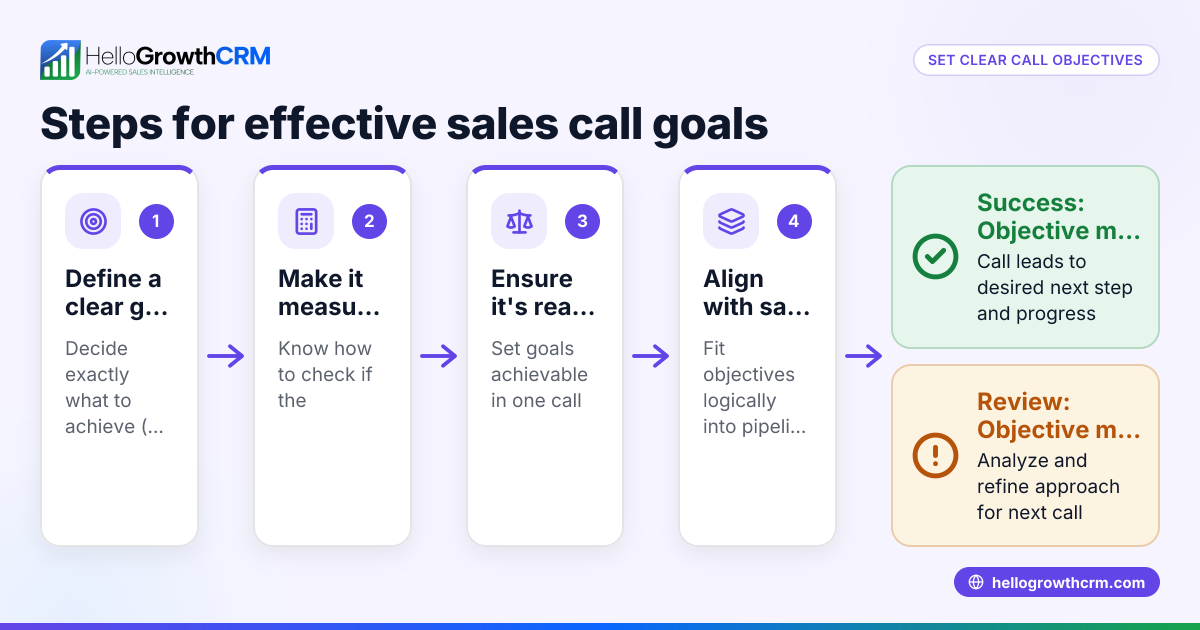
- Define your overall sales goal: Decide what you want to achieve, such as total revenue, number of deals closed, or new customers acquired. Check that this goal aligns with your broader business plan.
- Make objectives specific and measurable: Use numbers and deadlines. For example, “Increase monthly sales revenue by $50,000 by 12/31/2026.” Check that these targets are realistic given your resources.
- Break objectives into smaller targets: Assign targets by product, region, or sales rep to clarify accountability. Check that each target adds up to the overall goal.
- Set action plans: Define activities needed to meet objectives, such as lead follow-up schedules or marketing campaigns. Check that these actions are clear and assigned.
- Track progress regularly: Review sales data weekly or monthly to see if objectives are on track. Check for gaps and adjust plans as needed.
- Communicate objectives to your team: Make sure everyone understands the goals and their role. Check for team buy-in and clarity.
Example (fictional figures)
A B2B software reseller in Denver, Colorado wants to increase annual sales revenue from $1,200,000 to $1,500,000 by 12/31/2026.
Step 1: Overall goal = $1,500,000 annual revenue
Step 2: Current revenue = $1,200,000
Additional revenue needed = $1,500,000 - $1,200,000 = $300,000
Step 3: Break down by quarter:
$300,000 ÷ 4 = $75,000 additional revenue per quarter
Step 4: Assign to sales reps (3 reps):
$75,000 ÷ 3 = $25,000 additional revenue per rep per quarter
Step 5: Action plan:
- Each rep follows up on 50 leads monthly
- Close rate expected: 20%
- Average deal size: $2,500
Check if 50 leads × 20% = 10 deals
10 deals × $2,500 = $25,000 per rep per quarter
This plan meets the revenue target.
Step 6: Track weekly sales and adjust lead generation or follow-up as needed.
Common mistakes
- Setting vague goals: Avoid goals like “increase sales” without numbers or deadlines. Prevent by making objectives specific and measurable.
- Ignoring team input: Sales reps need to understand and commit to targets. Prevent by involving the team in goal setting.
- Not tracking progress regularly: Without monitoring, problems go unnoticed. Prevent by scheduling weekly or monthly reviews.
- Overloading with unrealistic targets: Too high goals demotivate. Prevent by basing targets on past performance and market conditions.
- Failing to assign accountability: Without clear ownership, tasks fall through. Prevent by assigning objectives and actions to individuals or teams.
- Using disconnected tools: Managing sales with spreadsheets, texts, and emails causes follow-up delays. Prevent by using a CRM like HelloGrowthCRM that integrates pipeline and communication.
Doing this in HelloGrowthCRM
HelloGrowthCRM helps small businesses manage sales objectives by tracking deals through a pipeline. For example, a quotation sent last week appears as a deal at the 'quote sent' stage with a follow-up date, ensuring no opportunity is forgotten. Field sales teams can log visits from their phones, letting managers see daily activity and adjust targets accordingly. For founders without a sales manager, Managed RevOps provides weekly support to keep follow-up queues active and pipelines clean. Learn more about HelloGrowthCRM for the United States, its WhatsApp and SMS CRM, and the built-in CRM dialer.
Frequently asked questions
What is the difference between sales objectives and sales goals? Sales objectives are specific, measurable steps that support broader sales goals. Goals are general targets like “grow revenue,” while objectives specify how much, by when, and through what actions.
How often should I review sales objectives? Review sales objectives at least monthly to track progress and adjust strategies. Weekly check-ins on key activities like lead follow-up help keep the team on track.
Can small businesses set sales objectives without a sales team? Yes. Even solo founders benefit from clear sales objectives to prioritize activities and measure success. Tools like HelloGrowthCRM help manage leads and follow-ups efficiently.
What metrics should I use for sales objectives? Common metrics include revenue amount, number of new customers, units sold, deal close rate, and average deal size. Choose metrics that align with your business model and growth plans.
How do sales objectives improve team performance? Clear objectives provide direction, focus, and motivation. They help salespeople prioritize efforts, track results, and celebrate milestones, improving accountability and results.
Key takeaways
- Sales objectives are specific, measurable targets that guide sales efforts.
- Clear objectives prevent missed opportunities and improve team focus.
- Set objectives by defining goals, breaking them down, planning actions, and tracking progress.
- Avoid vague goals, lack of tracking, unrealistic targets, and poor accountability.
- HelloGrowthCRM supports managing sales objectives with pipeline tracking, field operations, and Managed RevOps.
Setting clear sales objectives is essential to growing your business and keeping your sales efforts on track. Start managing your sales pipeline and follow-ups today with HelloGrowthCRM’s Free Forever plan, which supports 200 leads without requiring a credit card. Visit free CRM for small business to get started.
Ready to put this into practice?
Set up your pipeline, WhatsApp follow-ups, and AI lead scoring in minutes — free, no credit card.
Try HelloGrowthCRM freeGet CRM tips in your inbox
Join thousands of sales professionals who get weekly insights on CRM strategy, AI automation, and pipeline optimization.

The HelloGrowthCRM team publishes guides on CRM strategy, AI sales tools, and revenue operations for small business sales teams.