HelloGrowthCRM software
Built for real small-business sales teams
HelloGrowthCRM helps reps qualify faster, follow up on time, and close more deals—with practical automation in one place.
- AI lead scoring and pipeline visibility
- Built-in dialer, WhatsApp, and email automation
- Sales forecasting and RevOps-ready reporting
Outbound lead generation is when a business proactively contacts potential customers to create new sales opportunities. Instead of waiting for prospects to come to you, your sales team initiates contact through calls, emails, WhatsApp, SMS, or other channels. This article explains why outbound lead generation is important for small businesses, outlines a clear step-by-step method, provides a practical example with realistic figures, identifies common mistakes to avoid, and describes how HelloGrowthCRM supports lead capture, qualification, and pipeline management.
Why this comes up / what goes wrong
Many small business owners depend mainly on inbound leads from their website, referrals, or walk-ins. While inbound leads are valuable, they can be inconsistent or slow to arrive, making it difficult to maintain steady sales growth. Outbound lead generation helps fill the sales pipeline by actively searching for potential customers rather than waiting for them to find you.
However, small teams often struggle with outbound lead generation because it requires organization, timely follow-up, and prioritizing leads effectively. Leads can get lost in notebooks, scattered spreadsheets, or delayed phone calls, resulting in missed sales opportunities. Without a clear outbound process, your team’s effort can be inefficient and frustrating. Outbound lead generation becomes essential when you want to accelerate growth, enter new markets, or maintain a consistent sales flow.
Step-by-step
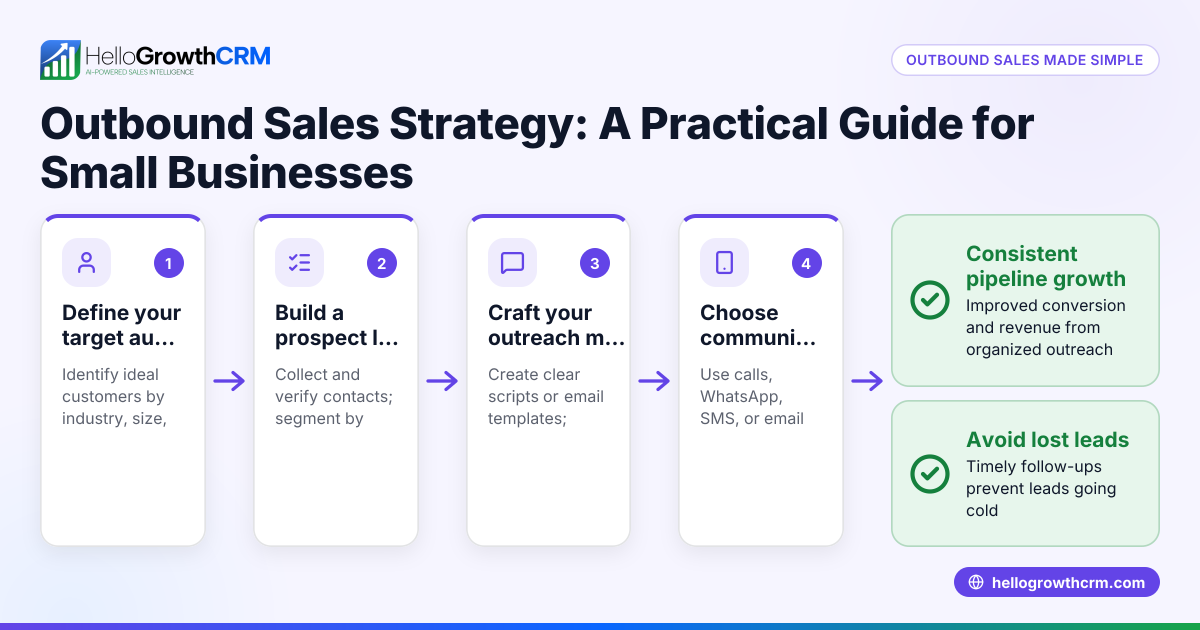
- Identify your target audience: Define the ideal customer profile by considering factors like industry, location, company size, or demographics. Check that your target criteria are clear and realistic.
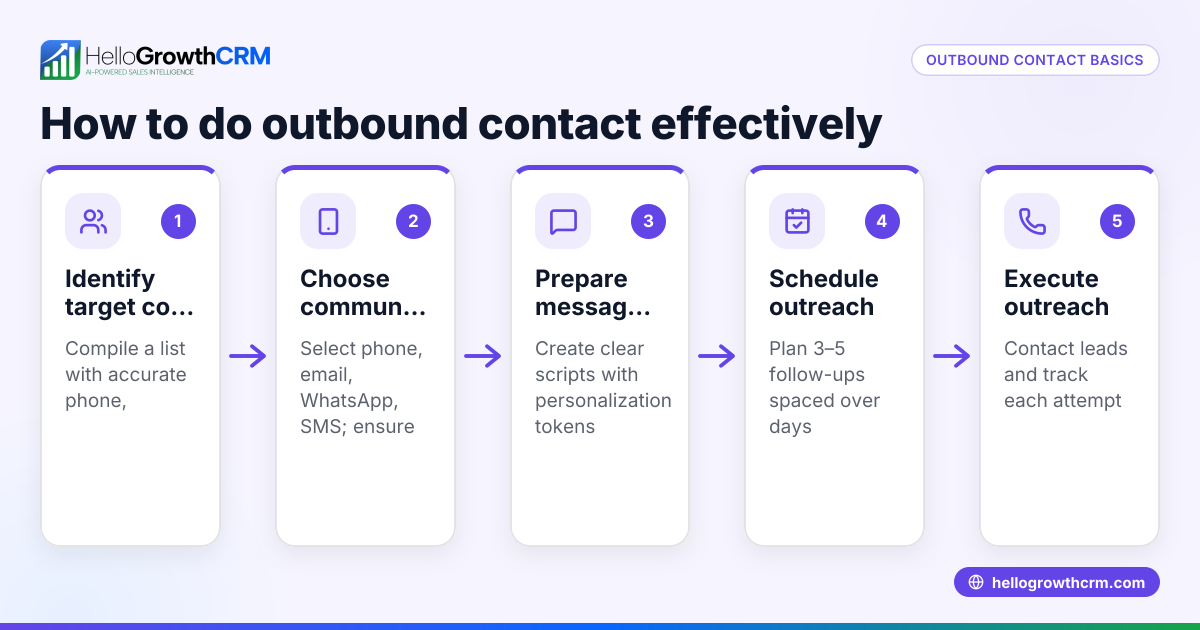
- Build a prospect list: Collect contacts matching your target audience from databases, LinkedIn, referrals, or purchased lists. Verify contact details such as phone numbers and emails to reduce bounce rates.
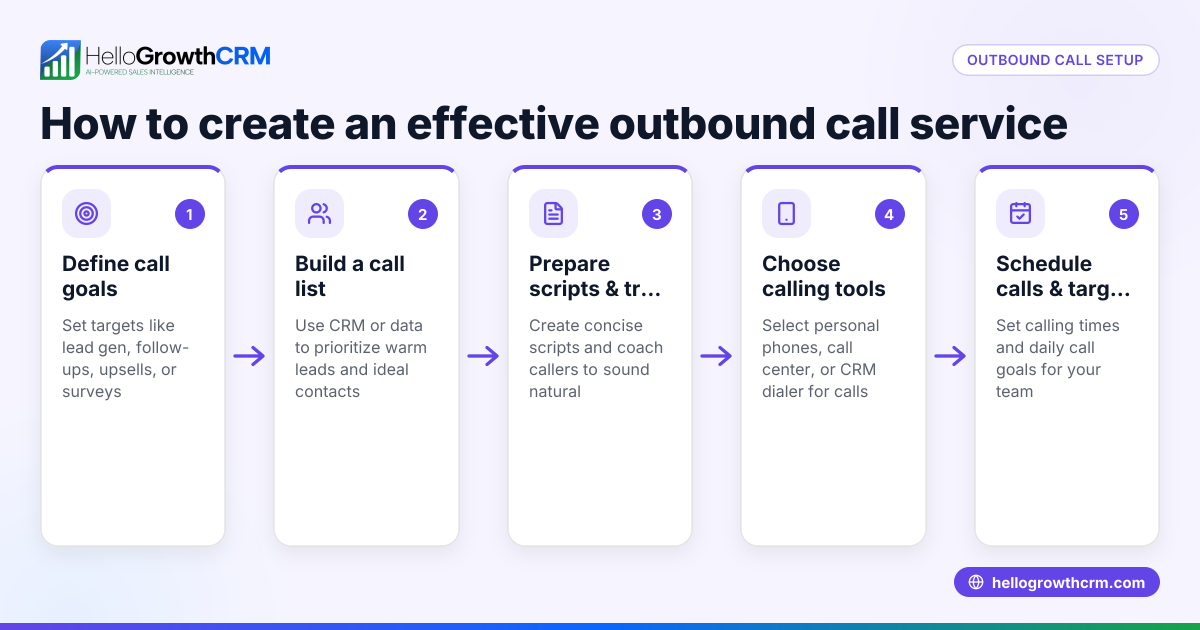
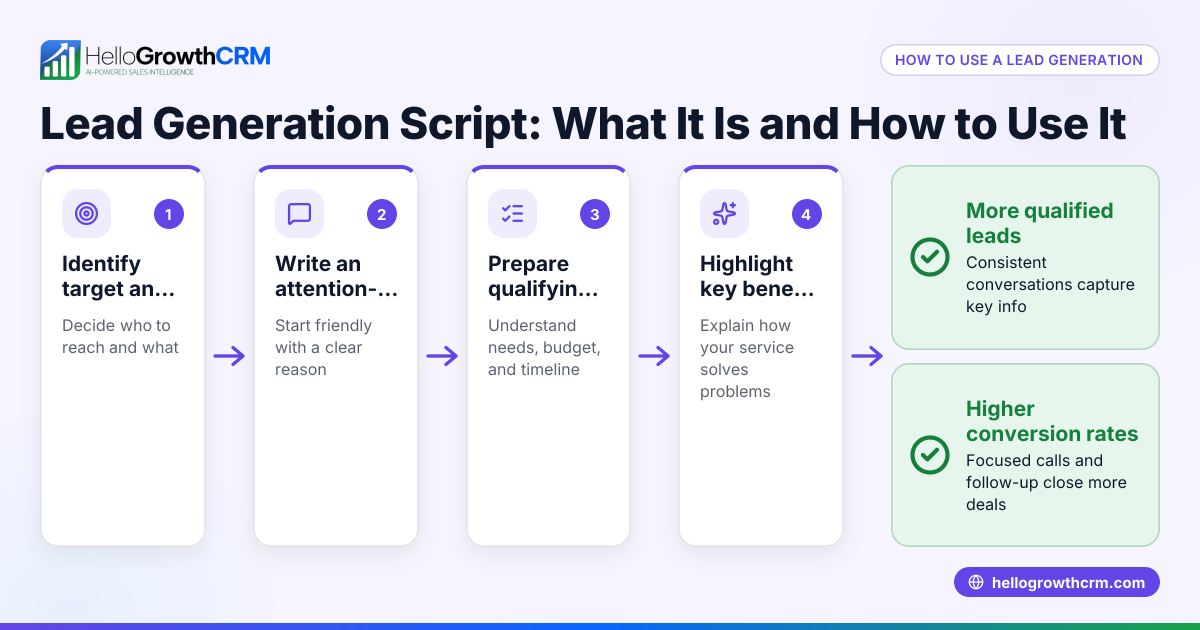
- Craft your outreach message: Prepare clear and concise scripts or email templates that highlight your value proposition and include a call to action.
- Choose outreach channels: Decide whether to use calls, emails, WhatsApp, SMS, or a combination. Ensure your outreach complies with US telemarketing laws and regulations.
- Make initial contact: Reach out to prospects following your schedule. Log every call, message, and response to track progress.
- Qualify leads: Ask questions to assess interest, budget, authority, and timeline. Mark the qualified leads for follow-up.
- Follow up consistently: Persistence is key. Schedule multiple follow-ups spaced appropriately to maintain engagement.
- Track and prioritize leads: Use lead scoring to focus on the most promising prospects first, increasing your chances of conversion.
- Convert or disqualify: Move leads through your sales pipeline until they are either closed as customers or disqualified.
- Review and refine: Analyze which messages and approaches worked best and adjust your targeting or scripts accordingly.
Throughout these steps, ensure your data is organized and accessible to your sales team to avoid losing leads or duplicating efforts.
Example (fictional figures)
A two-location dental practice in Columbus, Ohio wants to increase new patient leads through outbound calls over one month.
- Target audience: Adults aged 25-50 living within 10 miles of each location.
- Prospect list: 500 contacts collected from local business directories and social media.
- Outreach: Calls scheduled over 4 weeks.
- Conversion goal: 10 new patients.
Calculations:
500 prospects × 20% answer rate = 100 conversations
100 conversations × 15% interest rate = 15 interested leads
15 interested leads × 67% appointment booking rate = 10 booked appointments
$150 average revenue per new patient × 10 patients = $1,500 new revenue
This example helps estimate the effort and expected results for outbound lead generation.
Common mistakes
- Not defining your target audience clearly: Prevent this by creating a detailed ideal customer profile before starting.
- Using outdated or inaccurate contact lists: Regularly verify and update your prospect data to maintain accuracy.
- Ignoring follow-up: Set reminders and use tools to track communications to ensure consistent follow-up.
- Failing to prioritize leads: Use lead scoring to focus on leads most likely to convert (AI lead scoring).
- Logging leads in notebooks or scattered spreadsheets: Centralize lead data in a CRM system to avoid lost or duplicated leads (Leads feature).
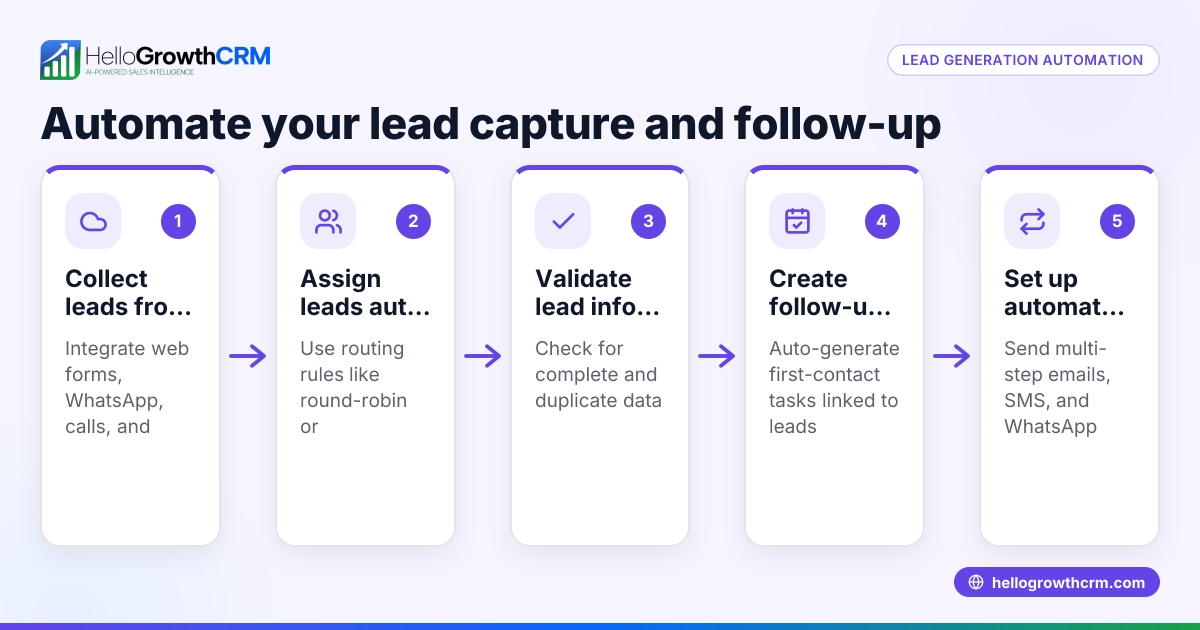
- Not automating lead assignment or task creation: Use workflows and lead routing rules to automate lead distribution and follow-up task creation (Workflows, lead routing and validation rules).
Doing this in HelloGrowthCRM
HelloGrowthCRM helps small businesses manage outbound lead generation by capturing every inquiry from forms, calls, or WhatsApp messages as a lead with an assigned owner and a next step, instead of keeping leads in notebooks. Its AI lead scoring feature helps reps prioritize calling the leads most likely to convert first. Automated workflows and lead routing assign new inquiries round-robin and create first-call tasks automatically, streamlining your outbound process. Learn more about HelloGrowthCRM for the United States here.
Frequently asked questions
What is outbound lead generation? Outbound lead generation is the process of proactively reaching out to potential customers through calls, emails, or messages to create sales leads.
How does outbound lead generation differ from inbound? Inbound lead generation waits for prospects to contact you, while outbound involves actively contacting prospects first to generate interest.
What is an outbound call center lead generation? An outbound call center specializes in making calls on behalf of a business to generate leads and appointments.
How do I prioritize outbound leads? Lead scoring based on engagement, demographics, and behavior helps prioritize leads most likely to convert (AI lead scoring).
Can outbound lead generation be automated? Yes, tools like HelloGrowthCRM offer workflows and lead routing to automate lead assignments and task creation, improving efficiency (Workflows, lead routing and validation rules).
Key takeaways
- Outbound lead generation actively contacts prospects to create sales opportunities.
- A clear target audience and verified contact list are essential.
- Consistent follow-up and lead prioritization increase conversion chances.
- Avoid scattered lead tracking by centralizing data in a CRM.
- Automation features like workflows and AI lead scoring improve outbound efficiency.
Start managing your outbound leads effectively with HelloGrowthCRM. Start on the Free Forever plan (200 leads, no credit card).
Ready to put this into practice?
Set up your pipeline, WhatsApp follow-ups, and AI lead scoring in minutes — free, no credit card.
Try HelloGrowthCRM freeGet CRM tips in your inbox
Join thousands of sales professionals who get weekly insights on CRM strategy, AI automation, and pipeline optimization.

The HelloGrowthCRM team publishes guides on CRM strategy, AI sales tools, and revenue operations for small business sales teams.