HelloGrowthCRM software
Built for real small-business sales teams
HelloGrowthCRM helps reps qualify faster, follow up on time, and close more deals—with practical automation in one place.
- AI lead scoring and pipeline visibility
- Built-in dialer, WhatsApp, and email automation
- Sales forecasting and RevOps-ready reporting
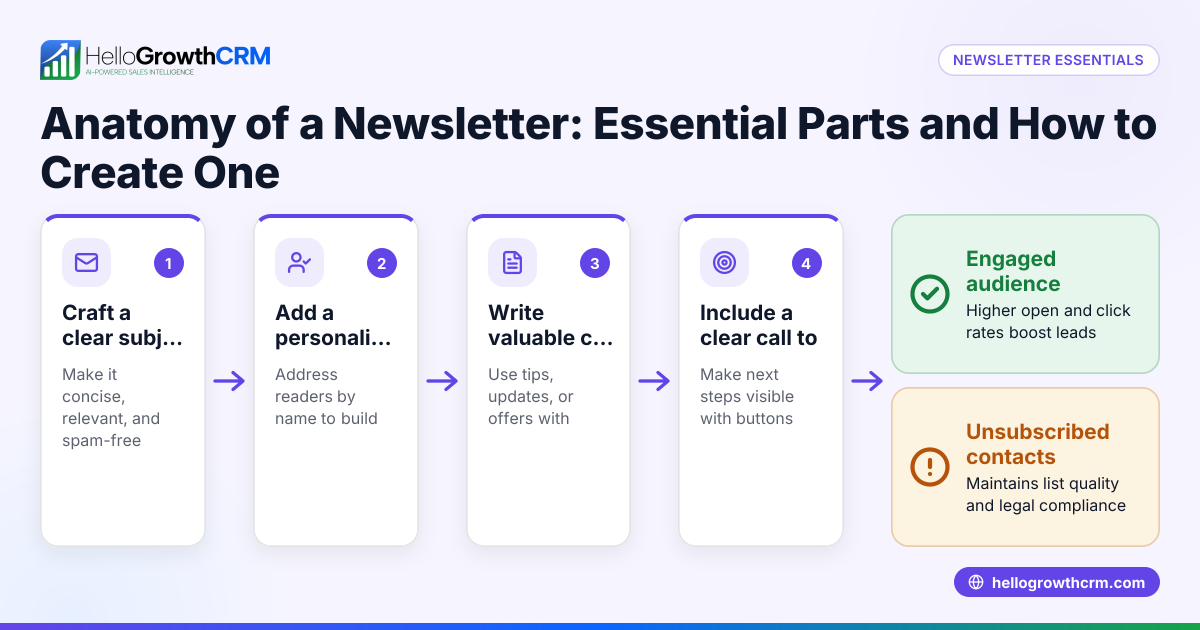
A newsletter is a structured message sent regularly to your customers or prospects to share news, offers, and useful information. The main parts of a newsletter include:
- Header: Displays your logo and newsletter title to establish your brand.
- Greeting: A personalized or general salutation to connect with readers.
- Main Content: The core information such as articles, updates, or promotions.
- Call to Action (CTA): A clear prompt inviting readers to take a specific step.
- Footer: Contact info, unsubscribe link, and legal disclaimers.
Why this comes up / what goes wrong
Small-business owners often want to use newsletters to keep in touch with customers but struggle because they don’t know what parts to include or how to organize them. Without a clear structure, newsletters can feel cluttered or fail to engage, resulting in low open rates and missed sales opportunities. Many owners also juggle sales communications using text messages, emails, and spreadsheets, which causes slow follow-up and lost leads. Knowing the parts of a newsletter helps you create consistent, professional messages that support your marketing and sales efforts.
Step-by-step
- Create the Header
- Add your business logo and a clear newsletter title.
- Check that the header looks professional and matches your brand style.
- Write a Greeting
- Use a personalized greeting if possible (e.g., "Hi Sarah,"), or a friendly general one like "Hello,".
- Make sure the tone fits your brand voice.
- Develop the Main Content
- Consider including a few key messages such as news, tips, or special offers to keep your newsletter focused and engaging.
- Use headings and short paragraphs to make it easy to read.
- Add images or graphics only if they support the message and load quickly.
- Add a Call to Action (CTA)
- Decide what you want readers to do next (visit your website, call, reply).
- Make the CTA stand out with clear wording and a button or link.
- Design the Footer
- Include your contact details (phone, email, address).
- Add an unsubscribe option to comply with email laws.
- Include any necessary disclaimers or legal notes.
- Review and Test
- Proofread for spelling and grammar.
- Test all links and formatting on different devices.
- Send a test email to yourself or a colleague.
- Send and Track
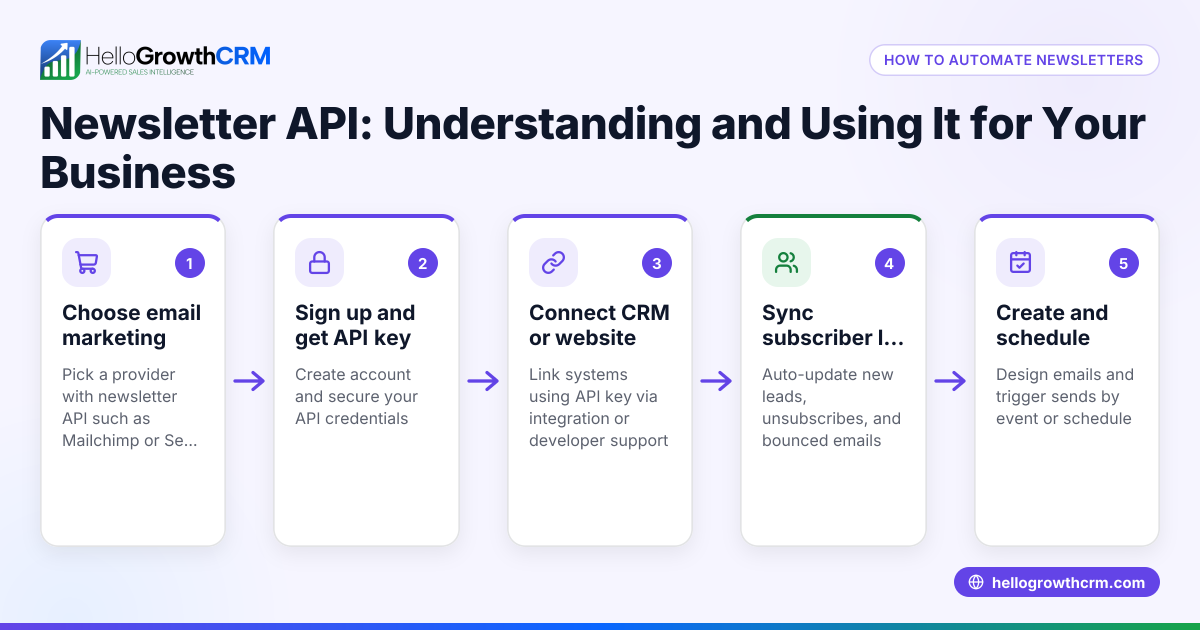
- Use an email tool or CRM that tracks opens and clicks.
- Analyze results to improve future newsletters.
Using a CRM with email sequences and lead tracking helps avoid delays and lost leads common when managing sales on text messages, email, and spreadsheets. See how a WhatsApp and SMS CRM or a built-in CRM dialer can help streamline your sales communications.
Example (fictional figures)
Consider a B2B software reseller in Denver, Colorado, sending a monthly newsletter on 06/15/2026 to 1,000 subscribers.
- Header: Logo and "June Software Updates"
- Greeting: "Hello, valued customer,"
- Main Content: Three sections — New product launch, customer success story, upcoming webinar.
- Call to Action: "Register for the webinar now"
- Footer: Contact info and unsubscribe link
Costs:
- Email platform fee: $50 per month
- Design and content creation: $200 one-time
Revenue goal:
- Expected webinar signups: 50
- Conversion rate: 20%
- Average sale per customer: $1,000
Calculations: 50 signups × 20% conversion = 10 sales 10 sales × $1,000 = $10,000 revenue
Return on investment: $10,000 revenue - ($50 + $200) costs = $9,750 profit
This example shows how using the key parts of a newsletter can lead to measurable business results.
Common mistakes
- Skipping the header or branding
- Prevent by always including your logo and newsletter title to build brand recognition.
- Using only generic greetings
- Personalize greetings when possible to better engage readers.
- Overloading content
- Limit main content to 2-3 focused messages to keep readers interested.
- Weak or missing call to action
- Make CTAs clear, actionable, and easy to follow. Test different wording.
- Ignoring unsubscribe options
- Always include an unsubscribe link to comply with laws and respect recipients.
- Not testing before sending
- Send test emails to catch errors and check formatting on various devices.
Using a CRM like HelloGrowthCRM for the United States that supports lead capture and email sequences can help avoid delays and lost leads common when managing sales on text, email, and spreadsheets.
Frequently asked questions
What is the ideal length for a newsletter? A newsletter should be concise enough to hold attention, typically between 200 and 500 words. Focus on key messages and avoid overwhelming readers with too much information.
How often should I send newsletters? Common schedules are weekly, biweekly, or monthly. Choose a frequency you can maintain consistently without sacrificing quality.
Can I include images in my newsletter? Yes, images can improve engagement if they are relevant and optimized for fast loading. Avoid large files that slow down email delivery.
How do I measure newsletter success? Track open rates, click-through rates, and conversions using your email platform or CRM tools. Use this data to refine your content and timing.
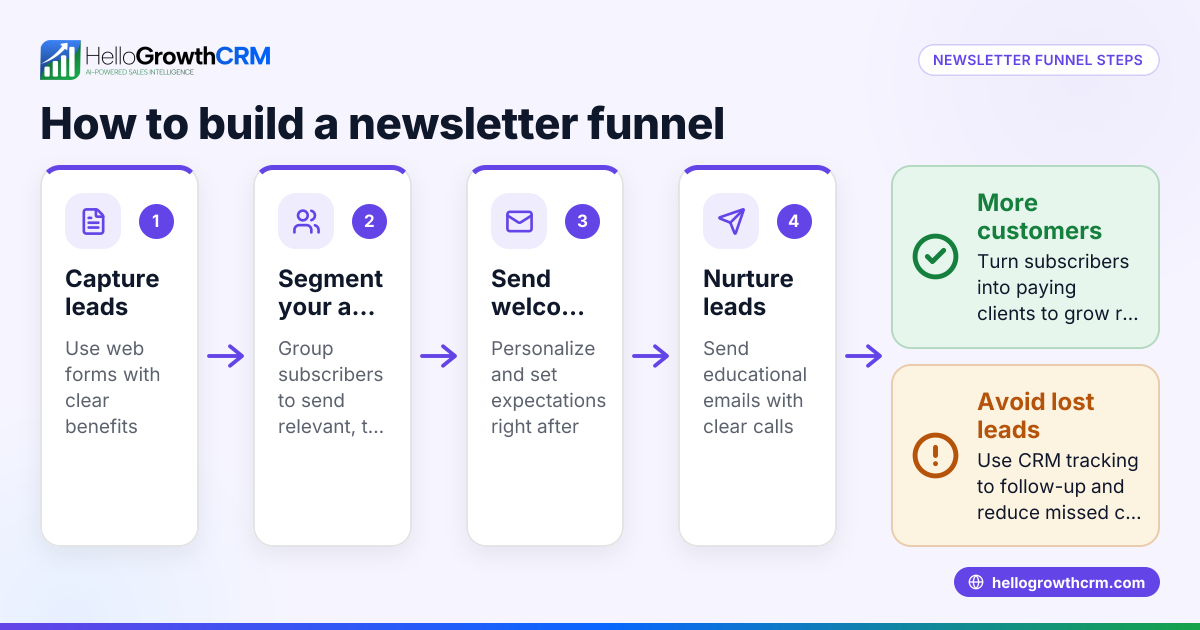
Should I segment my newsletter list? Segmenting your list by customer type or interest can improve relevance and response rates. Many CRMs support list segmentation and targeted email sequences.
Key takeaways
- A newsletter’s essential parts are the header, greeting, main content, call to action, and footer.
- Clear structure improves reader engagement and business outcomes.
- Avoid common mistakes like missing branding, generic greetings, and weak CTAs.
- Always test your newsletter before sending and track its performance.
- Using a CRM can help streamline newsletter creation and sales follow-up.
Start building your newsletter today to connect better with customers and grow your business. Start on the Free Forever plan (200 leads, no credit card).
Ready to put this into practice?
Set up your pipeline, WhatsApp follow-ups, and AI lead scoring in minutes — free, no credit card.
Try HelloGrowthCRM freeGet CRM tips in your inbox
Join thousands of sales professionals who get weekly insights on CRM strategy, AI automation, and pipeline optimization.

The HelloGrowthCRM team publishes guides on CRM strategy, AI sales tools, and revenue operations for small business sales teams.