HelloGrowthCRM software
Built for real small-business sales teams
HelloGrowthCRM helps reps qualify faster, follow up on time, and close more deals—with practical automation in one place.
- AI lead scoring and pipeline visibility
- Built-in dialer, WhatsApp, and email automation
- Sales forecasting and RevOps-ready reporting
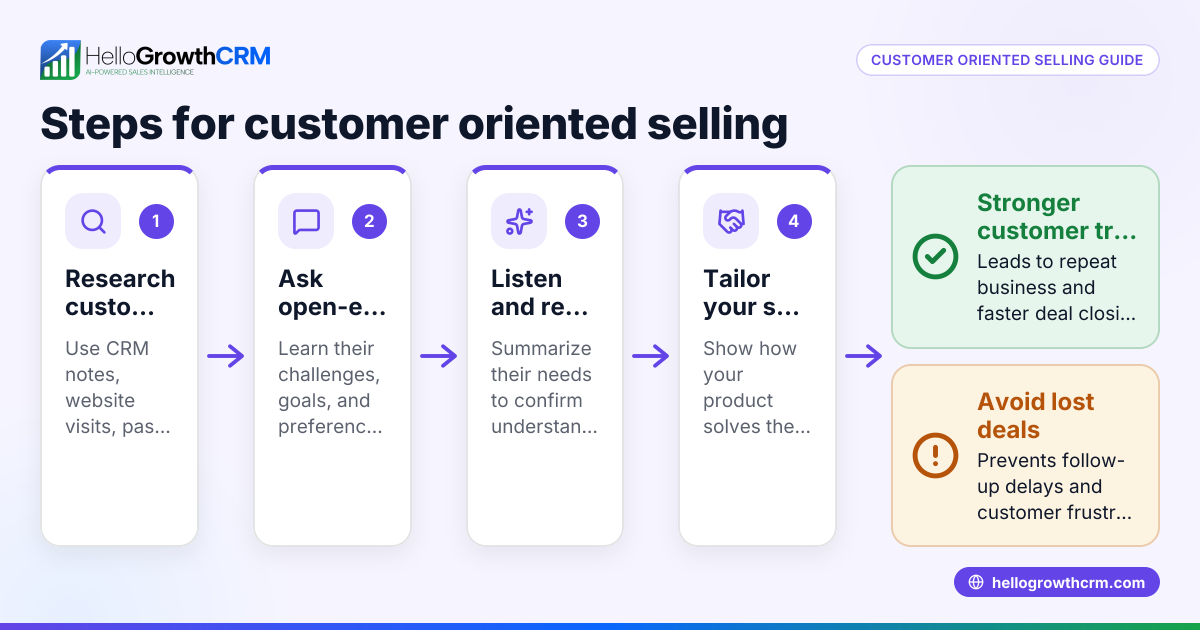
When selling a product, the key questions you ask should focus on understanding your customer's needs, budget, who makes the buying decision, and their timeline for purchase. These questions help you tailor your sales approach, avoid wasted effort, and close deals more efficiently.
Why this comes up / what goes wrong
Small-business owners often face slow sales or lost leads because they don’t ask enough targeted questions early in the process. Without understanding the customer’s pain points, budget constraints, or decision-making process, sales conversations become generic and ineffective. This can lead to missed sales opportunities or deals that stall indefinitely. Many owners rely on assumptions or focus only on product features without confirming if the product truly fits the customer’s needs or buying process.
This situation is common in businesses where sales happen over text messages, email, or spreadsheets without a clear system to capture critical information. Without asking the right questions, sales teams waste time chasing leads that aren’t ready or able to buy. This slows growth and frustrates teams.
Step-by-step
- Identify the customer’s problem or need. Ask: “What challenges are you facing that you hope this product can solve?” Make sure their problem aligns with your product’s strengths. Confirm you understand their pain points clearly.
- Understand their budget. Ask: “What budget have you allocated for this purchase?” Confirm if the price range fits their expectations to avoid wasted time. If they hesitate, offer a price range to guide the conversation.
- Clarify the decision-making process. Ask: “Who else is involved in making this purchase decision?” This helps you know if you need to engage other stakeholders or decision-makers.
- Determine the purchase timeline. Ask: “When are you looking to make a decision?” Knowing this helps you prioritize your follow-up efforts and manage your sales pipeline effectively.
- Explore past solutions. Ask: “What have you tried before to solve this?” This reveals what worked or didn’t and how your product can fit in or improve their current setup.
- Confirm product fit and customization needs. Ask: “Are there specific features or customizations you require?” Check if you can meet these needs or if you need to adjust your offer.
- Discuss next steps and communication preferences. Ask: “What is the best way to follow up with you?” Agree on how and when to stay in touch to maintain momentum.
Using a CRM that integrates with WhatsApp and SMS can help track these questions and answers, making your sales process more organized and timely. For more on such tools, see WhatsApp and SMS CRM and built-in CRM dialer.
Example (fictional figures)
A B2B software reseller in Denver, Colorado, sells a project management tool. Here’s how the sales conversation might go:
- Customer states: “We struggle with tracking project deadlines across teams.”
- Budget question: Customer says they have $15,000 annually allocated.
- Decision makers: Customer says CFO and IT manager are involved.
- Timeline: Customer plans to decide by 08/15/2026.
- Past solutions: Used spreadsheets and email, but it’s inefficient.
- Customization: Needs integration with existing accounting software.
Follow-up plan agreed: Weekly WhatsApp check-ins until decision.
Sales price calculation: Annual license fee = $15,000 Integration customization = $3,000 Total price = $15,000 + $3,000 = $18,000
This example shows how capturing and using answers to these questions helps tailor your sales approach and schedule follow-ups effectively.
Common mistakes
- Not asking about budget upfront. Prevent this by including budget questions early to avoid wasting time on unaffordable options.
- Ignoring the decision-making process. Prevent this by identifying all decision-makers to ensure no blockers later in the process.
- Failing to establish a timeline. Prevent this by setting clear next steps and deadlines to maintain sales momentum.
- Skipping questions about past solutions. Prevent this by learning what didn’t work before, so you can position your product better.
- Not confirming communication preferences. Prevent this by agreeing on follow-up methods to improve response rates (see HelloGrowthCRM for the United States).
- Relying on manual tracking with spreadsheets or emails. Prevent this by using a CRM with lead capture and communication tracking to keep your team aligned.
Frequently asked questions
What are the most important questions to ask potential buyers? Focus on their needs, budget, decision-makers, timeline, and previous solutions. These questions reveal if your product fits and how to approach the sale effectively.
How do I handle a customer who avoids answering budget questions? Explain that understanding their budget helps you propose the best options without wasting their time. Offering a price range can encourage openness and guide the conversation.
Why ask about the decision-making process? Knowing who influences the purchase helps you tailor communications and avoid surprises. Engaging all stakeholders early builds consensus and speeds up the sale.
What if the customer has no set timeline? Ask what factors will influence their timing and suggest a follow-up schedule. Keeping the relationship warm with regular check-ins using tools like WhatsApp sequences helps maintain interest.
How can I keep track of these questions and answers? Use a CRM system that supports lead capture and communication tracking, so your team stays aligned and follows up promptly. Tools with WhatsApp and SMS integration simplify this process.
Key takeaways
- Ask questions that uncover customer needs, budget, decision-makers, and timeline.
- Confirm past solutions tried to position your product effectively.
- Establish clear next steps and communication preferences.
- Avoid common mistakes like skipping budget or timeline questions.
- Track all interactions in a CRM to improve follow-up efficiency and team alignment.
To start organizing your sales questions and leads, consider a CRM built for US small businesses with WhatsApp and SMS integration. Start on the Free Forever plan (200 leads, no credit card) at HelloGrowthCRM.
Ready to put this into practice?
Set up your pipeline, WhatsApp follow-ups, and AI lead scoring in minutes — free, no credit card.
Try HelloGrowthCRM freeGet CRM tips in your inbox
Join thousands of sales professionals who get weekly insights on CRM strategy, AI automation, and pipeline optimization.

The HelloGrowthCRM team publishes guides on CRM strategy, AI sales tools, and revenue operations for small business sales teams.