HelloGrowthCRM software
Built for real small-business sales teams
HelloGrowthCRM helps reps qualify faster, follow up on time, and close more deals—with practical automation in one place.
- AI lead scoring and pipeline visibility
- Built-in dialer, WhatsApp, and email automation
- Sales forecasting and RevOps-ready reporting
A pipeline tracker is a system that helps you monitor your sales opportunities as they progress through defined stages, from first contact to closing the deal. It keeps your leads organized by stages, reminds you when to follow up, and highlights where deals might be stalling. This organized approach helps you manage your sales process actively and forecast revenue more accurately.
Why this comes up / what goes wrong
Many small business owners track sales leads using emails, text messages, and spreadsheets. This scattered approach often leads to missed follow-ups and lost leads because there is no single place to see all opportunities and their status. Without a dedicated pipeline tracker, it is hard to know which deals need attention, which are stuck, and what revenue to expect. This causes slower sales cycles, lost revenue, and frustration for the team.
Step-by-step
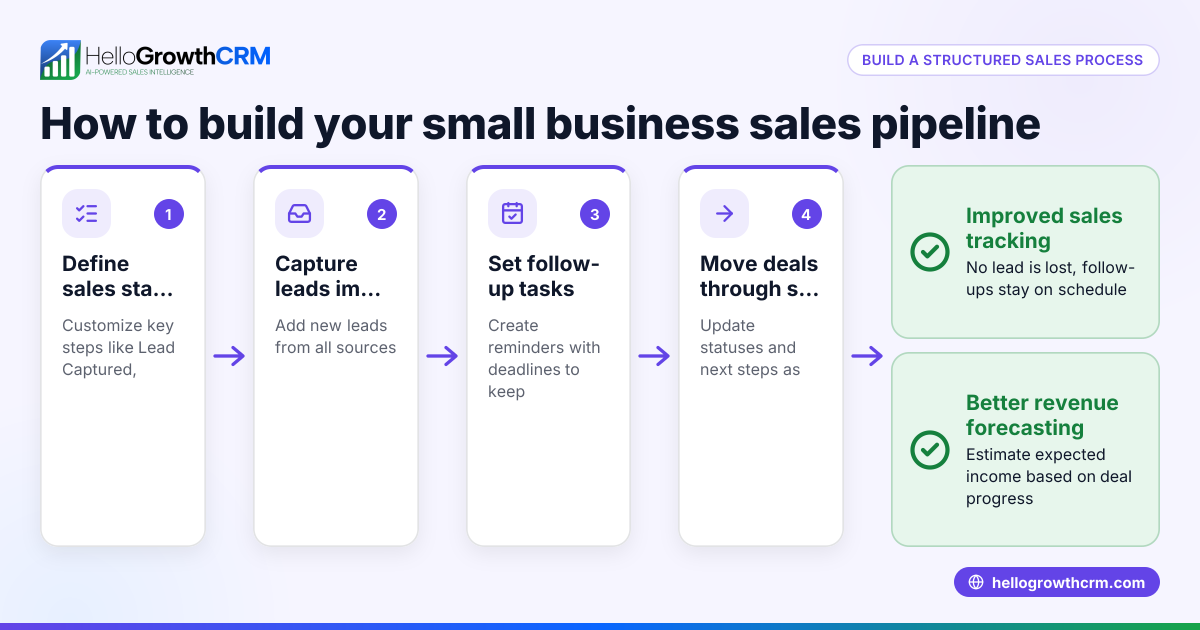
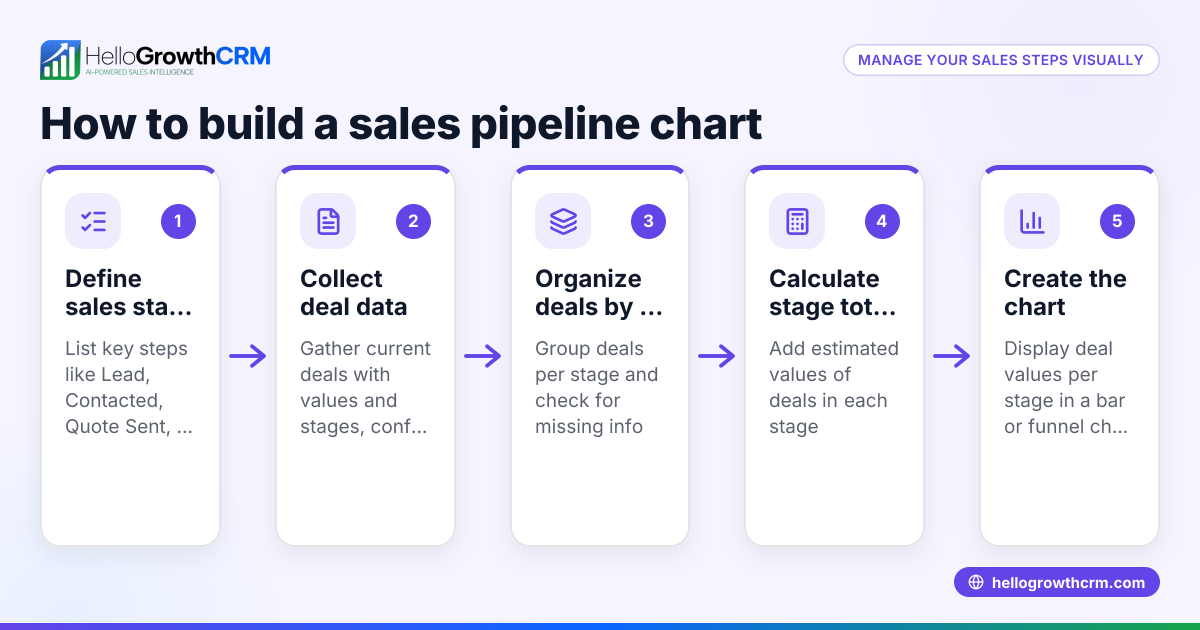
- Define your sales stages clearly. Typical stages include Lead, Contacted, Demo or Meeting, Quote Sent, Negotiation, and Closed (Won or Lost). Make sure each stage has a clear meaning so your team understands where each deal stands.
- Collect all leads in one centralized place. Use a system that captures leads from web forms, emails, or referrals so no leads get lost in inboxes or spreadsheets.
- Enter each lead as a deal in the pipeline tracker. Assign the current stage and set a follow-up date to remind you when to contact the lead next.
- Update deal stages regularly. Move deals forward as they progress or backward if stalled. Keep notes on communications and next steps to maintain context.
- Review your pipeline weekly. Check which deals need action, which are stuck, and update expected close dates to keep your data current.
- Analyze your pipeline health. Look for bottlenecks where deals stall and adjust your sales process to improve flow.
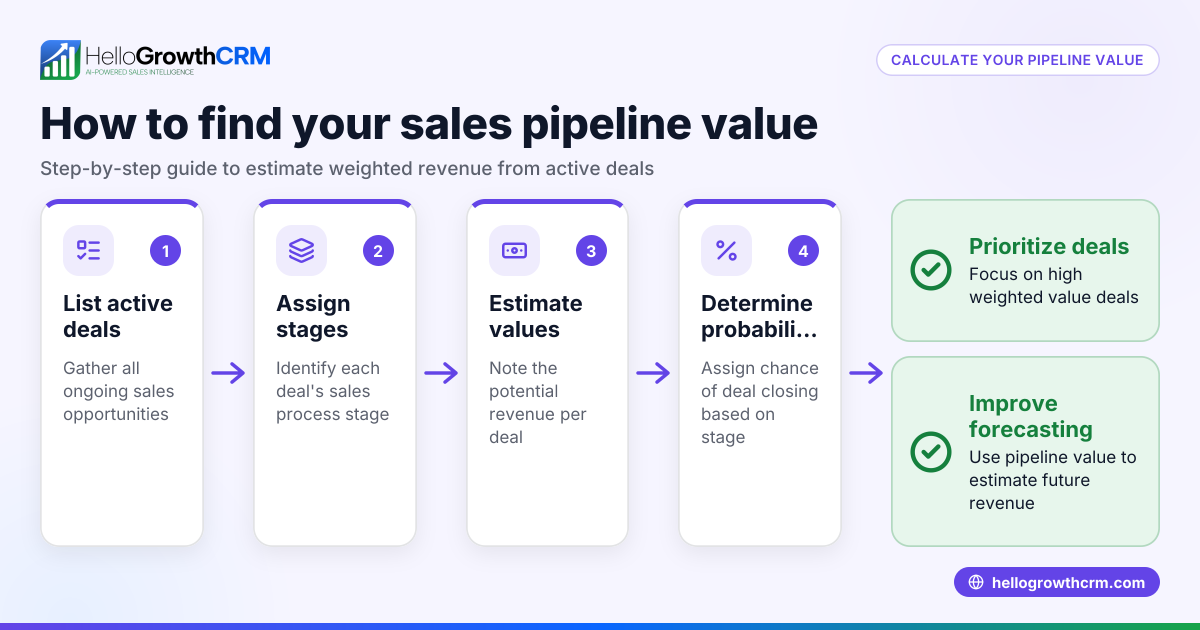
- Forecast revenue based on pipeline data. Use the probability of closing at each stage multiplied by deal value to estimate expected revenue.
Example (fictional figures)
A B2B software reseller in Denver, Colorado, has 10 deals in their pipeline on 06/01/2026. Here are three deals:
- Deal A at "Quote Sent" stage, value $50,000, 60% probability to close.
- Deal B at "Negotiation" stage, value $30,000, 80% probability.
- Deal C at "Contacted" stage, value $20,000, 30% probability.
Calculate expected revenue:
$50,000 × 60% = $30,000
$30,000 × 80% = $24,000
$20,000 × 30% = $6,000
Total expected revenue = $30,000 + $24,000 + $6,000 = $60,000
This forecast helps the owner plan resources and cash flow effectively.
Common mistakes
- Not defining clear sales stages. Prevent this by standardizing stages with your team so everyone understands the deal status.
- Failing to update deal status regularly. Prevent this by setting reminders or using a tool that prompts updates.
- Ignoring follow-up dates. Prevent lost leads by assigning follow-up tasks and alerts.
- Using multiple disconnected tracking methods. Prevent confusion by consolidating all leads and deals into one pipeline tracker.
- Not reviewing pipeline health or forecasting. Prevent surprises by scheduling weekly pipeline reviews and using AI insights if available.
Doing this in HelloGrowthCRM
HelloGrowthCRM offers a Deals (pipeline) feature that tracks open opportunities from first contact through close. For example, a quotation sent last week appears as a deal at the "quote sent" stage with a follow-up date, so it is not forgotten. The pipeline forecast and AI insights feature shows which stage deals are stalling without requiring you to build a spreadsheet. This helps you focus on deals that need attention and better predict revenue. Learn more about the AI CRM and sales forecasting features.
Frequently asked questions
What is the difference between a pipeline tracker and a CRM? A pipeline tracker focuses specifically on monitoring sales opportunities through defined stages, while a CRM manages customer relationships more broadly, including contacts, communication, and support. Many CRMs, like HelloGrowthCRM, include pipeline tracking as a core feature.
How often should I update my pipeline tracker? Ideally, update your pipeline tracker every time there is progress with a deal—such as a new contact, a meeting, or a quote sent. At minimum, review and update it weekly to keep data accurate and actionable.
Can I use a spreadsheet as a pipeline tracker? Spreadsheets can work for very small teams but require manual updates and lack automation like follow-up reminders and AI insights. A dedicated pipeline tracker in a CRM improves accuracy and efficiency.
How does pipeline tracking improve sales forecasting? By assigning probabilities to each stage and tracking deal values, you can calculate expected revenue more reliably. This helps plan budgets, staffing, and growth strategies.
Is pipeline tracking useful for all business types? Yes, any business with a sales process involving multiple steps benefits from tracking deals through stages to improve follow-up and close rates.
Learn more about how HelloGrowthCRM supports US businesses on HelloGrowthCRM for the United States.
Key takeaways
- A pipeline tracker organizes sales leads by stages to manage follow-ups and progress.
- Defining clear sales stages and updating deal status regularly is essential.
- Reviewing pipeline health helps identify bottlenecks and improve sales processes.
- Forecasting revenue from pipeline data supports better business planning.
- HelloGrowthCRM’s Deals (pipeline) and AI insights simplify tracking and forecasting.
Start managing your sales pipeline efficiently. Start on the Free Forever plan (200 leads, no credit card).
Ready to put this into practice?
Set up your pipeline, WhatsApp follow-ups, and AI lead scoring in minutes — free, no credit card.
Try HelloGrowthCRM freeGet CRM tips in your inbox
Join thousands of sales professionals who get weekly insights on CRM strategy, AI automation, and pipeline optimization.

The HelloGrowthCRM team publishes guides on CRM strategy, AI sales tools, and revenue operations for small business sales teams.