HelloGrowthCRM software
Built for real small-business sales teams
HelloGrowthCRM helps reps qualify faster, follow up on time, and close more deals—with practical automation in one place.
- AI lead scoring and pipeline visibility
- Built-in dialer, WhatsApp, and email automation
- Sales forecasting and RevOps-ready reporting
To ramp sales reps faster means to shorten the time it takes new salespeople to reach full productivity and start closing deals consistently. This requires clear goals, structured training, organized lead management, and tools that keep follow-ups on track. This article explains why slow ramp-up happens, step-by-step actions to speed it up, a practical example, common mistakes, and how HelloGrowthCRM can help.
Why this comes up / what goes wrong
Small business owners often hire new sales reps to grow revenue but find it takes months before these reps produce consistent sales. This slow ramp-up happens because new reps lack clear onboarding plans, don’t have access to organized leads, or get overwhelmed managing contacts through text messages, emails, and spreadsheets. Without structured follow-up or visibility into deal stages, leads slip through the cracks. Sales cycles drag out and revenue growth stalls.
Step-by-step
- Set clear ramp-up goals and timelines. Define what full productivity looks like (such as number of calls, meetings, or deals closed per month) and set checkpoints at 30, 60, and 90 days to measure progress.
- Provide structured onboarding and training. Teach reps about your products, target customers, and sales process. Include role-playing and shadowing experienced reps.
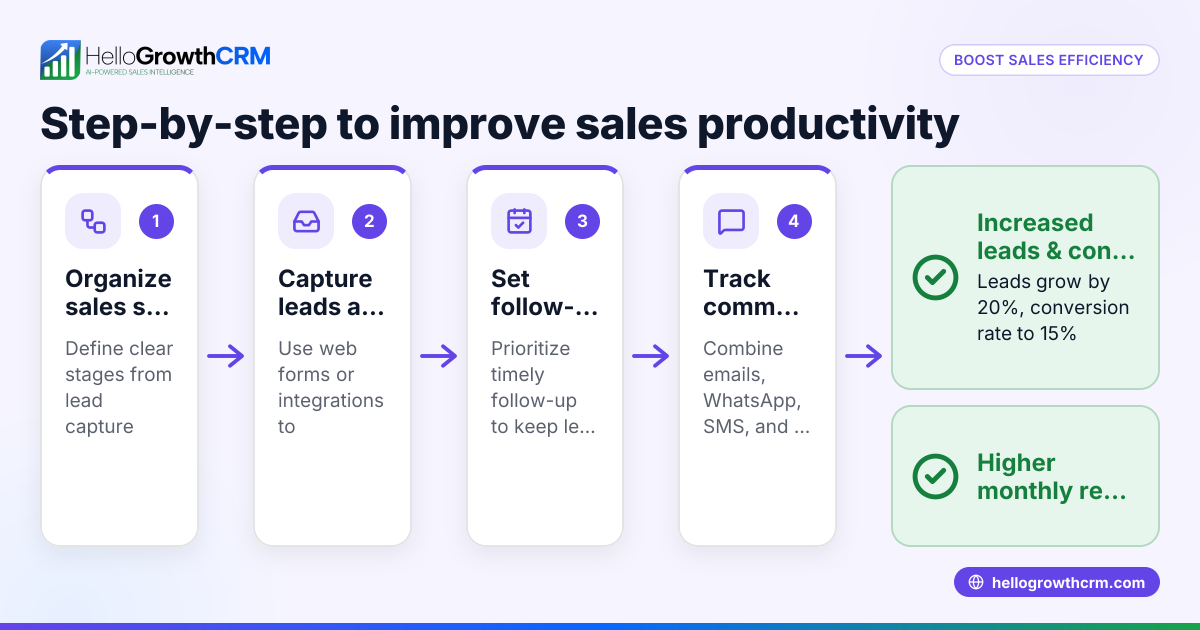
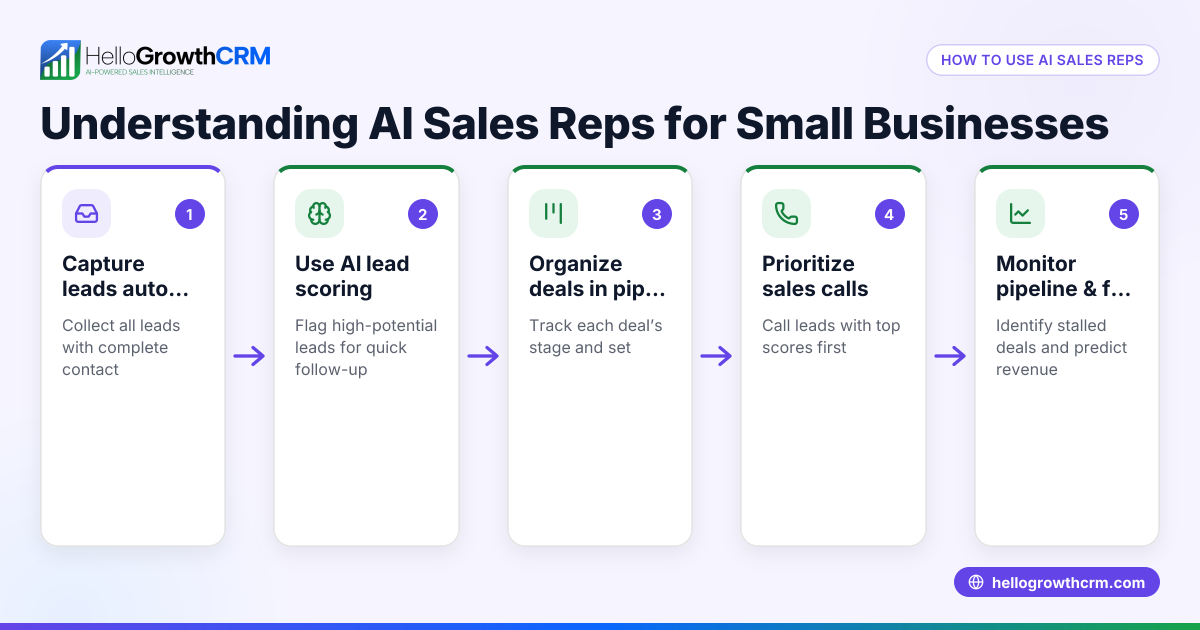
- Organize leads and sales activities in one place. Use a CRM to capture leads from web forms and other sources. Assign leads to reps with clear follow-up tasks and deadlines.
- Use pipeline management to track deals. Have reps move deals through defined stages (like prospecting, quote sent, negotiation) so progress is visible and no opportunity is forgotten.
- Implement regular coaching and feedback. Review deal progress and follow-up activity weekly. Help reps improve their messaging and close techniques.
- Automate follow-up sequences. Use email, WhatsApp, and SMS sequences to stay in touch with leads without manual effort.
- Monitor performance with sales reports and forecasts. Identify bottlenecks early and adjust training or lead assignments accordingly.
- Encourage field sales tracking if applicable. For reps visiting clients, logging visits and routes helps managers monitor activity and optimize territories.
Example (fictional figures)
Charlotte Landscaping Co., a landscaping contractor in Charlotte, North Carolina, hires a new sales rep on 01/15/2026. Their goal is for the rep to close $50,000 in deals monthly by month 3.
- Month 1 target: $15,000
- Month 2 target: $35,000
- Month 3 target: $50,000
The rep receives 40 qualified leads in month 1, with an average deal size of $2,000.
- Expected deals closed in month 1 = 40 leads × 25% close rate = 10 deals
- Revenue month 1 = 10 deals × $2,000 = $20,000 (exceeds $15,000 target)
In month 2, the rep gets 50 leads.
- Expected deals closed = 50 leads × 30% close rate = 15 deals
- Revenue month 2 = 15 deals × $2,000 = $30,000 (slightly below $35,000 target)
In month 3, the rep receives 60 leads.
- Expected deals closed = 60 leads × 35% close rate = 21 deals
- Revenue month 3 = 21 deals × $2,000 = $42,000 (below $50,000 target, needs coaching)
This example shows how tracking leads, close rates, and revenue helps identify when a rep needs more training or support.
Common mistakes
- No clear ramp-up goals. Without measurable targets, reps and managers can’t track progress. Prevent by setting specific sales milestones.
- Disorganized lead management. Leads scattered across emails, texts, and spreadsheets cause follow-up delays. Prevent by centralizing leads in a CRM.
- Lack of regular coaching. New reps need frequent feedback to improve. Prevent by scheduling weekly review sessions.
- Ignoring pipeline stages. Deals stuck without movement waste time. Prevent by enforcing pipeline discipline with stage updates.
- Manual follow-ups only. Relying on memory to follow leads leads to lost opportunities. Prevent by automating follow-up sequences.
- No visibility into field sales activity. Managers can’t support reps who work remotely. Prevent by using mobile tools to log visits and routes.
Doing this in HelloGrowthCRM
HelloGrowthCRM helps ramp sales reps faster by organizing deals in a pipeline where quotations sent last week appear at the 'quote sent' stage with follow-up dates, so no deal is forgotten. For businesses with field reps, territories and visit logs let managers see daily activity and optimize routes. If you don’t have a sales manager, Managed RevOps provides weekly follow-up execution and pipeline hygiene to keep leads moving. Learn more about WhatsApp and SMS CRM and the built-in CRM dialer to support your team’s communication and follow-up efficiency.
Frequently asked questions
How long does it usually take to ramp a sales rep? Ramp time varies but typically ranges from 3 to 6 months. The goal is to shorten this by clear goals, training, and tools that keep reps productive from day one.
What are the best tools to help ramp sales reps? A CRM that centralizes leads, tracks deal stages, automates follow-ups, and provides sales reports is essential. HelloGrowthCRM offers these features tailored for small businesses.
How can I measure if a sales rep is ramping well? Track metrics like number of calls made, meetings booked, deals closed, and revenue generated against ramp-up targets at 30, 60, and 90 days.
Can remote or field sales reps ramp up effectively? Yes, with territory management and mobile visit logging, managers can monitor activity and coach reps regardless of location.
What is the role of follow-up automation in ramping reps? Automated sequences ensure consistent communication with leads, reducing manual work and missed opportunities.
Key takeaways
- Define clear ramp-up goals with timelines and measurable targets.
- Centralize leads and sales activities in a CRM to avoid lost follow-ups.
- Use pipeline stages to track deal progress and coach reps effectively.
- Automate follow-ups with email, WhatsApp, and SMS sequences.
- Monitor field sales with visit logs and territory tools if applicable.
- Regular coaching and performance reviews accelerate rep productivity.
Start ramping your sales reps faster today. Start on the Free Forever plan (200 leads, no credit card) with HelloGrowthCRM and organize your sales efforts efficiently.
Ready to put this into practice?
Set up your pipeline, WhatsApp follow-ups, and AI lead scoring in minutes — free, no credit card.
Try HelloGrowthCRM freeGet CRM tips in your inbox
Join thousands of sales professionals who get weekly insights on CRM strategy, AI automation, and pipeline optimization.

The HelloGrowthCRM team publishes guides on CRM strategy, AI sales tools, and revenue operations for small business sales teams.