HelloGrowthCRM software
Built for real small-business sales teams
HelloGrowthCRM helps reps qualify faster, follow up on time, and close more deals—with practical automation in one place.
- AI lead scoring and pipeline visibility
- Built-in dialer, WhatsApp, and email automation
- Sales forecasting and RevOps-ready reporting
Real time customer segmentation is the process of dynamically grouping customers as new data arrives, such as recent purchases, inquiries, or interactions. This allows businesses to respond quickly with targeted offers, messages, or support, improving customer satisfaction and boosting sales.
Why this comes up / what goes wrong
Small business owners often rely on static customer lists or slow manual updates, which means they miss chances to engage customers at the right time. For example, a landscaping business in Denver might not know which customers recently booked a service and could benefit from a seasonal offer. Without real time segmentation, marketing messages can be generic, leading to lower response rates and lost revenue. Using spreadsheets or manual lists makes it difficult to keep segments current and accurate.
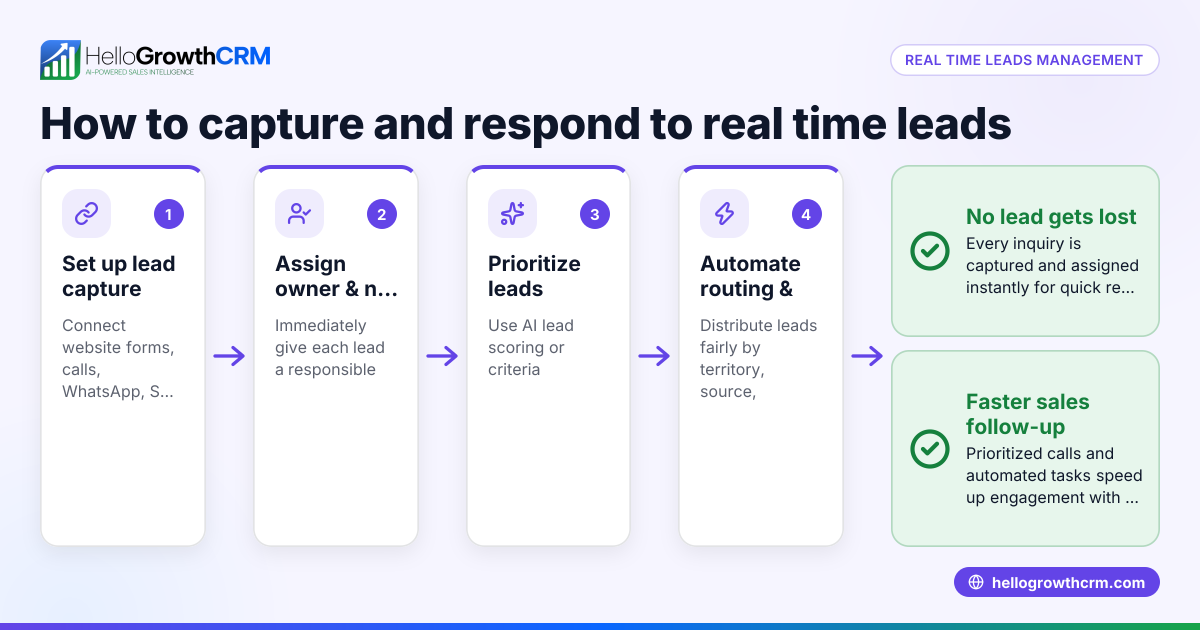
Many small businesses run sales and customer management on text messages, email, and spreadsheets, which do not update automatically. This delays recognizing customer needs or changes in behavior. Slow follow-up means lost leads and missed opportunities. Real time segmentation solves this by continuously updating customer groups as new information arrives.
Step-by-step
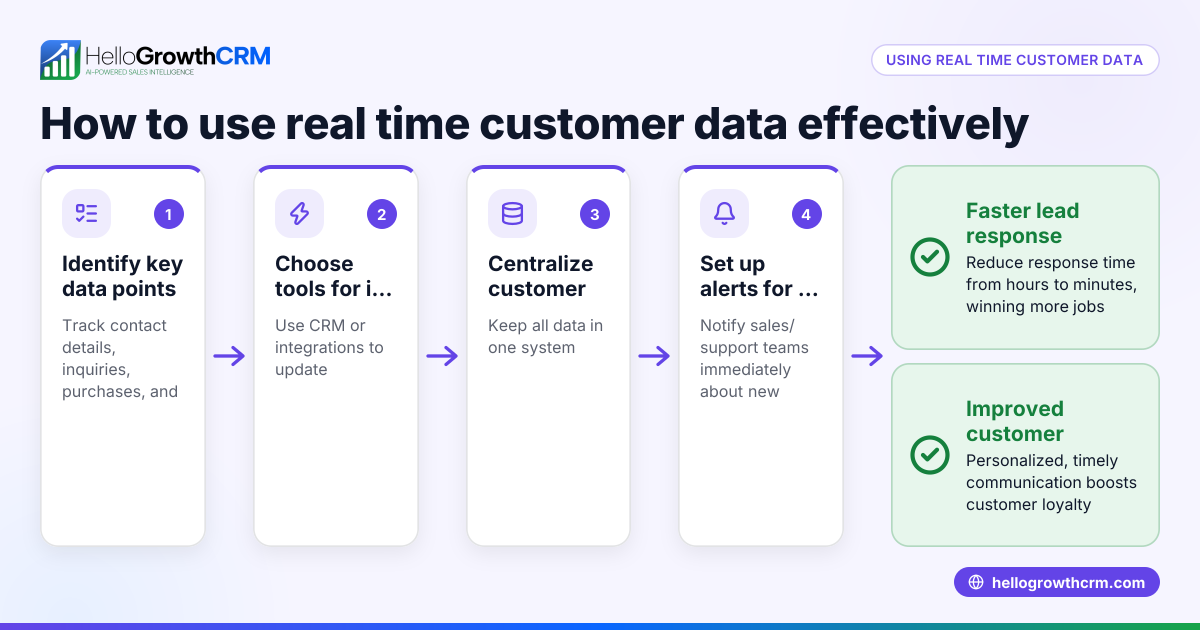
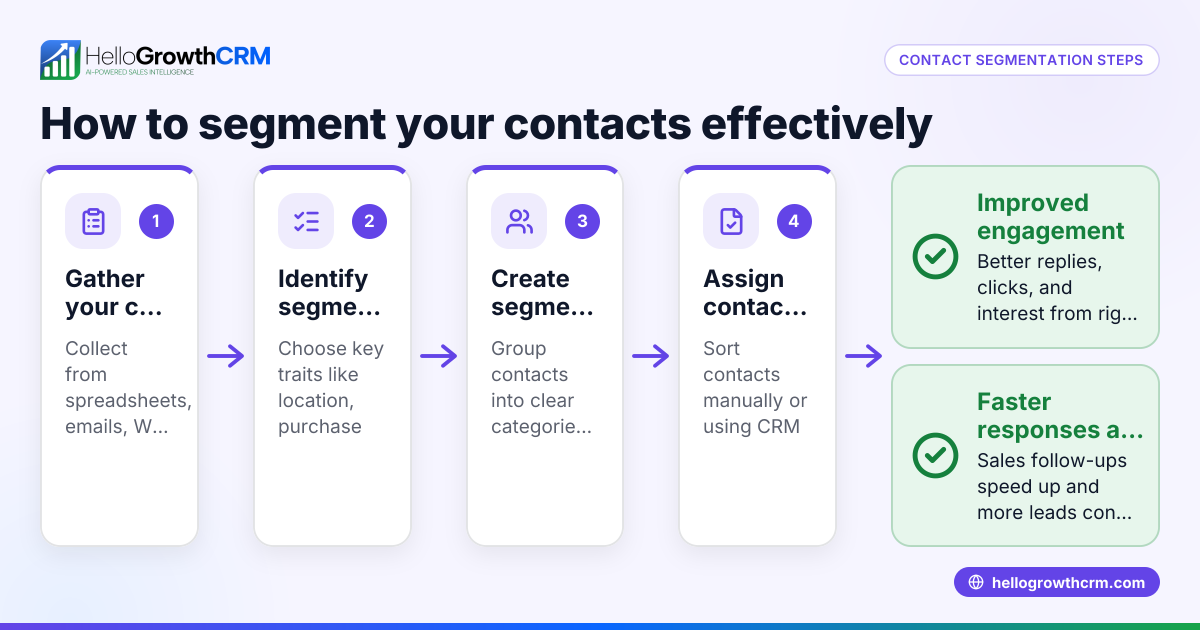
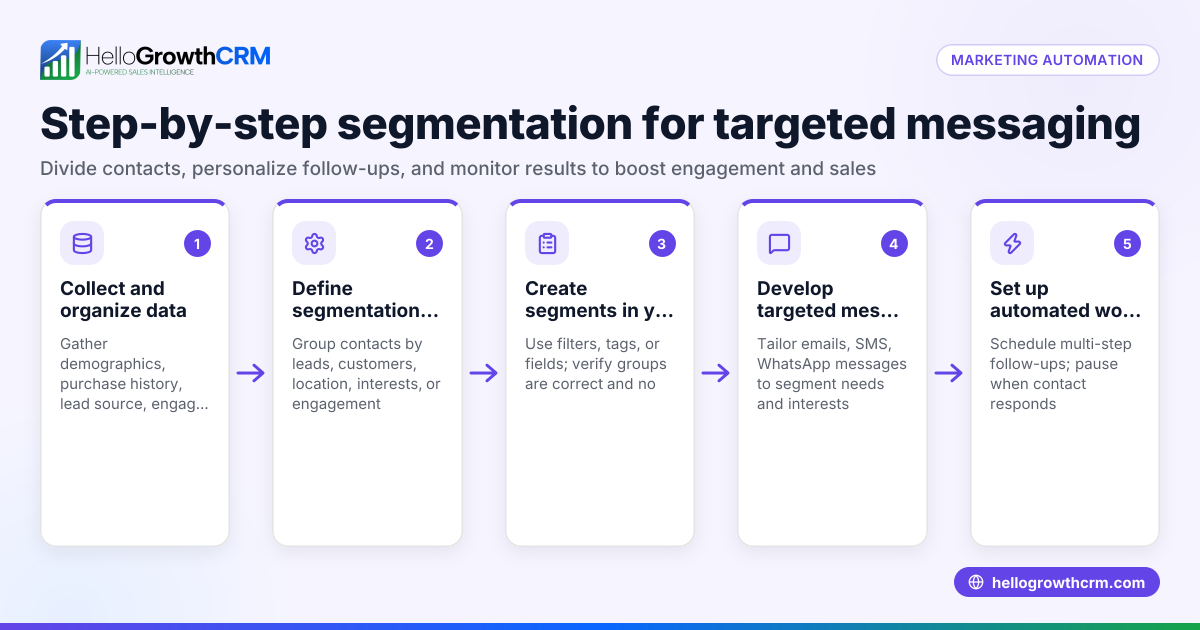
- Continuously collect customer data: Gather data from all sources like web forms, purchase records, WhatsApp or SMS conversations, and support tickets. Confirm data flows into a central system without delays to ensure segments reflect the latest customer activity.
- Define clear segmentation criteria: Decide which customer attributes matter most, such as recent purchase date, product type, location, or engagement level. Make criteria specific enough to create useful groups but broad enough to include enough customers.
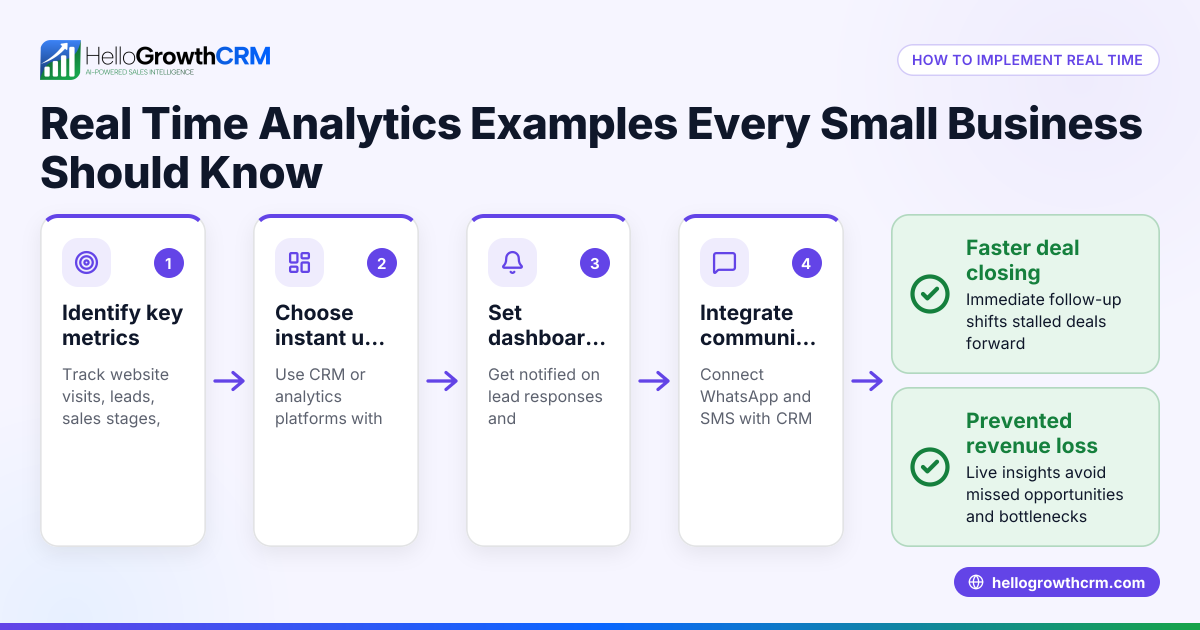
- Set up automation to update segments instantly: Use rules or AI-based scoring to automatically assign customers to segments as new data arrives. Check that automation triggers correctly and updates segments without manual intervention.
- Regularly review segment accuracy: Periodically verify that customers are in the correct groups and segments reflect current behavior. Adjust criteria if segments become too broad, narrow, or outdated.
- Use segments for targeted marketing and sales: Customize messaging, offers, and follow-up sequences based on real time segments. Track response rates and adjust criteria or messages as needed.
- Integrate post-sale data like support tickets and referrals: Keep service requests and referrals linked to the same customer record to maintain complete segmentation based on ongoing interactions.
- Leverage WhatsApp and SMS marketing sequences: Use real time segments to send personalized WhatsApp and SMS messages that match customers’ current interests and needs. This improves engagement and conversion rates.
Example (fictional figures)
A landscaping company in Austin, Texas, wants to target customers who booked a lawn care service in the last 30 days to offer a seasonal fertilization package.
- Total customers: 2,000
- Customers with lawn care service in last 30 days: 300
Step 1: Collect booking dates from invoices and support tickets.
Step 2: Define segment as "Booked lawn care service within last 30 days".
Step 3: On 06/15/2026, query customers with booking dates from 05/16/2026 to 06/15/2026.
Step 4: Identify 300 customers matching this.
Step 5: Send targeted email and WhatsApp messages to these 300 customers offering the fertilization package.
Step 6: Track responses:
- 300 customers receive message
- 20% respond positively: 300 × 20% = 60
- Average package price: $150
- Potential revenue: 60 × $150 = $9,000
This real time segmentation lets the company reach interested customers immediately, increasing sales opportunities compared to monthly updates.
Common mistakes
- Using outdated data: Prevent by automating data capture and segment updates to keep customer groups current.
- Setting segments too broad or too narrow: Prevent by testing and refining criteria to create meaningful and actionable groups.
- Ignoring post-sale interactions: Prevent by integrating support tickets and referrals into customer records to reflect ongoing customer activity.
- Relying on manual updates: Prevent by using CRM automation tools to keep segments current without manual work.
- Not linking segments to marketing actions: Prevent by planning follow-up steps and using targeted WhatsApp, SMS, or email sequences for each segment.
- Failing to review segments regularly: Prevent by scheduling quarterly reviews to adjust criteria and maintain relevance.
Doing this in HelloGrowthCRM
HelloGrowthCRM helps small businesses manage customer segmentation by keeping service requests, support tickets, and referrals on the same customer record as the deal. This unified view supports ongoing segmentation based on real-time customer activity. After the sale, service requests stay linked to the customer, making it easier to track ongoing needs and update segments accordingly. Learn more about these features in the customer health score section.
Frequently asked questions
What is the difference between real time and traditional segmentation? Traditional segmentation updates periodically and often manually, while real time segmentation updates automatically as new customer data arrives, enabling faster and more relevant engagement.
How can small businesses implement real time segmentation without complex software? Start by centralizing customer data in a CRM that supports automation. Use simple rules based on recent purchases or interactions to update segments instantly.
How does real time segmentation improve customer experience? It allows businesses to send timely, personalized messages and offers that match customers’ current needs and interests, increasing satisfaction and loyalty.
Can real time segmentation work with WhatsApp and SMS marketing? Yes, segmenting customers in real time lets you send targeted WhatsApp and SMS sequences that are more likely to engage recipients. HelloGrowthCRM specializes in WhatsApp and SMS CRM to support this.
How often should I review my segmentation criteria? Review at least quarterly to ensure segments remain relevant and reflect customer behavior changes.
What role do support tickets and referrals play in segmentation? Including support tickets and referrals on the customer record helps keep segmentation current by reflecting ongoing interactions and customer satisfaction levels.
Key takeaways
- Real time customer segmentation groups customers instantly based on the latest data.
- It helps small businesses respond quickly with personalized marketing and sales.
- Automate data collection and segment updates to maintain accuracy.
- Integrate post-sale service requests and referrals to keep customer records complete.
- Use segments actively in WhatsApp, SMS, and email sequences for best results.
- HelloGrowthCRM keeps service requests on the customer record to support ongoing segmentation.
Start improving your customer engagement today. Start on the Free Forever plan (200 leads, no credit card) to try real time segmentation and customer management with HelloGrowthCRM.
Ready to put this into practice?
Set up your pipeline, WhatsApp follow-ups, and AI lead scoring in minutes — free, no credit card.
Try HelloGrowthCRM freeGet CRM tips in your inbox
Join thousands of sales professionals who get weekly insights on CRM strategy, AI automation, and pipeline optimization.

The HelloGrowthCRM team publishes guides on CRM strategy, AI sales tools, and revenue operations for small business sales teams.