HelloGrowthCRM software
Built for real small-business sales teams
HelloGrowthCRM helps reps qualify faster, follow up on time, and close more deals—with practical automation in one place.
- AI lead scoring and pipeline visibility
- Built-in dialer, WhatsApp, and email automation
- Sales forecasting and RevOps-ready reporting
Reducing customer effort means making it easier for customers to get what they need from your business without unnecessary hassle or delays. This article explains why reducing customer effort matters, practical steps to achieve it, common mistakes to avoid, and how HelloGrowthCRM helps streamline customer service with its customer portal, tickets, and knowledge base.
Why this comes up / what goes wrong
Small-business owners often face customers who struggle to get answers, resolve issues, or complete purchases easily. This usually happens because communication and support are spread across different tools like text messages, emails, and spreadsheets, causing delays and confusion. Customers may repeat information multiple times or wait long for responses, increasing frustration. For a business with 5 to 200 employees, these inefficiencies can lead to lost customers, reduced revenue, and wasted marketing efforts.
Step-by-step
- Map the Customer Journey: Identify every step customers take to contact your business, find information, make purchases, and request support. Check for delays, repeated questions, or confusing processes.
- Consolidate Communication Channels: Use a single platform to manage WhatsApp, SMS, email, and calls so customers reach you easily and your team has full context.
- Create a Self-Service Customer Portal: Enable customers to find answers, track orders, and submit service requests themselves. Verify the portal is simple to use and mobile-friendly.
- Implement a Knowledge Base: Provide clear, searchable FAQs and guides so customers can solve common issues without contacting support.
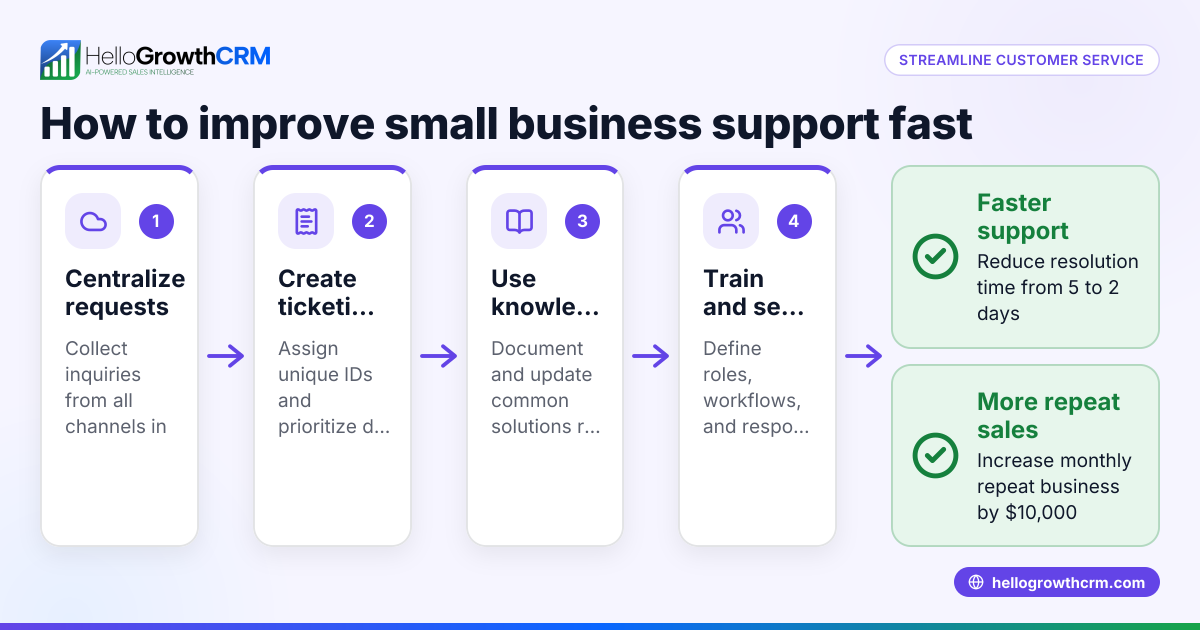
- Track and Manage Support Tickets: Use a ticketing system linked to each customer record to ensure service requests are not lost and are resolved promptly.
- Encourage Referrals and Feedback: Make it easy for satisfied customers to refer others and share feedback to identify ongoing friction points.
- Regularly Review Customer Health Scores: Monitor customer engagement and satisfaction indicators to proactively reduce effort and prevent churn. Learn more about customer health score.
Example (fictional figures)
A two-location dental practice in Columbus, Ohio, wants to reduce customer effort in appointment booking and follow-up.
- Current average call wait time: 5 minutes
- Calls dropped due to long wait: 10 per day
- Average revenue per patient visit: $150
They implement a self-service portal and ticket system that reduce calls by 50% and cut wait time to under 1 minute.
Calculation of saved lost revenue per day:
10 dropped calls × 50% = 5 calls saved
5 calls × $150 = $750 saved daily
Monthly saved revenue:
$750 × 22 business days = $16,500
This example shows how reducing customer effort can increase revenue by preventing lost appointments.
Common mistakes
- Ignoring customer feedback: Prevent by regularly collecting and acting on customer input.
- Using multiple disconnected tools: Prevent by consolidating communications and support in one place to reduce confusion.
- Making self-service portals complicated: Prevent by testing usability with real customers before launch.
- Failing to link service requests to customer records: Prevent by using a ticketing system integrated with customer data to avoid lost information.
- Not training staff on new tools: Prevent by providing clear training and documentation.
- Overlooking mobile users: Prevent by ensuring portals and communications are mobile-optimized, especially for WhatsApp and SMS channels. Learn more about WhatsApp and SMS CRM.
Doing this in HelloGrowthCRM
HelloGrowthCRM helps reduce customer effort by offering a branded self-service customer portal where customers can find answers and submit support tickets. All service requests stay linked to the same customer record as the deal, making follow-up seamless. The platform also supports referral program tracking and a knowledge base to empower customers with information. These features help small businesses streamline service and reduce friction after the sale. Learn more about HelloGrowthCRM for the United States.
Frequently asked questions
What does reducing customer effort mean? Reducing customer effort means simplifying interactions so customers can get what they need quickly without repeating themselves or facing delays. It focuses on removing friction in communication, support, and purchasing.
Why is reducing customer effort important for small businesses? Small businesses often compete with larger companies by offering better service. Reducing effort improves customer satisfaction, loyalty, and referrals, which drives growth without raising marketing costs.
How can I measure customer effort? You can measure customer effort by tracking metrics like call wait times, number of contacts per issue, ticket resolution times, and customer feedback scores. Using a customer health score helps monitor these indicators.
Can technology really reduce customer effort? Yes. Using a unified CRM platform that integrates communication channels, support tickets, and a self-service portal reduces manual work and speeds up responses, making it easier for customers.
What role does a knowledge base play in reducing customer effort? A knowledge base provides customers with quick access to answers and guides, reducing the need to contact support and speeding up problem resolution.
Key takeaways
- Reducing customer effort means simplifying every step a customer takes to get service.
- Consolidate communications and support in one platform to avoid delays and confusion.
- Use a customer portal, ticket system, and knowledge base to empower self-service.
- Regularly collect feedback and track customer health scores to identify friction.
- Avoid common mistakes like ignoring feedback or using disconnected tools.
- HelloGrowthCRM offers features that keep service requests linked to deals and provide a branded portal.
Start reducing customer effort today to improve satisfaction and grow your business. Start on the Free Forever plan (200 leads, no credit card).
Ready to put this into practice?
Set up your pipeline, WhatsApp follow-ups, and AI lead scoring in minutes — free, no credit card.
Try HelloGrowthCRM freeGet CRM tips in your inbox
Join thousands of sales professionals who get weekly insights on CRM strategy, AI automation, and pipeline optimization.

The HelloGrowthCRM team publishes guides on CRM strategy, AI sales tools, and revenue operations for small business sales teams.