HelloGrowthCRM software
Built for real small-business sales teams
HelloGrowthCRM helps reps qualify faster, follow up on time, and close more deals—with practical automation in one place.
- AI lead scoring and pipeline visibility
- Built-in dialer, WhatsApp, and email automation
- Sales forecasting and RevOps-ready reporting
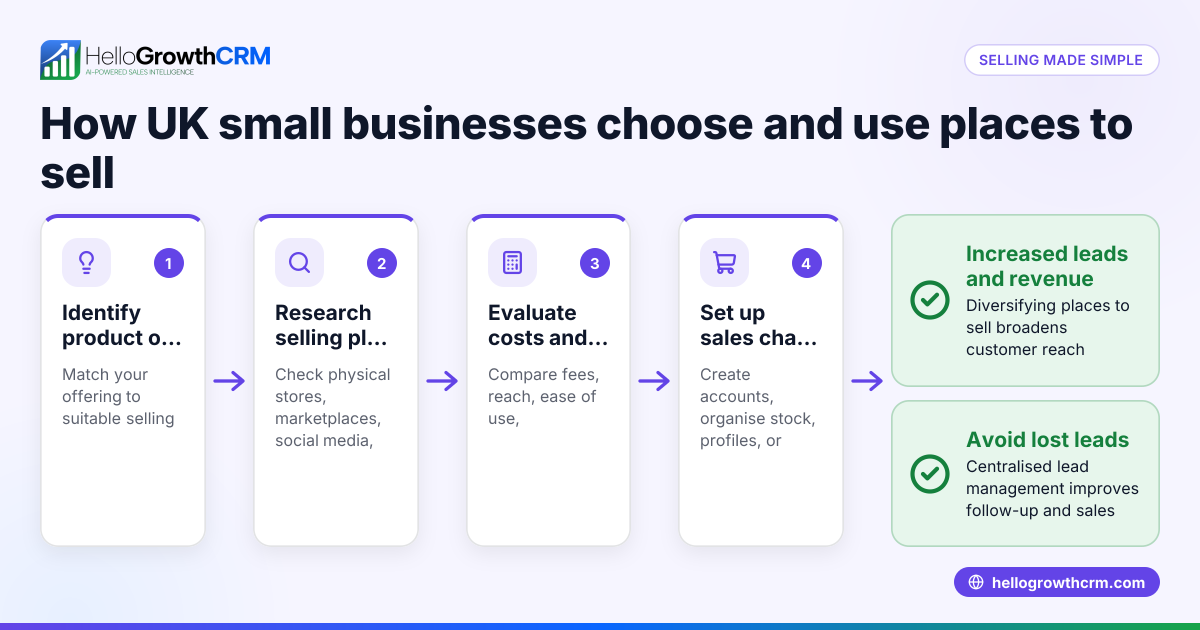
To sell online, start by choosing the products or services you want to offer. Next, select a platform to sell on, such as your own website or an online marketplace like Amazon or Etsy. Create detailed product listings with clear descriptions and quality photos. Set competitive prices including all costs. Arrange payment methods and shipping options. Finally, promote your store to attract customers and manage orders efficiently.
Why this comes up / what goes wrong
Many small business owners want to expand by selling online but find the process confusing or overwhelming. They may skip important steps like researching their market or fail to set up smooth payment and shipping processes. This leads to lost sales and frustrated customers. Without a clear plan, it’s easy to get stuck or miss key details that customers expect. For example, failing to test payment systems or ignoring shipping costs can cause delays or losses.
Step-by-step
- Choose your product or service: Decide exactly what you want to sell online. Research demand, competition, and profitability to ensure your product can succeed. Check if your product needs special shipping or regulations.
- Select your sales platform: Decide between building your own website or selling through an online marketplace. Your own site offers more control over branding and customer data; marketplaces provide ready-made audiences and simpler setup.
- Create product listings: Write clear, honest descriptions. Include multiple high-quality photos showing different angles and product details. Specify sizes, colors, or variants to help customers choose.
- Set prices: Research competitor prices and factor in all costs like materials, shipping, taxes, and platform fees. Price your products to cover costs and make a profit without scaring customers away.
- Set up payment methods: Choose secure options such as credit cards, PayPal, or other payment gateways. Test your payment system before launching to avoid lost sales or customer frustration.
- Arrange shipping and delivery: Decide on shipping carriers, costs, packaging, and delivery times. Offer tracking if possible to build customer trust. Calculate shipping costs carefully to avoid losing money.
- Launch your store: Publish your listings and test the entire customer experience from browsing to checkout. Check that payments and shipping options work smoothly.
- Promote your products: Use social media, email marketing, or paid ads to drive traffic to your store. Consider platforms your target customers use most.
- Manage orders and customer service: Respond promptly to inquiries, process orders quickly, and handle returns professionally. Good communication builds repeat business.
- Track sales and optimize: Monitor what sells well and adjust your listings, prices, or marketing accordingly. Consider using a CRM with WhatsApp and SMS integration to manage leads and follow up efficiently, as explained in WhatsApp and SMS CRM.
Example (fictional figures)
Maria owns a handmade soap business in Austin, Texas, and plans to start selling online by 07/01/2026.
- Product: Handmade soap bars.
- Platform: Maria chooses to build a simple website.
- Listings: She creates 10 soap variants with photos and detailed descriptions.
- Pricing: She sets prices at $8 per bar.
- Payment: She integrates PayPal and credit card payments.
- Shipping: She chooses USPS with a flat $5 shipping fee.
- Launch: Website goes live on 07/01/2026.
- Promotion: She runs Instagram ads costing $200 monthly.
Sales forecast for the first month:
- Expected sales: 100 bars
- Revenue from sales: 100 × $8 = $800
- Shipping income: 100 × $5 = $500
- Advertising cost: $200
- Shipping cost (USPS): 100 × $3 = $300 (assumed)
Profit calculation: $800 + $500 = $1,300 (total income) $1,300 - $200 - $300 = $800 (net profit)
Maria tracks orders and customer messages using a CRM with a built-in dialer for quick follow-up, as described in built-in CRM dialer.
Common mistakes
- Skipping product research: Prevent by checking market demand and competition before selling.
- Poor product descriptions: Prevent by writing clear, detailed listings with multiple photos.
- Ignoring shipping costs: Prevent by calculating all shipping fees upfront to avoid losing money.
- Not testing payment methods: Prevent by running test transactions before launch.
- Neglecting customer communication: Prevent by promptly answering questions and managing orders.
- Failing to promote: Prevent by allocating budget and effort to marketing your store, possibly using tools like HelloGrowthCRM, which supports HelloGrowthCRM for the United States.
Frequently asked questions
How do I start selling clothes online? Start by choosing your clothing niche and sourcing inventory. Use detailed size charts and photos to help customers choose the right fit. Set up an online store or use marketplaces. Promote through social media and consider offering easy returns to build trust.
What payment methods should I offer online? Offer popular and secure options like credit/debit cards, PayPal, and digital wallets. Ensure your payment gateway complies with security standards. Testing payments before launch helps avoid issues.
Do I need a website to sell online? Not necessarily. You can sell on marketplaces like Etsy or Amazon, which offer built-in audiences and simpler setup. However, having your own website gives you more control over branding and customer data.
How can I handle customer questions efficiently? Use a CRM that integrates WhatsApp and SMS to respond quickly and keep track of conversations, as with WhatsApp and SMS CRM.
Is shipping always necessary for online sales? If you sell physical products, yes. For digital products or services, shipping isn’t needed.
Key takeaways
- Choose your product carefully and research the market.
- Create clear listings with good photos and accurate prices.
- Set up secure payment and reliable shipping.
- Promote your store actively to attract customers.
- Use tools like CRM systems to manage leads and customer communication.
Start selling online today by following these steps. For managing your leads and communications efficiently, consider using HelloGrowthCRM. You can Start on the Free Forever plan (200 leads, no credit card).
Ready to put this into practice?
Set up your pipeline, WhatsApp follow-ups, and AI lead scoring in minutes — free, no credit card.
Try HelloGrowthCRM freeGet CRM tips in your inbox
Join thousands of sales professionals who get weekly insights on CRM strategy, AI automation, and pipeline optimization.

The HelloGrowthCRM team publishes guides on CRM strategy, AI sales tools, and revenue operations for small business sales teams.