HelloGrowthCRM software
Built for real small-business sales teams
HelloGrowthCRM helps reps qualify faster, follow up on time, and close more deals—with practical automation in one place.
- AI lead scoring and pipeline visibility
- Built-in dialer, WhatsApp, and email automation
- Sales forecasting and RevOps-ready reporting
To respond to feedback means to acknowledge, address, and act on comments or concerns customers or clients share about your business. This involves listening carefully, thanking the giver, clarifying details if needed, and making improvements or providing solutions. This article explains why responding well matters, gives a step-by-step guide, a practical example, common pitfalls, and answers frequent questions.
Why this comes up / what goes wrong
Small-business owners in the US often receive feedback through emails, social media, phone calls, or in person. Feedback can be positive, neutral, or negative. Many owners struggle with how to respond properly, especially when feedback is critical. Without a clear process, responses can be delayed, defensive, or ignored, causing lost customer trust and missed chances to improve. For businesses using multiple channels like WhatsApp, SMS, or email, managing feedback efficiently can be even harder without a system to track and act on it. This is why knowing how to respond to feedback is crucial for maintaining good customer relations and growing sales.
Responding effectively also helps prevent negative reviews and word-of-mouth damage. It shows customers you care and are committed to improving. However, without clear steps, owners may feel overwhelmed or unsure how to reply, especially when feedback is complex or emotional.
Step-by-step
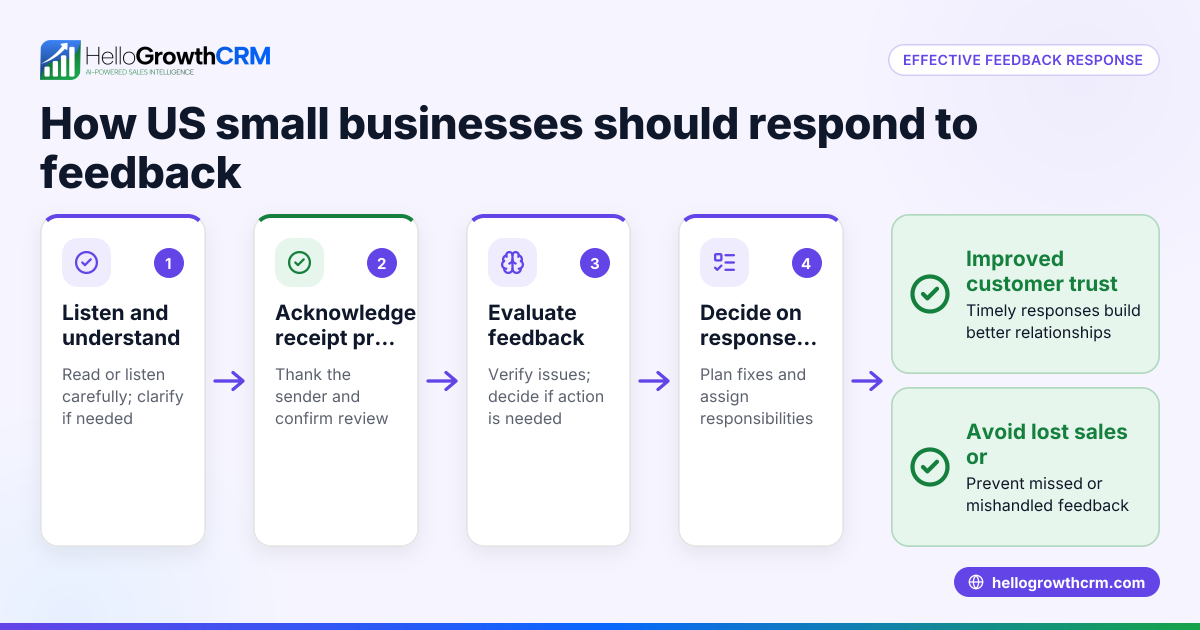
- Listen carefully and read thoroughly. Check the full feedback message for details. Avoid assumptions or jumping to conclusions. Make sure you understand the customer's exact concern.
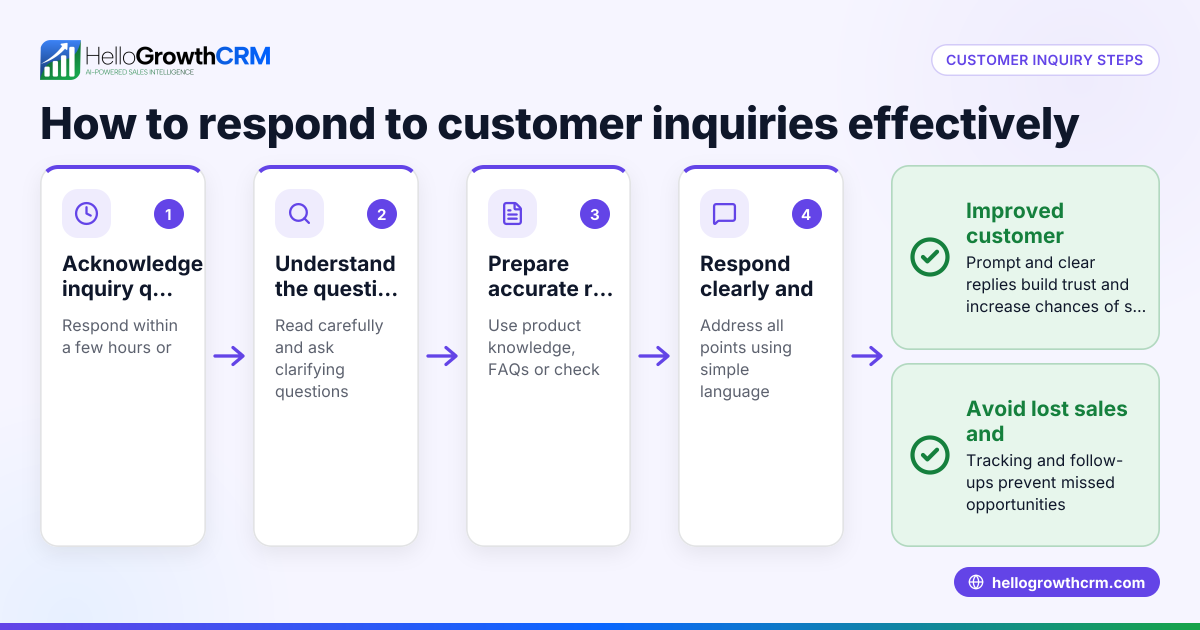
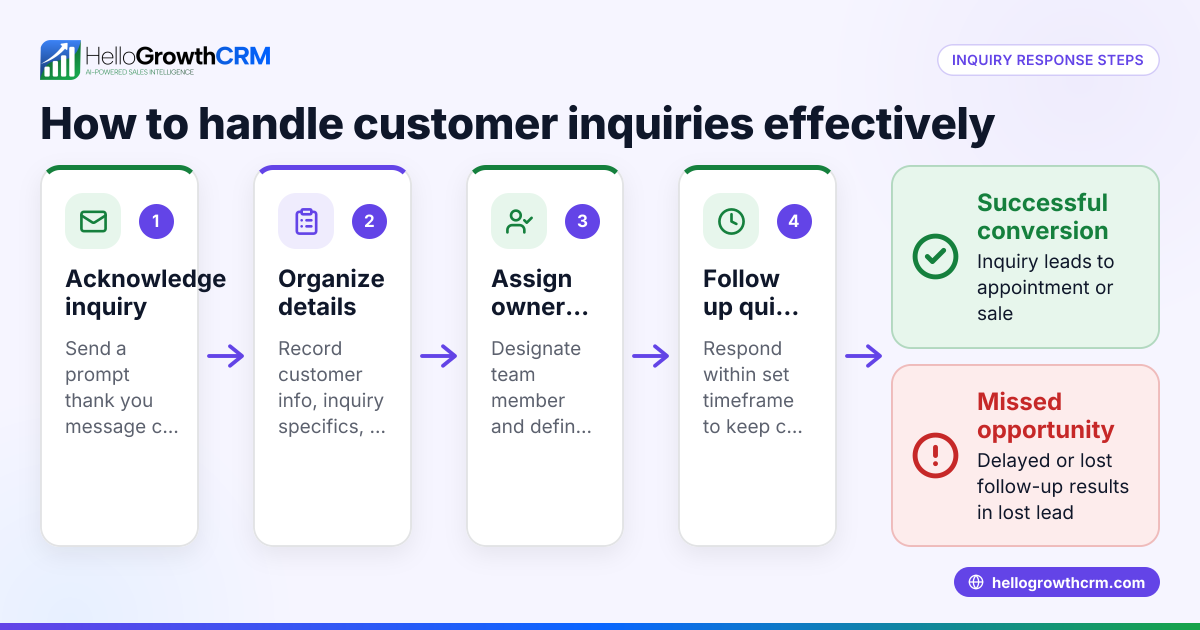
- Acknowledge receipt promptly. Reply within 24-48 hours, thanking the customer for their input, even if you need more time to investigate. This shows you value their feedback and are taking it seriously.
- Clarify details if needed. Ask polite, specific questions to better understand the issue without sounding defensive. For example, "Could you please provide more details on the problem you experienced?"
- Assess the feedback objectively. Determine if it is a one-time issue, a recurring problem, or a misunderstanding. This helps decide the best response and action.
- Respond with a clear, respectful message. Address the points raised, explain what you will do or have done, and offer solutions or compensation if appropriate. Keep the tone professional and empathetic.
- Take action internally. Share the feedback with your team, update processes, or fix product/service problems. This step turns feedback into improvement.
- Follow up after resolution. Check back with the customer to confirm satisfaction and show you value their business. This can be a simple message or call.
- Document the feedback and response. Use tools or simple spreadsheets to track feedback trends and your responses over time. This helps identify patterns and measure improvement.
These steps help turn feedback into an opportunity for improvement and stronger customer relationships. For businesses that run sales and customer communications on WhatsApp and SMS, integrating feedback management with your CRM can keep follow-up timely and organized. Learn more about WhatsApp and SMS CRM and using a built-in CRM dialer to stay on top of customer conversations.
Example (fictional figures)
A B2B software reseller in Denver, Colorado, receives feedback on 03/15/2026 from a client complaining about slow software updates causing delays.
- The owner reads the feedback fully on 03/15/2026 and replies within 24 hours, thanking the client and asking for specific examples.
- The client provides details on 03/17/2026.
- The owner investigates and finds the update process needs improvement.
- On 03/20/2026, the owner responds with a clear plan to speed up updates and offers a 10% discount on the next purchase.
- The discount is $1,200 on a $12,000 contract.
- The client confirms satisfaction on 03/25/2026.
Calculation:
$12,000 × 10% = $1,200 discount
This example shows how timely, clear responses and follow-up build trust and can save a business relationship.
Common mistakes
- Ignoring feedback or delaying response. Prevent by setting reminders and prioritizing all feedback. Prompt replies show customers you care.
- Responding defensively or emotionally. Prevent by drafting responses calmly and reviewing them before sending. Keep your tone professional.
- Failing to clarify unclear feedback. Prevent by asking specific questions politely. This avoids misunderstandings and wasted efforts.
- Not taking internal action after feedback. Prevent by assigning responsibility to team members and tracking improvements to avoid repeated issues.
- Forgetting to follow up after resolution. Prevent by scheduling follow-ups and confirming customer satisfaction to maintain good relations.
- Scattering feedback across channels without tracking. Prevent by centralizing feedback management, possibly using tools like HelloGrowthCRM for the United States to keep all communications organized and avoid missed messages.
Frequently asked questions
How quickly should I respond to feedback? Aim to acknowledge all feedback within 24 to 48 hours. Prompt replies show customers you value their input and are taking their concerns seriously.
What if the feedback is negative or unfair? Stay professional and courteous. Try to understand the root cause and clarify any misunderstandings. Offer solutions or explanations without blaming the customer.
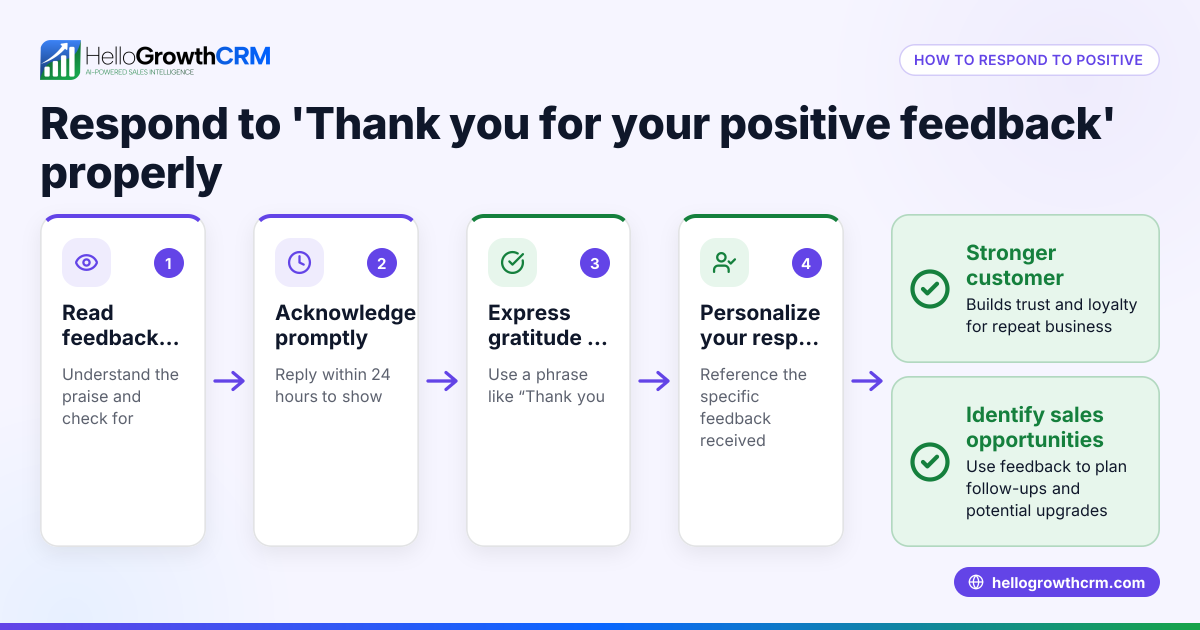
Should I respond to positive feedback? Yes. Thanking customers for positive feedback encourages loyalty and shows appreciation.
Can I automate responses to feedback? Automation can help acknowledge receipt quickly, but personalized follow-up is important for meaningful resolution. Combining automation with manual responses is effective.
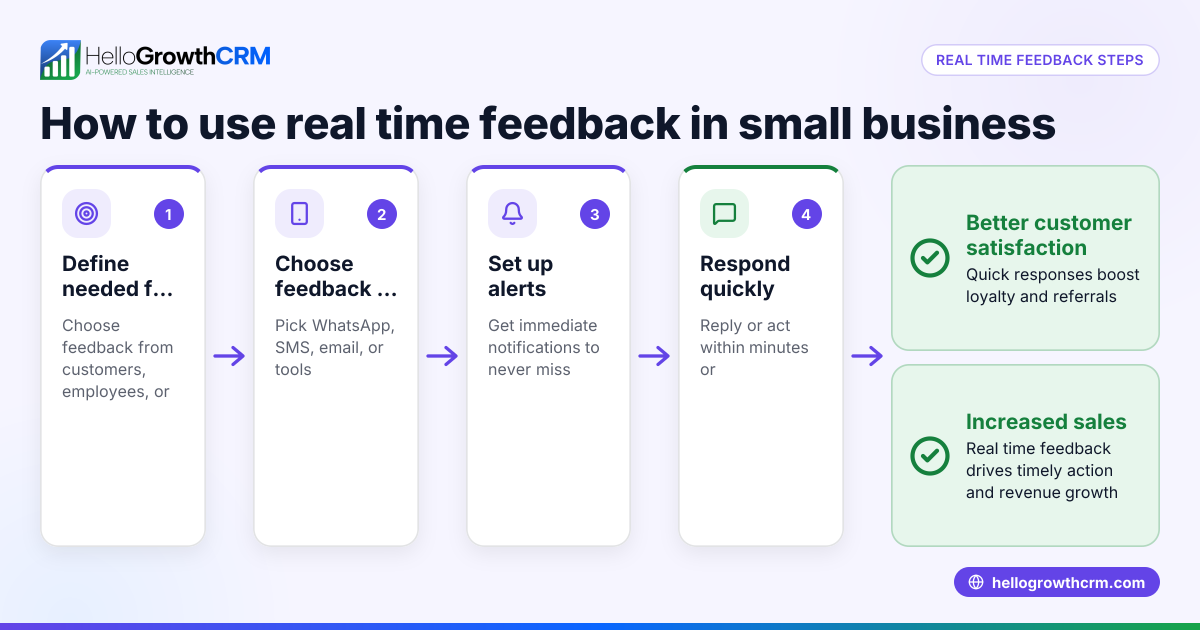
How do I manage feedback from multiple channels? Use a CRM that supports communication via WhatsApp, SMS, and email to consolidate feedback and responses. This avoids missed messages and slow follow-up. (business.whatsapp.com) See WhatsApp and SMS CRM and built-in CRM dialer for tools that help manage these channels.
Key takeaways
- Respond to feedback quickly and respectfully to build trust.
- Clarify unclear points before acting.
- Take concrete internal actions to address valid concerns.
- Follow up to confirm customer satisfaction.
- Avoid defensive or delayed responses.
- Centralize feedback management to stay organized.
Responding well to feedback is a vital skill for US small-business owners to improve customer relations and grow sales. Start on the Free Forever plan (200 leads, no credit card) at HelloGrowthCRM to organize your communications and never miss a chance to respond promptly.
Ready to put this into practice?
Set up your pipeline, WhatsApp follow-ups, and AI lead scoring in minutes — free, no credit card.
Try HelloGrowthCRM freeGet CRM tips in your inbox
Join thousands of sales professionals who get weekly insights on CRM strategy, AI automation, and pipeline optimization.

The HelloGrowthCRM team publishes guides on CRM strategy, AI sales tools, and revenue operations for small business sales teams.