HelloGrowthCRM software
Built for real small-business sales teams
HelloGrowthCRM helps reps qualify faster, follow up on time, and close more deals—with practical automation in one place.
- AI lead scoring and pipeline visibility
- Built-in dialer, WhatsApp, and email automation
- Sales forecasting and RevOps-ready reporting
A response to feedback is the way a business acknowledges and acts on comments or concerns from customers, employees, or partners. It involves listening carefully, thanking the sender, addressing issues raised, communicating any changes made, and following up to ensure satisfaction. Responding well to feedback builds trust, improves relationships, and can lead to better business outcomes.
Why this comes up / what goes wrong
Small-business owners often receive feedback through various channels such as emails, phone calls, social media, or in-person conversations. This feedback can be positive, neutral, or negative. Many owners struggle to respond promptly and effectively because they lack a clear process or system to manage feedback. Ignoring or delaying responses, or reacting defensively, can damage customer relationships and harm the business reputation. Without tracking feedback systematically, important issues or opportunities may be overlooked, leading to lost sales or unhappy customers.
Many US small businesses handle sales and customer communication through text messages, email, and spreadsheets. This setup can slow down response times and cause missed feedback. For example, a lead might send a complaint via WhatsApp, but if the owner checks only email, the message could be overlooked. This delay can cost the business a sale or a repeat customer.
Step-by-step
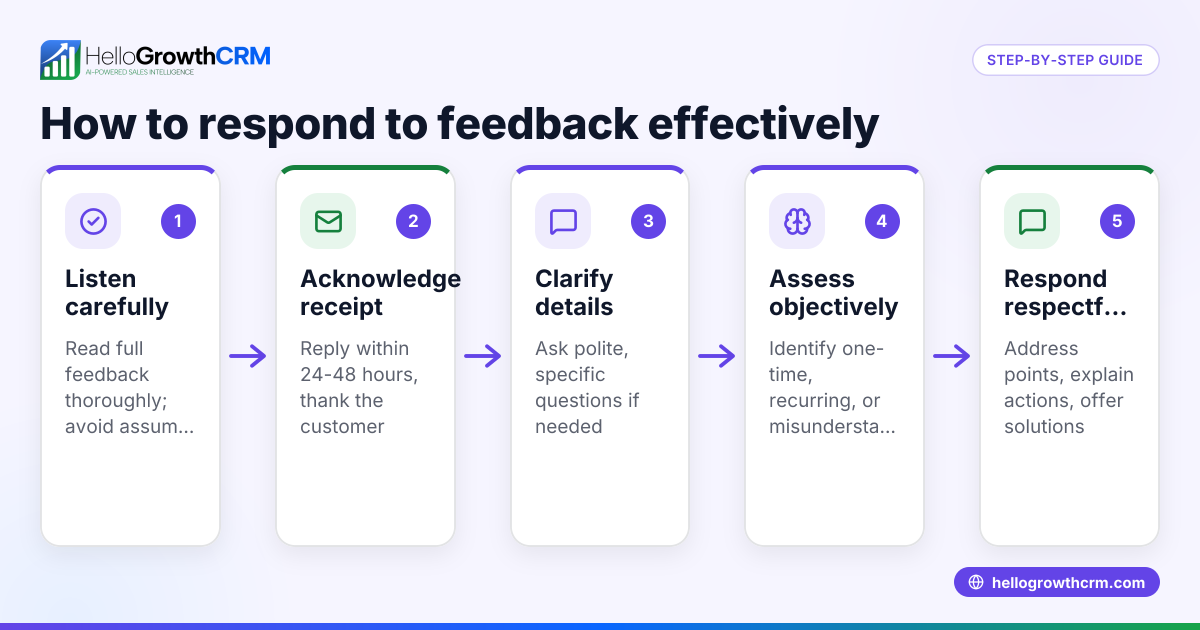
- Listen and understand the feedback fully
- Carefully read or listen to the entire message.
- Ask polite clarifying questions if needed to understand the issue clearly.
- Acknowledge receipt promptly
- Send a quick reply thanking the person for their feedback.
- Confirm that you are reviewing their comments and will follow up.
- Evaluate the feedback objectively
- Determine if the feedback points to a valid issue or improvement opportunity.
- Decide if immediate action is required or if further investigation is necessary.
- Decide on the response or action plan
- Plan what changes or fixes are needed.
- Assign tasks or responsibilities to team members if applicable.
- Communicate your response clearly
- Inform the feedback giver what you will do or have done.
- Be honest about any limitations or expected timelines for resolution.
- Follow up to ensure satisfaction
- After implementing changes, check back to confirm the issue is resolved.
- Invite additional feedback to show your commitment to improvement.
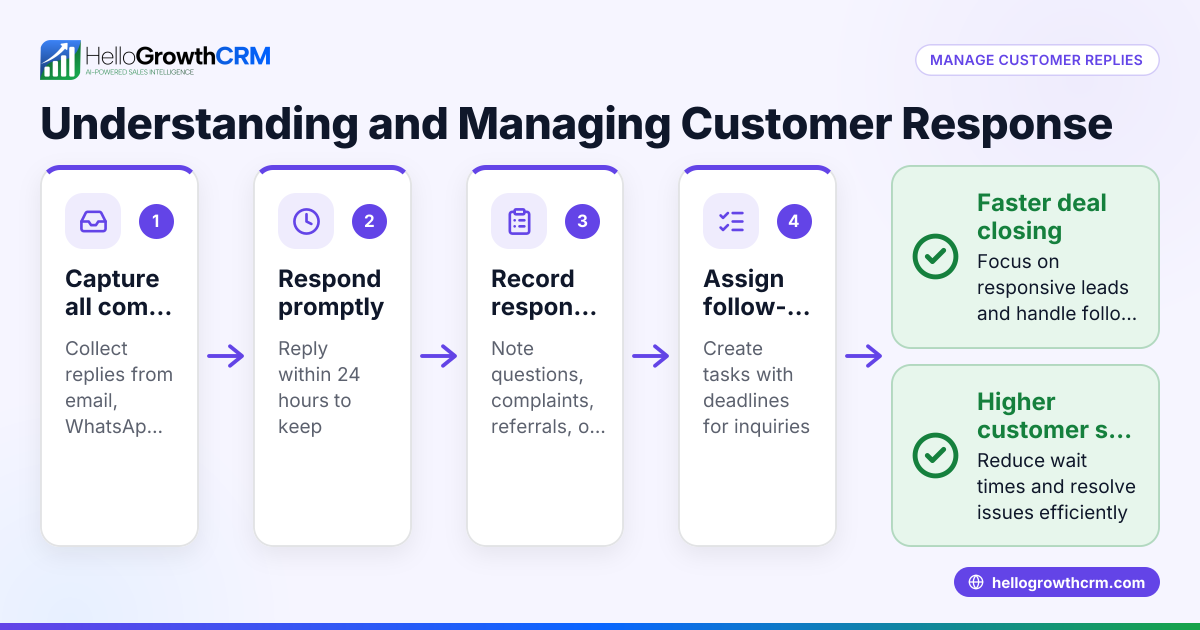
- Record and track feedback and responses
- Keep a log or use a system to monitor feedback trends and outcomes.
- Use this data to improve your business processes continuously.
Following this structured approach helps avoid missed feedback and slow follow-up, which are common problems for small businesses that run sales on text messages, email, and spreadsheets. For example, a CRM with WhatsApp and SMS integration can centralize communication and speed responses WhatsApp and SMS CRM.
Example (fictional figures)
A landscaping contractor in Charlotte, North Carolina, received feedback on 05/15/2026 from a client who said their lawn was not mowed to satisfaction and requested a refund or re-service.
- The contractor replied promptly on 05/16/2026, thanking the client and promising to review the work.
- On 05/17/2026, the contractor inspected the lawn and found uneven patches.
- They decided to offer a re-service at no extra charge, costing $150 in labor.
- The contractor informed the client of the plan and scheduled the re-service for 05/20/2026.
- After completing the work, the contractor followed up on 05/22/2026 to confirm the client’s satisfaction.
Calculations involved:
Original service charge = $350 Cost of re-service labor = $150 If refund chosen: Total cost = $350 (refund amount) If re-service chosen: Total cost = $150 (labor cost)
Calculation lines:
$350 (original service charge) = $350 $150 (re-service labor cost) = $150 If refund chosen: $350 (refund) = $350 If re-service chosen: $150 (labor cost) = $150
The contractor chose re-service to maintain goodwill while minimizing loss.
This process ensured the client felt heard and valued, preventing a lost lead or negative review.
Common mistakes
- Ignoring feedback or delaying response: Prevent by setting reminders or alerts to reply promptly.
- Responding defensively or emotionally: Prevent by pausing before replying and focusing on facts.
- Failing to communicate actions taken: Prevent by always updating the feedback giver about your plan and progress.
- Not tracking feedback systematically: Prevent by using tools or simple spreadsheets to log feedback and responses.
- Overpromising and underdelivering: Prevent by setting realistic expectations and timelines.
Using a CRM with a built-in dialer can help small businesses manage calls and messages efficiently, reducing delays and missed feedback built-in CRM dialer.
Frequently asked questions
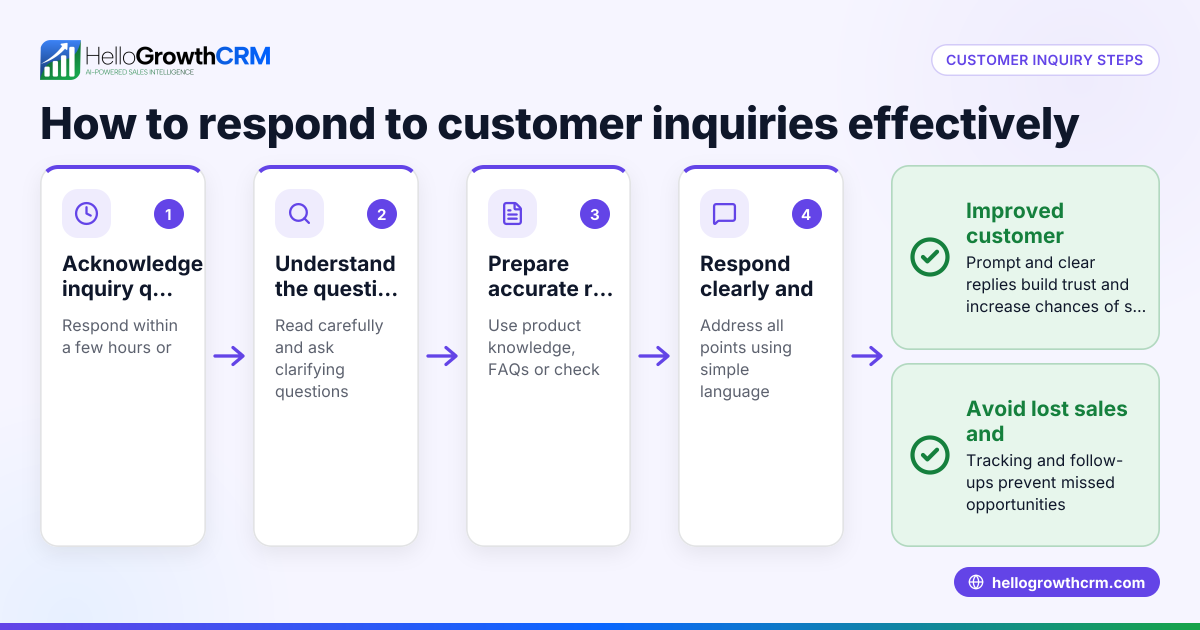
What is the best way to start a response to feedback? Start by thanking the person for their feedback and acknowledging their concerns. This shows respect and openness.
How quickly should a business respond to feedback? Aim to respond within 24 to 48 hours to show attentiveness and commitment.
What if the feedback is negative or unfair? Stay professional and objective. Address valid points, clarify misunderstandings politely, and avoid arguing.
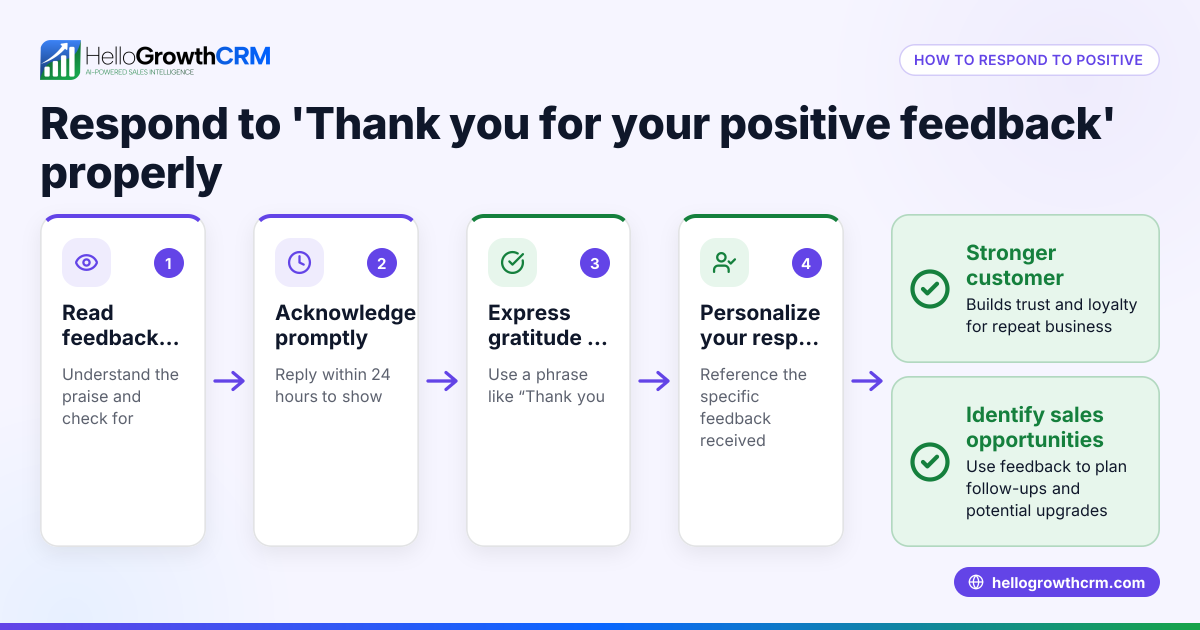
Can responding to feedback improve sales? Yes. Timely and thoughtful responses build trust, encourage repeat business, and improve reputation.
How can small businesses manage feedback efficiently? Using tools like HelloGrowthCRM for the United States helps centralize communication and track feedback systematically HelloGrowthCRM for the United States.
Key takeaways
- Responding to feedback means acknowledging, evaluating, acting, and communicating.
- Timely and clear responses improve customer trust and business outcomes.
- A step-by-step process prevents missed or mishandled feedback.
- Tracking feedback helps identify patterns and continuous improvement.
- Avoid common mistakes like ignoring feedback or responding defensively.
Start managing your feedback better today. Start on the Free Forever plan (200 leads, no credit card).
Ready to put this into practice?
Set up your pipeline, WhatsApp follow-ups, and AI lead scoring in minutes — free, no credit card.
Try HelloGrowthCRM freeGet CRM tips in your inbox
Join thousands of sales professionals who get weekly insights on CRM strategy, AI automation, and pipeline optimization.

The HelloGrowthCRM team publishes guides on CRM strategy, AI sales tools, and revenue operations for small business sales teams.