HelloGrowthCRM software
Built for real small-business sales teams
HelloGrowthCRM helps reps qualify faster, follow up on time, and close more deals—with practical automation in one place.
- AI lead scoring and pipeline visibility
- Built-in dialer, WhatsApp, and email automation
- Sales forecasting and RevOps-ready reporting
An RSS campaign is a marketing approach that uses RSS (Really Simple Syndication) feeds to automatically share new content or updates with your audience. This content can be delivered through email newsletters, SMS, WhatsApp, or other messaging platforms. The aim is to keep your leads or customers informed and engaged without needing to send messages manually each time.
Why this comes up / what goes wrong
Small-business owners often want to maintain regular contact with leads and customers to build trust and increase sales. However, sending updates or promotions manually can be time-consuming and inconsistent. An RSS campaign solves this by automating the delivery of fresh content directly to your contacts whenever new information appears.
The challenge is that many business owners don’t know how to start an RSS campaign or how to integrate it smoothly with their sales workflows. Without proper setup, campaigns might send irrelevant or too frequent messages, which can annoy recipients and reduce engagement.
Step-by-step
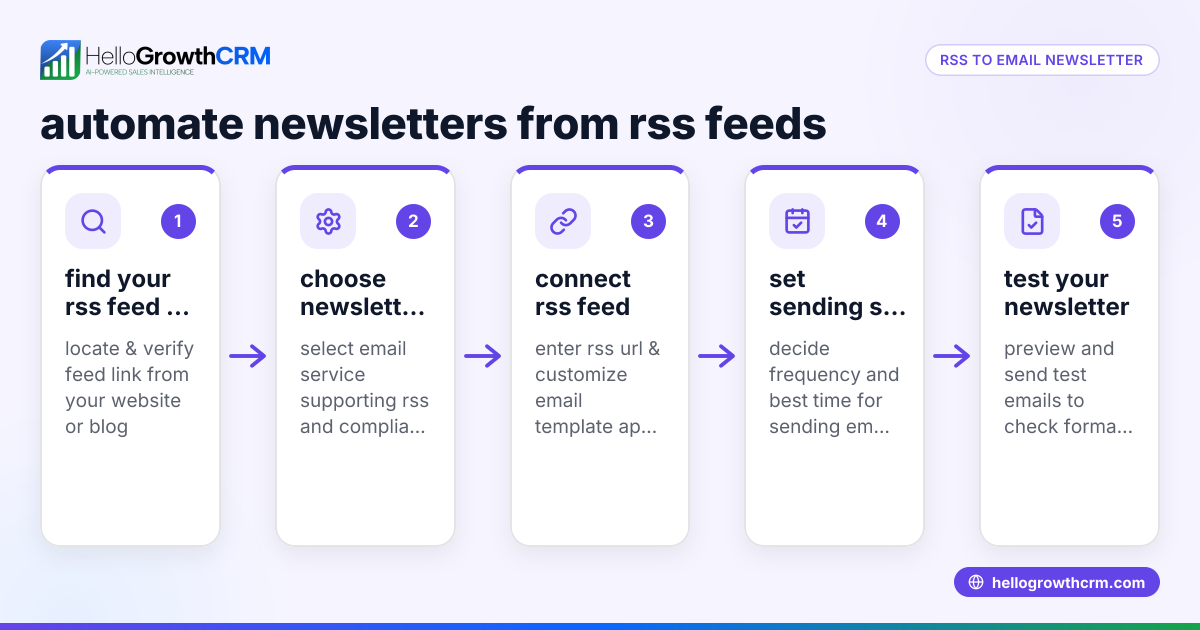
- Identify your RSS content source: Find an RSS feed that updates regularly with content relevant to your audience, such as your business blog, news announcements, or product updates. Confirm the feed URL works and updates reliably.
- Choose your messaging channels: Decide whether to send the RSS content via email, SMS, WhatsApp, or a combination. Make sure you have permission from your contacts to message them on these platforms.
- Select a campaign tool that supports RSS feeds: Use software capable of connecting to RSS feeds and sending automated messages. Configure the feed URL and set how often the tool should check for new content.
- Create message templates: Design messages that dynamically pull content from the RSS feed. Include a clear call to action and personalize messages when possible.
- Set scheduling and automation rules: Choose how often to send messages (weekly, biweekly, etc.) and ensure messages only send when new content is available to avoid spamming.
- Monitor campaign performance: Track metrics like open rates, clicks, and replies to understand how well your audience engages. Use this data to adjust your message timing and content.
- Integrate with your sales process: Use the campaign to nurture leads and trigger follow-ups when prospects engage. Ensure your CRM or sales tool supports this integration for smooth workflows. For example, HelloGrowthCRM offers multi-step sequences that stop automatically when a prospect replies, preventing overlap.
See also HelloGrowthCRM for the United States and WhatsApp and SMS CRM.
Example (fictional figures)
A plumbing company in Austin, Texas, uses an RSS campaign to share weekly home maintenance tips and special offers.
- Their blog’s RSS feed updates every Monday.
- The company sends an SMS message every Tuesday morning if new content is available.
- They have 1,200 opted-in leads on their contact list.
Costs:
- Each SMS costs $0.05.
- Weekly cost calculation: 1,200 contacts × $0.05 = $60
- Monthly cost calculation: $60 × 4 weeks = $240
The company monitors how many recipients click the links in the messages to measure interest. This data helps them plan personal follow-ups for leads who engage.
Common mistakes
- Sending messages too often or without new content: Prevent this by scheduling sends only when fresh RSS items exist.
- Ignoring message personalization: Use dynamic fields to address contacts by name or segment your list to increase relevance.
- Not securing proper permissions: Always confirm opt-ins for each messaging channel to comply with regulations.
- Failing to monitor engagement: Regularly review campaign analytics and adjust your strategy accordingly.
- Using multiple uncoordinated tools: Choose an integrated CRM platform that supports sequences and campaigns to reduce manual work and errors. HelloGrowthCRM’s sequences can automate multi-step follow-ups and stop on reply, streamlining your workflow.
See also the built-in CRM dialer for integrated calling.
Doing this in HelloGrowthCRM
HelloGrowthCRM provides sequences and campaigns that automate multi-step outreach workflows across email, SMS, and WhatsApp. You can set up a five-step follow-up over two weeks that runs automatically and stops immediately when the prospect replies. This helps nurture leads efficiently without manual intervention. Learn more about WhatsApp and SMS CRM and how the built-in CRM dialer integrates with your campaigns. For US businesses, see HelloGrowthCRM for the United States.
Frequently asked questions
What is an RSS campaign used for? An RSS campaign automatically sends new content from an RSS feed to your audience via email or messaging channels. It keeps contacts engaged with regular updates without manual effort.
Can I use RSS campaigns for SMS or WhatsApp? Yes, many platforms, including HelloGrowthCRM, support sending RSS campaign content through SMS and WhatsApp, allowing multi-channel outreach.
How often should I send messages in an RSS campaign? Send messages only when new content is available to avoid spamming. Weekly or biweekly is common, but adjust based on your content frequency and audience preferences.
How do I track the success of an RSS campaign? Track open rates, click-throughs, and replies to measure engagement. Use this data to refine your message timing and content.
What if a prospect replies during an automated sequence? With HelloGrowthCRM sequences, the follow-up automatically stops when a prospect replies, allowing you to engage personally without overlap.
Key takeaways
- An RSS campaign automates sending fresh content to your contacts using RSS feeds.
- Proper setup includes choosing the right feed, messaging channels, and automation rules.
- Avoid common mistakes like over-sending, lack of personalization, and missing permissions.
- Monitor engagement regularly to improve campaign effectiveness.
- HelloGrowthCRM sequences automate multi-step follow-ups and stop on reply, simplifying lead nurturing.
Start your RSS campaign easily with automation tools. To try automated sequences that stop when prospects reply, start on the Free Forever plan (200 leads, no credit card).
Ready to put this into practice?
Set up your pipeline, WhatsApp follow-ups, and AI lead scoring in minutes — free, no credit card.
Try HelloGrowthCRM freeGet CRM tips in your inbox
Join thousands of sales professionals who get weekly insights on CRM strategy, AI automation, and pipeline optimization.

The HelloGrowthCRM team publishes guides on CRM strategy, AI sales tools, and revenue operations for small business sales teams.