HelloGrowthCRM software
Built for real small-business sales teams
HelloGrowthCRM helps reps qualify faster, follow up on time, and close more deals—with practical automation in one place.
- AI lead scoring and pipeline visibility
- Built-in dialer, WhatsApp, and email automation
- Sales forecasting and RevOps-ready reporting
SaaS sales enablement means providing your sales team with the right resources and processes to convert leads into customers efficiently. US startups benefit from clear pipeline management, timely follow-ups, and alignment between sales and marketing efforts.
Why this comes up / what goes wrong
SaaS startups in the US often face challenges like slow lead follow-up, scattered sales data across emails and spreadsheets, and unclear sales stages. Founders or sales leaders may struggle to track deals or forecast revenue accurately. Without a structured process, leads get forgotten or delayed, especially with small or remote sales teams. Sales enablement organizes these elements to improve conversion rates and revenue predictability.
Step-by-step
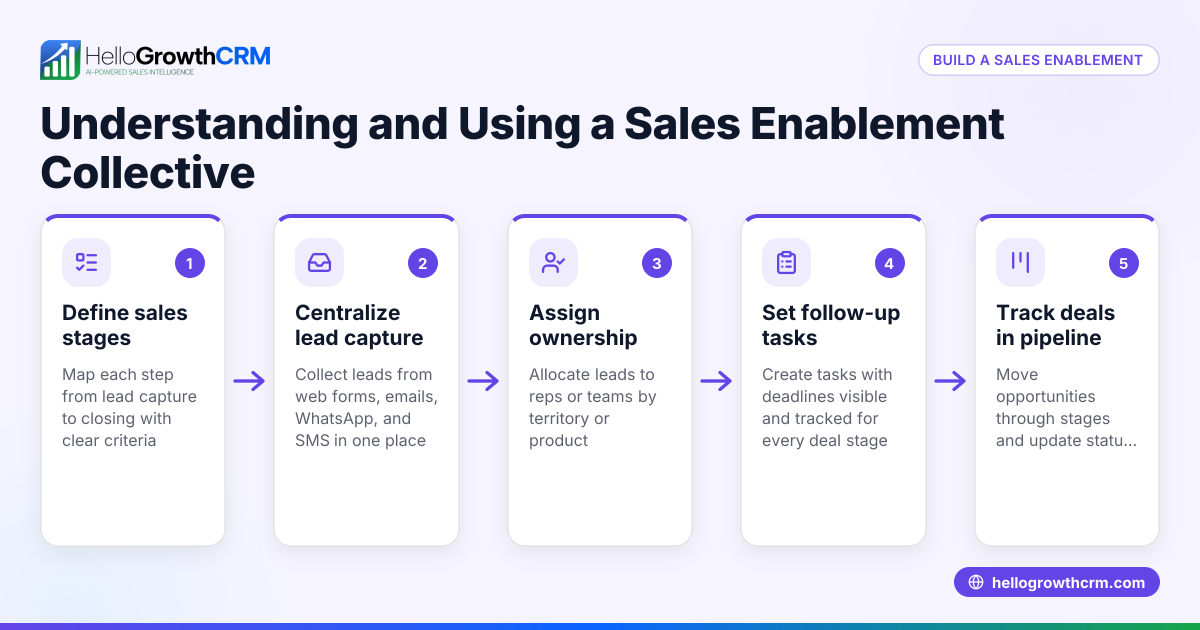
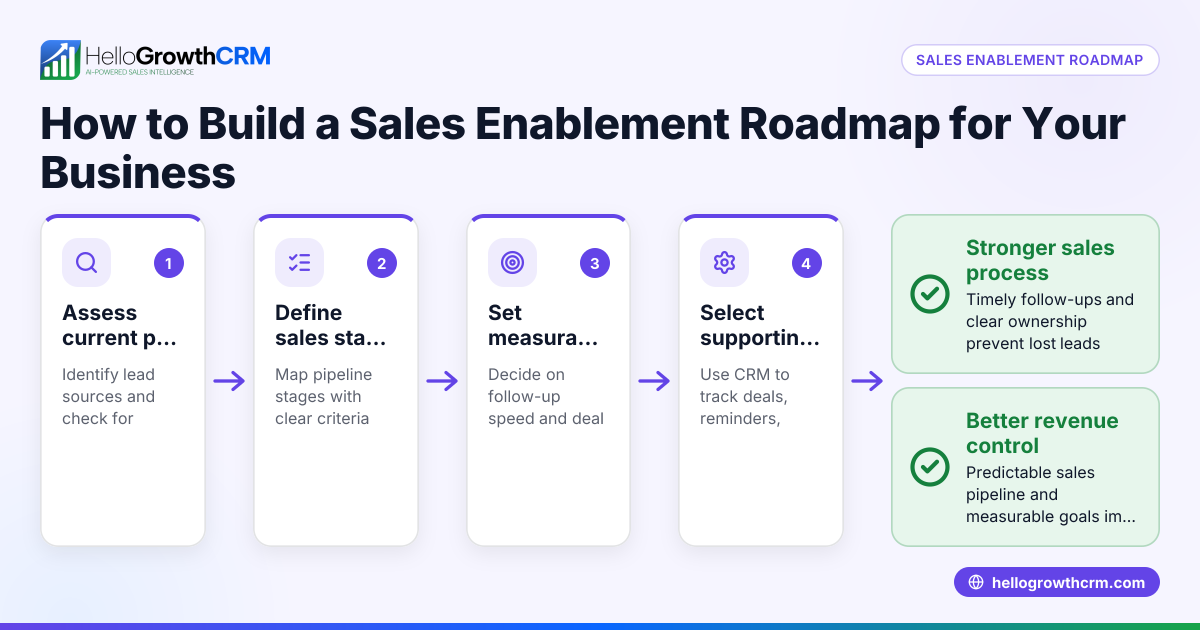
- Define your sales stages and pipeline clearly
- Map out each step from lead capture through closing.
- Make sure every team member understands and follows these stages.
- Implement a system to capture and track leads centrally
- Avoid keeping leads in email or spreadsheets.
- Use web forms or integrations to capture leads automatically.
- Set follow-up tasks and reminders for each deal
- Assign due dates for follow-ups to keep deals moving.
- Check regularly that no lead is forgotten or delayed.
- Align sales and marketing content
- Provide sales reps with relevant product information, case studies, and pricing.
- Use automated sequences via email, WhatsApp, or SMS to nurture leads.
- Assign territories or segments if applicable
- Define which reps handle specific leads or regions.
- Track field visits and activities for reps working remotely.
- Review pipeline regularly and forecast sales
- Monitor deal stages and their probabilities.
- Adjust sales efforts based on data to meet targets.
- Train and support your sales team continuously
- Use data to identify areas where reps need help.
- Provide coaching or managed support if needed.
These steps help US startups and technology companies create a repeatable sales process that grows revenue efficiently. Learn more about Startups and technology companies.
Example (fictional figures)
A SaaS startup in Seattle, Washington, offers a customer support platform. In 2023, they generated $1,200,000 in leads but closed only $180,000 in sales due to inconsistent follow-up.
They implement sales enablement as follows:
- Define pipeline stages: Lead > Contacted > Demo Scheduled > Quote Sent > Closed Won/Lost.
- Capture leads automatically via website forms into a CRM.
- Set follow-up tasks 3 days after sending a quote.
- Assign sales reps to specific customer segments.
In Q1 2026, they have 120 leads.
- 90 leads are contacted.
- 45 demos are scheduled.
- 30 quotes are sent.
- 18 deals close.
Average revenue per deal is $5,000.
Calculations:
Revenue = Number of deals × Revenue per deal
Revenue = 18 × $5,000 = $90,000
Before sales enablement, closing rate was 15% (18/120). After applying structured follow-up and pipeline visibility, they aim to increase this rate.
This example shows how structured sales enablement improves deal flow and revenue.
Common mistakes
- Ignoring pipeline stages: Deals stall without clear stages. Prevent by defining and training on stages.
- No follow-up reminders: Leads get lost. Prevent by setting follow-up tasks and alerts.
- Scattered lead data: Email and spreadsheets cause errors. Prevent by centralizing leads in a CRM.
- Lack of territory or segment ownership: Leads get duplicated or ignored. Prevent by assigning clear ownership.
- Not reviewing pipeline regularly: Leads stagnate unnoticed. Prevent by scheduling weekly pipeline reviews.
- Underusing sales content and sequences: Leads go cold. Prevent by providing aligned marketing materials and automated follow-ups.
For more on managing sales territories and field operations, see HelloGrowthCRM for the United States.
Doing this in HelloGrowthCRM
HelloGrowthCRM supports SaaS sales enablement with these features:
- Deals (pipeline): Track open opportunities from first contact through close, with stage movement and follow-up dates. For example, a quotation sent last week appears at the 'quote sent' stage with a follow-up task, so it is not forgotten.
- Territories, field operations and commissions: Define territories, log field visits from mobile, and track commissions linked to deal outcomes.
- Managed RevOps: If you lack a sales manager, a revenue specialist can work your follow-up queue weekly, clean up your pipeline, and provide reports to keep sales moving.
Learn more about HelloGrowthCRM's sales tools on the WhatsApp and SMS CRM page.
Frequently asked questions
What is the main goal of SaaS sales enablement? It equips sales teams with the right tools, content, and processes to close deals faster and more predictably. This includes managing leads, follow-ups, and pipeline stages effectively.
How do I choose the right sales enablement tools for my SaaS startup? Look for features like pipeline management, lead capture, task automation, and integration with communication channels like WhatsApp and SMS. Also consider if the tool supports territory management and offers managed support for small teams.
Can sales enablement improve revenue forecasting? Yes. Tracking deals with probabilities and stages helps predict expected revenue and adjust sales efforts accordingly.
How often should I review my sales pipeline? Weekly reviews help catch stalled deals, update stages, and assign follow-ups promptly.
Is sales enablement only for large teams? No. Small SaaS startups also benefit from structured sales processes and CRM tools to avoid lost leads and improve conversion rates.
For more answers related to startups, visit Startups and technology companies.
Key takeaways
- Define clear sales stages and centralize lead tracking.
- Set follow-up tasks and reminders to avoid lost deals.
- Assign territories or segments to ensure lead ownership.
- Regularly review pipeline and forecast sales based on deal stages.
- Use sales content and automated sequences aligned with marketing.
- Consider tools like HelloGrowthCRM for pipeline, territory, and managed RevOps support.
Start enabling your SaaS sales team today with a clear process and the right tools. To get started without risk, Start on the Free Forever plan (200 leads, no credit card).
Ready to put this into practice?
Set up your pipeline, WhatsApp follow-ups, and AI lead scoring in minutes — free, no credit card.
Try HelloGrowthCRM freeGet CRM tips in your inbox
Join thousands of sales professionals who get weekly insights on CRM strategy, AI automation, and pipeline optimization.

The HelloGrowthCRM team publishes guides on CRM strategy, AI sales tools, and revenue operations for small business sales teams.