HelloGrowthCRM software
Built for real small-business sales teams
HelloGrowthCRM helps reps qualify faster, follow up on time, and close more deals—with practical automation in one place.
- AI lead scoring and pipeline visibility
- Built-in dialer, WhatsApp, and email automation
- Sales forecasting and RevOps-ready reporting
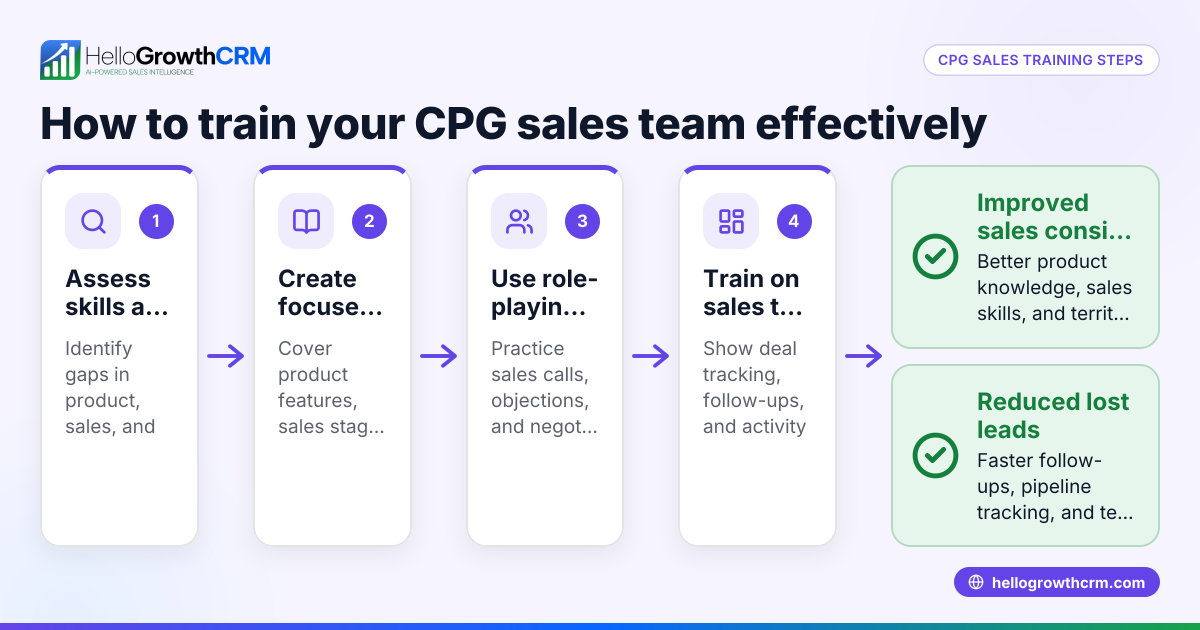
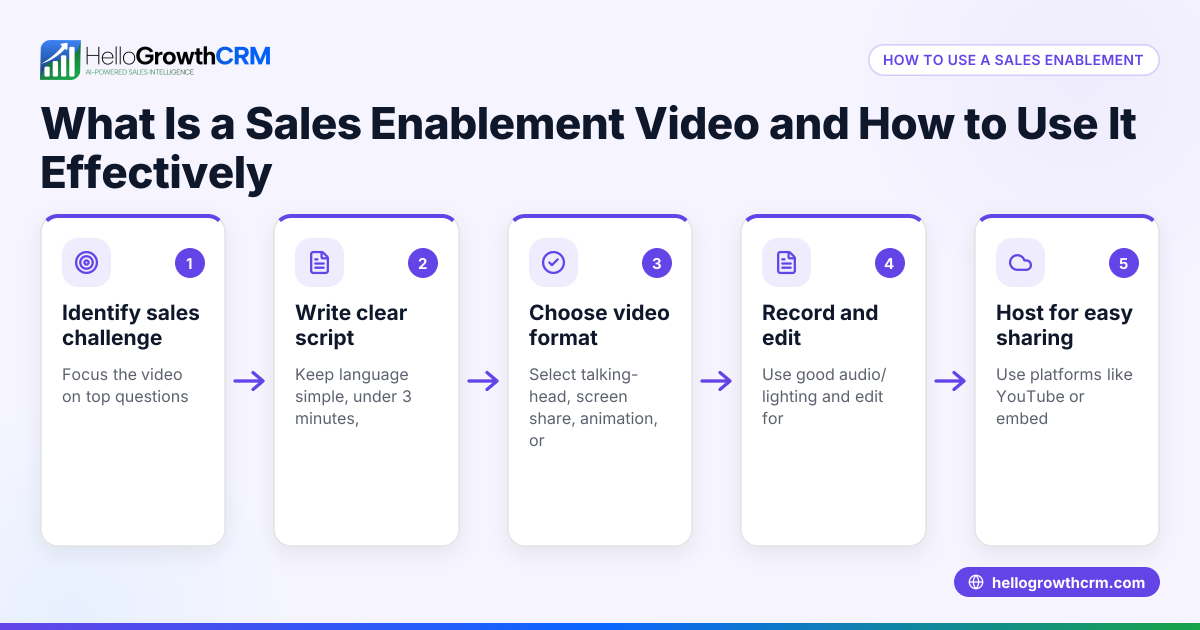
Sales enablement training equips your sales team with the skills, tools, and knowledge needed to engage leads effectively and close deals faster. It combines process guidance, content, and coaching tailored to your business goals. This article explains why sales enablement training matters, outlines step-by-step actions to implement it, shares a practical example, highlights common mistakes to avoid, and shows how HelloGrowthCRM supports this process.
Why this comes up / what goes wrong
Small-business owners often find their sales teams struggling to follow up on leads promptly or lacking consistent messaging and processes. This leads to lost opportunities and unpredictable revenue. Many small teams rely on scattered tools like text messages, email, and spreadsheets, which create confusion and inefficiency. Without proper training focused on sales enablement, reps may not know how to prioritize leads, use sales content effectively, or manage their pipeline well. This gap can stall growth and frustrate founders who want to see predictable sales results.
Step-by-step
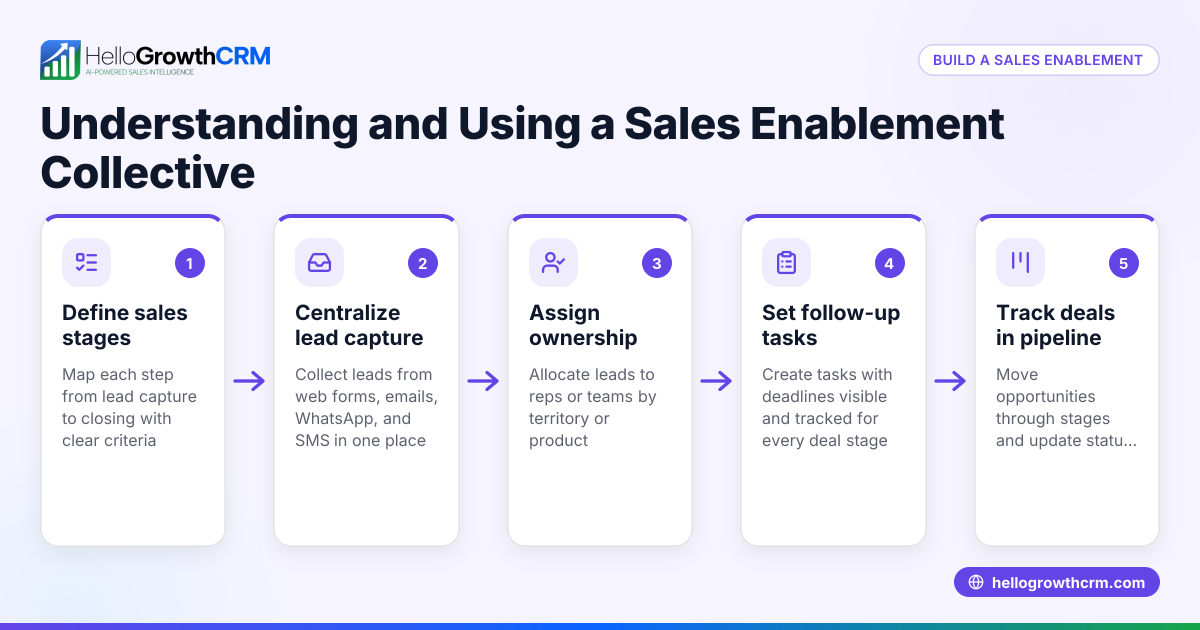
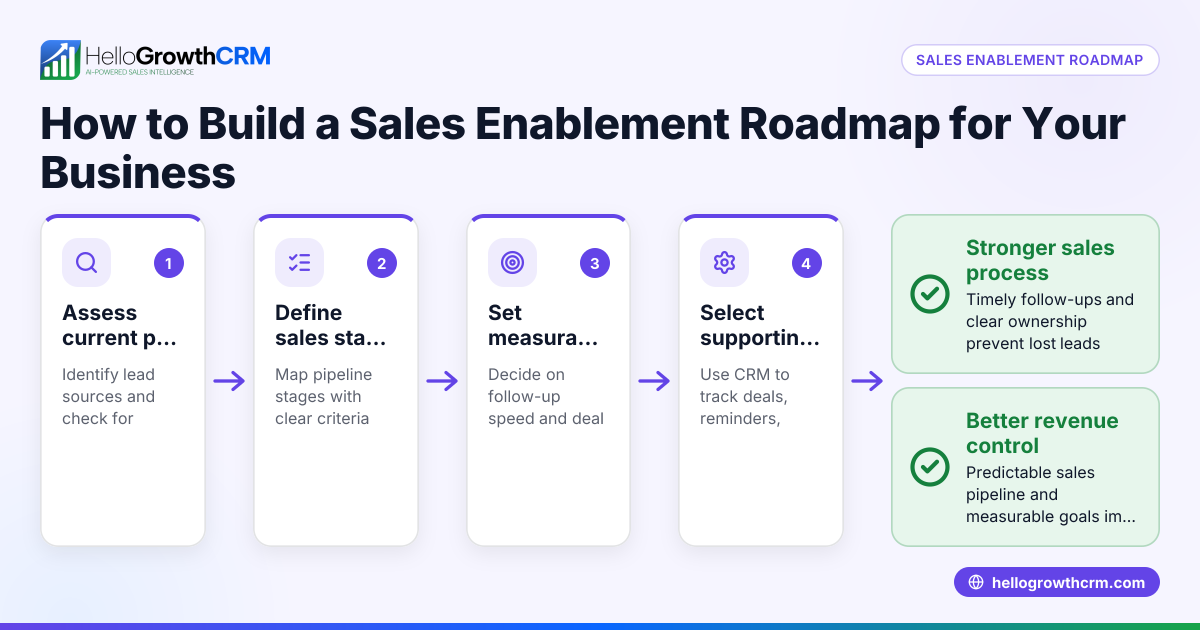
- Assess Your Current Sales Process
- Map out how leads come in, how reps follow up, and how deals progress.
- Identify bottlenecks or inconsistencies in communication and follow-up.
- Define Sales Enablement Goals
- Decide what skills and knowledge your team needs (e.g., product knowledge, objection handling).
- Set goals like faster lead response or higher close rates.
- Develop Training Content and Tools
- Create or gather sales scripts, email templates, and product sheets.
- Include guidance on using your CRM and communication channels effectively.
- Deliver Training Sessions
- Schedule interactive workshops or coaching sessions.
- Use role-playing to practice real sales conversations.
- Implement Sales Tools and Processes
- Ensure your team uses a CRM pipeline to track deals and follow-ups.
- Assign follow-up dates and task reminders to avoid lost leads.
- Monitor and Adjust
- Regularly review sales metrics and pipeline health.
- Collect feedback from sales reps on training usefulness.
- Update training and tools as needed.
- Encourage Ongoing Learning
- Promote continuous skill development through refresher sessions.
- Share best practices and success stories within the team.
Check your progress against these steps regularly to keep sales enablement effective and aligned with your business. For more guidance on managing your sales process and CRM tools, visit our CRM academy.
Example (fictional figures)
A residential real-estate team in Phoenix, Arizona, wants to improve their sales follow-up and closing rate. They start sales enablement training on 03/01/2026.
- They identify that on average, 20 leads come in weekly.
- Their current close rate is 10%, meaning 2 deals per week.
- Each deal averages $350,000 in sale price.
Goal: Increase close rate to 15% within 3 months.
Step 1: Training improves follow-up speed and messaging.
Step 2: They implement a CRM pipeline to track leads and set follow-up reminders.
Step 3: After 3 months, lead follow-up is consistent, and close rate rises to 15%, meaning 3 deals weekly.
Calculations:
Weekly revenue before = 2 deals × $350,000 = $700,000 Weekly revenue after = 3 deals × $350,000 = $1,050,000
Increase in weekly revenue = $1,050,000 - $700,000 = $350,000
This example shows how targeted sales enablement training combined with process improvements can increase revenue by improving close rates.
Common mistakes
- Skipping process assessment: Without understanding current gaps, training may miss critical issues. Prevent by mapping your sales process first.
- One-size-fits-all training: Generic content doesn’t address your team’s specific challenges. Prevent by tailoring training to your products and sales cycle.
- Ignoring CRM usage: Not tracking deals and follow-ups leads to lost leads. Prevent by enforcing consistent CRM pipeline updates and task management.
- No follow-up or reinforcement: Training is a one-time event and skills fade. Prevent by scheduling regular refresher sessions and coaching.
- Overloading reps with tools: Too many platforms confuse reps and reduce adoption. Prevent by integrating tools and simplifying workflows, for example using a WhatsApp-native CRM.
For more tips on managing your sales process and CRM tools, see our CRM academy.
Doing this in HelloGrowthCRM
HelloGrowthCRM supports sales enablement by helping teams track deals and follow-ups efficiently. A quotation sent last week appears as a deal at the 'quote sent' stage with a follow-up date, so no opportunity is forgotten. For businesses with field sales, distributors' field reps can log visits from their phones, and managers see the day's activities on a map. Founders without a dedicated sales manager can get weekly follow-up support and pipeline hygiene through Managed RevOps, ensuring leads are acted on promptly. Learn more about these features at HelloGrowthCRM for the United States and explore our WhatsApp and SMS CRM.
Frequently asked questions
What is the difference between sales enablement and sales training? Sales enablement is broader than training. It includes providing sales teams with the right content, tools, processes, and coaching to sell effectively. Training focuses mainly on teaching skills and knowledge.
How long does sales enablement training take? The initial training can take a few sessions over weeks, but sales enablement is ongoing. Continuous coaching and process improvements keep skills sharp and adapt to changing market needs.
Can small businesses benefit from sales enablement training? Yes, small businesses often gain the most because they usually have less formal sales processes. Training helps create consistency and efficiency that leads to faster growth.
Do I need special software for sales enablement? While not strictly required, a CRM that tracks deals and follow-ups makes sales enablement more effective by organizing information and automating reminders. HelloGrowthCRM offers tools tailored for small and mid-sized teams.
How do I measure success after sales enablement training? Track metrics like lead response time, close rates, average deal size, and pipeline health. Improvements in these areas indicate effective training.
For more answers, visit our CRM academy.
Key takeaways
- Sales enablement training equips your team with skills, content, and processes to close deals faster.
- Start by assessing your current sales process and setting clear goals.
- Use a CRM pipeline to track deals and follow-ups consistently.
- Avoid common mistakes like skipping process mapping or neglecting ongoing coaching.
- HelloGrowthCRM helps manage deals, field sales, and follow-up tasks that support sales enablement.
- Measure success by tracking improvements in lead response and close rates.
Start improving your sales team’s performance today. Start on the Free Forever plan (200 leads, no credit card).
Ready to put this into practice?
Set up your pipeline, WhatsApp follow-ups, and AI lead scoring in minutes — free, no credit card.
Try HelloGrowthCRM freeGet CRM tips in your inbox
Join thousands of sales professionals who get weekly insights on CRM strategy, AI automation, and pipeline optimization.

The HelloGrowthCRM team publishes guides on CRM strategy, AI sales tools, and revenue operations for small business sales teams.