HelloGrowthCRM software
Built for real small-business sales teams
HelloGrowthCRM helps reps qualify faster, follow up on time, and close more deals—with practical automation in one place.
- AI lead scoring and pipeline visibility
- Built-in dialer, WhatsApp, and email automation
- Sales forecasting and RevOps-ready reporting
Sales analysis software organizes and analyzes your sales data to help you understand performance, spot trends, and make better decisions. Small businesses use it to avoid losing leads, improve follow-up, and forecast revenue more accurately. This article covers why sales analysis software is important, a step-by-step evaluation guide, a worked example with realistic figures, common pitfalls, and how HelloGrowthCRM can assist your sales process.
Why this comes up / what goes wrong
Small business owners often struggle with scattered sales data across emails, text messages, spreadsheets, and notes. This scattered approach leads to missed follow-ups, lost leads, and unclear sales forecasts. Without clear analysis, it’s hard to know which products, customers, or sales reps are performing well or where to focus efforts.
Owners searching for sales analysis software want a tool that consolidates sales activities, tracks deals through stages, scores leads, forecasts revenue, and sends reminders for timely follow-up. They want to replace manual tracking with automated insights to grow sales without adding complexity.
Step-by-step
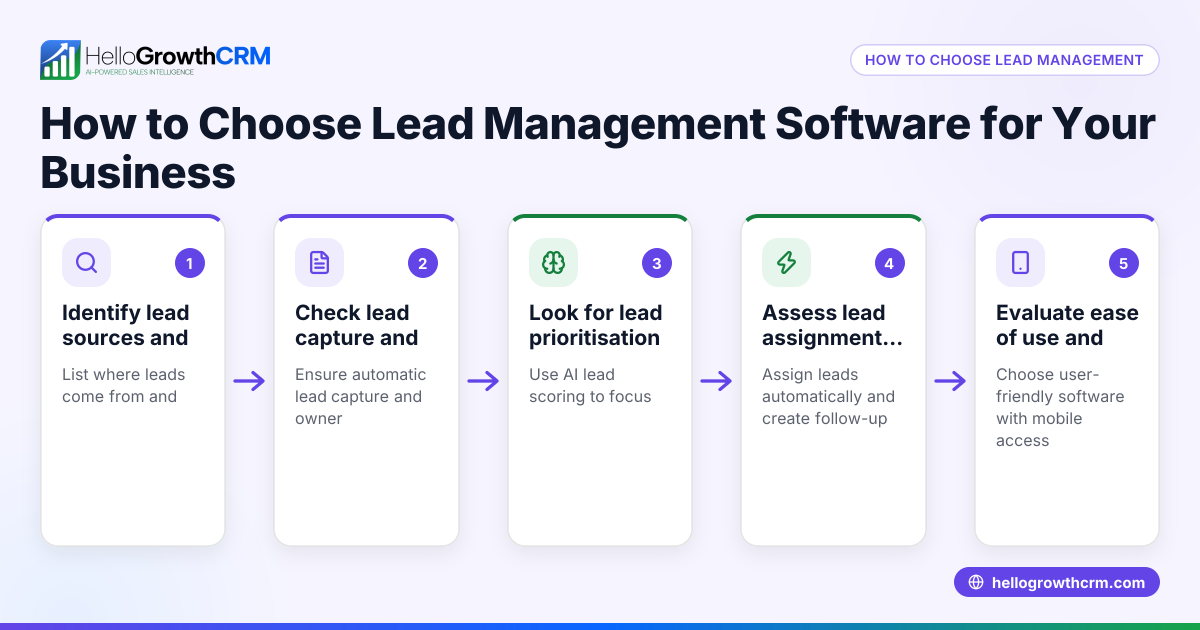
- Identify your sales data sources: List where your sales information currently lives (email, WhatsApp, SMS, spreadsheets). Check if the software can integrate or capture leads directly from these sources.
- Check pipeline management features: Ensure the software tracks deals through stages like prospecting, quote sent, negotiation, and close. It should allow setting follow-up dates to avoid losing leads.
- Look for lead scoring and task boards: Prioritize leads based on AI scoring or manual criteria so your team focuses on the best opportunities.
- Evaluate communication tools: Confirm the software supports your main communication channels (WhatsApp, SMS, email) and can automate sequences for follow-up.
- Assess reporting and forecasting: The software should provide clear sales forecasts and customizable reports to monitor performance.
- Consider field operations and territory management: If you have field reps, check if the software tracks visits, routes, and commissions.
- Review ease of use and adoption: Choose software that your team will actually use, with intuitive interfaces and mobile access.
- Test integration with your current tools: Verify compatibility with your existing CRM, web forms, or marketing platforms.
- Check support and managed services: Some providers offer managed revenue operations support to help with pipeline hygiene and weekly follow-ups.
Example (fictional figures)
A landscaping contractor in Charlotte, North Carolina, wants to analyze sales for Q1 2026. They track deals from first contact to close with stages: Lead, Quote Sent, Negotiation, Closed Won.
- Total leads in Q1: 150
- Average deal size: $3,500
- Conversion rate from Quote Sent to Closed Won: 40%
- Number of quotes sent in Q1: 100
Calculate expected revenue from quotes sent:
100 (quotes sent) × 40% (conversion rate) = 40 (expected wins) 40 × $3,500 (average deal size) = $140,000 (expected revenue)
If the contractor misses follow-ups on a portion of quotes, potential lost revenue can be estimated by tracking missed follow-ups and conversion rates.
This example shows how tracking deal stages and follow-ups can reveal missed opportunities worth thousands of dollars.
Common mistakes
- Using spreadsheets only: Spreadsheets lack real-time updates and reminders. Prevent this by adopting a pipeline tool that tracks deals and follow-ups automatically.
- Ignoring communication channels: If your team uses WhatsApp or SMS for sales, a CRM without these integrations causes data loss. Choose software with WhatsApp and SMS CRM features like HelloGrowthCRM (/product/whatsapp-sms-crm).
- Overcomplicating setup: Complex software with many unused features leads to low adoption. Select tools that fit your team size and workflow.
- Not setting follow-up reminders: Leads get cold without timely follow-up. Use pipeline stages with follow-up dates to stay on track (/product/ai-crm).
- Failing to track field reps: If you have outside salespeople, not monitoring their visits wastes resources. Use territory and field operations features to log visits and plan routes (/product/territory-management).
- Neglecting pipeline hygiene: Without regular cleanup, stale deals clutter the pipeline. Managed RevOps services can help maintain pipeline health (/services/managed-revops).
Doing this in HelloGrowthCRM
HelloGrowthCRM offers a Deals (pipeline) feature where a quotation sent last week appears as a deal at the 'quote sent' stage with a follow-up date, so it is not forgotten. For businesses with field sales, its Territories, field operations and commissions tools let reps log visits from their phones while managers see the day's activity. Founders without dedicated sales managers can use Managed RevOps, where a revenue specialist handles follow-up queues weekly and cleans up the pipeline. Learn more about HelloGrowthCRM’s sales tools at HelloGrowthCRM for the United States.
Frequently asked questions
What is the difference between sales analysis software and a CRM? Sales analysis software focuses on reporting, tracking sales performance, and forecasting, while a CRM manages customer interactions and communications. Many modern CRMs combine both functions, providing a unified sales tool.
Can small businesses benefit from sales analysis software? Yes, even small teams benefit from tracking deals, automating follow-ups, and spotting trends early to improve conversion rates and revenue forecasting.
How do I know if sales analysis software will integrate with my communication tools? Check the software’s supported channels. Some CRMs support WhatsApp, SMS, and email sequences, helping sales teams communicate and track conversations in one place (/product/whatsapp-sms-crm).
Is it necessary to track field sales visits? If your sales reps meet customers in person, tracking visits helps optimize routes, monitor productivity, and calculate commissions, which some sales tools support (/product/territory-management).
Can I get help managing sales operations if I don’t have a sales manager? Yes, managed revenue operations services provide expert support for follow-up queues, pipeline hygiene, and weekly KPI reports, helping founders stay on top of sales without hiring a full-time manager (/services/managed-revops).
Key takeaways
- Sales analysis software consolidates sales data to improve follow-up and forecasting.
- Evaluate software for pipeline tracking, lead scoring, communication channels, and reporting.
- Avoid relying solely on spreadsheets or disconnected communication tools.
- Follow-up reminders and pipeline stages prevent lost leads and revenue.
- Field sales tracking and managed revenue operations support add value for growing teams.
- Choose software that integrates with your communication channels and fits your team’s workflow.
Start improving your sales tracking and follow-up today. Start on the Free Forever plan (200 leads, no credit card).
Ready to put this into practice?
Set up your pipeline, WhatsApp follow-ups, and AI lead scoring in minutes — free, no credit card.
Try HelloGrowthCRM freeGet CRM tips in your inbox
Join thousands of sales professionals who get weekly insights on CRM strategy, AI automation, and pipeline optimization.

The HelloGrowthCRM team publishes guides on CRM strategy, AI sales tools, and revenue operations for small business sales teams.