HelloGrowthCRM software
Built for real small-business sales teams
HelloGrowthCRM helps reps qualify faster, follow up on time, and close more deals—with practical automation in one place.
- AI lead scoring and pipeline visibility
- Built-in dialer, WhatsApp, and email automation
- Sales forecasting and RevOps-ready reporting
A sales and marketing strategy is a unified plan that coordinates your marketing activities with your sales process to attract leads, nurture prospects, and close deals. It focuses on identifying your ideal customers, choosing the right channels, crafting compelling messages, and organizing your sales pipeline to maximize conversions and revenue.
Why this comes up / what goes wrong
Many small-business owners struggle with inconsistent sales and marketing results because their efforts are fragmented or reactive. They may run ads or send emails without a clear target, fail to follow up leads promptly, or track sales in spreadsheets that get lost. This leads to wasted time, missed opportunities, and unpredictable income. A clear sales and marketing strategy helps you focus resources on what works and coordinate your team to follow through.
Step-by-step
- Define your target audience: Identify who your ideal customers are by demographics, needs, and behaviors. Check that this group matches your product or service benefits.
- Set clear goals: Decide what you want to achieve, such as increasing leads by 20% or closing $500,000 in sales this quarter. Goals should be specific and measurable.
- Develop your messaging: Create value propositions and key messages that address your audience's problems and how your offering solves them.
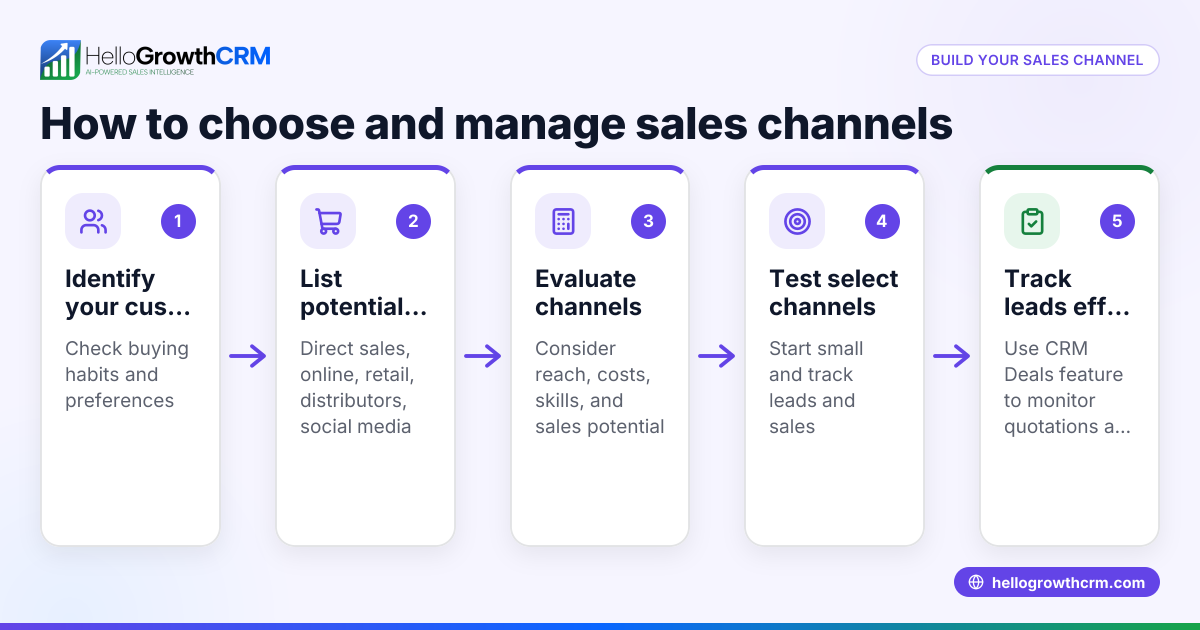
- Choose marketing channels: Select where to reach your audience—email, social media, WhatsApp, SMS, or events. Check past performance or competitor activity.
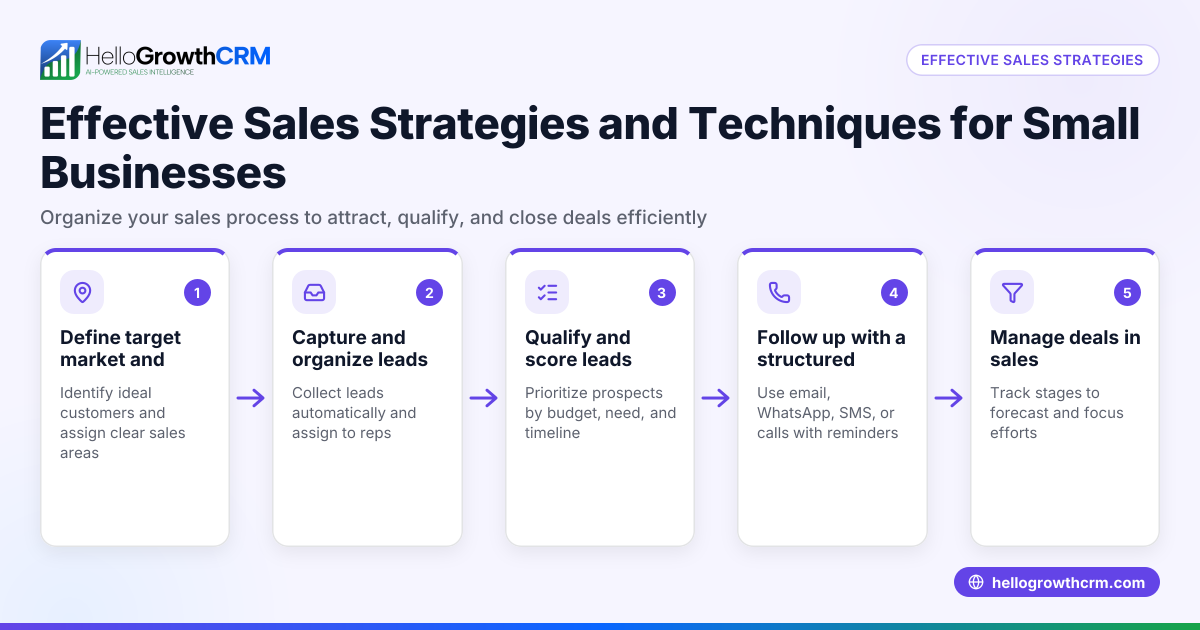
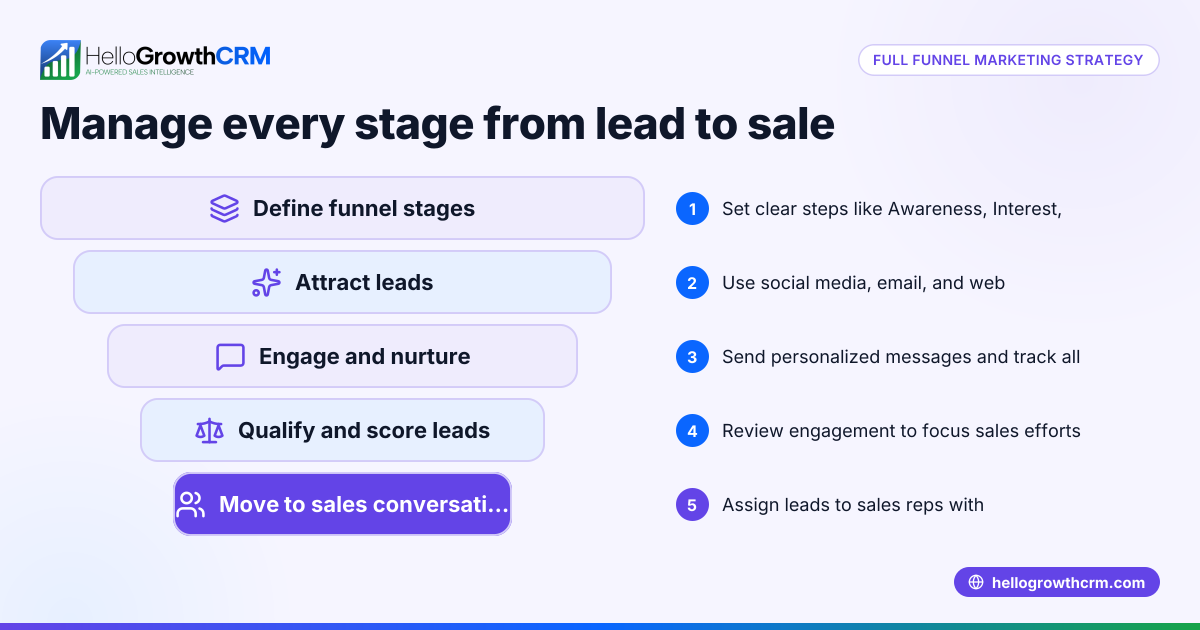
- Plan sales process stages: Outline the steps from lead capture to closing a deal and post-sale follow-up. Each stage should have clear actions and timelines.
- Assign roles and territories: If you have a sales team, define who handles which customers or regions to avoid overlap and ensure accountability.
- Implement tools and workflows: Use CRM software to capture leads automatically, track deals, and schedule follow-ups. Check that everyone on the team uses the system consistently.
- Measure and adjust: Regularly review sales and marketing results against goals. Identify bottlenecks or ineffective channels and adjust your strategy.
Example (fictional figures)
A two-location dental practice in Columbus, Ohio, wants to increase new patient bookings by 30% over 6 months.
- Target audience: Adults aged 25-50 in Columbus suburbs needing dental cleanings and cosmetic services.
- Goal: Increase new patient revenue from $200,000 to $260,000 by 06/30/2026.
- Messaging: "Gentle, affordable dental care with flexible scheduling."
- Channels: Local Facebook ads, email newsletters, and SMS appointment reminders.
- Sales process: Lead capture from website form → first consultation call → appointment booking → follow-up for no-shows.
- Roles: Receptionist handles calls and appointment scheduling; dentist manages consultations.
- Tools: CRM tracks leads from web forms and schedules follow-ups.
Calculation: Current revenue = $200,000 Target increase = 30% $200,000 × 30% = $60,000 Target revenue = $200,000 + $60,000 = $260,000
Common mistakes
- No clear target audience: Avoid by researching your ideal customer and focusing marketing messages accordingly.
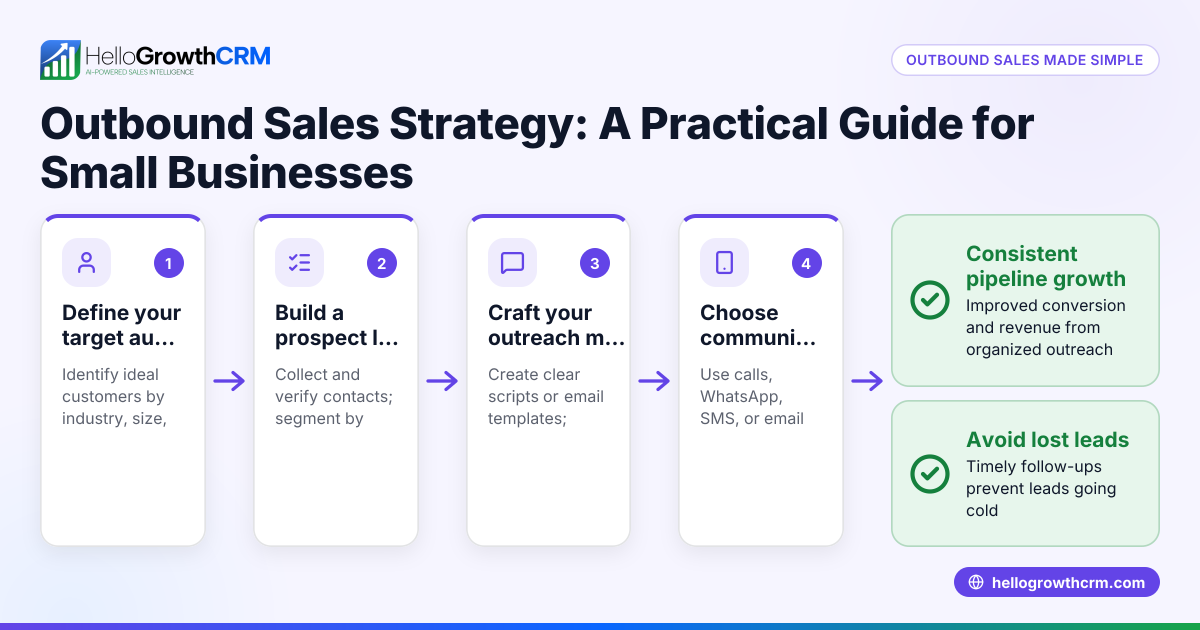
- Ignoring follow-up: Prevent lost leads by setting reminders and automating follow-ups using CRM tools like HelloGrowthCRM Deals (pipeline) Learn more.
- Using too many channels poorly: Focus on 1-2 channels that work best and track their performance.
- Unorganized sales process: Use pipeline templates to structure deal stages and task boards for clarity. Download free templates without signup Explore free sales tools.
- No role or territory clarity: Assign territories and responsibilities to avoid duplicated efforts. HelloGrowthCRM supports territory management and field operations Details.
- Not measuring results: Regularly review sales data to adjust strategies and improve outcomes.
Doing this in HelloGrowthCRM
HelloGrowthCRM offers tools to support your sales and marketing strategy. You can define territories and track field sales visits from mobile devices, so managers see daily activity. The Deals (pipeline) feature helps you track quotations and follow-ups so no opportunity is forgotten. Additionally, you can download free sales tools, templates, and calculators like follow-up cadences and pipeline templates without needing an account. These features help you organize and automate your sales process effectively.
Frequently asked questions
What is the difference between sales and marketing strategy? Marketing strategy focuses on attracting and engaging potential customers through messaging and channels. Sales strategy focuses on converting those prospects into paying customers through a defined process and follow-up. Together, they align to maximize revenue.
How often should I update my sales and marketing strategy? Review your strategy at least quarterly to analyze what is working and what isn’t. Adjust goals, messaging, or channels based on data and market changes.
Can a small business manage sales and marketing without a CRM? Yes, but it becomes harder to track leads, follow-ups, and results. A CRM like HelloGrowthCRM helps organize contacts, automate tasks, and keep your team coordinated, saving time and reducing errors.
How do I measure the success of my strategy? Track key metrics such as lead volume, conversion rates, average deal size, and revenue against your goals. Use CRM reports and sales forecasting tools to monitor progress.
What are the best marketing channels for small businesses? It depends on your audience, but common effective channels include email, social media, WhatsApp, SMS, and local advertising. Test and focus on those that deliver leads.
Key takeaways
- A sales and marketing strategy aligns your efforts to attract and convert customers efficiently.
- Define your target audience, set clear goals, and develop consistent messaging.
- Use a structured sales process with defined stages and roles.
- Automate lead capture and follow-up using CRM tools like HelloGrowthCRM.
- Regularly measure results and adjust your strategy to improve outcomes.
- Avoid common mistakes such as poor follow-up, unclear roles, and scattered channels.
Start building your sales and marketing strategy today. You can try HelloGrowthCRM’s Free Forever plan with 200 leads and no credit card required at Start on the Free Forever plan.
Ready to put this into practice?
Set up your pipeline, WhatsApp follow-ups, and AI lead scoring in minutes — free, no credit card.
Try HelloGrowthCRM freeGet CRM tips in your inbox
Join thousands of sales professionals who get weekly insights on CRM strategy, AI automation, and pipeline optimization.

The HelloGrowthCRM team publishes guides on CRM strategy, AI sales tools, and revenue operations for small business sales teams.