HelloGrowthCRM software
Built for real small-business sales teams
HelloGrowthCRM helps reps qualify faster, follow up on time, and close more deals—with practical automation in one place.
- AI lead scoring and pipeline visibility
- Built-in dialer, WhatsApp, and email automation
- Sales forecasting and RevOps-ready reporting
Sales emails examples are templates or scripts that show how to write clear, persuasive messages to potential customers. They focus on grabbing attention, explaining value, and prompting action. This article covers why sales emails matter, step-by-step writing tips, a realistic example with figures, common mistakes, and how a CRM can help manage follow-up efficiently.
Why this comes up / what goes wrong
Small-business owners often struggle with sales emails because they want to connect with leads but don’t know what to say or how to say it. Many lose leads due to slow follow-up or ineffective messaging. They frequently run their sales process on scattered tools like text messages, email, and spreadsheets, which leads to missed opportunities and confusion about next steps. Without clear sales emails examples, owners and their teams hesitate or send generic messages that don’t engage prospects or prompt responses.
Step-by-step
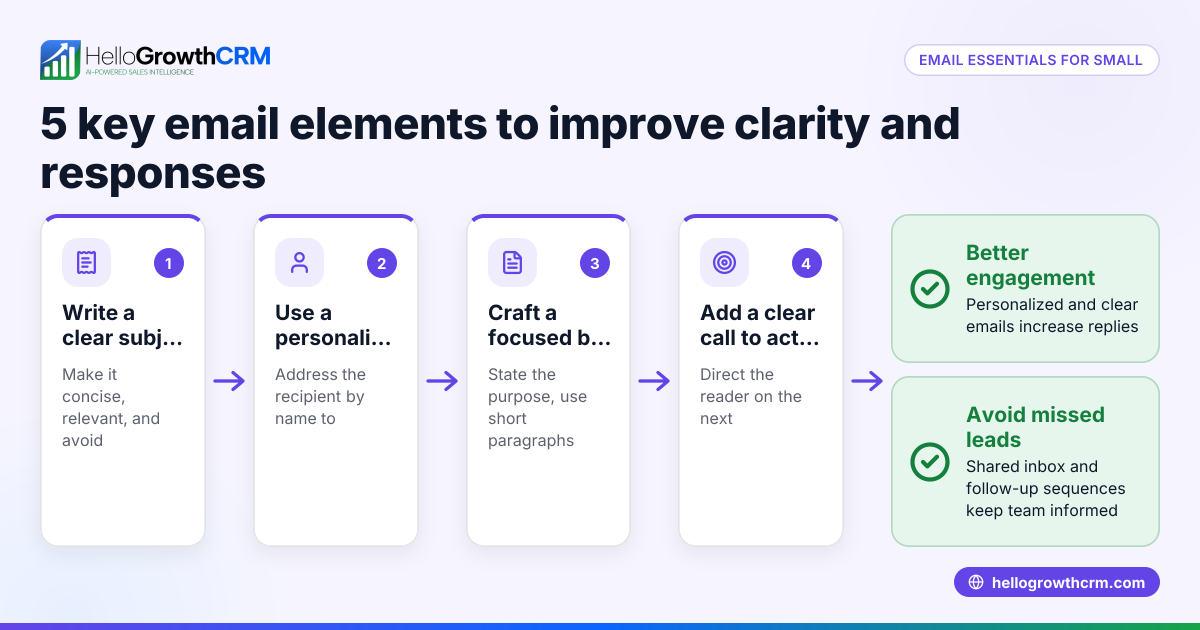
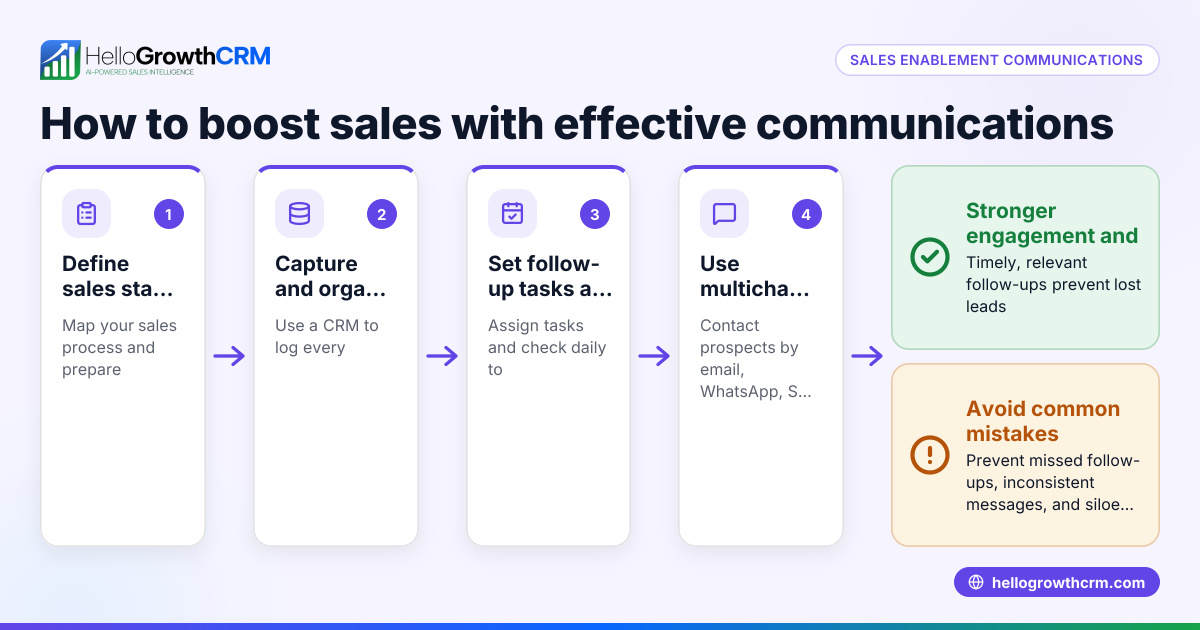
- Identify your goal: Decide if your email aims to introduce your product, follow up on a meeting, or close a sale. This shapes your message content and tone.
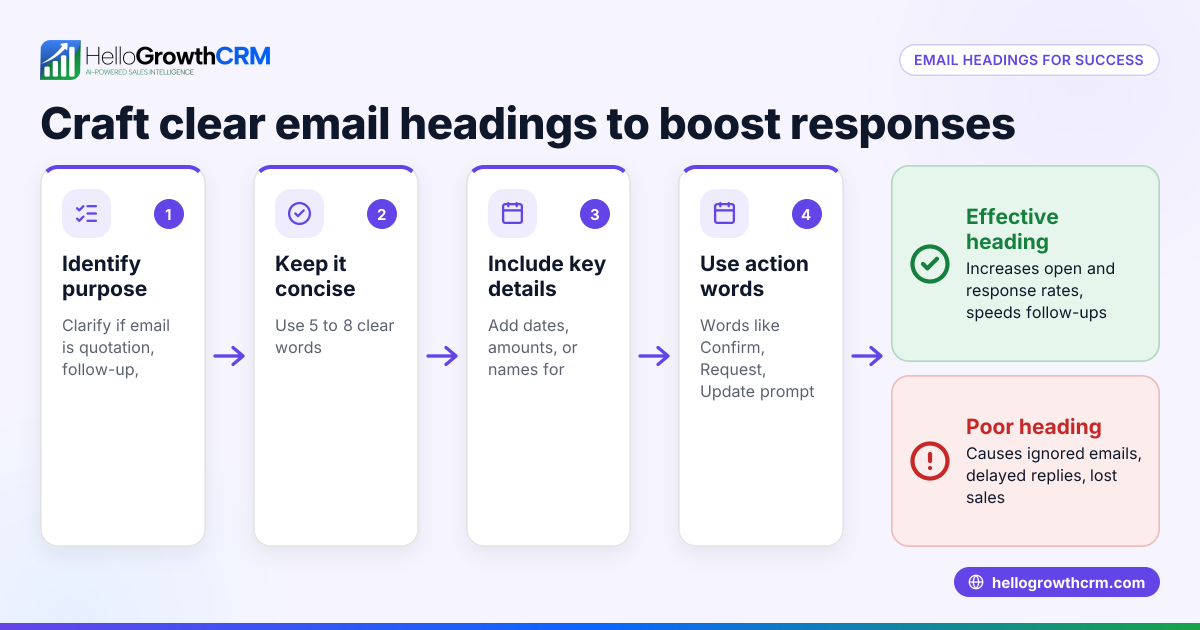
- Use a clear subject line: Make it specific and relevant to the recipient to increase open rates. Avoid vague or clickbait phrases.
- Personalize the greeting: Use the prospect’s name and mention something relevant to their business or recent activity.
- State your value proposition early: Explain how your product or service solves a problem or improves their situation. Be concrete and benefit-focused.
- Keep the message concise: Use short paragraphs and clear language. Avoid jargon or overly technical terms.
- Include a call to action (CTA): Tell the reader exactly what you want them to do next (e.g., schedule a call, reply, visit a website).
- Add a professional signature: Include your name, position, company, phone number, and email address.
- Proofread and check timing: Ensure no typos or grammatical errors. Send the email at a time when the recipient is likely to read it, such as mid-morning or early afternoon on weekdays.
Check that your email matches these steps before sending. Use tools or CRM features to schedule and track follow-up communications effectively.
Example (fictional figures)
A landscaping contractor in Charlotte, North Carolina, named GreenScape, wants to send a sales email to a commercial property manager named Sarah.
Subject line: Improve Your Property’s Curb Appeal with GreenScape
Email body:
Hi Sarah,
I’m John from GreenScape, and we specialize in commercial landscaping that boosts property value and tenant satisfaction. We recently helped a Charlotte office park increase foot traffic by 20% with our seasonal maintenance plans.
Would you be open to a quick call next week to discuss how we can help your properties look their best?
Best, John Smith Owner, GreenScape 555-123-4567 john@greenscape.com
Assume John sends this on 06/01/2026. If Sarah replies positively, John can move the lead to the next sales stage in his CRM pipeline.
Sales impact calculation example:
GreenScape’s seasonal maintenance plan costs $5,000 per property per year.
They sign a contract with Sarah’s office park for 3 properties.
Total contract value = $5,000 × 3 = $15,000
If John closes 2 similar deals per month:
Monthly revenue = $15,000 × 2 = $30,000
Annual revenue from these deals = $30,000 × 12 = $360,000
This example shows how a clear sales email can lead to significant revenue growth.
Common mistakes
- Being too vague or generic: Prevent this by personalizing your message and focusing on the recipient’s specific needs and challenges.
- Writing too much text: Keep emails concise and to the point to respect the reader’s time and increase the chance they read it fully.
- Forgetting a clear call to action: Always state the next step clearly, so the recipient knows what you want them to do.
- Ignoring follow-up: Set reminders or use CRM tools to track and follow up systematically, avoiding lost leads.
- Sending at the wrong time: Research or test the best sending times for your audience to improve open and response rates.
- Not proofreading: Review your email carefully or use grammar checking tools to avoid typos and errors that reduce credibility.
Avoiding these mistakes improves your chances of engaging prospects and closing sales.
Doing this in HelloGrowthCRM
HelloGrowthCRM helps you manage sales emails and follow-ups effectively. Deals (pipeline) show quotations sent last week as deals at the 'quote sent' stage with a follow-up date, so no lead is forgotten. This keeps your sales process organized and timely. Learn more about email automation and sequences to streamline outreach and follow-up in HelloGrowthCRM email automation and sequences. For businesses operating across regions, HelloGrowthCRM supports territory and field operations management territories-field. Using WhatsApp and SMS CRM features can also enhance your reach WhatsApp and SMS CRM.
Frequently asked questions
What makes a good sales email example? A good sales email example is clear, concise, personalized, and focused on the prospect’s needs. It includes a strong subject line, a value proposition early in the message, and a clear call to action.
How often should I follow up after sending a sales email? A common practice is to follow up within 2-3 days after the initial email if you don’t get a response, then again after a week. Avoid excessive follow-ups that may annoy prospects.
Can I use the same sales email example for all prospects? No, personalization is key. Tailor your message to the recipient’s industry, role, or specific needs to increase engagement.
How can a CRM help with sales emails? A CRM tracks deals through pipeline stages, sets follow-up reminders, and supports email automation and sequences, helping you stay organized and timely with your sales emails.
Is it better to send sales emails in the morning or afternoon? Timing varies by industry, but generally mid-morning or early afternoon on weekdays tends to have higher open rates. Testing your audience’s response is recommended.
Key takeaways
- Sales emails should be clear, personalized, and focused on the prospect’s needs.
- Use a strong subject line and a clear call to action.
- Keep emails concise and proofread carefully.
- Follow up consistently but respectfully.
- Use CRM tools to track sales emails, follow-ups, and pipeline stages.
Start improving your sales emails today by organizing your leads and follow-up tasks with HelloGrowthCRM. Start on the Free Forever plan (200 leads, no credit card).
Ready to put this into practice?
Set up your pipeline, WhatsApp follow-ups, and AI lead scoring in minutes — free, no credit card.
Try HelloGrowthCRM freeGet CRM tips in your inbox
Join thousands of sales professionals who get weekly insights on CRM strategy, AI automation, and pipeline optimization.

The HelloGrowthCRM team publishes guides on CRM strategy, AI sales tools, and revenue operations for small business sales teams.