HelloGrowthCRM software
Built for real small-business sales teams
HelloGrowthCRM helps reps qualify faster, follow up on time, and close more deals—with practical automation in one place.
- AI lead scoring and pipeline visibility
- Built-in dialer, WhatsApp, and email automation
- Sales forecasting and RevOps-ready reporting
Customer success email templates are essential tools for small and mid-sized businesses aiming to maintain strong relationships with their customers. These templates help standardize follow-up communication, reduce response times, and ensure customers feel valued and supported after a purchase. This article covers why businesses need these templates, how to create and use them step-by-step, a detailed example for a US plumbing company with clear calculations, common pitfalls to avoid, and how HelloGrowthCRM can streamline these processes.
Why this comes up / what goes wrong
Small-business owners often struggle with consistent customer follow-up after sales. Manual emails sent sporadically or delayed responses can lead to unhappy customers and lost repeat business. Without templates, teams may write inconsistent messages that fail to address key customer success goals such as onboarding, troubleshooting, or gathering feedback. This inconsistency can also waste time and reduce team efficiency. Moreover, businesses running sales and support through multiple channels like text messages, email, and spreadsheets find it difficult to track customer communication effectively.
Step-by-step
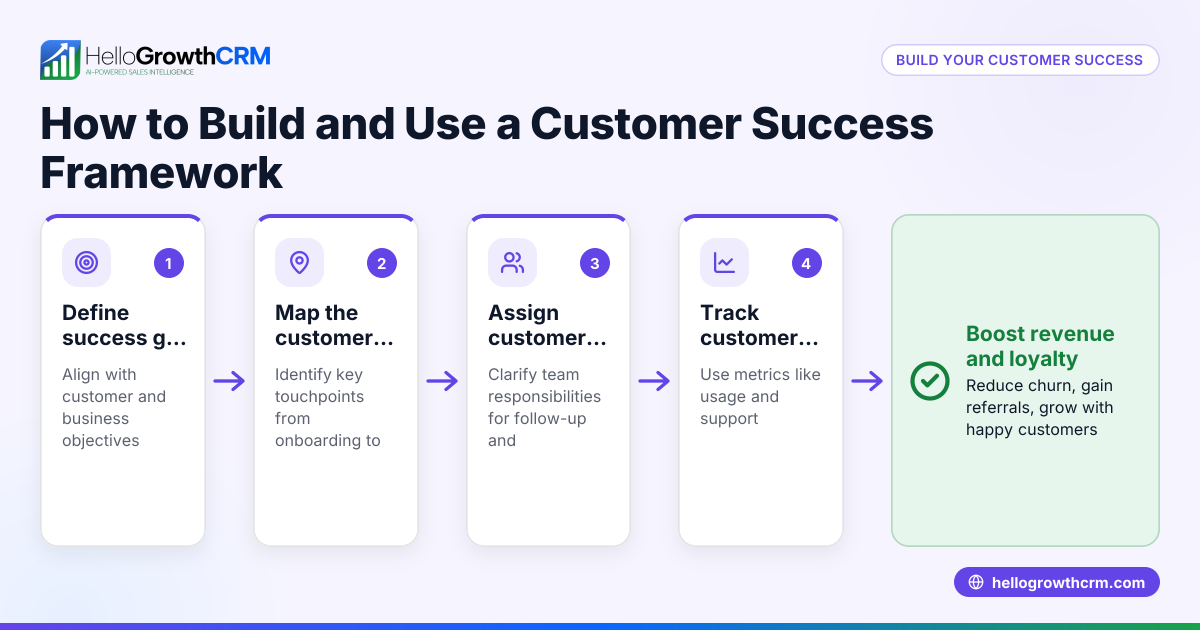
- Identify key customer success touchpoints: Determine moments when customers need check-ins, such as right after purchase, during onboarding, or when a product update occurs.
- Draft template emails for each touchpoint: Write clear, concise messages focusing on customer needs at each stage. Include helpful resources, contact information, and calls to action.
- Personalize templates for your audience: Use placeholders for customer names, purchase details, and relevant dates to make emails feel tailored.
- Set timing and frequency: Decide when each email should be sent (e.g., 2 days after purchase, 1 week after onboarding).
- Test templates internally: Have team members review and send test emails to ensure clarity and proper formatting.
- Implement automation tools: Use CRM features like email sequences and campaigns to schedule and send templates automatically, stopping follow-ups when customers respond to avoid spamming. For more on automation, see email automation and sequences.
- Monitor customer responses and adjust: Track open rates, replies, and customer feedback to refine your templates over time.
- Train your team to use templates consistently: Ensure everyone understands when and how to send these emails to maintain brand voice and customer experience.
Example (fictional figures)
A plumbing company in Austin, Texas called "Austin Flow Plumbing" uses customer success email templates to improve retention.
- They send a "Thank you" email 1 day after service completion.
- A "Maintenance tips" email 7 days later.
- A "Feedback request" email 14 days after service.
Assuming they serve 100 customers monthly, and 40 customers respond positively to the feedback request:
40 customers × 25% repeat rate = 10 repeat customers
10 repeat customers × $300 average job = $3,000 additional revenue
Calculation steps:
40 × 25% = 10
10 × $300 = $3,000
This shows how timely customer success emails can drive measurable business growth.
Common mistakes
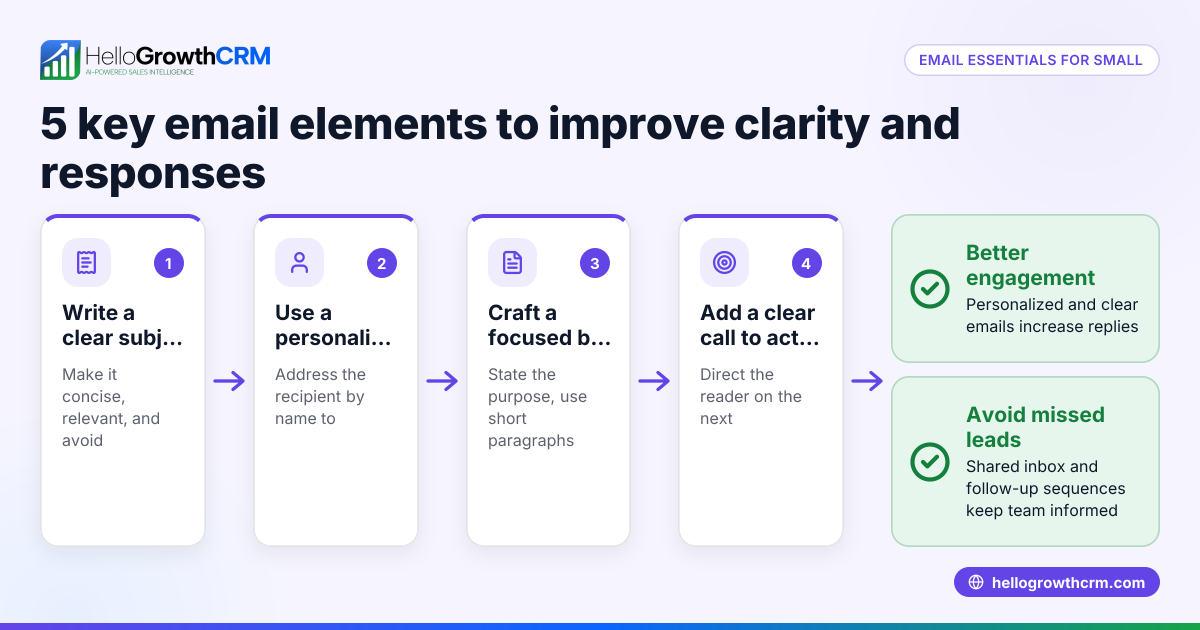
- Sending generic, non-personalized emails: Prevent this by using templates with placeholders for personal details.
- Over-emailing customers without stopping on reply: Use automation tools like sequences that halt follow-ups once a customer responds to avoid annoyance.
- Ignoring customer feedback collected via email: Assign a team member to review and act on responses promptly.
- Failing to align emails with customer journey stages: Map out your customer journey to ensure emails match customer needs at each phase.
- Not sharing email replies with the team: Use shared inboxes to keep the whole team informed and avoid duplicated or missed responses. Learn more about sales templates for consistent messaging.
Doing this in HelloGrowthCRM
HelloGrowthCRM helps small and mid-sized businesses manage customer success emails efficiently. Its HelloMail shared inbox lets your team see all replies to quotation and follow-up emails on the deal record, improving collaboration. Automated sequences enable a five-step follow-up over two weeks that stops automatically when the customer replies, preventing over-contacting. After the sale, service requests and support tickets stay linked to the same customer record, making it easy to track all interactions in one place. Explore these features to streamline your customer success communication at email automation and sequences and customer health score.
Frequently asked questions
What is a customer success email template? A customer success email template is a prewritten message designed to engage customers after a sale. It helps businesses consistently check in, provide support, and encourage loyalty without writing each email from scratch.
How often should I send customer success emails? The frequency depends on your business and customer journey but typically includes a thank-you email soon after purchase, follow-ups during onboarding, and periodic check-ins or feedback requests. Automated sequences can help schedule these appropriately.
Can I personalize customer success email templates? Yes, use placeholders for names, purchase details, and dates. Personalization increases engagement and makes customers feel valued.
How do I avoid annoying customers with too many emails? Use automation tools that stop sending emails once the customer replies. Also, map out the customer journey to space emails thoughtfully and keep messages relevant.
Can customer success emails improve revenue? Yes, by maintaining good relationships, encouraging repeat business, and gathering feedback to improve services, these emails can drive additional sales.
How does HelloGrowthCRM support customer success emails? HelloGrowthCRM offers a shared inbox for team visibility, automated multi-step email sequences that stop on reply, and keeps all customer service requests linked to the deal record, simplifying communication management.
Key takeaways
- Customer success email templates standardize and speed up post-sale communication.
- Personalization and timing aligned with customer journey stages increase effectiveness.
- Automation tools prevent over-emailing and ensure timely follow-ups.
- Monitoring and acting on customer feedback collected via email is critical.
- Shared inboxes improve team collaboration and response consistency.
- HelloGrowthCRM features support these processes with sequences, shared inbox, and integrated customer records.
Start improving your customer communication today by trying HelloGrowthCRM’s Free Forever plan with 200 leads and no credit card required at Start on the Free Forever plan (200 leads, no credit card).
Ready to put this into practice?
Set up your pipeline, WhatsApp follow-ups, and AI lead scoring in minutes — free, no credit card.
Try HelloGrowthCRM freeGet CRM tips in your inbox
Join thousands of sales professionals who get weekly insights on CRM strategy, AI automation, and pipeline optimization.

The HelloGrowthCRM team publishes guides on CRM strategy, AI sales tools, and revenue operations for small business sales teams.