HelloGrowthCRM software
Built for real small-business sales teams
HelloGrowthCRM helps reps qualify faster, follow up on time, and close more deals—with practical automation in one place.
- AI lead scoring and pipeline visibility
- Built-in dialer, WhatsApp, and email automation
- Sales forecasting and RevOps-ready reporting
The sales forecast formula is:
Number of deals × Average deal size × Probability of closing = Expected revenue
This formula helps you estimate how much revenue your business can expect from current sales opportunities. Using this method improves your planning and resource allocation by providing a clearer picture of future income.
Why this comes up / what goes wrong
Many small business owners in the US struggle with sales forecasting because they rely on informal or incomplete tracking methods such as text messages, emails, or spreadsheets. These approaches often lead to missed follow-ups, lost leads, and inaccurate revenue projections. Without a clear sales forecast, business owners may either overestimate income—leading to cash flow shortages—or underestimate it, which can cause underinvestment in sales and marketing efforts. Additionally, managing sales opportunities without a centralized system makes it difficult to keep track of deal stages and probabilities. This is why understanding and applying a sales forecast formula is essential for better sales planning and financial management.
Step-by-step
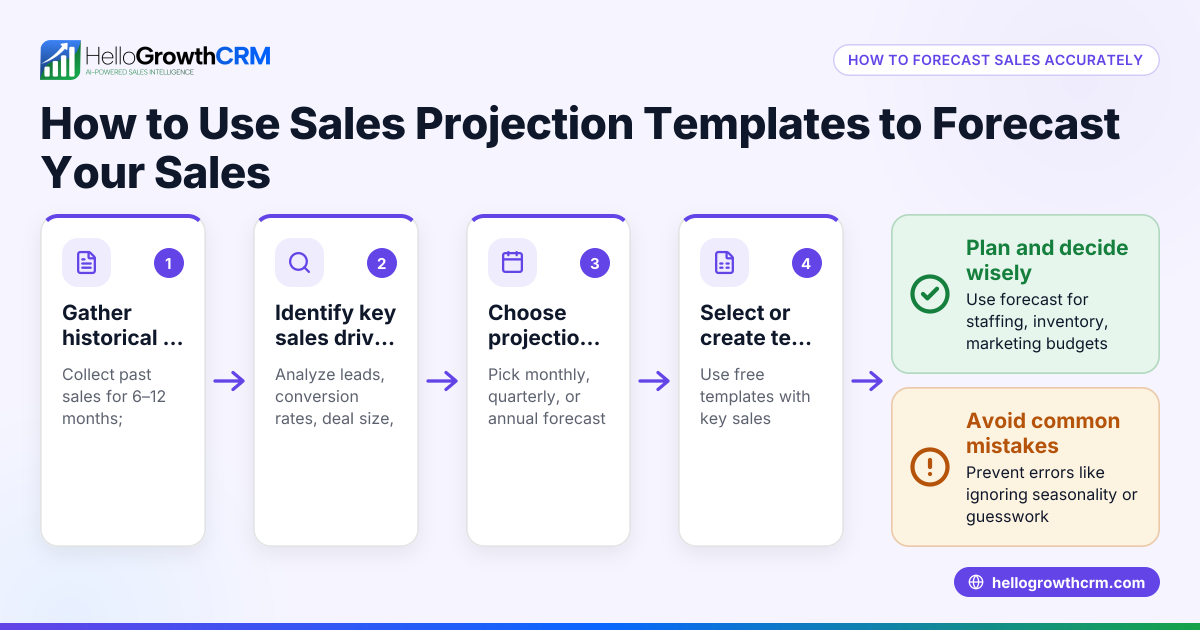
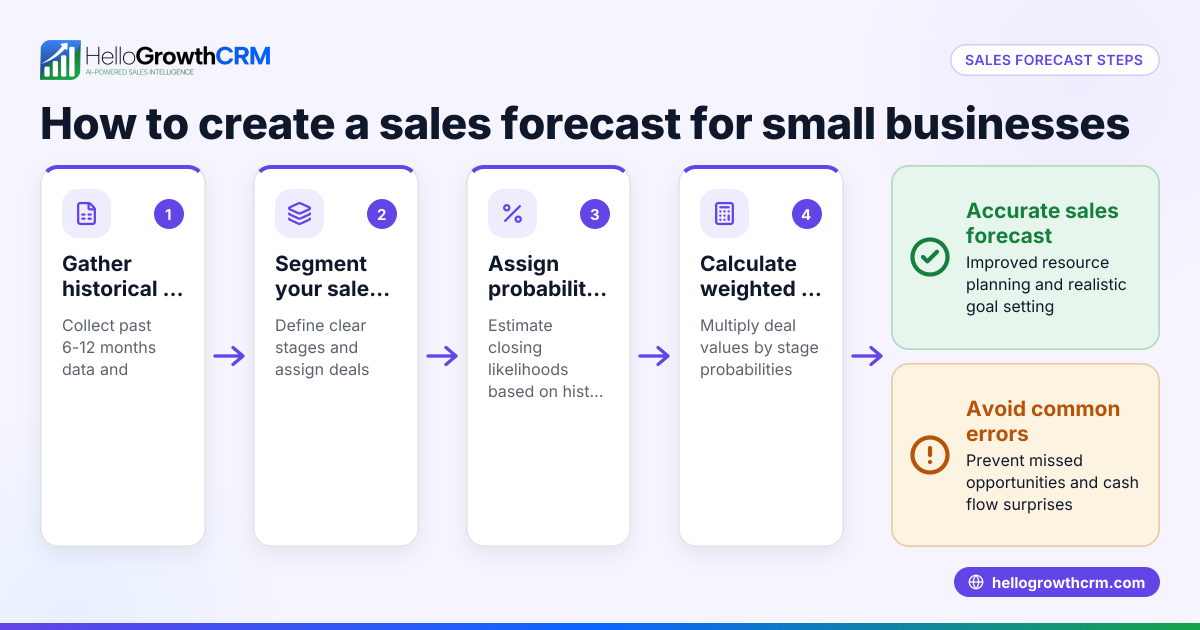
- List your active deals: Collect all current sales opportunities, including quotes sent, ongoing negotiations, and leads in various stages.
- Calculate average deal size: Use historical sales data to determine the average revenue per deal. If no data is available, estimate based on your pricing and typical customer purchases.
- Assign a closing probability: For each deal, estimate the likelihood it will close. Base this on the sales stage, previous conversion rates, and deal specifics.
- Calculate expected revenue per deal: Multiply the deal size by its closing probability to get the expected value.
- Sum expected revenues: Add the expected revenues of all deals to get your total sales forecast.
- Review and update regularly: Sales pipelines change frequently, so update your forecast weekly or monthly to maintain accuracy.
Check that your deal sizes are realistic and your probabilities reflect actual sales stages and historical data. Avoid double-counting deals or including inactive leads to keep your forecast reliable.
Example (fictional figures)
A B2B software reseller in Denver, Colorado, wants to forecast sales for the next month ending 07/31/2026. They have 3 active deals:
- Deal 1: $50,000 potential value, 60% chance to close
- Deal 2: $30,000 potential value, 30% chance to close
- Deal 3: $20,000 potential value, 80% chance to close
Calculate expected revenue for each deal:
$50,000 × 60% = $30,000 $30,000 × 30% = $9,000 $20,000 × 80% = $16,000
Add expected revenues:
$30,000 + $9,000 + $16,000 = $55,000
The sales forecast for July 2026 is $55,000.
Common mistakes
- Using inaccurate probabilities: Guessing closing chances leads to unreliable forecasts. Base your probabilities on historical data and sales stages. Prevent errors by reviewing past close rates regularly.
- Ignoring deal size variability: Assuming all deals are equal can distort your forecast. Use average deal sizes derived from real sales data and update them as needed.
- Failing to update forecasts: Sales pipelines evolve quickly. Schedule regular forecast reviews to capture changes and adjust probabilities.
- Counting stale deals: Including deals without recent activity inflates forecasts. Remove inactive or dead deals to keep projections realistic.
- Relying solely on spreadsheets: Manual tracking increases the chance of errors and missed follow-ups. Use a CRM to keep deals organized, visible, and updated.
Doing this in HelloGrowthCRM
HelloGrowthCRM helps small businesses forecast sales without complex spreadsheets. Its pipeline forecast and AI insights feature projects expected close amounts based on deal stage, velocity, and historical patterns, so the owner sees which stage deals are stalling. The deals (pipeline) feature tracks open opportunities with stage movement and follow-up dates, ensuring no quotation or lead is forgotten. For businesses with field sales, territories, field operations and commissions tools let managers see daily visits and sales activity logged by reps from their phones.
Frequently asked questions
What is the best sales forecast formula for small businesses? The basic formula is: Number of deals × Average deal size × Probability of closing. This weighted expected revenue reflects the likelihood of each deal closing, making it a practical and straightforward method.
How often should I update my sales forecast? Update your sales forecast regularly, ideally weekly or monthly. Frequent updates ensure your forecast reflects current pipeline status and helps identify stalled deals early.
Can I use sales forecasting without a CRM? Yes, but manual methods like spreadsheets or lists increase the risk of errors and missed follow-ups. A CRM like HelloGrowthCRM organizes deals, tracks stages, and provides AI insights to improve forecast accuracy.
What if my forecast is consistently off? Check your deal probabilities and average deal sizes for accuracy. Remove inactive deals and ensure follow-ups are timely. AI insights from a CRM can help identify pipeline bottlenecks.
How does AI improve sales forecasting? AI analyzes historical data and current pipeline velocity to predict outcomes more accurately than manual estimates. HelloGrowthCRM’s AI insights highlight where deals stall and revenue signals to watch.
Key takeaways
- Sales forecast formula: number of deals × average deal size × closing probability.
- Base deal sizes and probabilities on real data and update regularly.
- Regularly review and update your forecast to keep it accurate.
- Remove inactive deals to avoid inflated forecasts.
- Use a CRM like HelloGrowthCRM for pipeline forecasting, deal tracking, and field sales management.
Start your sales forecasting today with HelloGrowthCRM. Start on the Free Forever plan (200 leads, no credit card) to organize your deals and get AI-powered insights that help you predict revenue and grow your business.
Ready to put this into practice?
Set up your pipeline, WhatsApp follow-ups, and AI lead scoring in minutes — free, no credit card.
Try HelloGrowthCRM freeGet CRM tips in your inbox
Join thousands of sales professionals who get weekly insights on CRM strategy, AI automation, and pipeline optimization.

The HelloGrowthCRM team publishes guides on CRM strategy, AI sales tools, and revenue operations for small business sales teams.